What if accessibility was built into banking from the start?
Meet Everibodi🇳🇬, built in 48 hours for Zenith Bank’s “Inclusive Digital Banking” Hackathon track, featuring Nigerian languages, a 3D signing avatar, and head-controlled navigation.
@ZenithBank@thebeyondlimits
1/3
The best developers I know:
1) Build side projects for fun
2) Read docs like they're reading manga
3) Ask “why” till it’s annoying
4) Push messy code, then refactor
5) Google faster than they type
6) Teach others what they just learned
7) Never act like they’ve “arrived”
Posting my work is how I have gotten 90% of my clients, let me show you how to do it (part 2)
I’ve received job offers from almost every major social platform, LinkedIn, X, Instagram, WhatsApp, Dribbble, Behance, etc. In fact, my very first client who paid me in millions years ago came from X, followed by Behance, then LinkedIn, and so on.
The truth is, if I had to rely on interviews, I probably wouldn’t have landed most of these jobs. But when a client sees your work and reaches out, it’s different, they already like what you do. It bypasses many traditional hurdles and makes the process easier. That’s why posting your work is such a powerful tool. Let me show you how to get the most out of it:
1️⃣ Post consistently
The best way to get attention is through consistency. Consistency builds visibility, and visibility creates opportunities. This doesn’t mean posting every day, but it does mean having a rhythm, maybe 3–4 times a week on the same days. However, if you’re actively job-hunting, posting daily for a while can help. For example, I once did a 30-day landing page design challenge, and that led to a major client who changed my life about 2–3 years ago.
2️⃣ Focus on quality
The goal is to get clients to notice your work. These days, clients are looking for the best, so always share your strongest work. This doesn’t mean you should let imposter syndrome stop you from posting, just keep focusing on growth and improvement. A good practice is to get feedback from trusted friends or fellow designers before you post.
3️⃣ Tell the story behind each design
Don’t just drop visuals. Share the goal, challenge, and solution. Stories make your work memorable and relatable.
4️⃣ Share the process, not just the outcome
Clients love seeing how you solve problems. Show sketches, wireframes, and behind-the-scenes thinking, it makes your work more authentic.
5️⃣ Engage with feedback
Comments and discussions on your posts increase your reach, which means more potential clients will see your work. Beyond that, feedback sharpens your skills and helps you attract the right audience.
6️⃣ Share testimonials and past work
Every now and then, showcase client feedback or highlight completed projects. This builds trust and shows reliability.
7️⃣ Study what works
Look at designers who are doing well and consistently attracting clients. Study their posting patterns and strategies, and even ask tools like ChatGPT to help you break it down. Adapt these insights to your own style.
8️⃣ Don’t forget to pray
Personally, I make it a practice to whisper a simple prayer now and then: “Lord, help me get good clients who will see my work and reach out.” It works.
💡 I hope this helps you see how powerful posting your work can be. Let me know your thoughts in the comments, I’d love to hear how you approach it.
No fancy college.
But a GitHub stacked with real-world projects, clean READMEs, and a clear journey can get you interview calls before placements
Recruiters don’t care about marksheets , They care what you bring to the table
They care about what you’ve built, how you solve problems, and whether you ship.
And how fast can you ship with AI
Paper resumes are long gone
Your GitHub , X profile and linkedin is your resume .
Just saw that a new fintech app launched last week called Vban, built for African freelancers, remote workers, digital nomads, and creatives.
I checked it out because I’ve been looking for an easier way to:
• Receive USD instantly from clients
• Swap to NGN hassle-free
• Pay for international transactions with a virtual card
So far, I’m really liking this all-in-one app 👌🏾
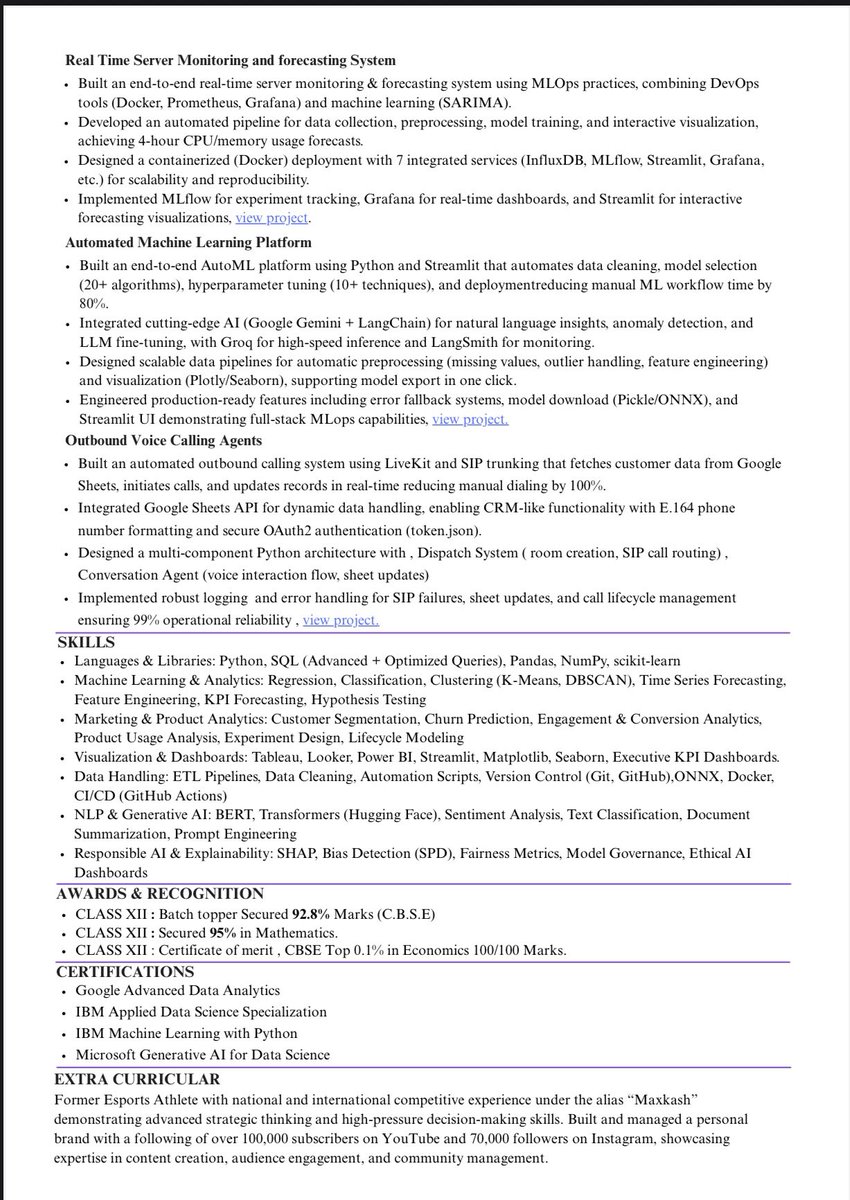
This Resume got me 4 offers , Never show your weakness most of them think I have done BCA or any other cs bg degree as i have only mentioned masters , dont mention gap years i had around 3-4 , there are other points too , but everything comes down to you basically not showing your weakness , later on when i get selected in the initial rounds , when they ask i let them know .
The Tea app having all its user data leaked was bad. Now imagine a porn site with "age verification" tying viewing history to a specific identity. I'm sure no hacker or government agency would ever have interest in such data!
When I analyse a company, I may see that the income statement is bad but the balance sheet is strong. When I see this, I am not worried.
My worry is when an income statement is good but the balance sheet is horrible.
I get bored talking about it these days but as someone who has called quite a number of companies BEFORE they went up (a feat I think @Rufyb is one of the best at) and someone who identifies great companies for a living: here is what I think.
I failed a course because I wasn’t available for the field trip while I was winning a gold medal for FUTA at the Nigeria University Games in 2013.
The professor said he got the exemption letter from the senate, but he didn’t care because his class was ‘more important’.
🫠
when dropbox first dropped their referral program, i spun up google ads… spent maybe $10 total & walked away with 1TB of free storage. easiest growth hack of my life.
what’s the biggest “hack” you’ve ever pulled?
Prior to @aeroxyz launch, the liquidity landscape on Base was fractured and the DeFi ecosystem incomplete
Fast-forward to 9 days post-launch
Base TVL doubles to $405 million of which Aerodrome accounts for more than $175 million!
A deep-dive on this @VelodromeFi fork🧵👇
5 FREE tools you need to master on-chain analysis
It's a bear market, and understanding on-chain analysis is the major way to get ahead of your competition.
On-chain analysis is like looking for a needle in a haystack, and most tools that help make this search easy require a lot of money to access
Here are 5 tools that would give you free access to on-chain activities.
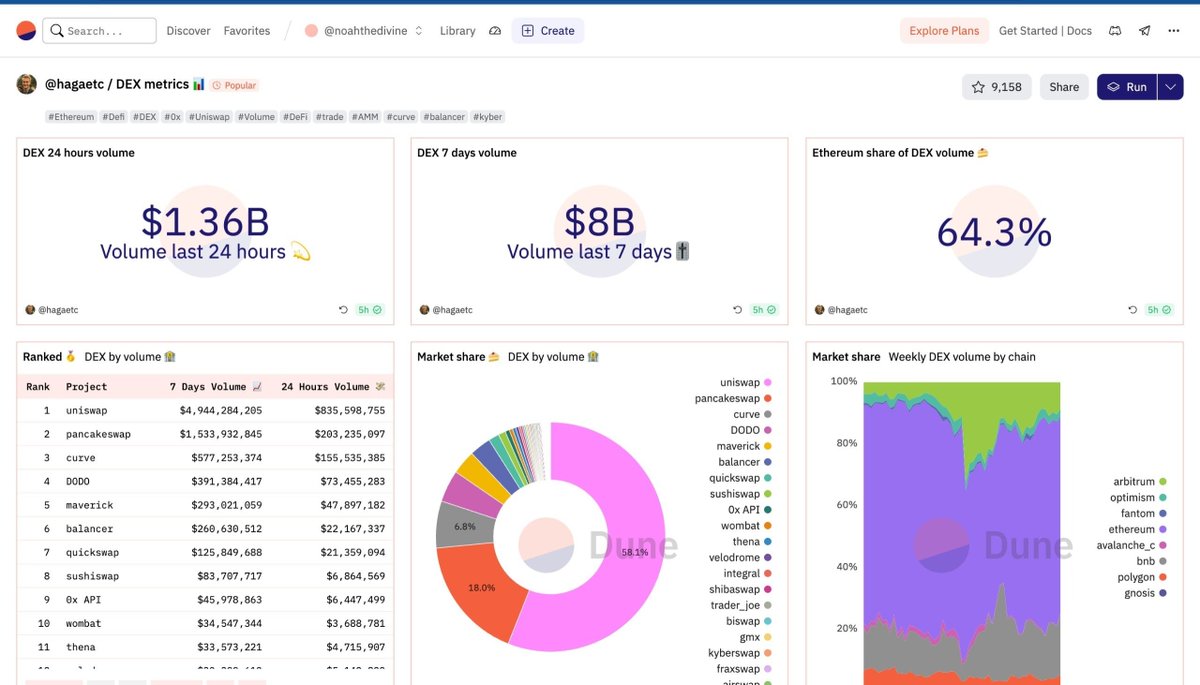
• Dune analytics
Dune Analytics is a data platform that crypto-asset analysts and investors use to research specific projects such as DeFi platforms or blockchain ecosystems.
It allows users to query, extract, and visualize data from public blockchains using plain SQL.
You can explore dashboards and queries the community created for free.
Here are some dashboards you can explore:
1) An overview of all activities on @avax by @SixdegreeLab
https://t.co/biVp8AZkll
2) An overview of activities on @BuildOnBase by @SixdegreeLab
https://t.co/WpIpoqP1Nc
3) Eth L2s comparison dashboard by @watermelonCP
https://t.co/KXmlxf7G6L
4) Best $BTC trading addresses by @longnh95
https://t.co/7ZaBEIldGF
5) Best shitcoin traders by @defi_mochi
https://t.co/jlSKvWcp58
Check out this tweet by @Flowslikeosmo for more dune dashboards.
https://t.co/ckSjywVkj8
• @ArkhamIntel
Arkham allows users monitor the on-chain activity of various blockchain entities, access a searchable database of crypto users, and filter their transactions.
It also has an intel exchange feature that enables users to trade valuable intel anonymously through smart contract bounties and auctions.
With Arkham, you can check the following:
1) How profitable an address is.
An example is 0x641FB555527B9108a1F58eA24E0C04fF86C4Ed0d, which has incurred a loss of $484,000 this year alone.
2) Timed transactions
With Arkham, you can view the transaction that occurred at a particular time.
This allows you to view transactions that occurred before a token pumped.
3) Portfolio balance
You can view the tokens that make up the portfolio of the address you are monitoring.
These functions and many more from Arkham will help navigate the complex web of on-chain activities.
• @DeBankDeFi
DeBank helps users track and manage DeFi assets across 21 blockchains, such as Ethereum, BSC, Polygon, and Fantom.
It also has a social feed feature that allows users to share their DeFi activities and insights with their followers.
Debank is like a lighter version of Arkham, which is very user-friendly.
• @bubblemaps
To be fair, bubblemaps is beautiful.
Bubblemaps is a supply auditing tool for DeFi tokens and NFTs that uses colorful bubbles to visualize on-chain data and reveal connections between wallets.
It is used by many projects and platforms in the crypto space to track holders' behavior, get market insights, and showcase transparency.
• Impersonator
This tool is pretty sick. It allows you to pretend to be another address and use this to access the platform for you to be able to monitor the activities of the address without the ability to initiate any transaction.
Created by @tomhschmidt
https://t.co/N2xzUlN7AR
These tools can help explore the in and out of on-chain activities
if you gained from this piece, kindly give a follow, like and retweet this tweet.
i'd tag some gigachads who might be interested in these tools
@SamuelXeus@PrudentSammy@thedefiedge@Defi_Warhol@DeFi_Dad@TheDeFinvestor@DefiIgnas@Defi_Maestro@Dynamo_Patrick@DeFi_Made_Here
Blockchain data like;
• active addresses/users
• daily transactions
• bridge inflow, etc
Can help identify which chain to find profitable gems.
But many people think they need premium tools to access this data.
Good news!
🧵: Here are 3 FREE Analytics Platforms to use