Crypto neobanks are not winning where people expected them to win.
The premium DeFi cards, the Silicon Valley banking apps, the sleek self-custody products. None of them are leading the market. RedotPay, a dollar access product for emerging markets built on USDT and Tron, controls 37% of all daily crypto card volume.
The real adoption story in crypto banking is not about better UX for people who already have good banks. It's about dollar access for people who don't.
That was always going to be the case. Stablecoins didn't become a $320 billion market cos people in New York wanted faster payments. They grew cos people in Nigeria, Argentina, and Turkey needed a stable currency they could actually hold.
The neobank story is following the same pattern. The winners are not the most innovative products. They're the ones solving the most urgent problems for the most underserved people.
That's where crypto actually changes something real.
Every time $BTC holds a level for more than a week the whole timeline starts talking about new ATH again.
Then it dumps 15% and we act surprised. We've been doing this all year.
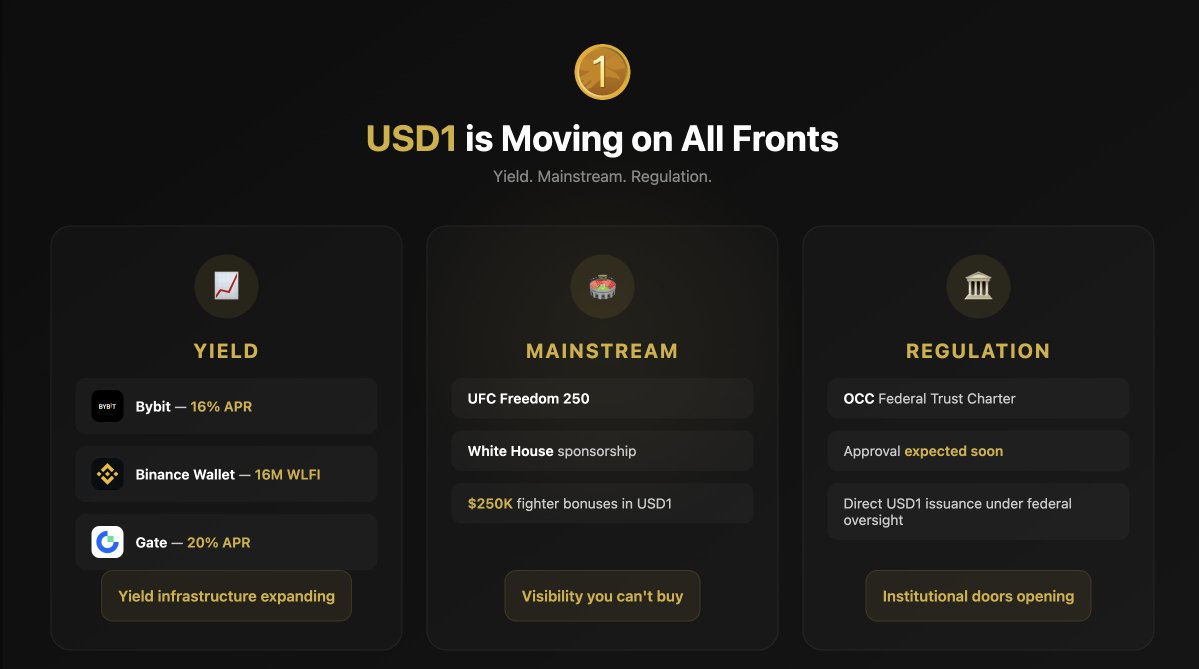
If you’ve been watching USD1 lately, you’ve probably noticed it’s moving on multiple fronts at once: yield campaigns, mainstream exposure, and regulatory progress. It’s worth stepping back to see what’s actually happening.
On the yield side, the infrastructure keeps expanding. Bybit is running a 16% APR campaign with 40M WLFI in rewards. Binance Wallet has a 16M WLFI program across Lorenzo, Lista DAO, and PancakeSwap with three ways to earn. Gate is still offering up to 20% APR with rewards paid in USD1 and daily auto‑compounding, on top of existing campaigns on Binance, MEXC, Dolomite, and TownSquare.
On the mainstream side, WLFI just sponsored UFC Freedom 250 at the White House, with $250K in fighter bonuses paid in USD1. That kind of visibility is hard to buy.
Then there’s regulation. Some reports suggest the OCC is close to approving a federal trust bank charter for WLFI. If that goes through, they’d be able to issue and redeem USD1 directly under federal oversight, instead of relying on intermediaries and state‑by‑state frameworks.
Yield to drive usage, mainstream exposure to build awareness, regulatory progress to bring in institutions, all moving at the same time.
It’s one thing to launch a stablecoin. It’s another to build yield, payments, and regulatory rails around it at once.
The biggest barrier in prop trading has never been skill, it’s the cost of getting started. Most traders who could pass a challenge never take one because they can’t justify the risk.
That’s why free access to a $50K funded account matters more than people think. @CFTradercom is giving away 50 of them tonight, ends 11 PM UTC.
Enter on Gleam and use cft-jefferycrypt for extra entries. Same code gets you 50% off if you’d rather just buy in.
https://t.co/am274YLG52
Most people in crypto are trying to be the best trader in the room.
But the people making the most money aren't relying on trading. They're building the rooms. Exchanges, infra, stablecoins, tooling.
Trading is a high-skill, high-competition game with thin edges.
Building is a different game: get the product and timing right and the returns are on a different scale entirely.
Pick the game where being good enough still changes your life.
What a card. Knockouts all night, Gaethje with the upset. The White House delivered.
And somewhere in all of that, USD1 made its way into the octagon with the fighter bonuses.
Crypto outside of crypto. You don't see that often.
USD1 yield rates just got better if you haven’t checked in a while.
Binance bumped their flexible product to 10.5% APR with a 2,000 USD1 limit. Gate just launched a campaign doing up to 20% APR with no lock‑up. The Gate one pays rewards in USD1 and auto‑compounds daily so you don’t have to do anything.
If you looked at USD1 yield before and passed, might be worth another look now.
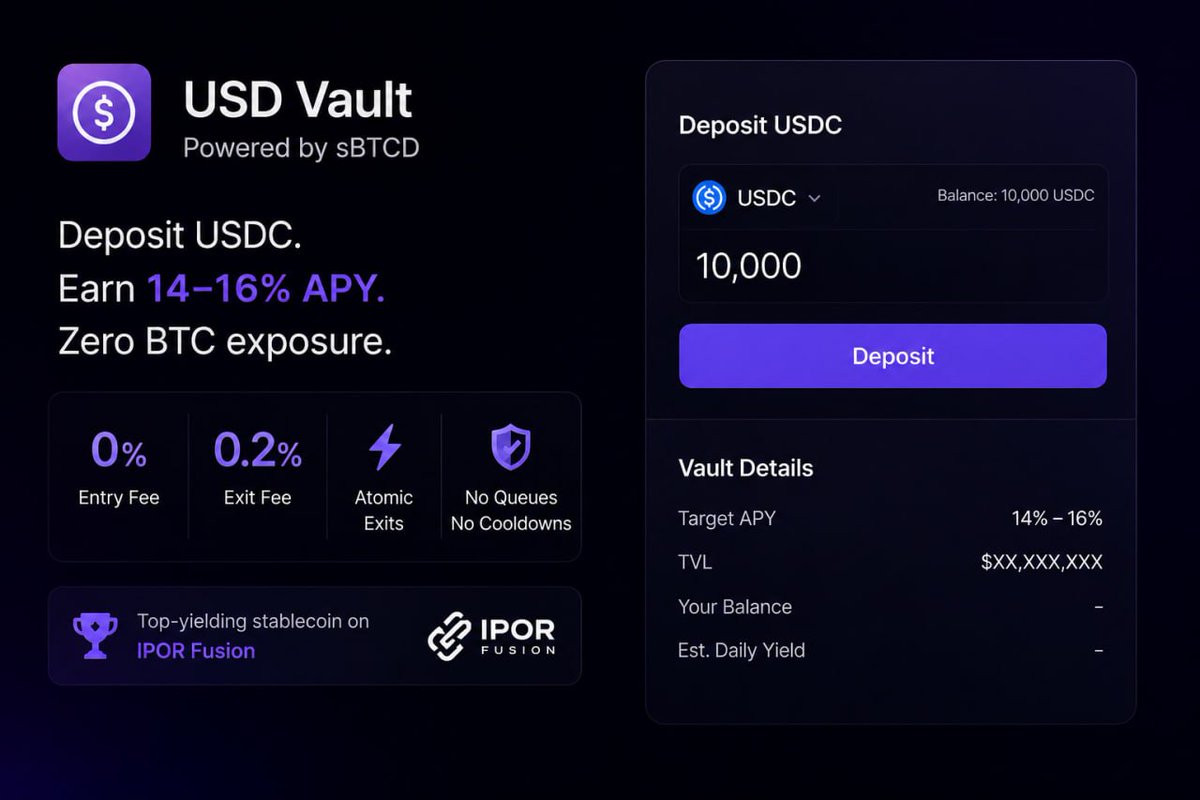
BTCD is a protocol where you earn yield on BTC and USD positions without taking on directional risk or depending on perp markets to stay favorable.
Here's the full breakdown.👇
Giving away 5 whitelist spots for https://t.co/F7ZSVjzbnk.
Each spot = 0.05 ETH worth of tokens, fully funded by the project. You just connect your wallet and claim. Nothing comes out of your pocket.
https://t.co/F7ZSVjzbnk is a memecoin battle royale on Uniswap V4. Tokens fight, one graduates, losers fund the winner's liquidity.
To enter:
Follow me + @battledotmeme
RT this post
Drop your wallet below
Picking 5 winners in 24 hours.
$MEGA is at its all-time low, 16 days after what everyone called the biggest token launch of 2026.
It's lost 50% from launch price in a market that's barely moved.
88.7% of supply is still locked. The token can't find a floor and most of the selling hasn't even started.
Being a good project and having a good token are two completely different things. MEGA is proving it in real time.
If you're holding USD1 on Binance, you might wanna know this.
BTC perps quoted in USD1 go live Monday. 100x leverage. And they gave USD1 the 99.99% collateral ratio which means you can use almost all of it as margin.
So now you can hold it, earn yield on it, and trade perps with it. I'm gonna try it out Monday and see how it feels.
Coinbase becomes the official USDC treasury deployer on Hyperliquid.
Coinbase also acquires rights to Native Markets’ USDH brand assets as USDH transitions into USDC.
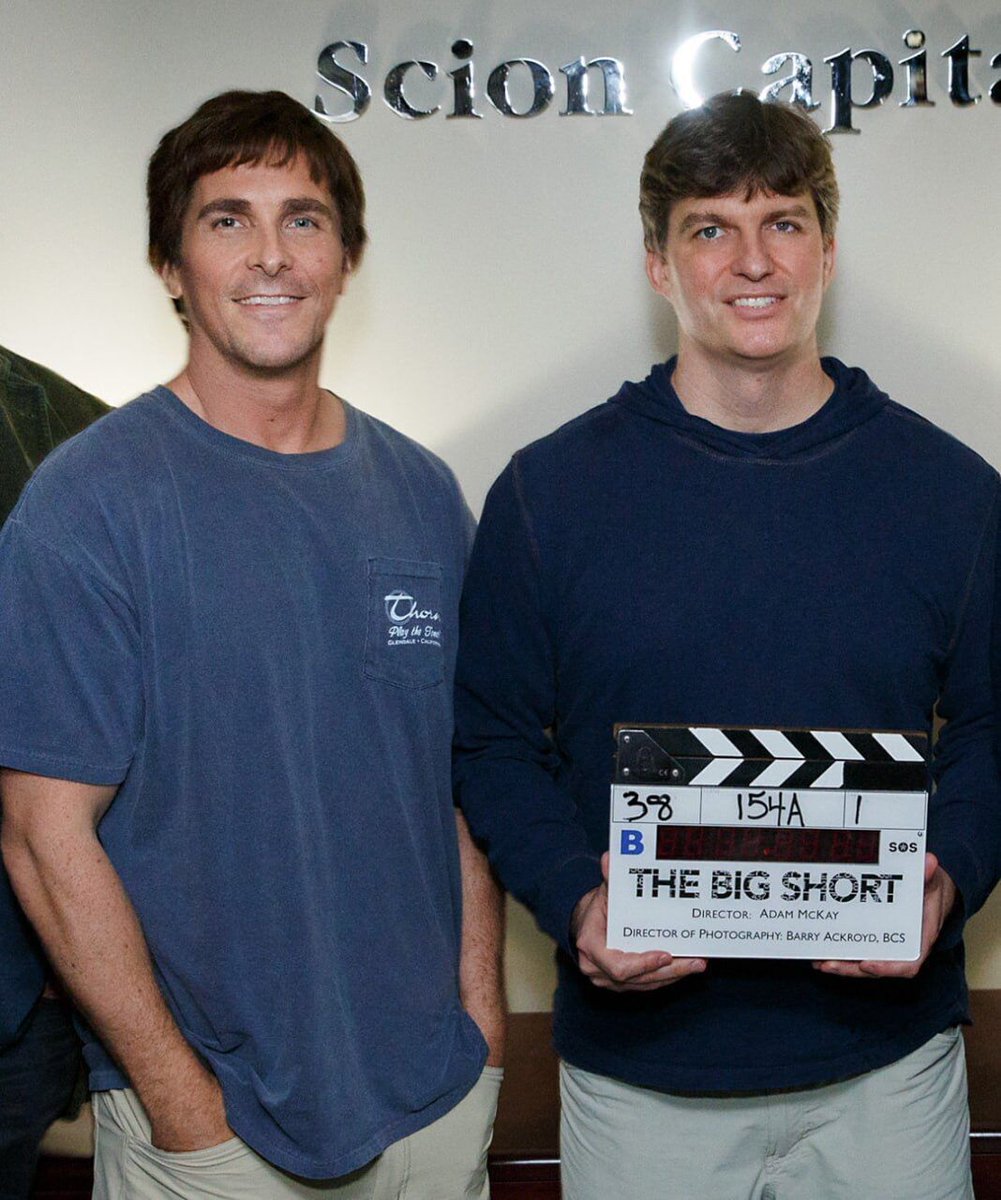
"The Big Short" investor Michael Burry warns the Nasdaq 100 is mirroring the dot-com bubble peak.
"We are witnessing history. In the stock market, that is not a good thing."
Everyone talks about chips when discussing the AI race.
Very few talk about the other bottleneck:
Energy.
Meta is now funding power from space and reserving massive long-duration storage because AI infrastructure is becoming incredibly energy intensive.
The next decade of AI may depend less on who has the best model
and more on who can actually keep the lights on.
https://t.co/jMm8Zyz7jm