Two weeks ago, Ethereum researchers met in Berlin to continue charting the protocol's long-term trajectory, following along discussions with client teams in Svalbard in April.
The updated strawmap is at https://t.co/9e2AQ6rhz6, and I attached a picture of it to this post.
My own high-level takeaways:
* "Lean Ethereum" is not a single one-shot upgrade, it is a collection of improvements that will come online to the Ethereum network over the course of three or four years. But make no mistake, this IS the third major iteration of Ethereum in the same way that the Merge was the second. Almost every major piece of the protocol will be replaced:
- Verification through recursive STARKs, rather than direct re-execution. Recursive STARKs become an enshrined first-class core component of the protocol
- Replacing everything quantum-vulnerable with quantum-safe alternatives
- Consensus: decoupled available chain and finality, one or two-round finality. Theoretically optimal security properties, simpler than today, and faster than today
- Multidimensional gas
- State: not just tree structure, but what *types* of state are available
- Changes to client architecture
...
At the same time, simplification, cleanup and future-proofing. And this will all be done in a way that minimizes disruption to existing application. We've done this before (the Merge), we can do it again.
* H-star (aka Hegota) is probably Ethereum's last thematically "pre-Lean" fork. Starting from I-star, most of everything we do will have a very strong "Lean" feel to it in one way or another.
* Privacy is no longer an afterthought, it is a first class goal. When designing Frames, the mempool, additions to the state tree, we explicitly ask the question "okay, how do quantum-safe, intermediary-free privacy protocol transactions go through this, and what is the overhead?"
* Formal verification of everything for security.
* FV also makes us much more comfortable with canonicalization (having pieces of the protocol that are directly defined as a piece of bytecode expressed in some language). evm-asm is being written in part to become a canonical proof system for the EVM.
* Quantum safety has shifted up a LOT in priority. This adds a lot of work (eg. finalizing a quantum-safe blobs design has become urgent; this work has already been ongoing for months)
* Probably the single most disruptive part of the plan is the changes to state. There is growing consensus around leaving present-day-style "dynamic state" mostly unchanged, but scaling it only a medium amount, and adding new types of state that are more scalability-friendly (eg. no need for builders to sync/store all of it) but more restrictive, and that will scale a large amount.
eg. possible Ethereum in 2030: 2 TB of present-day-style (dynamic) state, and 100 TB of new-style (scalable but restrictive) state
This "new-style" state would work very well for ERC20s, NFTs, many defi use cases, but not eg. highly "central" objects like Uniswap contracts, or onchain order books, or other complex things (which are crucial for Ethereum but which only take up a small percentage of state)
Hence, it will not be *necessary* to rewrite any apps, but it will be *very cost-effective* to eg. rewrite an ERC20 token into a newer design that uses a new type of UTXO storage that is currently being explored, so that it will have >10x lower txfees.
Design of these new state types (current ideas: keyed nonces, ring buffers, UTXOs, statically accessible state, temp state) is an area where we will need a lot of feedback from application developers (incl. privacy-friendly application developers) and probably several rounds of rethinking and iteration.
* In the context of a much larger total state size, we need to figure out the incentive issues around who stores this state and what motivates them to. Even saying "each node stores 1%" is not good enough - why do they store that 1% and why are they willing to serve it? This is being elevated as a first-class research area.
* Ethereum will need to have a "VM" other than EVM in one form or another - at the very least, we need something like leanISA for recursive STARKs - and the gains are large in exposing it to users so that we support programmable privacy and better scalability. Right now, the most likely contenders are leanISA and RISC-V.
My own ideal is that in this world, we adjust the protocol so that the EVM becomes a high-level-language compiler-level feature, and the protocol only "sees" RISC-V / leanISA directly. But this is still far away.
* Gas limit increases, blob increases and slot time decreases will happen many times over the next ~5 years. We expect a large gas limit increase with Glasterdam. Each step of increased scale or decreased slot time is a matter of getting to the point where it is safe to do it, which comes from a combination of client optimization and protocol changes.
Ethereum is CROPS.
Ethereum is scaling.
Ethereum is reinventing itself.
Onward.
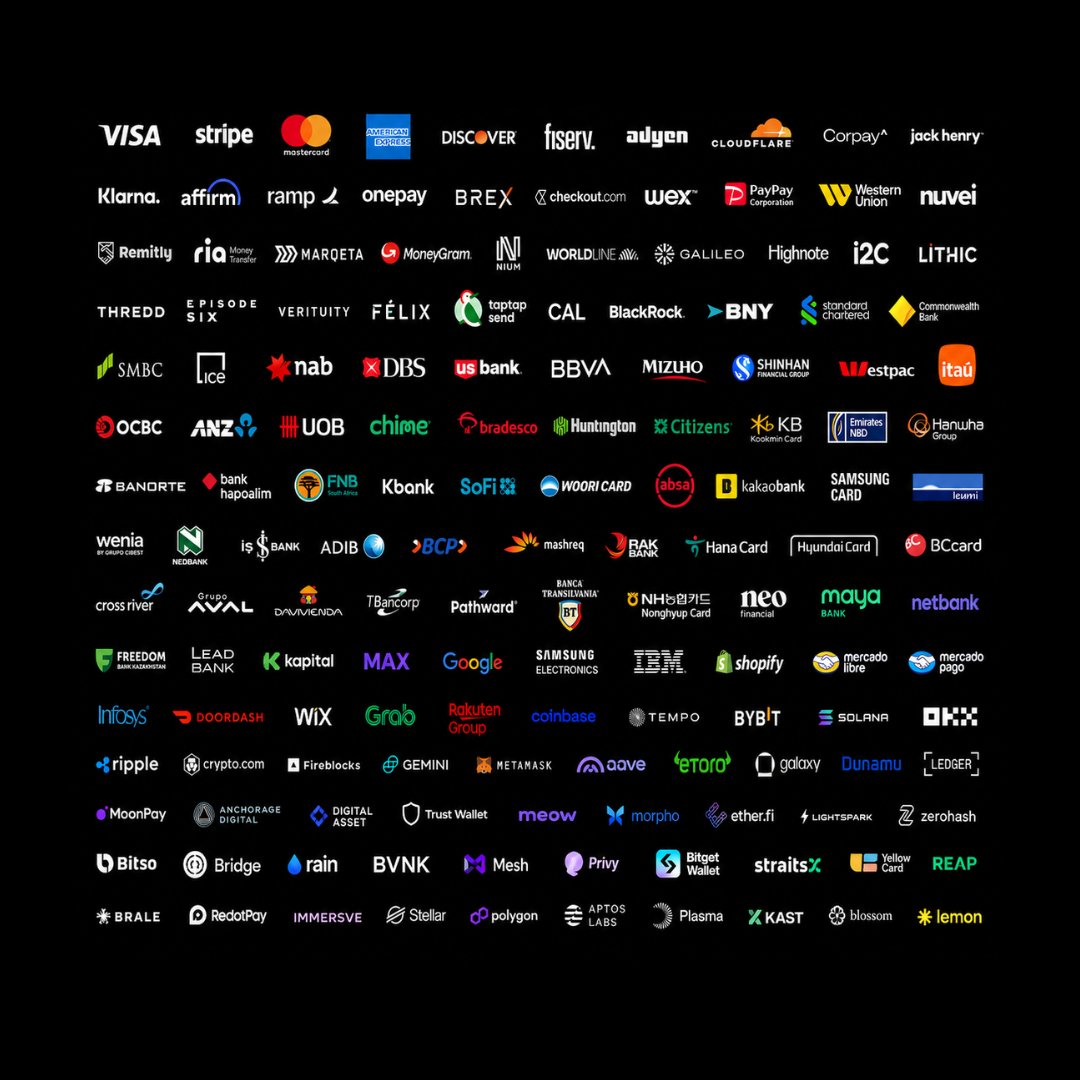
🔥 BIG: Open Standard announces Open USD $OUSD, a stablecoin backed by 140+ partners including Visa, Stripe, Mastercard, BlackRock, Google and Coinbase.
Aos mega bear de Strategy, desculpa qualquer coisa, não vai rolar nada do que vocês estão prevendo tão cedo.
Pra a tese bear funcionar, esta lista de improváveis precisa acontecer ao mesmo tempo:
1. o Bitcoin a $10K travado por 6 anos sem um repique sequer;
2. o mercado de convertibles fechado, zero apetite em qualquer cupom ou strike;
3. o ATM fechado, ninguém compra $MSTR no secundário;
4. o software perde 100% da receita;
5. nenhum banco, family office ou fundo aceita Bitcoin como colateral, nem a 50% de LTV;
6. o mercado de Bitcoin travado pra venda institucional;
7. os noteholders exercem todos os puts no primeiro dia, sem renegociar;
8. os acionistas vetam qualquer emissão de emergência;
9. o conselho não move uma palha.
Nove condições ao mesmo tempo, cada uma já improvável sozinha. Juntas, é um colapso coordenado que nem 2008 alcançou.
E mesmo assim a conta não fecha pro bear. São 847.363 BTC contra $6,7 bi de convertible, escalonada de 2027 a 2032, sem um centavo com margin call, cross-default ou trigger no preço do Bitcoin. O preferred de $15,5 bi nem conta, é perpétuo, dividendo discricionário, suspender não dispara default. A $10K, quitar 100% da dívida em caixa consome 670 mil BTC, sobram 177 mil livres, ignorando todo o caixa.
Agora some o caixa que já está no balanço, $1,4 bi, e zere de vez um software que fatura $490 milhões a 67% de margem, $328 milhões de lucro bruto que o bear precisa fingir que sumiram. A dívida cai pra 530 mil BTC, sobram 317 mil. A Strategy sai do apocalipse de 6 anos com mais Bitcoin do que MARA, Riot, CleanSpark, Galaxy e Tesla somadas hoje.
E nada disso precisa acontecer. Pra o apocalipse morder, as 9 portas têm que ficar trancadas ao mesmo tempo, todo dia, por 6 anos, e basta uma reabrir pra zerar o relógio. Uma emissão de convertible já saiu a $2 bi em 5 dias, cupom 0%, oversubscribed. O ATM sozinho captou mais de $11 bi neste bear de 2026, com o Bitcoin no chão e a $STRC abaixo do par. E o colateral nunca foi nem usado: 200 mil BTC liberam $1 bi a 50% de LTV num único banco, sem vender 1 satoshi. No mundo real, nem este bear trancou uma porta sequer.
Tive um professor de matemática, o Cláudio Serra, que abria a aula perguntando qual a chance de ter um canguru australiano atrás da porta da sala. Todo mundo dizia 0. Ele ia à lousa e mostrava que não era: a porta existe, o canguru existe, logo a probabilidade é positiva, só pequena demais pra importar. O apocalipse que os bears precificam me lembra esse canguru. Não é impossível, são 9 eventos improváveis acontecendo juntos e se sustentando por 6 anos, cada ano a mais multiplicando a chance por um número menor. Não é 0. Só não é nela que se monta um short.
Reparem o avanço: já não é mais "o Bitcoin vai a zero", é "a MSTR vai ser liquidada". Avançamos.
Quem desenhou a Strategy, sabia o que estava fazendo.
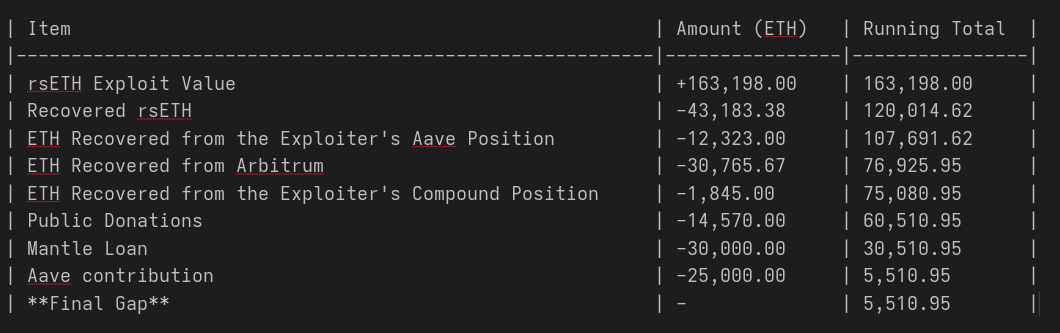
The Kelp DAO attacker has laundered ~$220M through THORChain, Wasabi, Tornado Cash, and Umbra. Only $1.7M remains traceable from the $292M April exploit.
https://t.co/Y91Iv4Tm1l
0/ Today, the Ethereum Foundation finalized the terms of a 10,000 ETH sale at an average price of $2,292.15 via OTC.
For this sale, our OTC counterpart was @BitMNR.
Lido: We're giving 2500 ETH to DeFi United
EtherFi: We're giving 5000 ETH to DeFi United
Stani: I'm giving 5000 ETH to DeFi United
even Golem: We're giving 1000 ETH to DeFi United
Nobody:
Absolutely no one:
....
Ethereum Foundation: We've finalized the terms to sell 10,000 ETH.
The Arbitrum Security Council has taken emergency action to freeze the 30,766 ETH being held in the address on Arbitrum One that is connected to the KelpDAO exploit. The Security Council acted with input from law enforcement as to the exploiter’s identity, and, at all times, weighed its commitment to the security and integrity of the Arbitrum community without impacting any Arbitrum users or applications.
After significant technical diligence and deliberation, the Security Council identified and executed a technical approach to move funds to safety without affecting any other chain state or Arbitrum users.
As of April 20 11:26pm ET the funds have been successfully transferred to an intermediary frozen wallet. They are no longer accessible to the address that originally held the funds, and can only be moved by further action by Arbitrum governance, which will be coordinated with relevant parties.
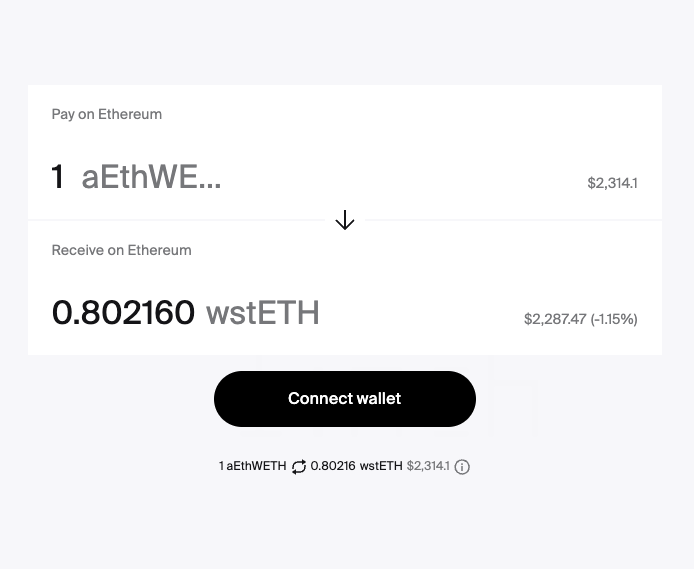
Calling all ETH lenders locked on Aave. We have built a way to exit to any token.
While Fluid provides redemption to wstETH/weETH, via our Pathfinder algorithm, you can swap aEthWETH directly into the asset of your choice.
aWETH → any token on https://t.co/Fscm9AjUuW in one click if you're still stuck.
🚨 BREAKING:
AAVE @aave governance post details the amount of bad debt it has under 2 scenarios:
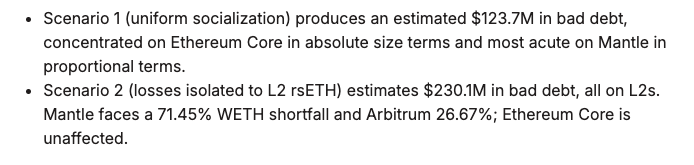
Scenario 1 (uniform socialization of rsETH) produces $123.7M in bad debt, concentrated on Ethereum Core (Aave deployment on Eth mainnet) in absolute size terms and most acute on Mantle in proportional terms.
Scenario 2 (losses isolated to L2 rsETH) estimates $230.1M in bad debt, all on L2s. Mantle faces a 71.45% WETH shortfall and Arbitrum 26.67%; Ethereum Core is unaffected.
"As of April 20, 2026, the DAO treasury holds $181 million in assets," the report said.
"Which scenario materializes depends on decisions outside Aave's control, primarily how rsETH accounting and the LRTOracle exchange rate are updated," Aave said.
https://t.co/wh1lHhkDQC
Total stablecoin market cap just added $3.073B in the past week.
This puts it at a new all-time high and represents the most significant expansion since October.
🚨A FASE MAIS CRÍTICA DO CICLO DE BAIXA NO BITCOIN.
O Realized Profit/Loss Ratio (90D SMA) acabou de cair abaixo de 1. Isso significa que, em média, os investidores est��o realizando mais prejuízo do que lucro na rede.
Historicamente, quando esse indicador perde o nível neutro, o mercado entra num período prolongado de capitulação.
Em ciclos anteriores, essa fase durou mais de 6 meses antes da recuperação.
Esse é o momento em que a narrativa costuma mudar.
O entusiasmo some, a liquidez seca e só permanece quem realmente contruiu convicção e estratégia.
É o período que expurga turistas.
Paradoxalmente, é também quando o risco já foi amplamente descarregado e as melhores oportunidades começam a ser construídas silenciosamente.
Espero que você tenha uma estratégia.
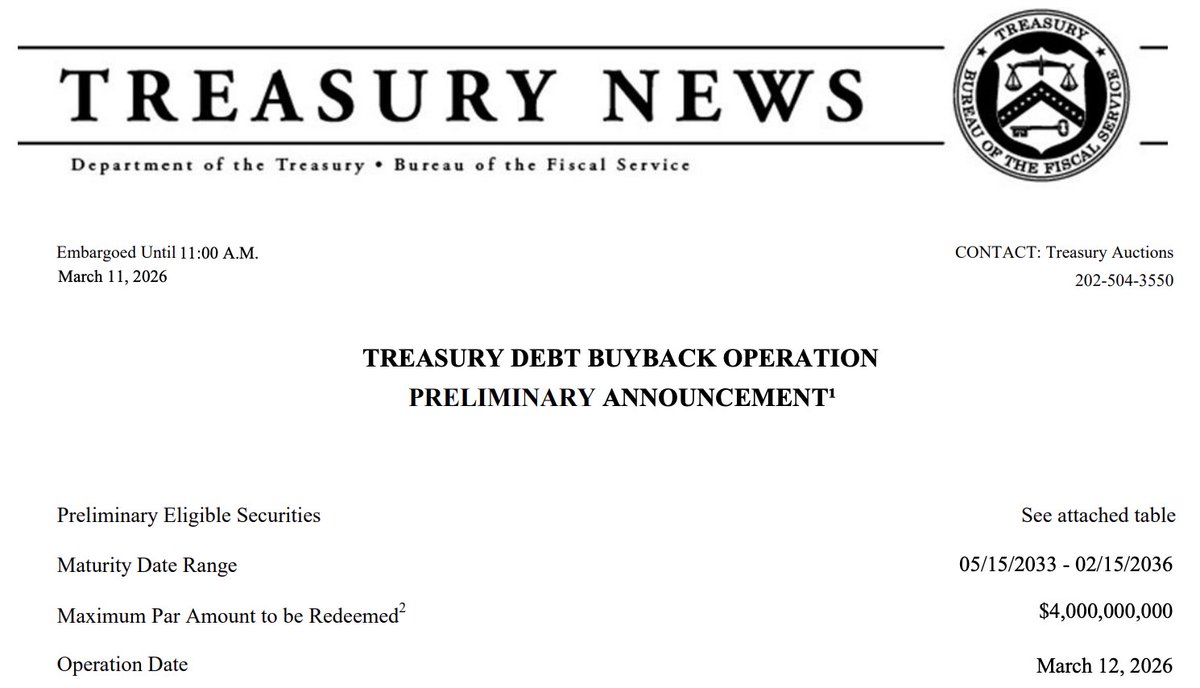
U.S. Treasury projected to buy back another $4 Billion of their own Debt, making a total of $19 Billion this week, the largest weekly buyback in history 🚨🚨
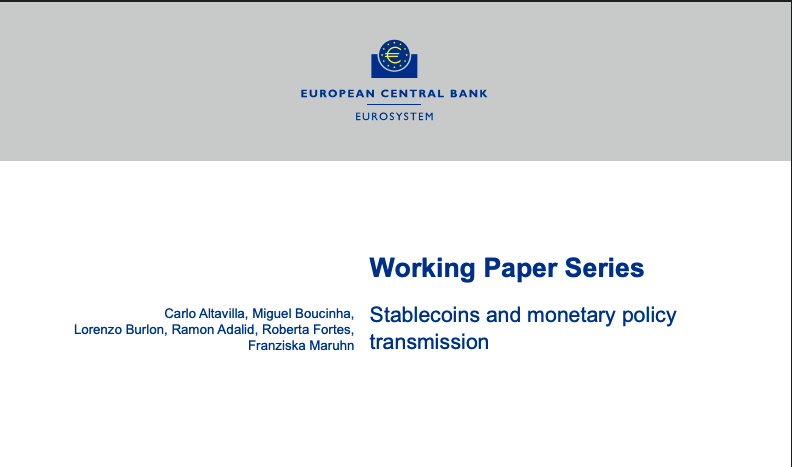
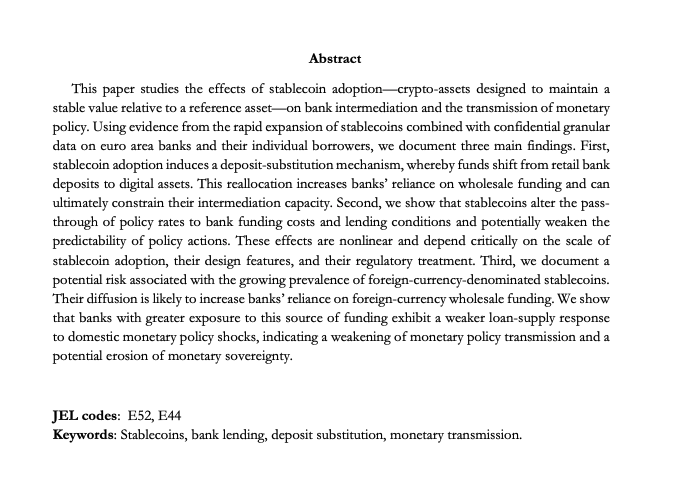
ECB Working Paper #3199 reveals central banks’ quiet panic: "stablecoins drain cheap retail deposits, lock banks into volatile wholesale funding, slash real-economy lending, and weaken their precious monetary policy transmission. USD ones risk importing foreign shocks, eroding their treasured sovereignty."
The control machine trembles.
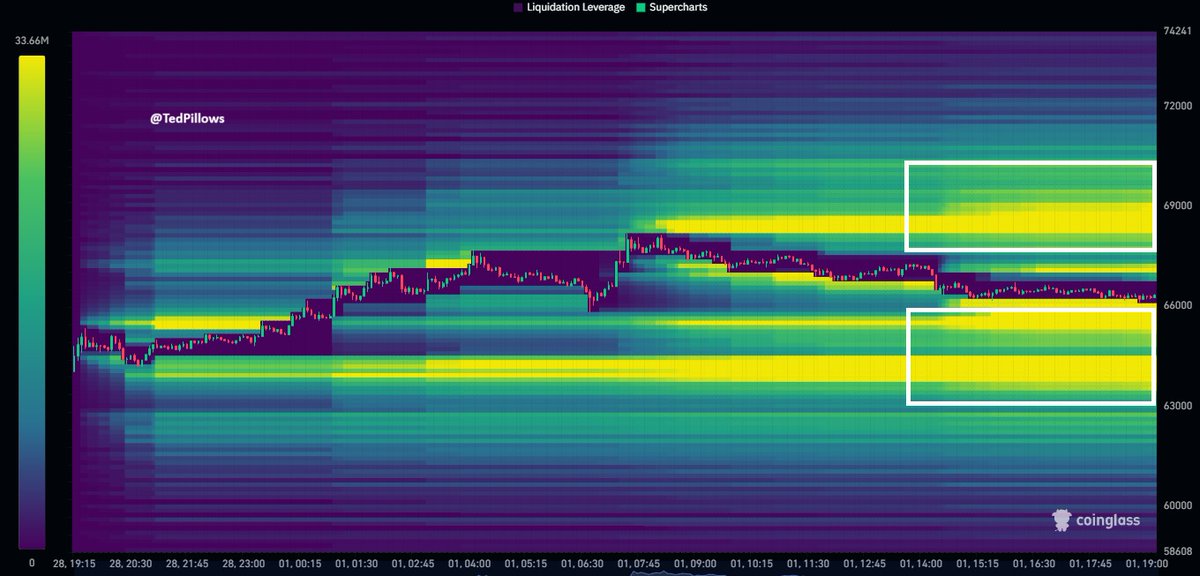
$BTC liquidation heatmap looks pretty balanced right now.
There's a decent liquidity cluster around the $63,500-$64,000 level, which could be taken out first if US futures slide down.
After that, MMs will target the upside liquidity around the $69,000 level.
The most recognized names in global finance are issuing stablecoins, and now their yields are finally made tradeable.
Introducing:
🔹Aave aRLUSD (28 May 2026) by @Ripple
🔹Aave aPYUSD (28 May 2026) by @PayPal
Fixed yield on institutional stablecoins, enabled by Pendle