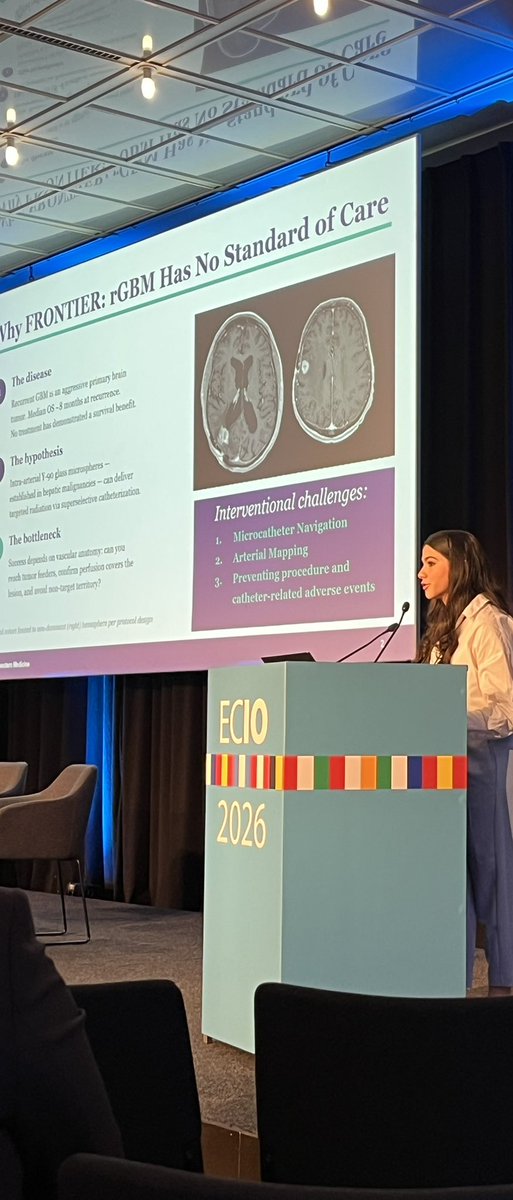
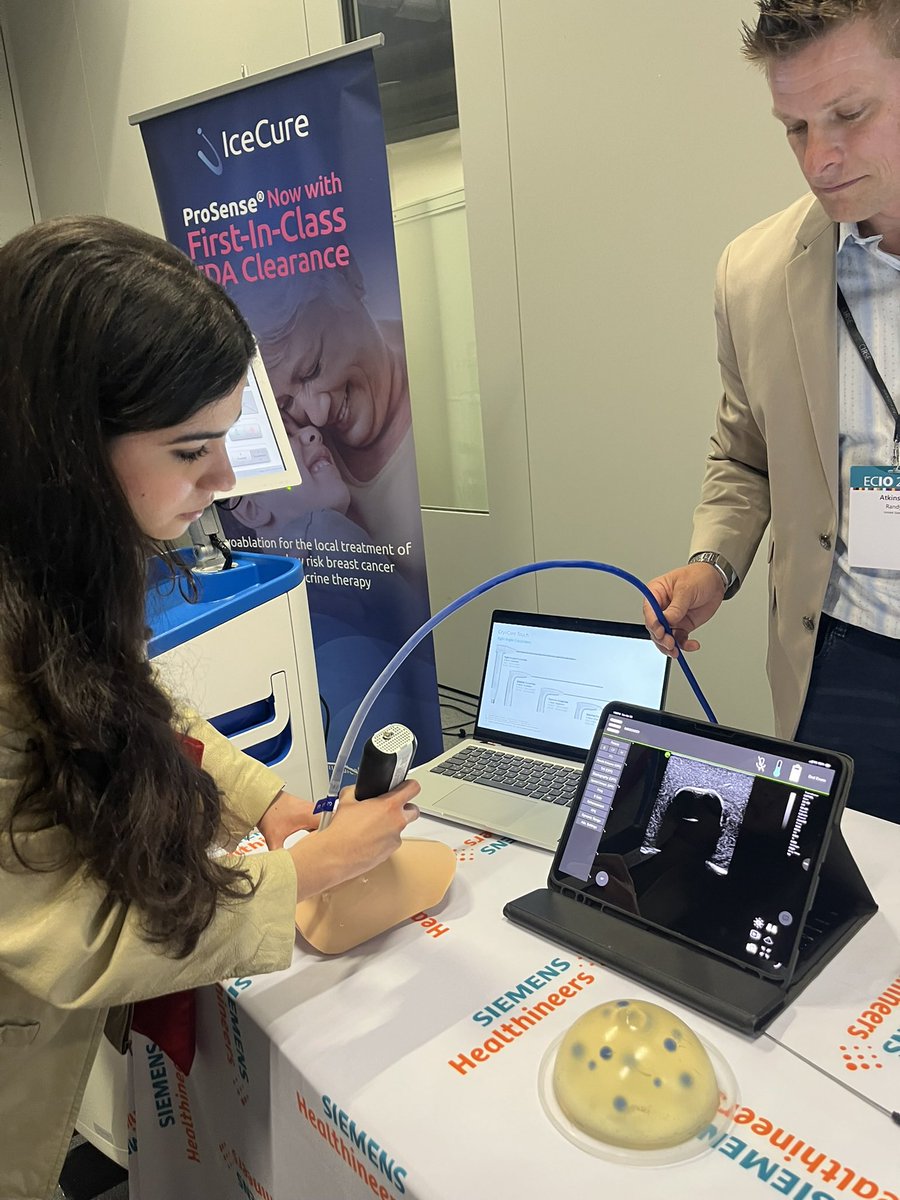
The FRONTIER team puts so much heart and effort into the work that we do, that it is such a privilege to showcase it. Thank you #ECIO2026 for having me, truly a dream come true. Huge shoutout to my mentor @SamMouli and all of the FRONTIER team 🩵
@ECIOcongress@cirsesociety
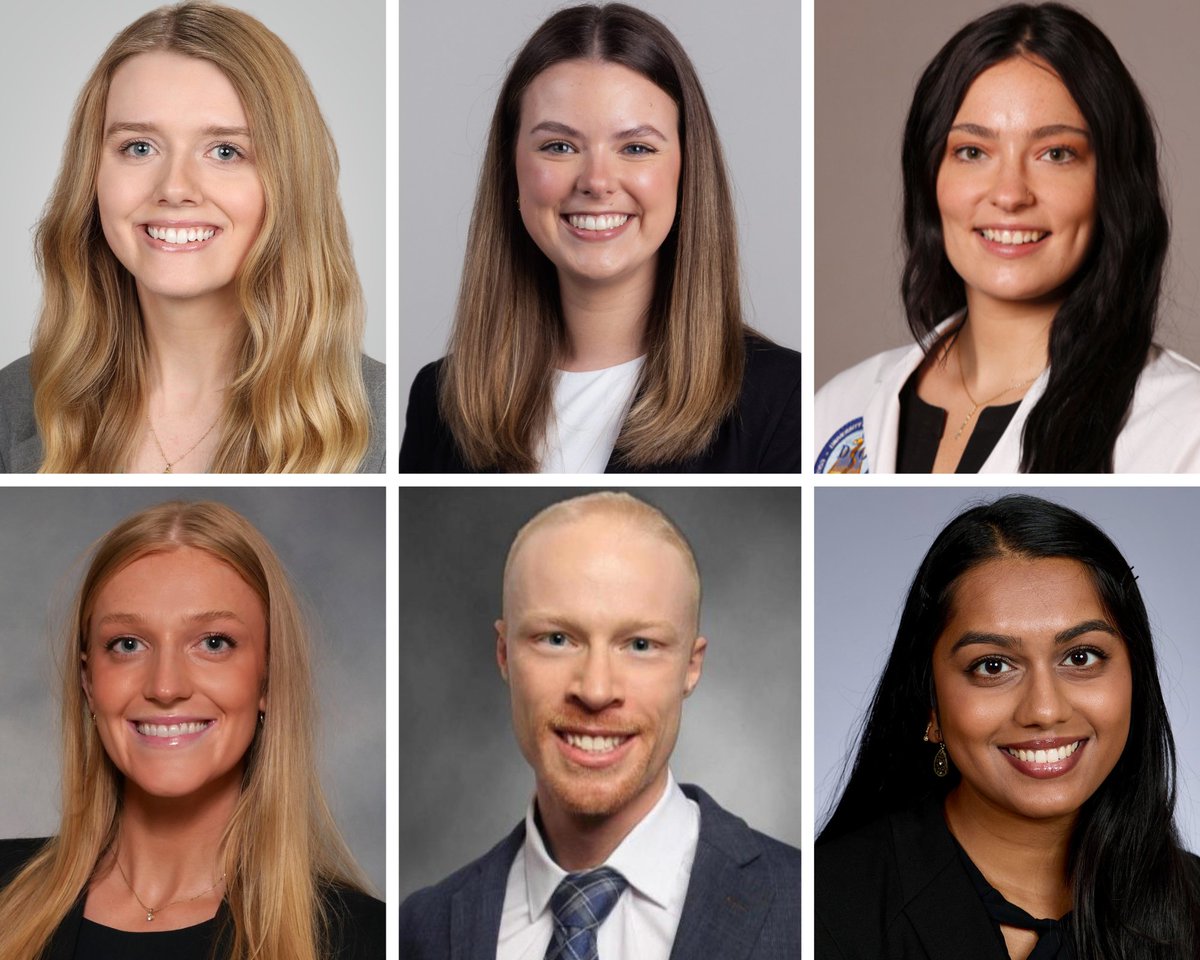
Thanks to all who contributed to the latest version of the WIR Pregnancy Toolkit! We’d like to recognize Elizabeth Theirl, Morgan Smeltzer, Julia Baracewicz, Chloe Dunseath, Robert Stegman, and Apurva Puli for supporting new and expectant mothers in IR. https://t.co/c3cyrWRIgE
#ASCO26
This one is special.
This is the hottest paper of 2026 and potentially in the history of pancreatic cancer.
Let’s dive in.
RASolute 302: Daraxonrasib vs investigator’s choice chemotherapy in previously treated metastatic pancreatic cancer
Abstract LBA5 (soon!)
Presentation: May 31, 2026, 3:21-3:33 PM CDT
For decades, pancreatic cancer has been where good ideas go to die.
We have optimized chemotherapy. We have sequenced chemotherapy. We have celebrated modest gains.
But the central driver of PDAC has always been sitting there in plain sight:
RAS.
More than 90% of pancreatic cancers have oncogenic RAS mutations, and until recently, we had essentially nothing direct to do about it.
Daraxonrasib is an oral RAS(ON) multiselective inhibitor targeting the active GTP-bound state of mutant and wild-type RAS.
And in RASolute 302, it delivered.
Quick hits:
📌 Phase 3 international randomized trial 500 patients with previously treated mPDAC Daraxonrasib vs investigator’s choice chemotherapy
🧬 RAS G12 population
91.8% of patients had RAS G12 mutations
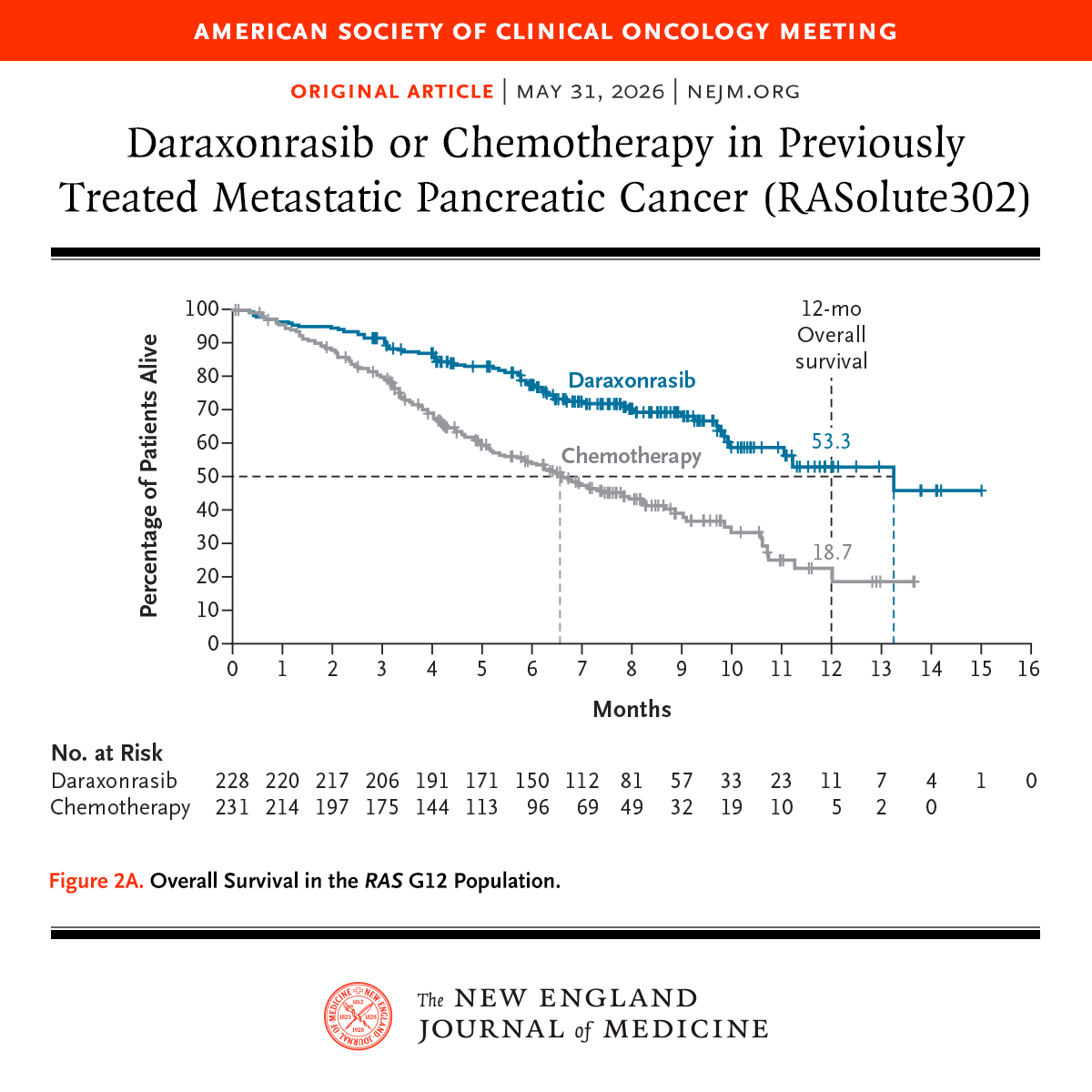
📈 OS in RAS G12 population
13.2 vs 6.6 months
HR 0.40
P<0.001
📈 OS in overall population
13.2 vs 6.7 months
HR 0.40
P<0.001
📊 PFS in RAS G12 population
7.3 vs 3.5 months
HR 0.45
P<0.001
📊 PFS in overall population
7.2 vs 3.6 months
HR 0.49
P<0.001
🔥 12-month OS
Overall population: 53.2% vs 17.3%
⚠️ Toxicity matters, but this was not just more efficacy for more toxicity
Grade ≥3 AEs: 61.8% vs 69.6%
TRAEs leading to discontinuation: 1.2% vs 11.2%
This is the kind of survival curve we almost never get to see in pancreatic cancer.
This validates RAS(ON) inhibition in the most RAS-addicted major cancer. It takes a target we have talked about for decades and turns it into a clinically meaningful survival benefit in a randomized phase 3 trial.
The next questions come fast: 1L combinations, maintenance, perioperative disease, sequencing, resistance, toxicity management, and whether this becomes a new backbone.
RAS is here, and it couldn’t have come sooner.
https://t.co/Y4WJRlRRTk
@TheGutonclab@UGrewalMD@TimothyJBrownMD@OncoAlert@Onco_Nexus@ASCO@NazliDizman@LauraAlderMD@DVAraujoMD@DrBarbiOnc@LauraEsfeller@FunchainMD@YGaritaonaindia@DrSAHaddad@jgong15@iandresmeraz@SakditadMD@RamilaShilpakar@RohitBanwar@lungoncdoc
People who don't follow cancer research often ask me why we haven't cured cancer. That perception masks a wonderful reality: We make amazing, stepwise progress every year, and the result is that many people live much longer today than they would have previously.
Right now we're in the thick of the annual meeting of the American Society of Clinical Oncology, the biggest research meeting on new cancer medicines, and this morning a bunch of really important studies dropped. I'm going to review them here.
This first image is the result for daraxonrasib, a treatment for pancreatic cancer that is generating consdirable excitement. The green line is the probability of living for patients who got the new drug; the gray one is the chemo control group.
If you follow cancer drugs, a chart like this will make your breath hitch a little. I'm going to review these and some other data here.
Presented at #ASCO26:
Among patients with previously treated metastatic pancreatic ductal adenocarcinoma, the RAS(ON) inhibitor daraxonrasib led to significantly longer overall survival and progression-free survival than chemotherapy. Full phase 3 RASolute 302 trial results: https://t.co/xwLWBZYRzq
@ASCO
Applications are now open for the AACR-Exelixis Renal Cell Carcinoma Research Fellowship!
This two-year, $130,000 fellowship supports postdoctoral or clinical research fellows conducting renal cell carcinoma research across basic, translational, clinical, or population sciences.
Deadline: June 11
Learn more and apply: https://t.co/anHUz6nKE5
#AcceleratingCures
As always, the best part of these conferences are the people!! Meeting other trainees and seeing so many cool girls interested in IR fills my heart 🫰🏽
#GEST2026#GEST26#womeninIR#interventionalradiology
Always enjoy my time at #GEST! Got to present our work on a AI prototype for #PAE and see our undergrad’s educational exhibit related to Y-90 for HCC.
Also cool to see all the demos, specially the AR one. It looks like these glasses are here to stay 🥽
#GEST2026#IR#womeninIR
This person has published 71 papers in 143 days so far in 2026. That is, 2 days per paper (source: Google Scholar).
It's truly amazing. To see someone proud of this.
Kicking off #GEST2026, panelists mark the meeting's 20th year, highlighting research, practical discussion and openness to new technology as core components of its success @thegestgroup
#ECIO2026 was FULL of demo stations. As a trainee, I really enjoy these because I get to learn so much from them! Kudos to the reps, they’re always so patient/helpful :))
@ECIOcongress#womeninIR#IO#IR
Day 2 of #ECIO2026 was full of insanely innovative sessions. I picked up a copy of CIRSE’s curriculum for IO & met tons of trainees from all across the globe! Jet lag was heavy so coffee stations definitely were the real life savers ☕️
@ECIOcongress@cirsesociety#IO#womeninIR
Afshin Gangi (Strasbourg, France), giving the first Thierry de Baère Lecture at #ECIO2026, focused on embracing technology and investing in the tools that are necessary to perform well as an interventionist @ECIOcongress
Not a dry eye at today's ECIO Honorary Lecture, now named after the legendary Thierry de Baère. 🩺✨ Huge thanks to Dr. Palussière for the heartfelt laudation 💬 and Dr. Gangi Afshin for the inspiring talk on the future of interventional oncology! #InterventionalOncology
"We have to test us" was the key takeaway from Maciej Pech (Magdeburg, Germany) opening #ECIO2026 referencing the use of new ablative technologies for #HCC and operator learning curves @ECIOcongress
Excited to share that our study, “Baseline Hemoglobin Predicts Oncologic Outcomes in Intrahepatic Cholangiocarcinoma Treated with Yttrium-90 Radioembolization,” has been accepted for publication in the JMIRO.
Article: https://t.co/tQUACbhEp2
@andrew_c_gordon@NorthwesternIR