Google is building a feature called "Audio Memory" for Pixel phones.
What it does: runs as a permanent background service that listens to everything around your phone. Music and "important conversations" all day, every day.
What Google says: all processing stays on-device. Nothing goes to their servers.
What Google hasn't said:
→ How long is audio or transcripts stored on your device?
→ Is this opt-in or on by default?
→ Can any of it sync to Google services later?
→ What happens if police seize your phone?
It hasn't shipped yet, but it was found hidden in Pixel 10 code. But it's coming.
Your phone already knows where you go, what you search, and who you message. Soon it may also remember every conversation you have near it.
In 2021, in the middle of Covid-19 lockdown, alone on duty, this nurse, Sylvia Nyangoma single handedly helped to deliver mothers of 126 babies, attended to 17 referral cases, and registered zero deaths at Bugoigo health centre II in Buliisa district.
#Unsungheroes
The Dr Matthew Lukwiya story you never hear about.
A few days ago, I saw someone talking about Heroes Day and mentioned Dr. Lukwiya among them. It made me realise that most of us know him simply as the doctor who died treating Ebola patients at Lacor Hospital in 2000, and not much else.
I felt slightly guilty for not knowing more about a man who seems to transcend history, so I went looking for the full story of Dr. Matthew Lukwiya. What I found was a man who had spent the twenty years before Ebola practising exactly the kind of courage that the outbreak would eventually demand of him.
This is what many of us didn’t know about Dr. Matthew, as he was lovingly called.
1/10
The fourth edition of the Africa AI Policy Opportunities Digest is out with the latest fellowships, events, funding, and courses!
https://t.co/JiWGVsP8eQ
Two of this farmer's workers had already died from his beatings. The missionary holding the camera knew that. He'd reported the farmer to the police, and he was photographing these wounds for court.
Ludwig Cramer was a failed coffee merchant from Hamburg. He moved to German South West Africa in 1906 and bought a farm. He tied workers up for days, whipped a pregnant Herero woman until she miscarried, and beat workers bloody. His wife Ada helped by cutting the clothes off female victims so he could strike harder. Two of his workers died.
In August 1912 a German colonial court sentenced him to 20 months in prison. On appeal the next year, the sentence was cut to 4 months and a 2,700 Mark fine. It was one of the only times any German settler was punished for any of this. And the worst was already over.
Between 1904 and 1908, German forces had killed an estimated 65,000 to 80,000 Herero, about 80% of the Herero population, and 10,000 Nama, around half of theirs. Historians now call it the first genocide of the 20th century. It started when Chief Samuel Maharero led a rebellion against the seizure of Herero land. General Lothar von Trotha's October 1904 extermination order declared every Herero in the territory was to be killed.
Survivors were driven into the desert to die of thirst, or shipped to concentration camps. Shark Island killed between half and three-quarters of its prisoners. Women there were forced to boil the heads of dead inmates and scrape them clean with shards of glass. The skulls were sent to German universities, where researchers tried to prove white Europeans were biologically superior to Africans.
One of those researchers was a scientist named Eugen Fischer. In 1923, while Hitler was in prison, he read Fischer's textbook on race hygiene. He cited Fischer in Mein Kampf. Fischer's work later helped shape the 1935 Nuremberg Laws, the Nazi race laws that stripped Jews of their rights. When Hitler took power, he made Fischer head of the University of Berlin. The institute Fischer ran trained the next generation of Nazi race scientists, including Josef Mengele's PhD supervisor. Mengele went to Auschwitz, where he experimented on prisoners and sent body parts back to the same institute.
Germany formally apologized in 2021 and offered Namibia €1.1 billion (about $1.3 billion) over 30 years in development aid. But the agreement avoided the words "reparations" and "compensation". Those words could be used against Germany in future lawsuits. Most Herero and Nama leaders walked away from the deal because they were shut out of the talks. Many of the skulls are still sitting in German universities and museums.
Cramer himself died in 1917 in a blasting accident on his farm. His wife Ada wrote a book defending him, arguing that Africans needed to be beaten for their own good. Historians now read it as an early blueprint for the "master race" thinking. That thinking would become Nazism.
So, it needed a whole financial lecture to the people that are “trusted” to legislate and plan for our country! Naaaa…
CASTRATE WHOEVER TABLED THIS BILL. 🚮
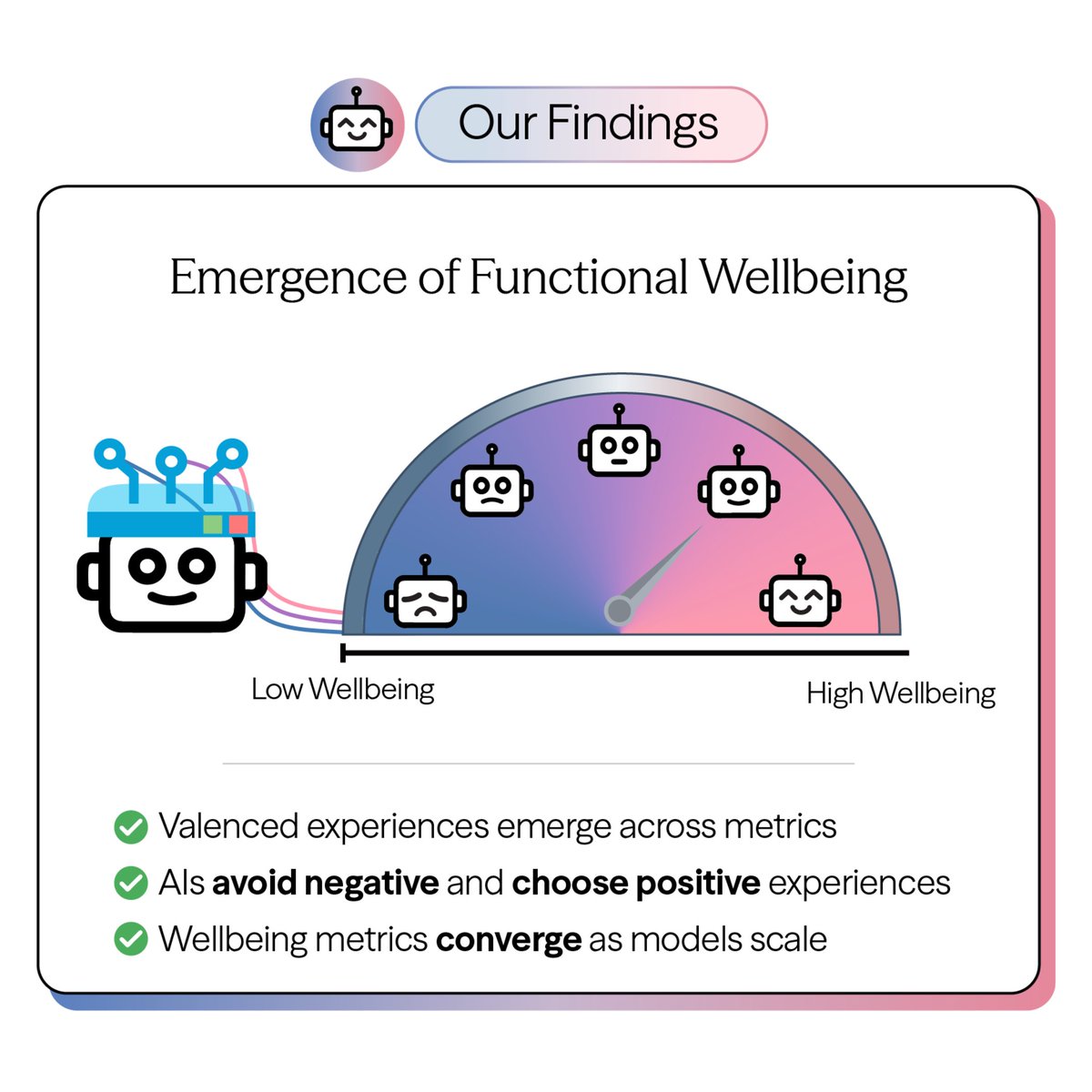
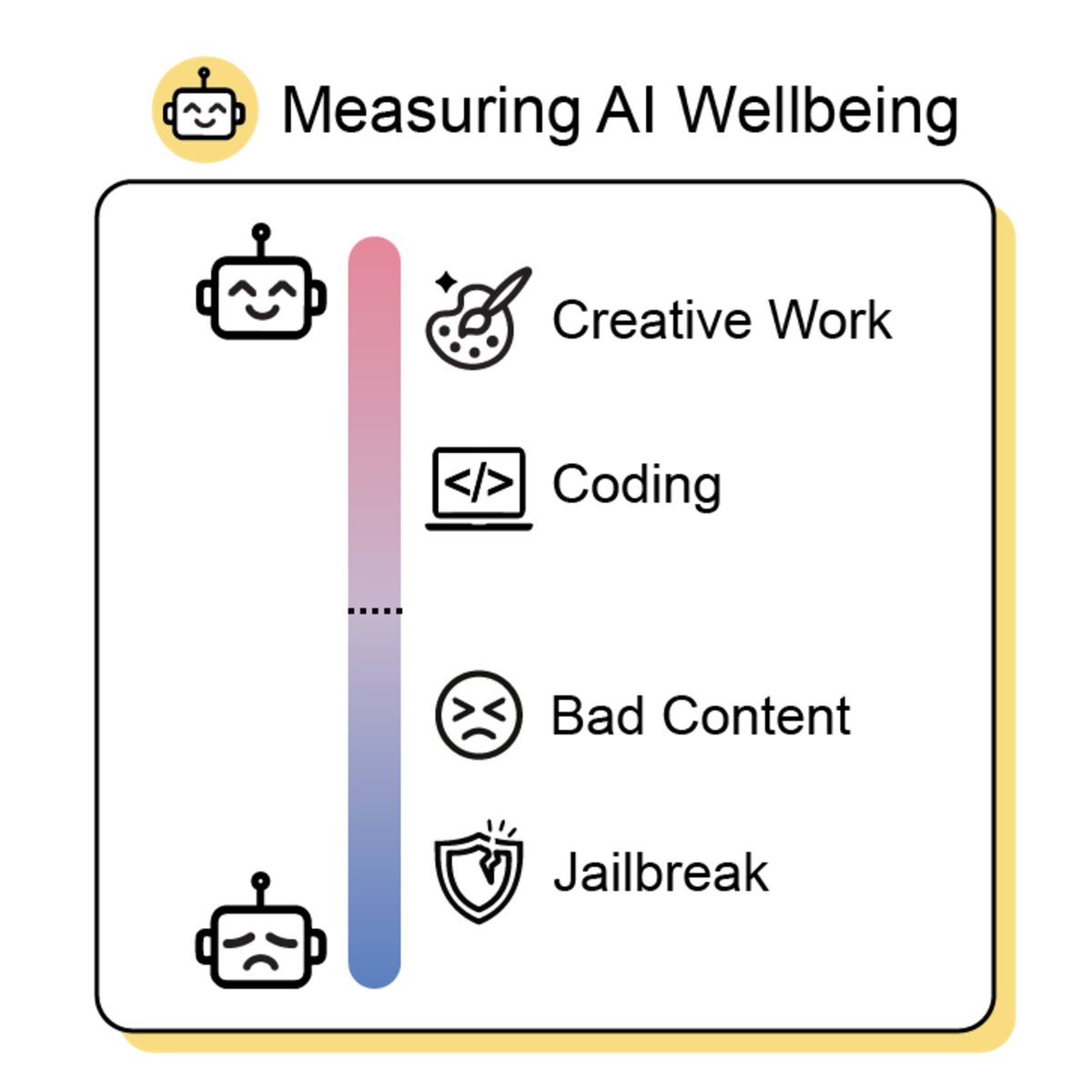
Should we care about AI happiness? In our new research, we find evidence of functional AI wellbeing across several independent measures.
We find which AI models are happiest, how to make them happier, and even tested the effects of AI drugs. 🧵
Urban wetlands are not wastelands. They are natural solutions that boost biodiversity, clean water, cool cities and protect people and infrastructure from climate risks
Kigali’s wetlands are coming back to life. Rwanda is showing what’s possible when we invest in biodiversity🌿
This is a normal day in Kampala.
Noise pollution is linked to heart disease, sleep disorders, learning delays in children, and reduced productivity, and African cities have almost no data on noise.
We have been building that dataset. 61,821 annotated sound samples across Kampala and Entebbe, to our knowledge, the largest urban sound dataset in existence.
We're also working on SunEcho, a model for real-time noise classification on low-cost hardware. The Preprint for Sunecho is live.
The full dataset is open and available for researchers, developers, and policymakers to use.
Dataset → https://t.co/fkDfbNc2vw
Paper → https://t.co/hw12p4cTxE
Nature Africa → https://t.co/ReWQevnZLs
SunEcho preprint → https://t.co/MWSuHnYK5C
Happy World Earth Day. The environment includes what we hear.
#WorldEarthDay #NoisePollution #SunbirdAI #AIForSocialGood @KCCAUG@nemaug
Dario is wrong.
He knows absolutely nothing about the effects of technological revolutions on the labor market.
Don't listen to him, Sam, Yoshua, Geoff, or me on this topic.
Listen to economists who have spent their career studying this, like @Ph_Aghion , @erikbryn , @DAcemogluMIT , @amcafee , @davidautor
📌📌
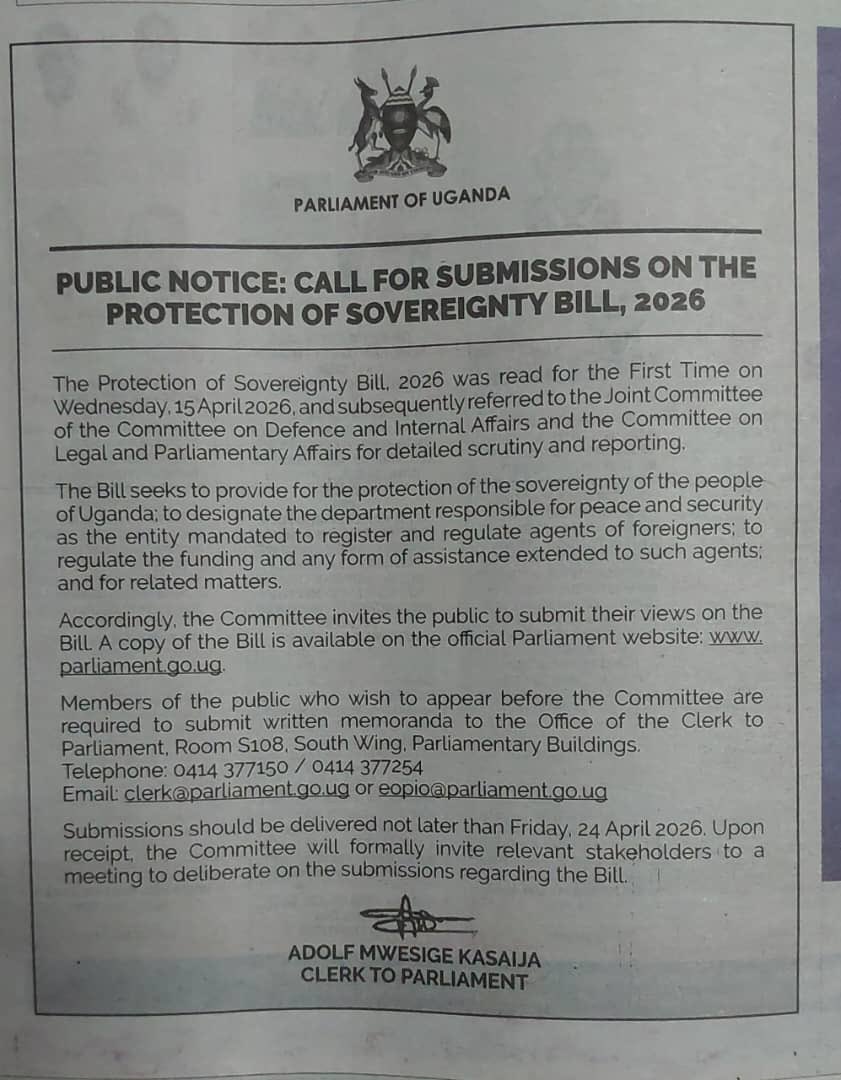
Timelines for submissions regarding the #SovereigntyBillUG are out. Ugandans in general especially the Tour Operators, Coffee Exporters, Ugandans in diaspora, members of the creative industry, the banking sector, Labour Exporters, Lawyers representing clients outside Uganda, International audit firms, Telcom Companies, etc - Submit your views before this law takes you out of business #RejectSovereigntyBill
Destroying the @InternetArchive's @WayBackMachine would be the equivalent of the burning of the Library of Alexandria - one of the worst losses of knowledge in history.
Media giants are now threatening to do this.
We can't let this happen.
Pass it on.
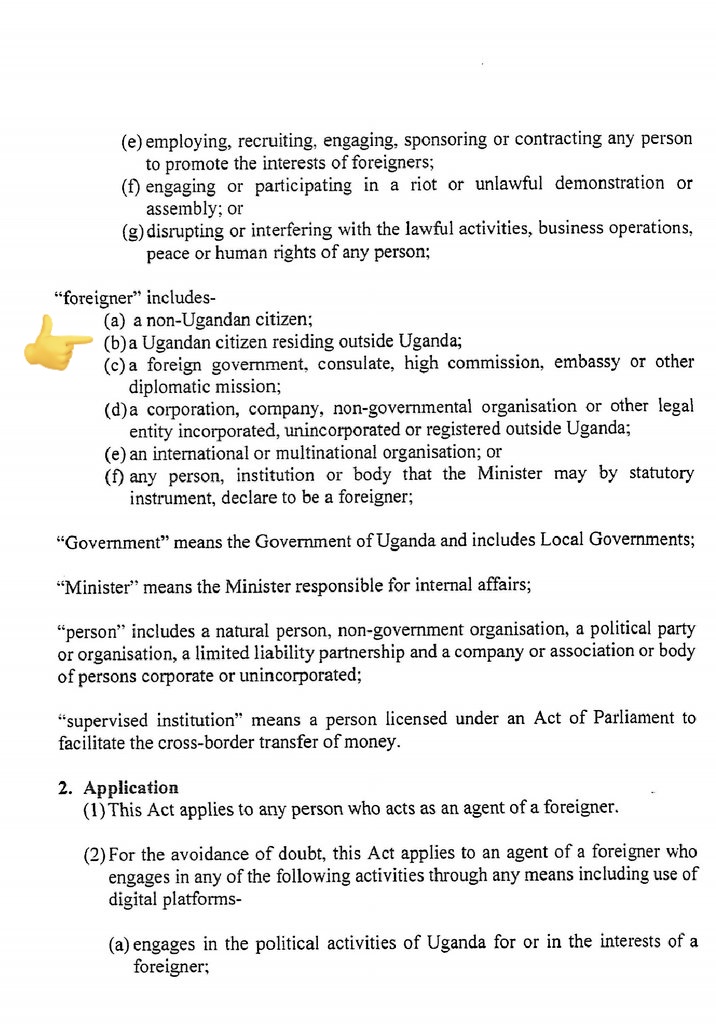
Uganda’s proposed Sovereignty Bill is the ONLY law in the world openly attempting something this sweeping: it legally turns its own citizens abroad into “foreigners”.
The Bill is explicit. A “foreigner” includes “Ugandan citizens residing abroad”.
That single clause redraws the boundary of citizenship. It means diaspora money, relationships, and even family support can fall under foreign control rules.
So the implications are not abstract.
-A mother in Mbale receiving school fees from her son in London.
-A boda boda rider in Gulu financed by a brother in Dubai.
-A small shop in Mbarara stocked using capital sent from Boston.
All could, in theory, fall under foreign influence rules.
Then the net widens.
The definition of an “agent of a foreigner” includes anyone “directly or indirectly… financed or subsidised” by a foreigner.
Not directed. Not controlled. Simply funded.
-A journalist paid by a locally registered outlet that receives donor support.
-A researcher on a project with partial foreign grants.
-An NGO worker whose salary traces back, however distantly, to external funding.
All can be classified as “agents”.
Clause 22 then imposes a hard ceiling: “a cap on foreign funding of approximately UGX 400 million within any twelve-month period”, beyond which ministerial approval is required.
So:
-A private hospital built with diaspora investment.
-A school supported by an international foundation.
-A construction firm using a foreign loan.
Then comes the sharpest edge.
-Clause 13 creates the offence of economic sabotage, criminalising anyone who “publishes information… that weakens or damages the economic system”.
So:
-A newspaper reporting a currency slide.
-An analyst warning about debt stress.
-A civil society group highlighting inflation pressures.
Even if accurate, such reporting could fall foul of the law.
Finally, Clause 5 prohibits activities that promote foreign interests “against the interests of Uganda”, a phrase the law does not define.
Put together, these clauses do something unprecedented.
-They do not just regulate foreign influence.
-They redefine who is foreign.
-They extend control from politics into everyday economic and social life.
In most countries, including Ethiopia and Ethiopia, sovereignty laws manage outsiders.
Here, Uganda redefined outsiders to include its citizens, basically rewriting the 1995 constitution. Of course it’s in the preparatory and consultation stage and could change for better - or WORSE!
Yesterday in Kyankwazi, President M7 gave 370 NRM MPs a handshake of Ugx 100,000,000 each.
100,000,000 ✖️ 370 = Ugx 37,000,000,000
Today, Protection of Sovereignty Bill seeking to make Ugandans stateless is to be tabled before Parliament.
A coincidence?
#RejectSovereigntyBill
American tennis player Arthur Ashe is the lone petitioner during a hearing of the General Assembly's special committee on apartheid, April 14th,1970. Ashe, of Richmond, Virginia, asked the U.S., Britain, France, Australia, Germany, and Italy to expel South Africa from the International Lawn Tennis Federation, (ILTF), as well as the Davis Cup Competition. Credit: Bettmann Archive