Also you didn't answer my question... but using your translation, until the 2nd coming... How do you know your not a hypocrite according to Chapter 18, Paragraph 1 and even 2? Do you know this truly infallibly as Paragraph 2 says? I'm asking because as Paragraph 1 says, they are decieved with false hope, corrrect?
"may vainly deceive themselves with false hopes, and carnal presumptions, of being in the favour of God, and in a state of salvation, which hope of theirs shall perish"
How do you infallibly know this isn't you, according the language in the confession?
Which Translation do you ride with???????
CHAP. XVIII. Of the Assurance of Grace and Salvation.
1. ALthough temporary Believers, and other unregenerate men, may vainly deceive themselves with false hopes, and carnal presumptions, of being in the favour of God, and in a state of salvation, which hope of theirs shall perish; yet such as truly believe in the Lord Jesus, and love him in sincerity, endeavouring to walk in all good Conscience before him, may in this life be certainly assured that they are in the state of Grace; and may rejoice in the hope of the glory of God which [page] hope shall never make them ashamed.
2. This certainty is not a bare conjectural and probable persuasion, grounded upon a fallible hope; but an infallible assurance of faith, founded on the Blood and Righteousness of Christ5 revealed in the Gospel; and also upon the inward evidence of those graces of the Spirit unto which promises are made, and on the testimony of the7 Spirit of adoption, witnessing with our Spirits that we are the children of God; and as a fruit thereof keeping the heart both humble and holy.
3. This infallible assurance doth not so belong to the essence of faith, but that a true Believer, may wait long and conflict with many difficulties before he be partaker of it; yet being enabled by the Spirit to know the things [page] which are freely given him of God, he may without extraordinary revelation in the right use of means attain thereunto: and therefore it is the duty of every one, to give all diligence to make their Calling and Election sure, that thereby his heart may be enlarged in peace and joy in the holy Spirit, in love and thankfulness to God, and in strength and chearfulness in the duties of obedience, the proper fruits of this Assurance; so far is it13 from inclining men to looseness.
4. True Believers may have the assurance of their Salvation divers ways shaken, diminished, and intermitted; as by negligence in preserving of it, by15 falling into some special Sin, which woundeth the Conscience, and grieveth the Spirit, by some sudden or vehement temptation, by Gods withdrawing the17 light of his countenance [page] and suffering even such as fear him to walk in darkness and to have no light; yet are they never destitute of the seed of God, and Life of Faith, that Love of Christ, and the brethren, that sincerity of Heart, and Conscience of duty, out of which by the operation of the Spirit, this Assurance may in due time be revived: and by the which in the mean time they are21 preserved from utter despair.
W. J. McGlothlin, Baptist Confessions of Faith (Philadelphia; Boston; Chicago; St. Louis; Toronto: American Baptist Publication Society, 1911), 251–254.
“PART III THE THEOLOGY OF THE OXFORD MOVEMENT | Chapter 15 The Ecclesiology of the Oxford Movement | Geoffrey Rowell | William Palmer’s Treatise on the Church:
In 1838, William Palmer (of Worcester College, Oxford) published a two-volume study of the Church, A Treatise on the Church of Christ, which was reissued in a revised and enlarged form in 1842. When it first appeared Newman described it as ‘a stupendous magazine of learning’ which ‘has quite made me feel ashamed’ (LDN VI.217). Palmer’s Treatise was, according to Owen Chadwick, ‘formally the ablest exposition provoked by those times’. Yet Chadwick also acknowledged Palmer’s limitations: ‘There is no mystery, no sense of depth, no feeling—all is tidy, the mystery is cleared away … It is a conscientious book; but it is not quite what Newman, or Keble, or Pusey, or Froude, or Williams would have written’ (Chadwick 1990: 19). Palmer argued for a branch theory of the Church. Yet, while he acknowledged that ‘actual unity of external communion is not a necessary characteristic of the church’, he nonetheless maintained that all branches of the Church ‘must necessarily desire such an unity, and tend towards it, and must possess principles and means calculated to produce unity in each particular church and in the universal church’ (Chadwick 1990: 70). As far as the Church of England was concerned Palmer argued that ‘the churches of the British, or Anglo-catholic communion have so many external signs or notes of being a portion of the universal church, that it is not necessary to establish their soundness by proving in detail all their doctrines and discipline to be conformable to the word of God; but that their general and external characteristics should determine their members to remain attached to their communion’ (Palmer 1842: I.9). Palmer structured his ecclesiology on the four marks or notes of the Church—one, holy, catholic, and apostolic. The mark of unity meant unity in confessing the revealed truths of the Christian faith, as set out in the historic creeds. Such unity was, for Palmer, consistent with disunity in external communion (Palmer 1842: I.70). The holiness of the Church was derived from Christ as its Head, and from the apostles as commissioned by Christ, and was expressed in the holiness of its doctrines, and of the sacraments as means of grace, the holiness of its members, and the ‘divine attestations of holiness in miracles’ (Palmer 1842: I.107). On the catholicity or universality of the Church Palmer maintained that this referred to a ‘moral universality’ (Palmer 1842: I.119, 123). In discussing the apostolicity of the Church Palmer was clear that an apostolical succession of ordination was essential to the Christian ministry (Palmer 1842: I.141). Newman reviewed Palmer’s work for the British Critic. He portrayed the book as an attempt to form ‘a theory of the Church, which shall be at once conformable to ancient doctrine on the subject, and to the necessities of the modern English communion’. Palmer’s theory was a valuable contribution to the via media, helping Anglicans to defend their Church ‘against both Romanists and sectaries’. Newman noted with approval that, in opposition to the ‘ultra-Protestant’ appeal to the Bible as interpreted by private judgement, Palmer maintained ‘that not the Bible, but the Church is, in matter of fact, our great divinely-appointed guide into saving truth under divine grace, whatever be the abstract power or sufficiency of the Bible’ (Newman 1872: 153–4). The Gospel, in short, was to be learned by the individual from the Church.”
The Oxford Handbook of The Oxford Movement Edited by STEWART J. BROWN PETER B. NOCKLES and JAMES PEREIRO
“Chapter 5 Forming Jewish Scriptures as a Biblical Canon | LEE MARTIN MCDONALD | THE JEWISH SCRIPTURES AS A BIBLICAL CANON: There is no evidence that the HB canon was closed before the end of the first century CE and there was no known rabbinic council that made that decision. Josephus and 4 Ezra are the first to limit the books to twenty-two and twenty-four, respectively, plus the seventy others in 4 Ezra for the wise. There is likewise no clear reference to the tripartite biblical canon such as we see in the HB before its presence in the Babylonian baraita b. Baba Bathra 14b. This suggests that a tripartite collection of scriptures was not a widely held view at the time it was written since the rabbis continued to speak of their scriptures as the Law and the Prophets or Moses and the Prophets well into the fourth century and they even debated its parameters that late, as we saw above. There is an earlier Tosefta text that mentions the reading of the Ketuvim, or Hagiographa, but such texts are rare before the later Talmudim.10 This suggests that the development of the Writings as the third part of the Jewish scriptures began in the second and third centuries CE and that the tripartite HB canon was not widely acknowledged among a majority of the rabbinic sages until even later. Leiman suggests that the expansion of the Jewish scriptures into a three-part HB is based on a liturgical expansion rather than a canonical one, but it is difficult to distinguish the authority attributed to the Jewish scriptures in a canonical context from writings used in a liturgical context. Both function like or as scripture. He cites many references to the Law and the Prophets without reference to the Writings (or Ketuvim) well into the Amoraic period, when the third part of the Tanak was identified more frequently.11 Several of the later-designated Writings are cited as Torah or Law or are included among the “prophets” in the NT, as noted above. Also, the tripartite Tanak distinctions are not found in Jewish literature before the middle to end of the second century CE (b. Baba Bathra 14b), and the Tanak divisions are not obvious in Qumran literature, NT literature, or Josephus. It therefore seems obvious that those distinctions were not functional in the first century CE. Again, since the Jewish scriptures were all initially transmitted in individual rolls or scrolls, it is difficult to find consistency or stability in the order or sequence of them, apart from the Law, until the rabbis begin to make use of the codex centuries later. The Bryennios catalog is the earliest known Jewish scripture catalog and may date from 100–150 CE; it is quite similar to Epiphanius’s Jewish list (ca. 374–377), and it also does not follow the HB Tanak order.”
Ancient Jewish and Christian Scriptures New Developments in Canon Controversy by John J. Collins, Craig A. Evans, and Lee Martin McDonald
Is this not a major contradiction, or just my eisegesis kicking in? Read these two quotes from the same author within the same work, and if I'm correct, there is a contradiction; do you see it?
Chapter One Holy Scripture: The Word of God | Scripture and the Church:
"If the authority of the fathers must be subject to that of Holy Scripture, so also must the authority of the Church. We have already seen what the Thirty-nine Articles have to say in this connection. In particular, Scripture is not dependent on the pronouncements of the Church for its authentication, for it is authenticated to every believer by God himself. Composed under the inspiration of the Holy Spirit, God’s word is self-authenticating."
vs.
Chapter One Holy Scripture: The Word of God | Scripture and the Church:
"Secondly, it is the duty of the Church “to distinguish and discern the true, sincere, and genuine Scriptures from the spurious, false, and suppositious."
Philip Edgcumbe Hughes, Theology of the English Reformers, ed. Marion Hughes, Revised and Expanded Edition (Eugene, OR: Wipf & Stock, 1997), 50–52.
A reminder that there are 7 deadly sins, and they still do great damage!
They are Pride, Anger, Lust, Envy, Gluttony, Avarice (greed), and Sloth. Remembered by the acronym PALEGAS.
Within the Reformed Tradition, are "Acts"/Actions considered Works? If so, how do you or your tradition interpret the Matthew 7 Hearers and Doers passage, where Christ says, "Hearing My Words and ACTS on them"?
“LECTURE V ON THE USE OF PRIVATE JUDGMENT | 8: This being the state of the case, I make the following remarks; which, being for the sake of illustration, are to be taken but as general ones, without dwelling on extreme cases or exceptions.
(1.) That Scripture, Antiquity, and Catholicity cannot really contradict one another:
(2.) That when the Moral Sense or the Reason of the individual seems to be on one side, and Scripture on the other, we must follow Scripture, except Scripture anywhere contained contradictions in terms, or prescribed undeniable crimes, which it never does:
(3.) That when the sense of Scripture, as interpreted by the Reason of the individual, is contrary to the sense given to it by Catholic Antiquity, we ought to side with the latter:
(4.) That when Antiquity runs counter to the present Church in important matters, we must follow Antiquity; when in unimportant matters, we must follow the present Church:
(5.) That when the present Church speaks contrary to our private notions, and Antiquity is silent, or its decisions unknown to us, it is pious to sacrifice our own opinion to that of the Church:
(6.) That if, in spite of our efforts to agree with the Church, we still differ from it, Antiquity being silent, we must avoid causing any disturbance, recollecting that the Church, and not individuals, “has authority in controversies of faith.”
I am not now concerned to prove all this, but am illustrating the theory of Private Judgment, as I conceive the English Church maintains it. And now let us consider it in practice.
John Henry Newman, The Via Media of the Anglican Church, vol. 1 (London: Basil Montagu Pickering, 1877), 134–135.
A Prayer to be said before the hearing or reading the Word of God
"O holy and eternal Jesus, who hast begotten us by Thy word, renewed us by Thy Spirit, fed us by Thy sacraments, and by the daily ministry of Thy word, still go on to build us up to life eternal. Let Thy most Holy Spirit be present with me and rest upon me in the reading or hearing Thy sacred word, that I may do it humbly, reverently, without prejudice, with a mind ready and desirous to learn and to obey; that I may be readily furnished and instructed to every good work, and may practise all Thy holy laws and commandments, to the glory of Thy holy Name, O holy and eternal Jesus. Amen.
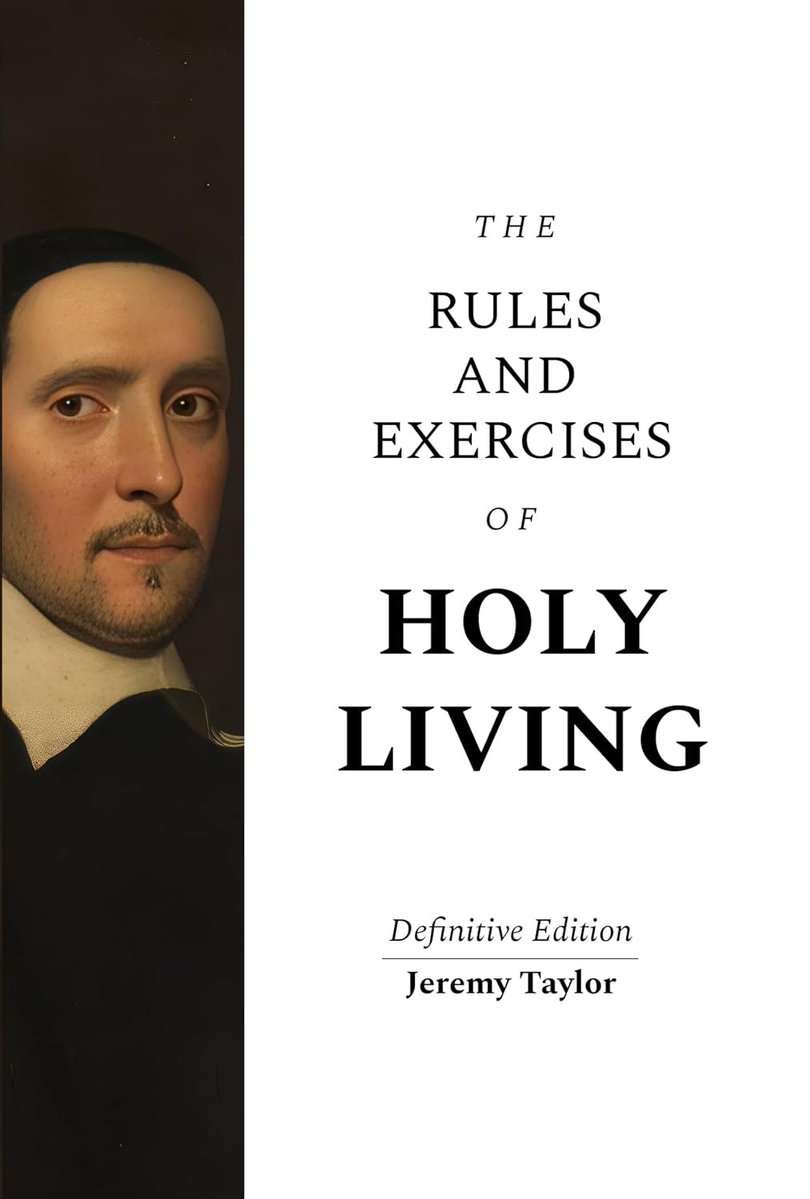
Jeremy Taylor, The Rule and Exercises of Holy Living (London: Longmans, Green, and Co.; Henry Frowde, 1890), 197.
CHAPTER II CRITICISM OF THE GOSPELS | § 4. Present Day Criticism and Rationalism:
"Like the Gnostics of ancient times, the modern ‘liberals’ treat as Jewish fables the teaching of Jesus about His second coming, the resurrection of the dead, and the judgment. ‘Liberalism’ is satisfied to think of a continuous growth of the good which is already in us. And it dislikes all notion of an interference, any interposition of God in the work of redeeming man, any cataclysm in establishing the reign of righteousness. Hence while reverent epithets are often given to Christ, ‘liberal’ Protestantism, when it is honest and outspoken, always denies that He is God. Consistently with this denial, even its best representatives, such as Harnack, denounce as ‘sub-Christian,’ i.e. semi-pagan, the whole idea of man being made partaker of the divine nature through union with Christ. This doctrine, which is rooted in the teaching of S. Paul and S. John, and was so magnificently developed by the Greek Fathers of the Church, is elaborately attacked or ignored as a fiction. With this denial goes the whole doctrine of the sacraments. Instead of efficacious means by which God acts morally upon the human soul, the sacraments are nothing but bare symbols, and sometimes it is denied that Jesus instituted Christian baptism or desired His disciples to continue any celebration of the meal which He ate with them the night before His death. ‘Liberalism’ has valued Christ’s teaching about the kingdom of God, so far as that kingdom is regarded as inward and as a moral bond between believers. But the Christian conception of the Church vanishes. If there is no divine Saviour, it is seen that there cannot be a body through the members of which He acts upon the world. Baur objected to S. Paul’s Epistle to the Ephesians because it contains ‘the material conception of the Catholic Church’; Jülicher finds in the high priestly prayer of our Lord in S. John 17 a forged utterance inspired by a later idea of the unity of the Church; Harnack repudiates Christ’s mention of the Church in S. Matt. 16. He is copied by Dr. James Moffatt in his Historical New Testament, where we are told that ‘to suppose that Jesus contemplated a visible church as the embodiment of His gospel is almost to be guilty of a historical atrocity’ (p. 269). The Protestantism of the sixteenth century constantly appealed to the doctrinal teaching of S. Paul. But the so-called ‘modern Protestantism’ is intensely hostile to it, attacking the very roots of S. Paul’s teaching about our Lord’s divinity, His past and present atoning work, as well as the Pauline doctrine concerning the Church and the sacraments. This hostility is sometimes masked by praises of the apostle, especially where his name is honoured as it deserves. It should lastly be noticed that with a repudiation of Christian eschatology, ‘liberal’ Protestantism has decidedly, though not universally, tended to minimise the ascetic element in Christ’s teaching, and to lay a rather one-sided stress on the joyful and genial nature of Christian ethics. That ‘liberal’ Protestantism is hardly distinguishable from a modernised form of Judaism is self-evident. And it has lately been treated as such in the remarkable commentary on the Synoptic Gospels composed by a leading English Jew, Mr. Claude Montefiore, published in 1909, and in his work, published the next year, on The Moral Teaching of Jesus. These books were marked by an enthusiasm for the teaching of our Lord so genuine as to create a profound impression on English Judaism. The learned author believes that Jesus supposed Himself to be the Messiah, though he does not accept as genuine the crucial passage in which Jesus declares that ‘no man knoweth the Father, but the Son.’ Mr. Montefiore’s work is built on the foundation of Gentile rationalism of a pronounced though not extreme type. It must therefore stand or fall with that system.”
Leighton Pullan, The Gospels, ed. W. C. E. Newbolt and Darwell Stone, The Oxford Library of Practical Theology (London; New York; Bombay; Calcutta: Longmans, Green, and Co., 1912), 56–58.
CHAPTER V THE GENIUS OF WESTERN LITURGIES | § 2. The Origin of Protestant Liturgies | MASS OF THE FAITHFUL:
"We can conclude our account of Lutheran worship by saying that whenever Lutheranism has been at its best, it has scrupulously avoided that type of worship which has been maintained in England by those who, like the Lutherans, call themselves ‘Evangelical.’
The Swiss Reformers, as might be expected from their theology, departed far more widely than the Lutherans from the normal type of Catholic worship. But, contrary to what we should have expected, we find that Zwingli was in some points more conservative than Calvin. His service was published in 1525, and, with some alterations, was retained at Zürich until 1675. He had previously published in 1523 his Epichiresis de Canone Missae, in which the Canon of the Mass was severely criticised. But his own service showed a willingness to retain reminiscences of other parts of the Mass. It consists of: 1. A prayer—2. Reading of 1 Cor. 11:20–29—3. Gloria in excelsis—4. Salutation, Response, Reading of S. John 6:47–63—5. The Apostles’ Creed—6. Exhortation, Lord’s Prayer, prayer for a worthy reception—7. Reading of the account of the institution by our Lord—8. Communion—9. Reading of Psalm 113.—10. Thanksgiving.
Very significant of Zwingli’s doctrine is the fact that the communicants sat while they received. Unleavened bread and then wine were handed to them by appointed attendants, so that each person broke off a piece of bread for himself and took the cup into his hand. But by far the most important feature of Zwingli’s work has yet to be mentioned. It is this: Zwingli was the first man who destroyed the apostolical and universal connection between the Lord’s day and the Eucharist. He has thus had an immense influence in moulding the whole of the Protestant conception of worship. The Zwinglian Sunday service consisted of preaching, with a few prayers. The Zwinglian Communion Service was held once a year only, viz. on Maundy Thursday for men and women, on Good Friday for those of middle age, on Easter Day for the aged. The holy communion was not regarded as the normal food of the human soul, but as part of an anniversary festival in commemoration of a past historical event. The difference between the two conceptions is vital. And whenever a Zwinglian estimate of this sacrament prevails, and it is denied to be the actual channel of divine assistance, the Zwinglian estimate of worship is likely to reappear. The rite will be considered more impressive if it is infrequently performed.
Against this view of Zwingli’s teaching it may be urged that there are passages in his writings which seem to imply a higher view of the sacrament, and teach that the faithful communicant does feed on Christ. The force of these passages must not be despised. But the key to them is probably to be found in the passages which describe the sacrament as only a symbol, and in Zwingli’s own liturgical directions. His inconsistent language finds a parallel in modern England. For there seems to be a number of Christians in England who quite sincerely deny that they regard the sacrament as a mere memorial, and assert that they truly feed on Christ by faith. On further examination it is found that they believe that they feed on Christ, not as He is, but as He was in death. But our Lord is not dead, and cannot die again. Therefore they can only mean, if they are logical, that they feed on their own recollection of the circumstances of His death and on the benefits of that death."
Leighton Pullan, The Christian Tradition, ed. W. C. E. Newbolt and Darwell Stone, Second Edition, The Oxford Library of Practical Theology (London; New York; Bombay: Longmans, Green, and Co., 1904), 149–151.
EARLY CHRISTIAN DOCTRINE | CHAPTER III CHRISTIAN DOCTRINE FROM A.D. 90 TO A.D. 180 | Judaistic Christianity:
"The Nazarenes became gradually mingled with the Syriac-speaking Christians of Palestine. The Ebionites continued to exist for a long time in Palestine and Arabia, and it was chiefly from them that Muhammad derived his teaching. The detestation which the Moslems have for Christianity shows us what a prophetic insight St. Paul had into the true character of his Judaising opponents."
Leighton Pullan, Early Christian Doctrine, Third Edition, Oxford Church Text Books (New York: Edwin S. Gorham, 1905), 32–35.
"The Example of Rome Sometimes Preferable to that of Geneva"
(The Form of Our Liturgy Too Near the Papists, Too Far Different from That of the Other Reformed Churches, as They Pretend)
What I have already said may serve as an answer to the general objections that our critics have to the form of our common prayer, to the supposed conformity of our worship service to that of the Church of Rome, and to the differences between some of the Reformed Churches and our own. To say that we may in no way follow the usage of the Church of Rome is violent and extreme. There are some things they do in that they are human, some in that they are wise and Christian people, some in that they are misled and blinded with error. In so far as they follow reason and truth we are not afraid to tread in the same steps they have trod and to be their followers.
Whereas Rome retains what is ancient and better, we see others leaving these practices for new ones and changing things for the worse. We would be better off following the perfection of those whom we do not like than resembling the errors of those we love. Although Thomas Cartwright and his friends profess to agree with us concerning a prescribed form of worship to be used in the Church—a form which they say is agreeable to God’s Word and the usage of the Reformed Churches—they declare in a special written caveat that it is not their intention to require their ministers to follow our practice. It will not be necessary, they say, for a minister to repeat all parts of the service. He need only begin with a familiar confession preceding the sermon and at the end use either the prayer for all estates or else pray in whatever way the Spirit of God may move his heart (Cartwright, Reply, l.i, p. 135).
In this respect we believe it much better to stay with the practice of the Church of Rome and establish a prescribed form of worship that everyone is required to observe rather than to go with those who set down some general sort of outline that ministers may use or not as they choose, or change in any way that pleases them. Furthermore, the Church of Rome has rightly affirmed that public prayer is a duty in itself, a duty required to be performed much more often than preaching can possibly be done. For this reason, we, like the Romans, have a prescribed form of public worship every morning and evening whether or not sermons are given at those services.
On the other hand, our critics in their reformed services only indicate the form to be followed on those days appointed for the preaching of the Word, prescribe the words to be said when the hour appointed for the sermon is at hand, and set out what shall be said before and after the sermon. According to their format, the standing rule is no sermon, no service. This general oversimplification of theirs prompted the French spitefully to term their sort of religion a mere preach.
There are various other more particular defects in this so-called reformed common prayer that I willingly forbear to rehearse but which, when we consider them, induce us to prefer our own form of common prayer, regardless of what church we may resemble by doing so."
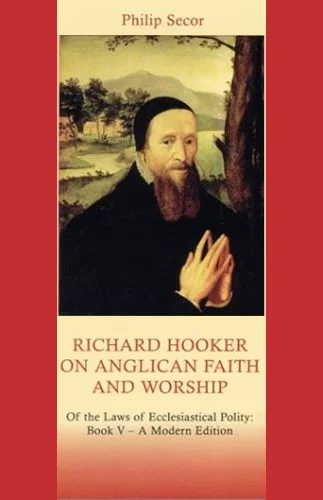
Richard Hooker, Richard Hooker on Anglican Faith and Worship: Of the Laws of Ecclesiastical Polity: Book V, ed. Philip B. Secor, A Modern Edition (London: SPCK, 2003), 108–109.