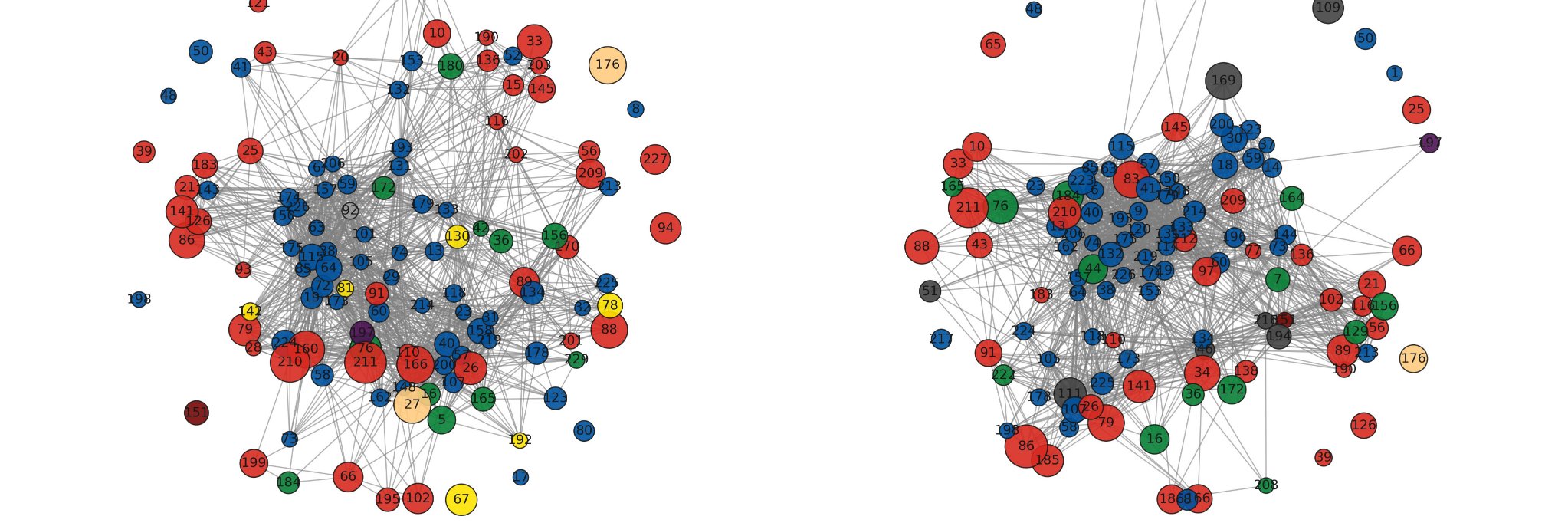
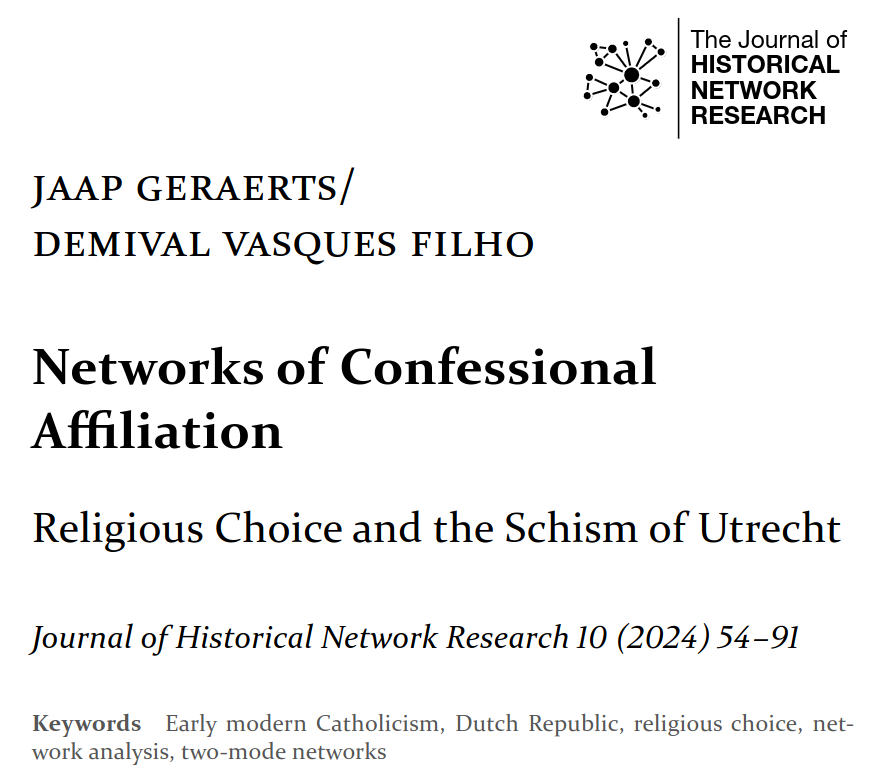
Networks of Confessional Affiliation is out! Here are some of the highlights of this paper, co-written with the inimitable @JaapGeraerts and published today in the Journal of Historical Network Research. Check it out! 1/10
#twitterhistorians#DHLab_IEG@C2DH_LU#HNR@HNR_org
Historical Network Research @HNR_org is organizing HISTONET, a satellite event at @NetSciConf to connect with the community of network scientists.
The call for papers is open until February 15th!
Details can be found here:
https://t.co/l7beIejek1
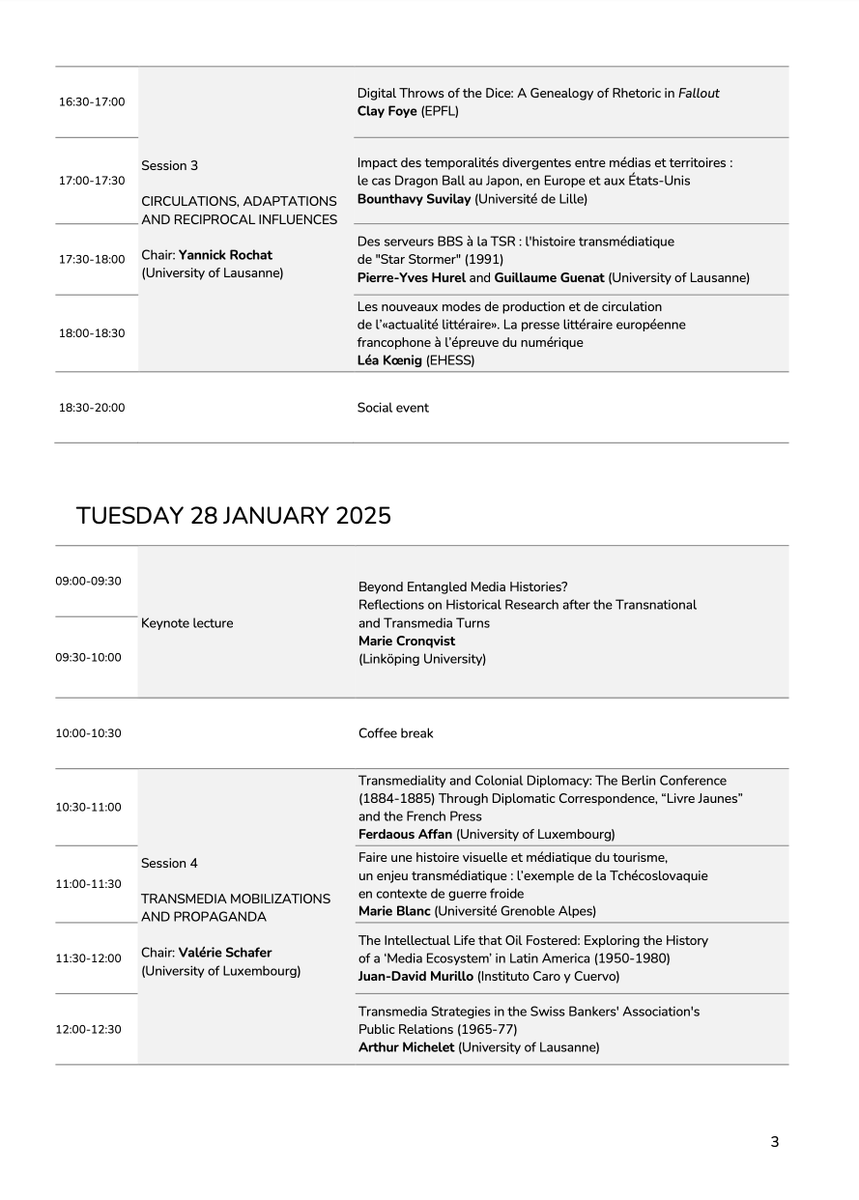
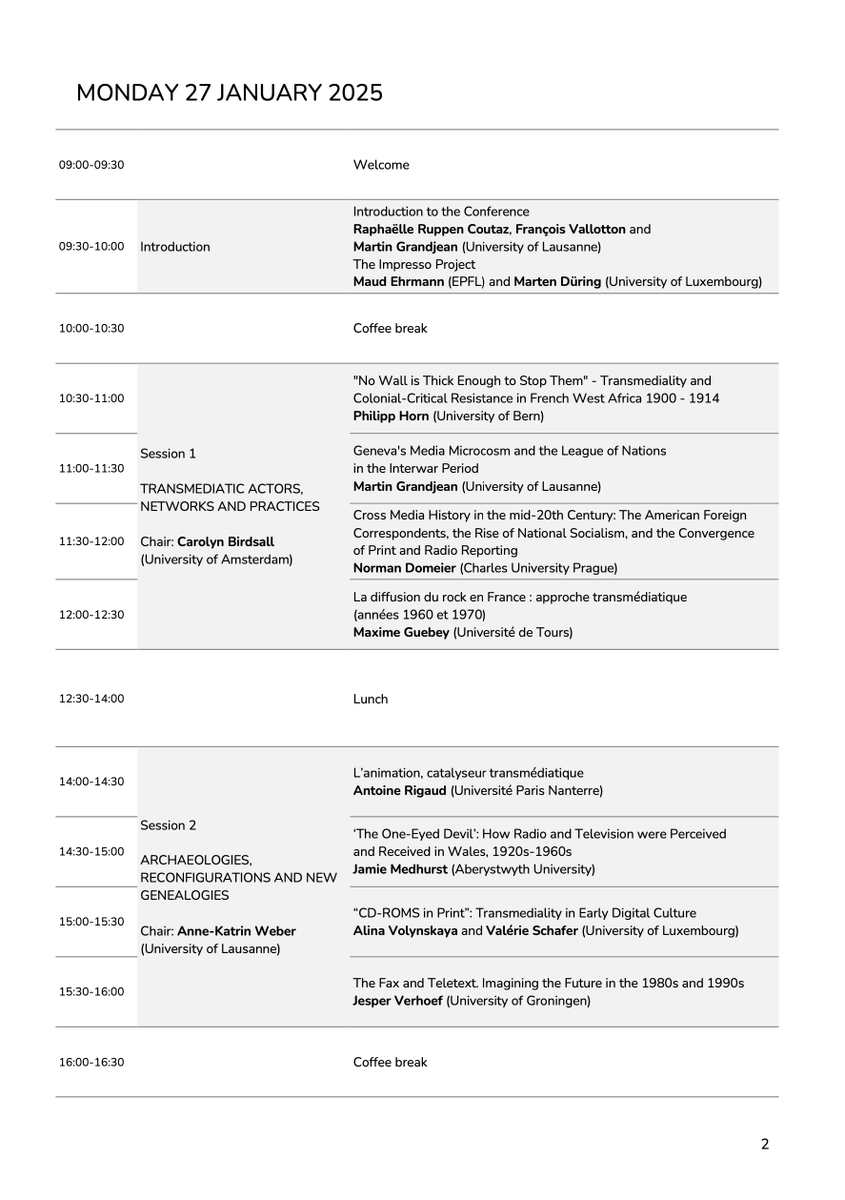
"Transmedia History: Circulations, Reconfigurations and New Methodologies" - The conference program is now online! https://t.co/vHOCyybPai
Come and discuss the combined use of media for historical research in Lausanne on January 27-28, 2025! Free registration, also via Zoom.
Getting started publicising #NetSciX26 - the International School and Conference on Network Science - to be hosted in Auckland in Feb 2026. https://t.co/hknIkT64GN Ever wanted to come to New Zealand? This may be your time. /cc @lespin@danielapaolotti@droneale@ProfMSmall
Reminder!
The call for papers for the Historical Network Research (HNR) Conference 2025, which will take place in Rio de Janeiro from May 21 to 23, is open!
Details can be found on the conference website: https://t.co/wP7JCBUkDe
Join us in Rio!
#hnr#RiodeJaneiro
Vai ser legal! Disciplina no mestrado de Humanidades Digitais do @ppgihd_ufrrj . Vou dividir as aulas com o @alexfortes66
Corre que ainda dá pra se matricular!
#HNR2024 Papers today:
Networks of Confessional Affiliation: Religious Choice and the Schism of Utrecht, by @JaapGeraerts and @demivasques
See https://t.co/soRtUuqBJU
It is still possible to register for the in-person or online #HNR2024 conference. We look forward to welcoming you to Lausanne @UNIL to discuss the state of research in historical network analysis.
The Forgeries and Networks project (https://t.co/LYzUbkrhTP) is recruiting! We're looking for research assistants and a post-doc in art history: https://t.co/AOXsBI9vqQ Please apply and/or spread the word! #digitalhumanities
PS: this paper was particularly fulfilling for me, as it was the first time I could apply, in an historical context, the methodologies for two-mode (bipartite) and one-mode projected network analysis that we (w/ @droneale) developed in a series of papers in the last years
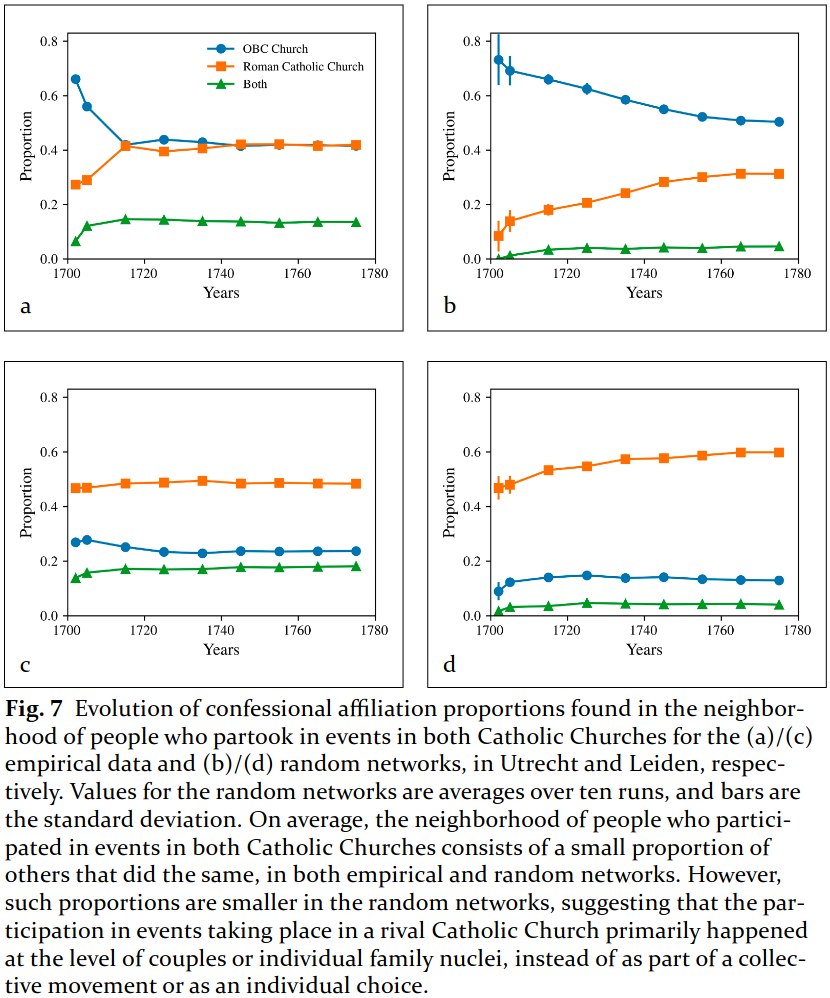
But more importantly, the network analysis showed that the process of religious affiliation did not take place in the context of larger groups or collectives, nor was it a strictly individual affair, as it mainly occurred at the level of couples or individual family nuclei 7/10
For instance, it showed us that the most connected people in Utrecht (by far) were spiritual maidens who acted as godmothers of many children in baptisms and witnesses in marriages, binding and strengthening the communities where they served 6/10
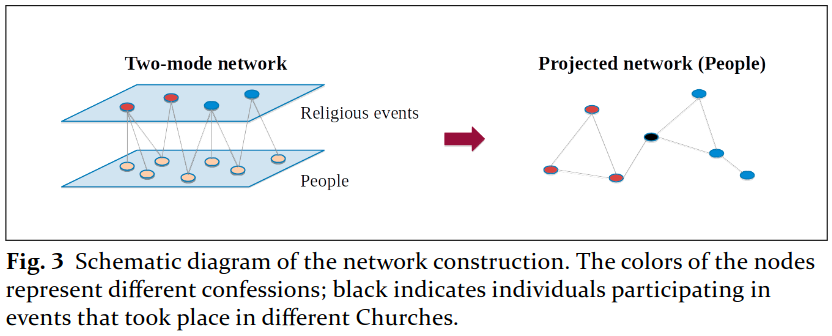
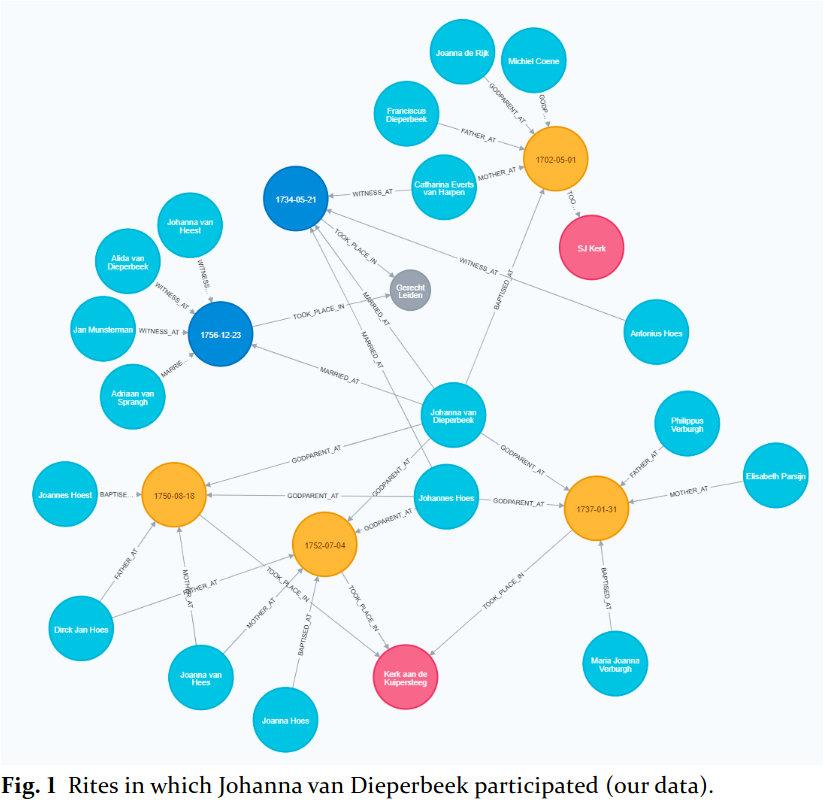
By reconstructing and analyzing two-mode networks (connecting people to events) with their one-mode projections (people connected with whom they participated in an event together) we got insights of the role religions played in the social fabric of these cities 5/10
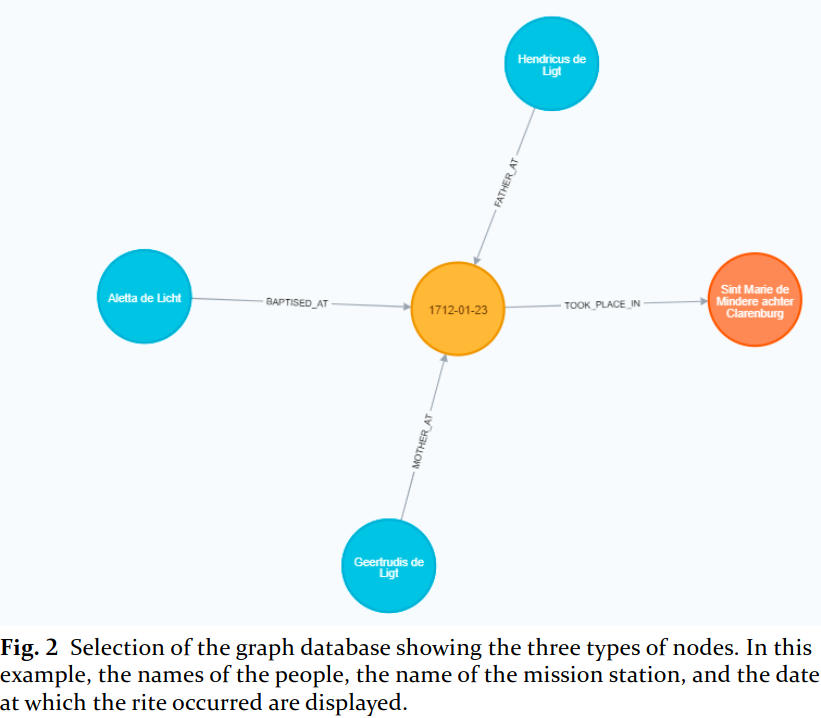
The graph database facilitated not only qualitative analysis - enabling us to track people who participated in the events (baptism/marriage) and their roles (e.g., children, parents, godparents, witnesses, bride/groom) - but also quantitative network analysis 4/10
The focus of the paper is our mixed-methods approach, combining qualitative and quantitative analyses. To do that, we ingested the data (records of baptisms and marriages) in a specifically designed graph database 3/10