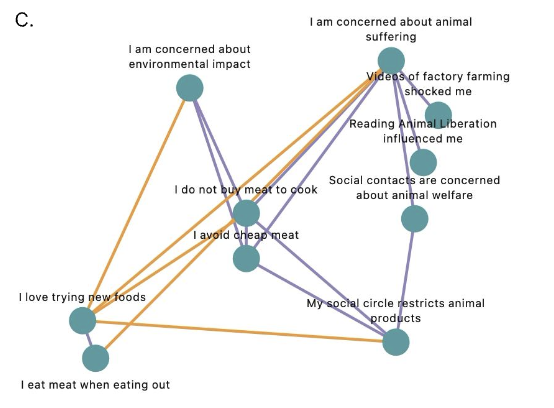
Exciting new paper using LLMs to map individual-level belief networks by @vic_moeller and colleagues. It's a great time to revisit classic debates about how public opinion is structured.
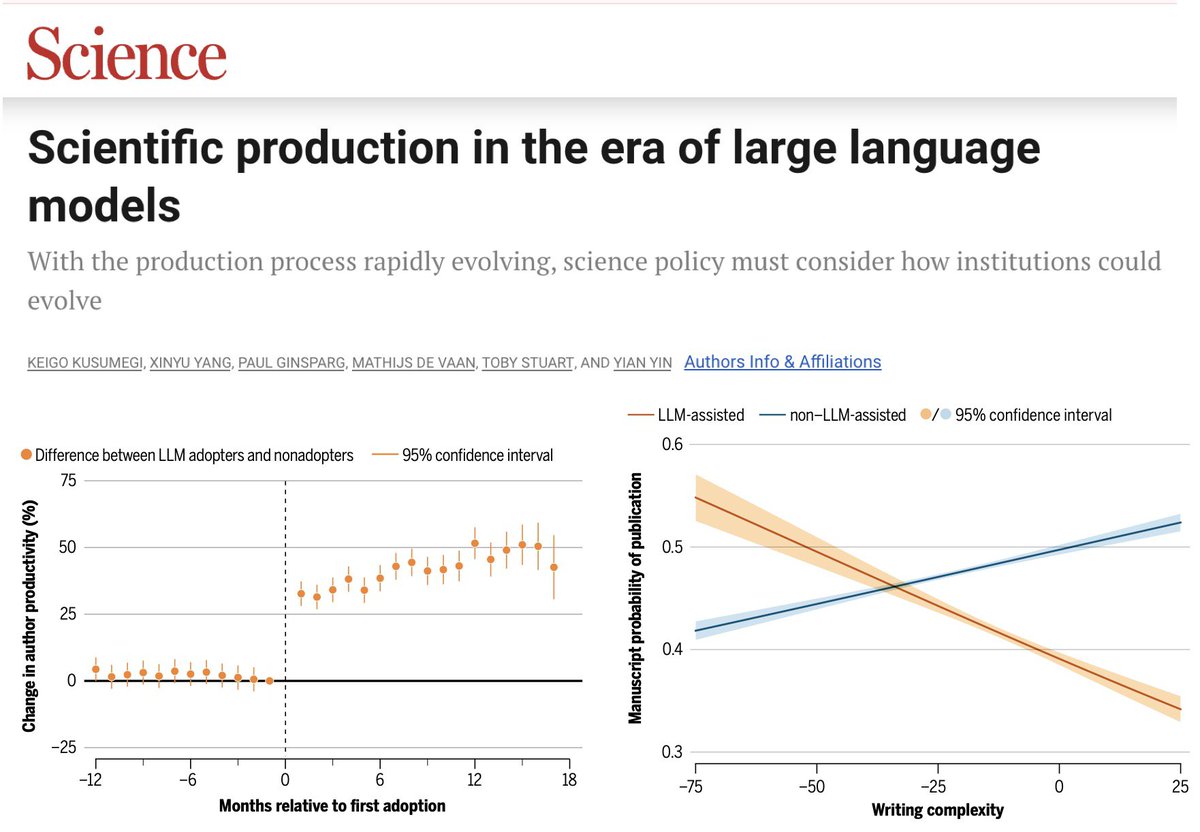
Fantastic analysis from journal submission data. It is also encouraging to see key findings from our recent @ScienceMagazine paper on #AI impact on science — increased productivity, more complex scientific writing, and emerging quality concerns — echoed in this setting.
I was invited to submit and just published a Perspective in @dpn_journal on launching an independent research lab focusing on leadership, team building, funding strategy, and digital infrastructure in early career science.
New work from @WSUAPPLEBAUM.
https://t.co/07nvwmBKlb
📢 Last call for abstracts!
Submit your work to the DACH-CSS Conference 2026, May 21–22 in Vienna, hosted by CSH & CEU.
Accepted abstracts: 3-minute talk + poster session.
🗓 Deadline: TODAY (Feb 20)
📝 Registration open
Details: https://t.co/tDwb5GZJCT
#CSS#DACH#Vienna
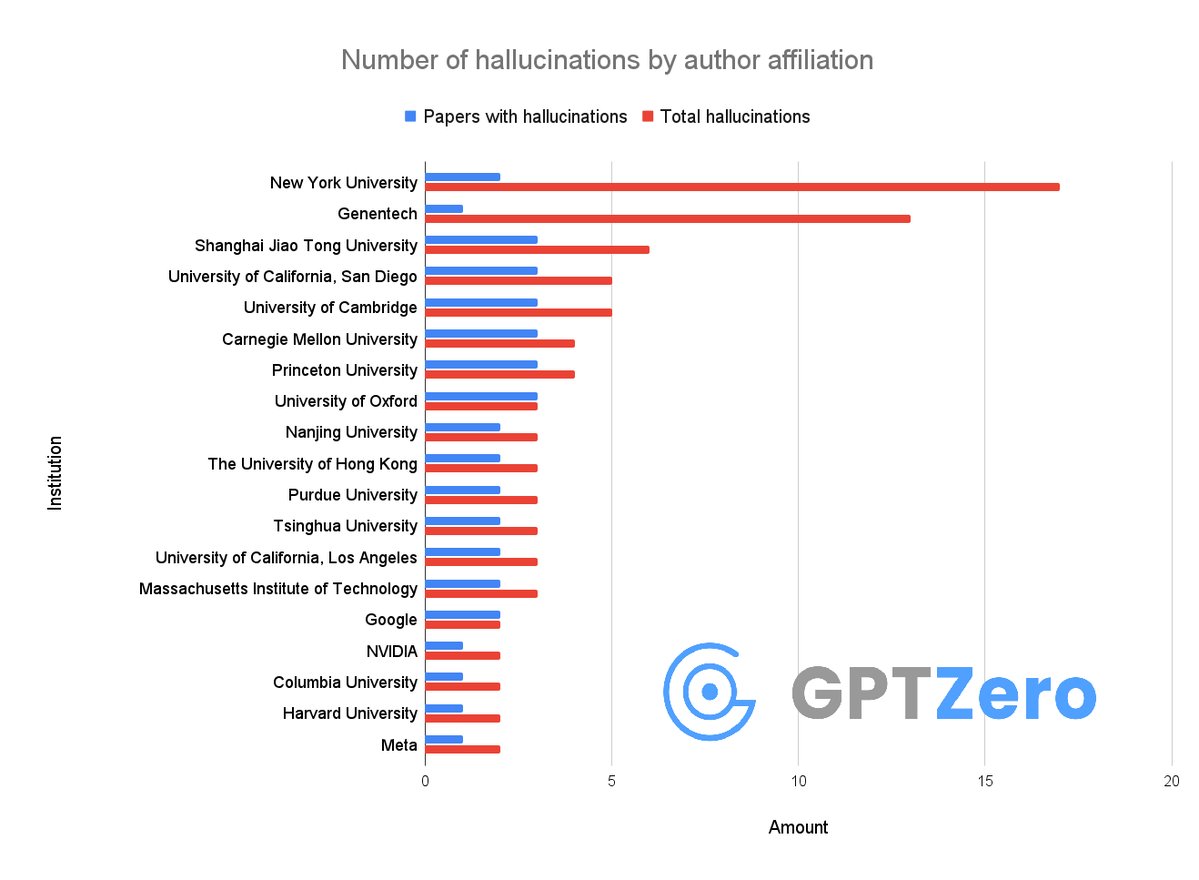
Okay so, we just found that over 50 papers published at @Neurips 2025 have AI hallucinations
I don't think people realize how bad the slop is right now
It's not just that researchers from @GoogleDeepMind, @Meta, @MIT, @Cambridge_Uni are using AI - they allowed LLMs to generate hallucinations in their papers and didn't notice at all.
It's insane that these made it through peer review👇
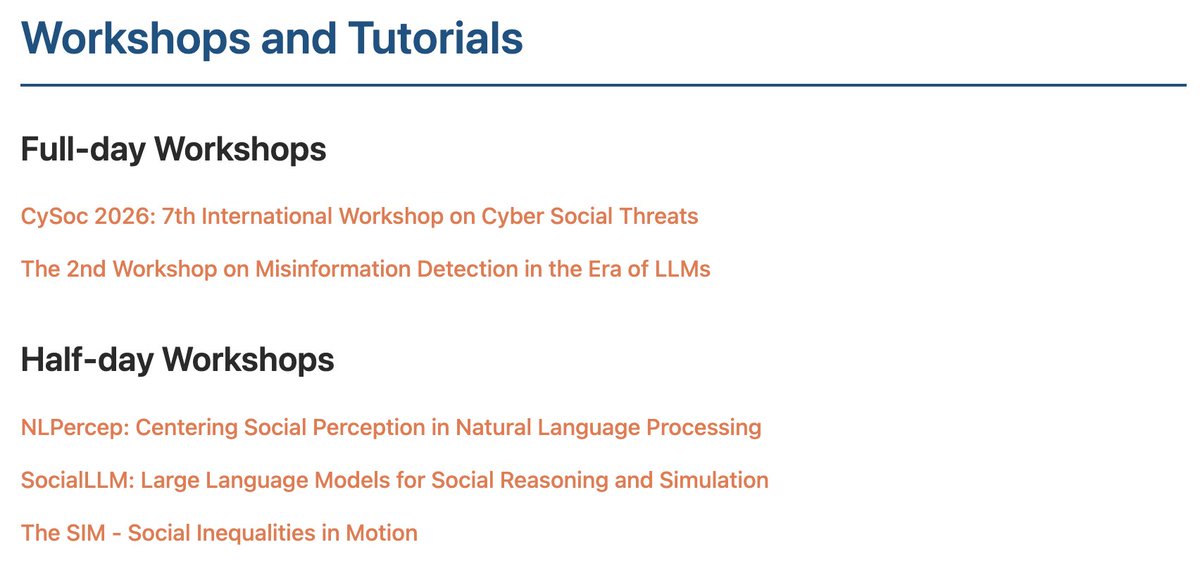
📢 Reminder: The deadline for #ICWSM 2026 workshop proposals is Jan 30th, don’t miss your chance!
Find all the details here 👉 https://t.co/jTNXFg7bpA
@gvrkiran@lespin@msaveski
We recently organized #Agents4Science, the 1st conference where LLMs are both authors and reviewers🤖
It was an open experiment to assess how well AI can lead research and review papers.
Today we report what we learned in @NatureBiotech Highlights in 🧵
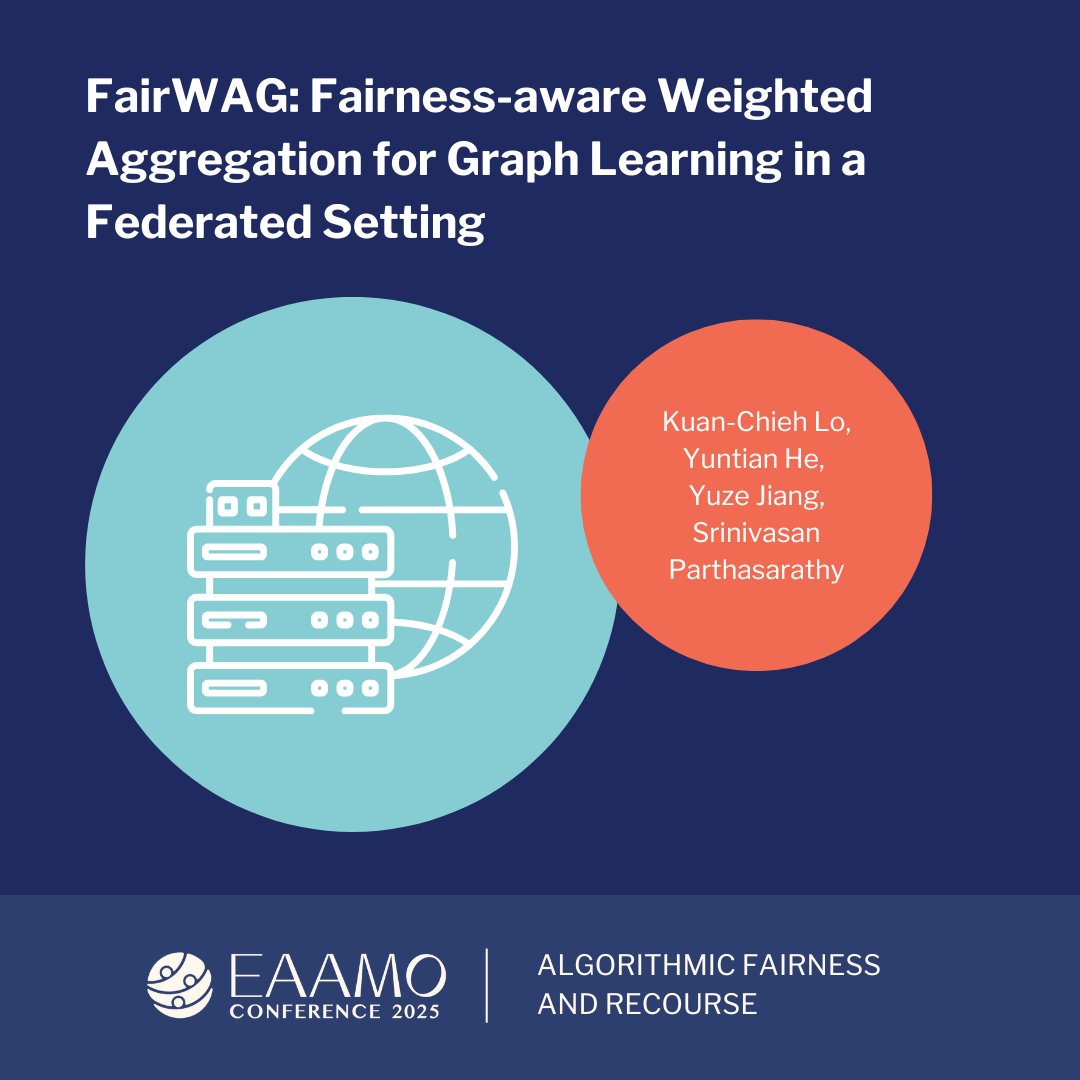
🔍 The next paper takes on a key issue in #federatedgraphlearning: when data from different institutions is uneven or demographically skewed, even privacy-preserving training can still produce unfair models. Read more here 👉https://t.co/PdbGdySBVc
Please share: Post-doctoral position in the Human Nature Lab in the area of human social chemosignaling.
What role do the odors we emit and our capacity for smell play in shaping social behavior?
https://t.co/7ND78ktqkD
Children can solve a difficult sorting task by spontaneously discovering efficient sorting algorithms. Older children outperform younger children, showing developmental growth in strategy use and problem-solving find Yang et al.
https://t.co/Jp491LgqX6
Huge thanks to @LiuhuayingYang & @CSHVienna for creating such a creative space every year. 👏👏👏
If you want to explore how science & data can be translated into playful, pedagogical, and artistic forms, apply for the next edition in 2026!
https://t.co/EtDs3bl2Sl
🧵5/5
A couple of weeks ago @LiuhuayingYang & Paul Kahn hosted the annual Data Visualization Workshop at @CSHVienna.
@DanieleBarolo2 & I joined as invited scientists to share our research with artists, designers & data journalists.
It was so much fun ✨
🧵1/5
For our work on ranking & recsys audits (https://t.co/2tPx9qdJvB):
- SHROOM BOOM: a board game [https://t.co/09ngOt2jWM]
- Hidden Network: interactive tool + exhibit
- Network Sandbox: play w/ homophily
- Rave of Fairness: visual + audio learning [https://t.co/kI03KIrC3W]
🧵4/5


![lespin's tweet photo. For our work on ranking & recsys audits (https://t.co/2tPx9qdJvB):
- SHROOM BOOM: a board game [https://t.co/09ngOt2jWM]
- Hidden Network: interactive tool + exhibit
- Network Sandbox: play w/ homophily
- Rave of Fairness: visual + audio learning [https://t.co/kI03KIrC3W]
🧵4/5 https://t.co/zZX8OguCh4](https://pbs.twimg.com/media/G1XkYkIXMAAN6GV.jpg)
![lespin's tweet photo. For our work on ranking & recsys audits (https://t.co/2tPx9qdJvB):
- SHROOM BOOM: a board game [https://t.co/09ngOt2jWM]
- Hidden Network: interactive tool + exhibit
- Network Sandbox: play w/ homophily
- Rave of Fairness: visual + audio learning [https://t.co/kI03KIrC3W]
🧵4/5 https://t.co/zZX8OguCh4](https://pbs.twimg.com/media/G1XkBy3WQAAQfMw.png)
![lespin's tweet photo. For our work on ranking & recsys audits (https://t.co/2tPx9qdJvB):
- SHROOM BOOM: a board game [https://t.co/09ngOt2jWM]
- Hidden Network: interactive tool + exhibit
- Network Sandbox: play w/ homophily
- Rave of Fairness: visual + audio learning [https://t.co/kI03KIrC3W]
🧵4/5 https://t.co/zZX8OguCh4](https://pbs.twimg.com/media/G1Xj0nLXsAAlCwy.jpg)







![lespin's tweet photo. For our work on ranking & recsys audits (https://t.co/2tPx9qdJvB):
- SHROOM BOOM: a board game [https://t.co/09ngOt2jWM]
- Hidden Network: interactive tool + exhibit
- Network Sandbox: play w/ homophily
- Rave of Fairness: visual + audio learning [https://t.co/kI03KIrC3W]
🧵4/5 https://t.co/zZX8OguCh4](https://pbs.twimg.com/media/G1XkdHfXkAAYMCK.png)





