Jensen Huang just called out every CEO who’s been firing people “because of AI.”
Jim Cramer asked him why companies are laying people off if AI is supposed to make everyone MORE productive.
Jensen's answer:
"For companies with imagination, you will do more with more. For companies where the leadership is just out of ideas, they have nothing else to do. They have no reason to imagine greater than they are. When they have more capability, they don't do more."
Read that again.
The man who built the most important tech company on Earth just told you that if your CEO is using AI to cut headcount, it means one thing:
They have no imagination.
They have no vision for what comes next.
They got handed the most powerful tool in human history and their FIRST instinct was to fire people.
This is the CEO of NVIDIA. The company whose chips power every AI system on the planet.
If anyone on Earth has the right to say "AI replaces workers," it's Jensen Huang.
And he said the OPPOSITE.
He said every carpenter could become an architect. Every plumber could become an architect. AI elevates capability. It doesn't eliminate it.
But here's where it gets really interesting...
During the same interview, Jensen revealed something nobody's talking about:
He said AI startups like OpenAI and Anthropic are seeing their revenues increase by one to two billion dollars a WEEK. And he wishes these companies were public so the world could see what he sees.
One to two billion per week.
That's a $50 to $100 BILLION annualized run rate.
For companies that most people think are burning cash and making nothing.
The entire Wall Street narrative that "AI companies aren't profitable" might be completely wrong.
Jensen sees their numbers. He sees their compute orders. He sees their growth. And he's saying the revenue is real.
So if the money IS real, why are other companies firing people?
Because they're not building AI products. They're not creating new revenue streams. They're not using AI to expand into new markets.
They're using AI as an EXCUSE to cut costs because they ran out of ideas 3 years ago and need something to tell the board.
Jensen's company added $500 billion in new orders in 5 months. He expects $1 trillion in cumulative revenue through 2027 from just two product lines.
That number doesn't include the new chips, systems, or partnerships announced this week.
And he's not cutting people. He's hiring.
Because when you have imagination, more capability means MORE opportunity. Not less headcount.
Meanwhile Salesforce cut thousands. Meta cut thousands. Amazon cut thousands. All blaming "AI efficiency."
Jensen's response: You're out of imagination.
He also said something that stuck with me.
Cramer asked if he ever thought he'd build a $10 to $20 trillion company while waiting tables at Denny's.
His answer: "I was just trying to make it through the shift."
Biggest tip he ever got? Two, three dollars.
Now he's building tech that increased computing demand by one million times in two years.
He announced OpenClaw, which he says is as big as ChatGPT.
And he's got 21 months of new business that isn't even counted in the trillion dollar figure yet.
When asked how long he plans to keep working?
"I'm hoping to die on the job. And I'm not hoping to die anytime soon."
This is a man who believes every single thing he's building.
And his message to every CEO using AI to justify layoffs is simple...
You're not innovating. You're surrendering.
The technology wasn't built to shrink companies.
It was built to make them limitless.
If your leadership can't see that, the problem isn't AI.
It's THEM.
WHY DOES GREENLAND “REALLY” MATTER?
Whoa, best summation you’ll ever hear!
“What you are watching right now is END GAME” and no mistake,Trump is in charge.
Trump is simply dusting off a version of the
“WAR PLAN RED”
♦️THE SCATHING PUZZLE PIECES FIT♦️
Simple search shows both sides have done this before.
Democratic-controlled states that redistricted to gain seats in the last 40 years include:
California: Gained seats through reapportionment (1980s, 1990s) and maximized Democratic representation through partisan maps before the 2010 commission; 2025 proposals aim to flip seats.
Illinois: Aggressive gerrymandering in 2011 and 2021 increased Democratic seats (e.g., 14 of 17 in 2021).
Maryland: 2011 and 2021 maps flipped or maintained Democratic seats (7 of 8).
New York: Early cycles (1980s, 1990s) and attempted 2021 gerrymander aimed to maximize Democratic seats; 2025 proposals pending.
Oregon: Gained one seat in 2021 and drew Democratic-leaning maps (5 of 6).
Nevada: Gained one seat in 2011 and maintained Democratic advantage in 2021 (3 of 4).
New Mexico: 2021 maps flipped all three seats to Democratic-leaning.
Judith Love Cohen was an American aerospace engineer who helped create the Abort-Guidance System that rescued the Apollo 13 astronauts.
When she went into labor, she went to work.
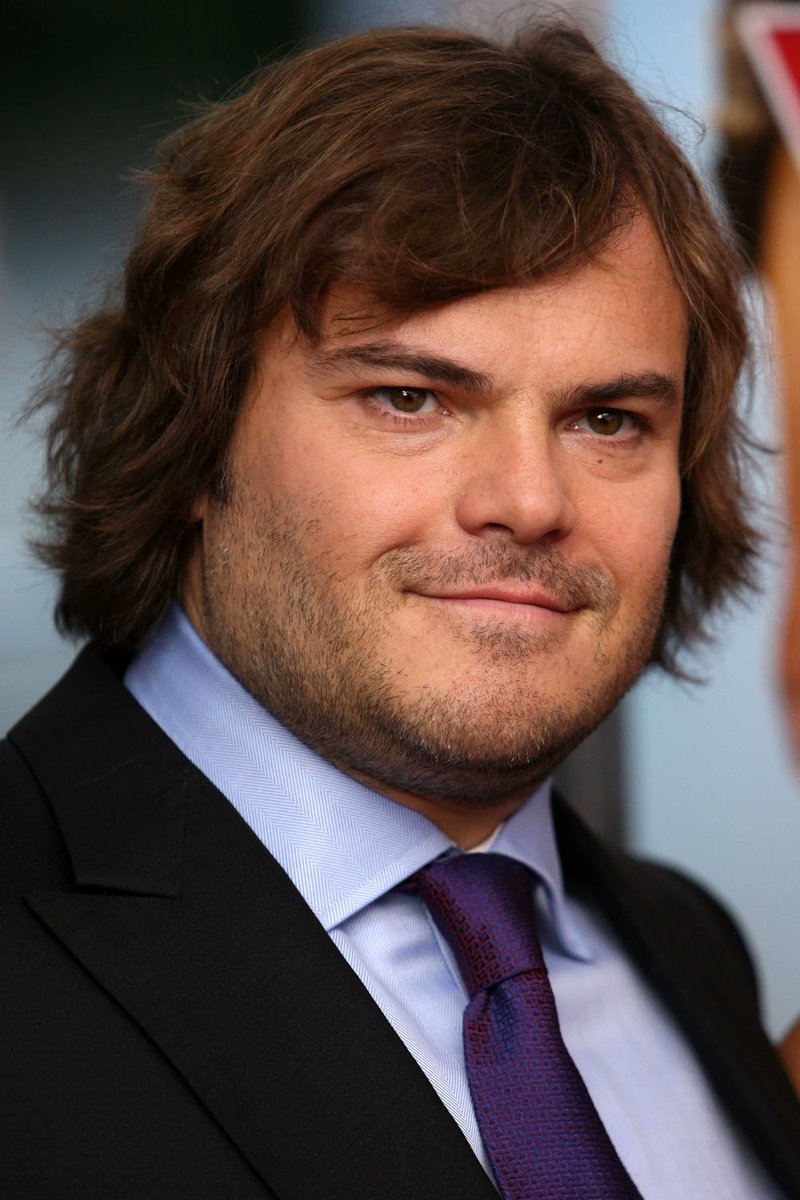
She took a printout of a problem she was working on to the hospital. She called her boss and said she finished the problem and gave birth to Jack Black
We launch more than rockets. This month, we launch our new streaming service, NASA+. https://t.co/McWnWOKXSu
No subscription req.
No ads. No cost. Family friendly!
Emmy-winning live shows
Original series
On most major platforms
Shortly after Steve Jobs returned as the CEO of Apple in 1997, he met with Jony Ive, Apple’s Senior VP of industrial design.
Apple had 40 products on the market.
“Jony, how many things have you said no to?” Jobs asked.
Ive was confused.
“You have to understand,” Jobs said,
“There are measures of focus, and one of them is how often you say no.”
“What focus means,” Jobs taught Ive, “is saying no to something that you—with every bone in your body—think is a phenomenal idea, and you wake up thinking about it, but you say no to it because you're focusing on something else.”
Jobs walked up to a whiteboard and drew a 2 x 2 grid. On top, he wrote “Consumer” and “Professional.” Down the side, “Portable” and “Desktop.”
Four products—meet Apple’s new radically focused product line, Jobs said.
After that meeting, over the next two decades, Jobs and Ive—focused on making a few high-quality products while saying no to everything else—transformed a dying, near-bankrupt company into one of the most valuable companies in the world, worth over $2.9 trillion.
Takeaway 1:
The philosopher Marcus Aurelius pointed out that the focus of doing less “brings a double satisfaction.”
You get the satisfaction of having fewer things to do. And…you get the satisfaction of doing those fewer things at a higher level.
You get “to do less, better.”
During Steve Jobs’ first visit to Jony Ive’s design studio, he looked around, and then he said, “Fuck, you’ve not been very effective, have you?”
It was clear to Jobs that Ive was full of ideas and potential he wasn’t able to execute or fulfill under Apple’s previous leadership.
In the Jobs era of “doing less, better,” Ive was very effective.
Some products he designed include: iMac, iPod, iPhone, iPad, Apple Watch, and AirPods.
Takeaway 2:
Even though he slashed the product line down to four products, Jobs loved to have and hear ideas.
“Steve used to say to me,” Ive said, “and he used to say this a lot, ‘Hey, Jony, here’s a dopey idea.’ And sometimes they were: really dopey. Sometimes they were truly dreadful.
But sometimes they took the air from the room, and they left us both completely silent.”
It made me think of what Jerry Seinfeld identifies as the ultimate skill of the artist: “taste and discernment.”
“It’s one thing to create,” Seinfeld says. It’s one thing to have ideas.
“The other is you have to choose. ‘What are we going to do, and what are we not going to do?’” What are we going to add to the product line, and what are we not going to add?
“This is a gigantic aspect of [artistic] survival,” Seinfeld continues.
“It’s kind of unseen—what’s picked and what is discarded—but mastering that is how you stay alive.”
- - -
“Everything just got simpler. That’s been one of my mantras—focus and simplicity.” — Steve Jobs
Follow @bpoppenheimer for more content like this!





![bpoppenheimer's tweet photo. Shortly after Steve Jobs returned as the CEO of Apple in 1997, he met with Jony Ive, Apple’s Senior VP of industrial design.
Apple had 40 products on the market.
“Jony, how many things have you said no to?” Jobs asked.
Ive was confused.
“You have to understand,” Jobs said,
“There are measures of focus, and one of them is how often you say no.”
“What focus means,” Jobs taught Ive, “is saying no to something that you—with every bone in your body—think is a phenomenal idea, and you wake up thinking about it, but you say no to it because you're focusing on something else.”
Jobs walked up to a whiteboard and drew a 2 x 2 grid. On top, he wrote “Consumer” and “Professional.” Down the side, “Portable” and “Desktop.”
Four products—meet Apple’s new radically focused product line, Jobs said.
After that meeting, over the next two decades, Jobs and Ive—focused on making a few high-quality products while saying no to everything else—transformed a dying, near-bankrupt company into one of the most valuable companies in the world, worth over $2.9 trillion.
Takeaway 1:
The philosopher Marcus Aurelius pointed out that the focus of doing less “brings a double satisfaction.”
You get the satisfaction of having fewer things to do. And…you get the satisfaction of doing those fewer things at a higher level.
You get “to do less, better.”
During Steve Jobs’ first visit to Jony Ive’s design studio, he looked around, and then he said, “Fuck, you’ve not been very effective, have you?”
It was clear to Jobs that Ive was full of ideas and potential he wasn’t able to execute or fulfill under Apple’s previous leadership.
In the Jobs era of “doing less, better,” Ive was very effective.
Some products he designed include: iMac, iPod, iPhone, iPad, Apple Watch, and AirPods.
Takeaway 2:
Even though he slashed the product line down to four products, Jobs loved to have and hear ideas.
“Steve used to say to me,” Ive said, “and he used to say this a lot, ‘Hey, Jony, here’s a dopey idea.’ And sometimes they were: really dopey. Sometimes they were truly dreadful.
But sometimes they took the air from the room, and they left us both completely silent.”
It made me think of what Jerry Seinfeld identifies as the ultimate skill of the artist: “taste and discernment.”
“It’s one thing to create,” Seinfeld says. It’s one thing to have ideas.
“The other is you have to choose. ‘What are we going to do, and what are we not going to do?’” What are we going to add to the product line, and what are we not going to add?
“This is a gigantic aspect of [artistic] survival,” Seinfeld continues.
“It’s kind of unseen—what’s picked and what is discarded—but mastering that is how you stay alive.”
- - -
“Everything just got simpler. That’s been one of my mantras—focus and simplicity.” — Steve Jobs
Follow @bpoppenheimer for more content like this!](https://pbs.twimg.com/media/FzeinZYWYAEzlYI.jpg)


