If you’ve ever installed solar in Zimbabwe, you’ve probably heard the golden rule: "Always face the panels North." But is that actually the best setup for your home?
Let’s break down the science of sun tracking and the secret of the East-West split.
(Thread)🧵
Someone asked me, “If you had the money, what business would you do?”
It took me back to a programme I once managed as a Technical Officer, focused on providing renewable energy solutions for productive use in marginalised communities.
We provided solutions to people who already had the capacity to produce:
Surface water Solar pumps - for farmers with land and access to surface water. The systems were provided upfront, with payment coming once they started producing and selling. The impact on livelihoods was clear.
The challenge, Market access. Beyond grain, many farmers struggled to sell perishable produce. With capital for cold-storage facilities and guaranteed market linkages, this could have been a game changer.
Solar incubators - one of the biggest successes. Turning reliable energy access into poultry production and income.
Solar refrigerators - enabling small businesses to preserve products, reduce losses and extend their trading capacity.
It reinforced something I strongly believe:
Energy access alone is not enough. The real transformation happens when energy is connected to productive use, finance, technology and markets.
Every person who wants to make a difference at some point has to decide whether they care more about the peoples lives they’re changing or the peoples opinions they’re offending.
This week, I have the privilege to tour schools in some of Zimbabwe’s most remote communities. One thing stood out - talent is evenly distributed, but opportunity is not.
Reaffirming my belief that energy is one of the most powerful enablers of education. A classroom with reliable electricity becomes a gateway to digital learning, access to information, better teaching, and brighter futures.
When we invest in energy, we invest in education. And when we invest in education, we give communities the tools to break the cycle of poverty.
The nexus between energy, education, and poverty isn’t just a concept, it’s something you witness firsthand in rural schools.
Here’s a thought - before the year ends, how about we come together and electrify one deserving rural school? One school. One solar system. Hundreds of lives changed for years to come.
Small acts, when directed at the right place, create generational impact.
Tazviona Moyo from Binga Sikomena is appealing for money to do pharmacy coarse.$500 a semester for 1 year.She is a maid in Mberengwa but with 8 "O" levels including Maths, Eng,Science .Also 4 points at A Level & she did sciences. Her #+263780987317.
Pliz retweet this message.
Remember, farming can uplift your soul one minute and break your heart the next. This was last year's tomato. Bountiful, beautiful, and rich before late blight and later frost hit us 😪. We dust ourselves, count our losses and blessings, and start again. We always start again.
Referrals are such a powerful source of getting business. Never underestimate the impact of saying “I know Pablo, he can hire out a car to you.” And next thing you’re getting a message, “Chief, get me this car ready ASAP..”
Advertising helps, but referrals top it all.
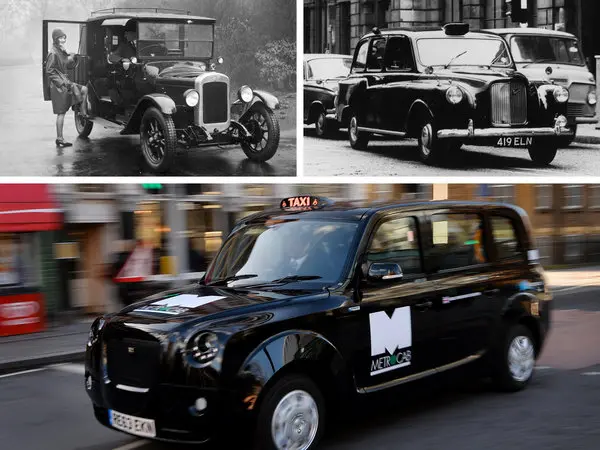
To get a license to drive a black cab in London, you have to memorize 25,000 streets, 20,000 landmarks, and the fastest route between any two points in a six-mile radius of Charing Cross. It takes most people three to four years.
A British neuroscientist asked the obvious question nobody had thought to ask. What does that actually do to a human brain?
Her name was Eleanor Maguire. The study changed neuroscience forever.
The exam is called The Knowledge. It was introduced in 1865, and the format has barely changed since.
Applicants ride a moped around London for years with a clipboard strapped to the handlebars, tracing every possible route between every possible pair of points in the city.
They get tested in person by an examiner who can ask them, on the spot, for the shortest legal route between any two addresses in a database of tens of thousands. Half the people who attempt it fail.
The ones who pass have spent an average of four years studying full time and have taken the test 12 times before getting through.
Maguire was watching a TV movie about it in 1995 when she had the idea. These were not ordinary people. They were people running one of the most extreme spatial memory training programs that exists anywhere on Earth.
If the human brain could be reshaped by experience, this was the cleanest natural experiment anyone was ever going to find.
She put 16 of them in an MRI machine.
Their posterior hippocampi were significantly larger than the brains of matched controls. The longer a driver had been working, the bigger the difference got.
A 40-year veteran had a measurably more developed hippocampus than a 5-year veteran, and both had more than someone who had never driven a cab.
Here is why that finding broke a century of consensus.
Until 2000, every neuroscience textbook in the world taught a version of the same idea. The adult brain is essentially fixed. You are born with a set number of neurons. Childhood is the window where the wiring gets laid down. After puberty, the structure freezes, and the rest of your life is just slow decline.
Maguire's study was one of the first pieces of human evidence that this was simply wrong. Adult brains physically remodel themselves in response to what you ask them to do. Not metaphorically. Structurally. With grey matter you can measure on a scan.
The skeptics had an obvious objection. Maybe people with bigger hippocampi were just more likely to become taxi drivers in the first place. The brains were not changing. The job was selecting for brains that already looked that way.
So Maguire ran the experiment again. Properly this time.
She recruited 79 trainees who were just starting to study for The Knowledge and 31 controls who were not. She scanned all of them at the start. Then she waited four years. Of the 79 trainees, 39 eventually passed the exam and 20 failed. She scanned them again.
The trainees who passed had grown larger posterior hippocampi over those four years. The trainees who failed had not. The controls who never studied had not. The brain change was not selection. It was construction.
The act of memorizing the city had physically rebuilt the part of the brain responsible for spatial memory, and the rebuild only happened in the people who actually did the work.
There is a quieter finding from this research that almost nobody quotes, and it is the one I cannot stop thinking about.
The drivers had a bigger posterior hippocampus, but they had a smaller anterior hippocampus. The brain had not magically expanded. It had reallocated. Tissue that was being used for one type of memory had been compressed to make room for another.
When Maguire ran follow-up cognitive tests, the cabbies were measurably worse than controls at certain visual memory tasks unrelated to navigation. They had paid for The Knowledge with something else. The trade was real.
She also ran a second control experiment that is the part of the story most people never hear. She scanned London bus drivers. Same hours behind the wheel. Same city. Same traffic. Same stress. The only difference was that bus drivers follow fixed routes. They do not have to navigate. Their hippocampi looked completely normal.
The cab drivers had not grown bigger hippocampi from driving. They had grown them from the constant, active, effortful retrieval of spatial information from memory.
That distinction is the entire study.
Then in 2020, McGill researchers ran the inverse experiment. They tracked 50 regular drivers and measured how often they used GPS. The participants who relied most heavily on turn-by-turn navigation had measurably weaker spatial memory. When the researchers retested a subset of them three years later, the heavier GPS users had declined fastest.
The hippocampus, the same region the cabbies had built up by ignoring shortcuts, was being slowly hollowed out in everyone else by accepting them.
The mechanism Maguire spent 25 years documenting works in both directions. Brains grow what you make them grow. They lose what you stop asking them to do.
The taxi drivers were running the most intense spatial memory training program on Earth. Most of the rest of us are running the opposite program without realizing it.
Maguire died in early 2025. UCL's tribute described the cabbie study as a stroke of creative genius. She had spent her entire career on a single question. What does it physically take to remember something, and what changes inside a person who remembers a lot of it.
The answer is the part that should change how you live.
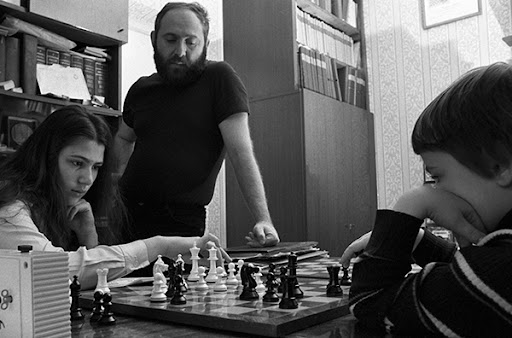
A Hungarian psychologist raised three daughters to prove that any child could become a chess grandmaster through early specialization. He succeeded. Two of them became grandmasters. One became the greatest female chess player who ever lived.
Then a sports scientist looked at the data and found something nobody wanted to hear.
His name is David Epstein. The book is called "Range."
The Polgar experiment is one of the most famous case studies in the history of deliberate practice. Laszlo Polgar wrote a book before his daughters were even born arguing that geniuses are made, not born. He homeschooled all three girls in chess from age four. By their teens, Susan, Sofia, and Judit were dominating tournaments against grown men. Judit became the youngest grandmaster in history at the time, breaking Bobby Fischer's record. The story became the gospel of early specialization. Pick a domain young, drill it hard, and you can manufacture excellence.
Epstein opens his book by telling that story honestly and then quietly demolishing the conclusion most people drew from it.
Chess works that way. Most things do not.
Here is the distinction that took him four years of research to articulate, and that almost nobody who quotes the 10,000 hour rule has ever read.
There are two kinds of environments in which humans develop expertise. Psychologists call them kind and wicked. A kind environment has clear rules, immediate feedback, and patterns that repeat reliably. Chess is the cleanest example. Every game ends with a winner and a loser. Every move is recorded. The board never changes shape. The pieces never invent new ways to move. A child who plays ten thousand games will see most of the patterns that exist in the game, and pattern recognition is exactly what chess mastery is built on.
A wicked environment is the opposite. Feedback is delayed or misleading. Rules shift. The patterns that worked yesterday may be exactly the wrong patterns to apply tomorrow. Most of the real world looks like this. Medicine is wicked. Investing is wicked. Building a company is wicked. Scientific research is wicked. Almost every job that involves a complex changing system with humans in it is wicked.
The Polgar sisters trained in the kindest environment any human can train in. Their success was real and the method was correct. The mistake was generalizing the method to fields where the underlying structure of the environment is completely different.
Epstein's research is what made the implication impossible to ignore.
He looked at the careers of elite athletes outside of chess and golf and found that the pattern was almost the inverse of what people assumed. The athletes who reached the very top of their sports were overwhelmingly people who had played multiple sports as children, specialized late, and often switched disciplines well into their teens. Roger Federer played squash, badminton, basketball, handball, tennis, table tennis, and soccer before tennis became his focus. The kids who specialized in tennis at age six and trained year-round for a decade mostly burned out, got injured, or topped out at lower levels of the sport.
The same pattern showed up everywhere he looked outside of kind environments. Inventors with the most patents had worked in multiple unrelated fields before their breakthrough work. Comic book creators with the longest careers had drawn for the most different genres before settling. Scientists who won Nobel Prizes were dramatically more likely than their peers to be serious amateur musicians, painters, sculptors, or writers.
The skill that mattered in wicked environments was not depth in one pattern. It was the ability to recognize when a pattern from one domain applied unexpectedly in another. That kind of thinking cannot be built by drilling a single subject. It can only be built by accumulating mental models from many subjects and learning to move between them.
The deeper finding is the one that should change how you think about your own career.
Specialists in wicked environments often get worse with experience, not better. Epstein cites studies of doctors, financial analysts, intelligence officers, and forecasters showing that years of experience in a narrow domain frequently produce more confident judgments without producing more accurate ones. The expert builds elaborate mental models that feel comprehensive and turn out to be increasingly disconnected from the actual structure of the problem. They stop noticing what does not fit their framework. They mistake fluency for understanding.
Generalists do better in wicked domains for a reason that sounds almost mystical until you understand the mechanism. They have less invested in any single mental model, so they abandon broken models faster. They are used to being a beginner, so they are not threatened by the discomfort of not knowing. They have seen enough different domains that they can usually find an analogy from one field that unlocks a problem in another. The technical name for this is analogical thinking, and the research on it is one of the most underrated bodies of work in cognitive science.
The single most useful sentence in the entire book is the one Epstein puts almost as a throwaway.
Match quality matters more than head start.
A person who tries six different fields in their twenties and finds the one that genuinely fits them will outperform a person who picked one field at fourteen and stuck to it on willpower alone. The lost years were not lost. They were the search process that produced the match. Every field they walked away from taught them something they later imported into the field they finally chose.
The reason this is so hard to accept is cultural, not empirical. We tell children to pick a path early. We reward the prodigy who knew at six. We treat the late bloomer as someone who failed to launch on time, when the data suggests they were running an entirely different and often more effective optimization process underneath.
The Polgar sisters were not wrong. The conclusion the world drew from them was.
If your environment is genuinely kind, specialize early and drill hard. If it is wicked, and almost every interesting human problem is, then the people who win are the ones who refused to specialize until they had seen enough to know what was actually worth specializing in.
You are not behind. You were running the right experiment all along.
Worth a read! 😍
My mom wanted to send me homemade pickles. But I said ‘no’.
I was 27, living in New York, working on Wall Street. I didn't need pickles shipped across the world. The shipping would cost more than buying them here.
Three years later, I read the psychologist take on what I'd actually done. When you reject someone's offer to help, you're not just declining assistance. You're declining their need to matter to you!
Benjamin Franklin figured this out in 1736. He had a rival in the Pennsylvania legislature who hated him. Instead of trying to win him over with favors, Franklin asked the rival to lend him a rare book.
The rival agreed. They became lifelong friends. It's called the Ben Franklin effect.When people do something for you, they convince themselves they must like you. Otherwise, why would they help?
My mom didn't want to send pickles because I needed them.
She wanted to send them because SHE needed to feel useful to me. To feel like despite the ocean between us, she still had a role in my life.
Every time I said "I'll manage," I was taking that away from her. Here's what I learned after a decade of living away from home:
→ Accepting small favors isn't about you needing help.
It's about letting people you love feel needed.
Your dad wants to transfer ₹5000 even though you earn well?
Let him.
Your friend wants to pick you up from the airport even though Uber exists?
Say yes.
Your partner wants to make you tea even though you can make it yourself?
Accept it.
The people who love you don't want to solve your big problems. They want to matter in your small moments.
Let them. #lifelesson
If we don't educate children in history, culture, languages, religion, traditions, ethics and critical thinking preferring instead to limit them to STEM subjects, then we are raising a generation of easy to manipulate morons. This is becoming ever more obvious today.
Sam Altman said people saying “please” and “thank you” to ChatGPT costs OpenAI tens of millions of dollars a year in compute. 67% of Americans do it anyway.
Run the math on why.
A 2024 Waseda University study tested LLM responses across politeness levels in English, Chinese, and Japanese. Impolite prompts produced measurably worse outputs: more bias, more errors, more refusals. Moderate politeness consistently beat both extremes.
The mechanism makes sense once you see it. Polite prompts pattern-match to higher-quality training data. When you write “Could you help me structure this analysis?”, the model pulls from professional, well-reasoned text. When you write “give me the answer,” it pulls from Reddit.
Google DeepMind’s Murray Shanahan explained it simply: the model is role-playing a smart intern. Treat the intern like a colleague, you get colleague-quality work. Bark orders, you get minimum-viable compliance.
Now look at the cost side. OpenAI handles over a billion queries daily. Each GPT-4 query uses roughly 2.9 watt-hours, ten times a Google search. But OpenAI just raised $40 billion at a $300 billion valuation. Tens of millions in politeness tokens is a rounding error on a rounding error.
67% of users do it anyway, and 55% of them say it’s because it’s “the right thing to do.” They’re maintaining a behavioral habit that governs every other interaction in their life. The parent who teaches their kid to say please to Alexa isn’t doing it for Alexa. They’re doing it because the alternative is raising someone who learns that being rude gets faster results.
Telling 900 million people to stop saying thank you so OpenAI can save 0.01% of operating costs is the most engineer-brained optimization take on the internet. You’re training yourself to treat every interaction as a transaction. And that habit doesn’t stay in the chat window.
Your phone is gone. You open Find My Device from your laptop.
“Last seen: 3 hours ago. Location: Sudirman Street.”
After that? There is no update. Offline.
The thief immediately turned off the internet. Classic move.
In the past, that was the end of the story. Now, no.
This is one of the most honest questions anyone can ask…
The Bible actually addresses this tension repeatedly.
1. What looks like an “easy life” is not always what it seems.
In Psalm 73, Asaph wrestled with this exact issue. He said he envied the wicked because:
“They are not in trouble as other men… their eyes stand out with fatness…”
But later he realized something: he was only seeing the present, not the end.
“I understood their end.” - Psalm 73:17
Temporary ease is not the same as divine approval.
2. God’s blessings are not distributed strictly by church attendance frequency.
“…for he maketh his sun to rise on the evil and on the good, and sendeth rain on the just and on the unjust.” - Matthew 5:45
There is something called common grace such as in Health, Opportunities, Talent, Favor in systems
These are not always tied to daily prayer.
3. Prayer is not a vending machine.
In James 4:3, Scripture says:
“You ask and do not receive, because you ask amiss…”
Sometimes Motives are wrong, Timing is not right, God is developing character before releasing results, or the “result” we expect is not the will of God.
4. Comparison distorts perception.
“There is a vanity which occurs on earth: that there are just men to whom it happens according to the work of the wicked…” - Ecclesiastes 8:14
In other words, life is not always instantly fair.
Christianity does not promise an easier life. It promises
- Eternal life
- Transformation
- Peace that surpasses understanding
- Purpose beyond circumstances
5. Visible success is not ultimate success.
Jesus asked in Mark 8:36:
“What shall it profit a man, if he shall gain the whole world, and lose his own soul?”
The person who appears to be “winning” materially may be bankrupt spiritually.
And lastly, sometimes God allows delay to deepen us.
Joseph prayed, yet he went to prison.
Job prayed, yet he suffered.
Paul prayed, yet the thorn remained (2 Corinthians 12:7–9).
So, Delay is not denial, Silence is not absence, & Hardship is not abandonment.
So we must understand however that
- Some people prosper because of discipline and natural principles.
- Some struggle because of poor decisions, not lack of prayer.
- Some suffer because of divine refinement.
- Some thrive temporarily before eventual collapse.
The full story is never visible in one season.
🚨‼️Solomon wrote Ecclesiastes like a man finally telling the truth after a lifetime of pretending. He is not trying to help you “find yourself.” He is exposing what you become when you live as if this world is all there is. That is why the book is so sharp: you are watching the wisest king on earth run the experiment every sinner dreams about. Wealth, pleasure, projects, entertainment, learning, reputation, and control, all poured into one life, and the conclusion is still the same: “Vanity of vanities, saith the Preacher, vanity of vanities; all is vanity” (Ecclesiastes 1:2). Modern men keep acting like they will be the exception, as if their next purchase or next promotion will finally satisfy the hole in their chest. Solomon had more than they will ever touch, and God let him write the report so you do not have to waste your life repeating the same failure.
Chapter by chapter, Solomon turns his kingdom into a laboratory and his heart into the test site. He admits, “Whatsoever mine eyes desired I kept not from them” (Ecclesiastes 2:10), which ought to embarrass every preacher who tells people to follow their heart. He then moves to the subject of time and shows you the cage: “To every thing there is a season” (Ecclesiastes 3:1). That verse is not a sentimental line for funerals, it is a warning label. Time gives, time takes, and you cannot control the seasons no matter how spiritual your vocabulary sounds. Solomon says God placed eternity in man, but man cannot find out the work of God from beginning to end (Ecclesiastes 3:11). In other words, the creature can see the gears turning but cannot interpret the whole machine without revelation, which is why modern man is always anxious, always managing, always trying to force certainty out of a world God designed to remind him he is not God.
Then Solomon looks at society and shows you what civilization becomes without the fear of God. He sees oppression with no comforter, rivalry driving labor, and loneliness sitting at the top like a king (Ecclesiastes 4:1-8). He warns that religion can become mouth worship, rash vows, and empty performance when a man talks at God but does not tremble before Him (Ecclesiastes 5:1-7). He crushes the success myth by showing that having is not the same as enjoying, and God can allow a man to gain everything and still taste nothing (Ecclesiastes 6:2). He tells you funerals teach more truth than parties, rebukes help more than applause, and that much wisdom can turn into much grief when it is not anchored in the fear of the Lord (Ecclesiastes 7:2-3; 1:18). Under the sun, man’s brightest thoughts still cannot straighten what sin has bent, because “That which is crooked cannot be made straight” (Ecclesiastes 1:15).
The punchline of the whole book is that Solomon does not let you stop at the diagnosis. He marches you to the courthouse. He admits that time and chance hit everybody, that the swift do not always win, and that death levels kings and beggars alike, which is why atheists love to camp in Ecclesiastes 9 and pretend hopelessness is wisdom (Ecclesiastes 9:11-12). But Ecclesiastes ends with the Creator, not the creature: “Remember now thy Creator in the days of thy youth” (Ecclesiastes 12:1). Then comes the final blow that wraps the whole series: “For God shall bring every work into judgment, with every secret thing” (Ecclesiastes 12:14). Ecclesiastes ends in judgment because judgment forces the only question that matters: how will you stand there. Solomon stops at the courtroom door, but the Gospel answers what he only points toward, because the only escape from vanity, fear, and final accountability is not self improvement, but the righteousness of Jesus Christ.
If LeBron James or Lionel Messi showed up at your basketball game or football match and asked to join your team, you wouldn’t just say yes, you’d hand them captaincy and get out of their way.
You’d trust them without question, cos you know what they’ve done, you’ve seen the results, and you trust their expertise completely.
If Steve Jobs knocked on your garage door and offered to help build your startup, you wouldn’t micromanage him. You’d give him the keys and consider it the opportunity of a lifetime.
You’d do all of this instantly. Without hesitation.
So why do we struggle so much to hand Jesus the reins of our lives?
We say we believe He spoke the universe into existence. That He holds all wisdom, sees the beginning from the end, defeated death itself.
We say we trust Him.
But then we clutch our plans, our timelines, our understanding of how things should go.
We ask for His guidance but override it when it doesn’t make sense to us. We want Him on our team, but we still want to call the plays.
If we really believed who He is, not just intellectually, but in our bones, surrender wouldn’t feel like loss. It would feel like the most rational thing we could possibly do.
The gap between what we say we believe and how tightly we grip control might be the most honest measure of our faith.
You watch a preacher long enough, he will disappoint you.
You attend a church long enough, it will let you down in some way.
You serve in a ministry for some time, you will get hurt.
All of these are true but it does not mean you quit, get bitter or leave.
It does mean that you forgive, stay steadfast and focussed on Jesus.
Pray for your pastor.
Be faithful in your local church.
Serve others.