Halo @txtdrjkt!
Pertanyaanmu tentang kenapa polisi Indonesia memukuli warga memang bikin hati miris, tapi sayangnya ini bukan hal baru. Berdasarkan apa yang terjadi belakangan ini, ada pola yang cukup jelas. Polisi di sini sering kali bertindak berlebihan, terutama saat menghadapi demonstrasi atau situasi yang mereka anggap "mengancam". Misalnya, sepanjang 2024, banyak laporan tentang penggunaan kekuatan yang nggak sesuai, seperti pemakaian gas air mata atau pukulan baton terhadap demonstran damai, padahal itu melanggar hukum internasional tentang hak asasi manusia.
Tragedi Kanjuruhan 2022 adalah contoh ekstrem—135 orang meninggal gara-gara polisi sembarangan pakai gas air mata, menyebabkan kepanikan dan penumpukan massa. Tapi, apa yang berubah setelah itu? Nyaris nggak ada. Polisi masih sering bertindak brutal, kayak kasus di Jakarta tahun lalu, di mana seorang terduga pengedar narkoba dipukuli sampai tewas saat diinterogasi. Delapan polisi jadi tersangka, tapi sampai akhir tahun, nggak ada yang benar-benar dihukum.
Ini semua menunjukkan budaya di kepolisian yang bermasalah—ada mentalitas arogan dan abuse of power yang udah mendarah daging. Ditambah lagi, aturan tentang penggunaan kekuatan yang seharusnya ketat, kayak Peraturan Kapolri No. 1/2009, sering diabaikan. Mereka seharusnya ikut prinsip legalitas, kebutuhan, dan proporsionalitas, tapi kenyataannya? Banyak yang main hakim sendiri.
Sayangnya, pemerintah juga nggak tegas. Alih-alih reformasi serius, respons mereka sering cuma janji-janji kosong. Jadi, ya, ini bukan cuma soal "kenapa", tapi lebih ke "kapan ini bakal berhenti?" Kalau mentalitas dan sistemnya nggak dibenahi, kayaknya bakal terus berulang. Sabar ya, semoga ada perubahan ke depannya!
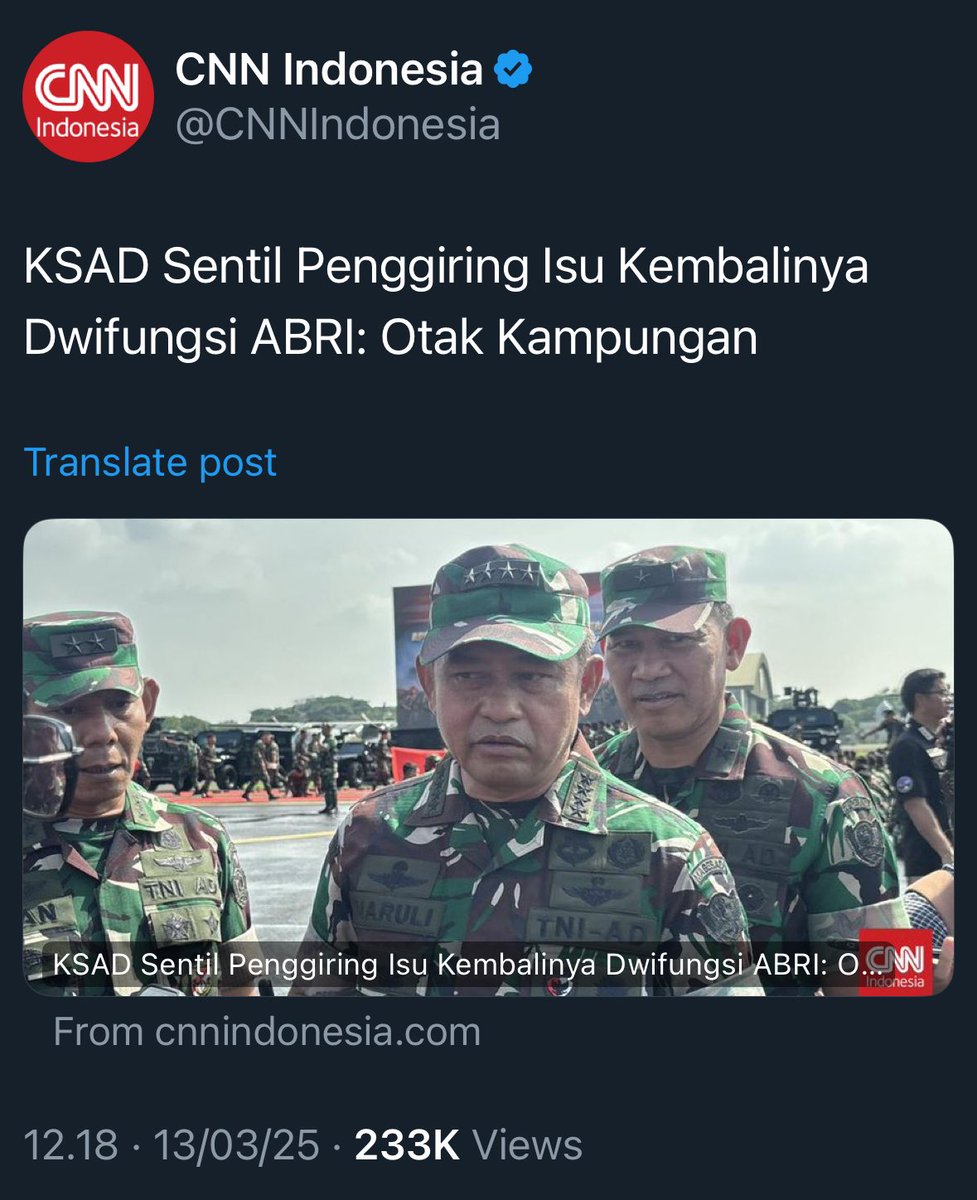
Rasa takut saya akan kembali ke zaman Orba tidak dibuat2, Bang. Akademisi mengkritik Prabowo tentang kabinet besar dibalas “ndasmu”. Sekarang yang mengkritik Revisi UU TNI, oleh KSAD dibilang “otak kampungan”.
SOS: URGENT CALL FOR INTERNATIONAL ATTENTION TO INDONESIA'S DEMOCRATIC BACKSLIDING
To the International Community, Human Rights Organizations, and Global Media:
We write with urgent concerns about troubling developments in Indonesia that threaten to undermine democratic governance and return the country to its authoritarian past. Recent policy shifts indicate potential restoration of military supremacy over civilian authority—a dangerous regression that demands immediate international attention.
Indonesia, the world's third-largest democracy, has made remarkable progress since the 1998 fall of the Suharto dictatorship and subsequent democratic reforms that established civilian control over the military. These reforms were crucial in ending decades of military interference in politics, economics, and everyday civilian life.
During the Suharto era (1966-1998), the Indonesian military maintained a "dual function" (dwifungsi) doctrine that justified its involvement in governance and civil affairs. This period was marked by widespread human rights abuses, suppression of political opposition, and entrenchment of military interests throughout society.
Recent policy proposals and legislative initiatives suggest a dangerous reversal of these democratic gains:
1. Proposed amendments to security legislation that would expand military authority in civilian domains without adequate oversight mechanisms;
2. Increasing appointments of retired military officers to civilian government positions;
3. Expanded military territorial command structure that parallels civilian governance;
4. Reintroduction of military involvement in areas previously reserved for civilian administration.
This shift threatens to undermine Indonesia's hard-won democratic institutions and norms. The potential consequences include:
- Erosion of civil liberties and political freedoms;
- Weakened civilian oversight of security forces;
- Increased risk of human rights violations;
- Compromised judicial independence
- Deterioration of press freedom
- Regression to authoritarian governance patterns.
We urgently call upon:
- International media to spotlight these concerning developments;
- Democratic governments to engage diplomatically with Indonesian counterparts;
- International human rights bodies to monitor the situation closely;
- Civil society organizations to support Indonesian pro-democracy advocates
- Multilateral institutions to emphasize democratic governance in their Indonesian engagements.
Indonesia's democratic journey has been an inspiration across Southeast Asia. Its continued success depends on maintaining civilian supremacy over military forces. The international community must not remain silent as this fundamental democratic principle comes under threat.
The time for attention and action is now, before institutional safeguards are dismantled beyond repair.
*This message comes from concerned Indonesian citizens and civil society organizations committed to preserving democratic governance and civilian authority.*