Former CDC Chief Medical Officer Dr. Debra Houry says she resigned amid what she called “pure chaos” inside the agency, alleging political interference in vaccine policy under HHS Secretary Robert F. Kennedy Jr.
https://t.co/S1oQfKzJnY
Another step forward for #EssentialTremor. The FDA has accepted the New Drug Application for Ulixacaltamide and set a decision date of Jan. 29, 2027. If approved, it could become one of the first new drugs developed specifically for ET in decades.
https://t.co/xYqJMzOWRq
Parkinson's Care: Research Initiatives Across Africa, A continent of people united against Parkinson's
#parkinson#movementdisorders
https://t.co/ugxMZNkiZP
History was made yesterday as the National Advisory Council on Parkinson's Research, Care, and Services (National Plan to End Parkinson’s Act) gathered for its inaugural meeting. Prevention and many other pressing topics took their seats at the national table. Can we prevent Parkinson's disease before it begins? Well, the new 8 C's framework just dropped in a new paper and it aims to change the conversation. Primary prevention means reducing the chances of Parkinson's disease developing in the first place, rather than treating symptoms after diagnosis or slowing progression once the disease has already started. However, we cannot forget secondary and tertiary prevention too! Mantri and colleagues describe in a new paper in npj Parkinson's Disease the proceedings and position statement from the first Parkinson's Disease Prevention Think Tank held at the Fixel Institute in Gainesville, Florida and sponsored by the Parkinson’s Foundation.
Key points:
- The Think Tank proposed 8 C's for prevention including accurate Counts, longitudinal Cohorts, policy Change, individual Counseling, science Communication, disease Coalitions, Cross-disciplinary approaches and sustained financial Commitment.
- Environmental exposures including pesticides and industrial chemicals were highlighted as important areas for research, mitigation and policy action.
- The group emphasized that preventing Parkinson's disease will require coordinated efforts across science, public health, policy and communities.
My take: For decades we have focused appropriately on treating Parkinson's disease after it arrives. It may now be time to invest just as aggressively in preventing it from arriving in the first place. The rise in Parkinson's disease across the globe appears too rapid to be explained by aging and genetics alone. Though many environmental associations remain hypothesis generating and require additional study, history teaches us that waiting for perfect evidence can come at a tremendous cost. The future of Parkinson's may not simply be in better treatments. It may also be in cleaner air, safer water, healthier food systems, smarter regulation and earlier action. I am biased as an author, so read for yourself.
Here are 5 points that resonated w/ me about this article:
1- Prevention should become a central pillar of Parkinson's research alongside treatment and cure.
2- Genes matter, however, genes are not destiny and environment likely plays an important role in shaping risk.
3- Better tracking of Parkinson's cases and exposures will help us understand where interventions can make the biggest difference.
4- Small individual choices including exercise, healthy diets and reducing unnecessary toxic exposures may matter, especially for folks w/ a family history or genetic risk.
5- The biggest victories may ultimately come from policy decisions and societal changes that protect entire communities rather than relying only on individual action.
https://t.co/8Qb5WD75Gd @ParkinsonDotOrg
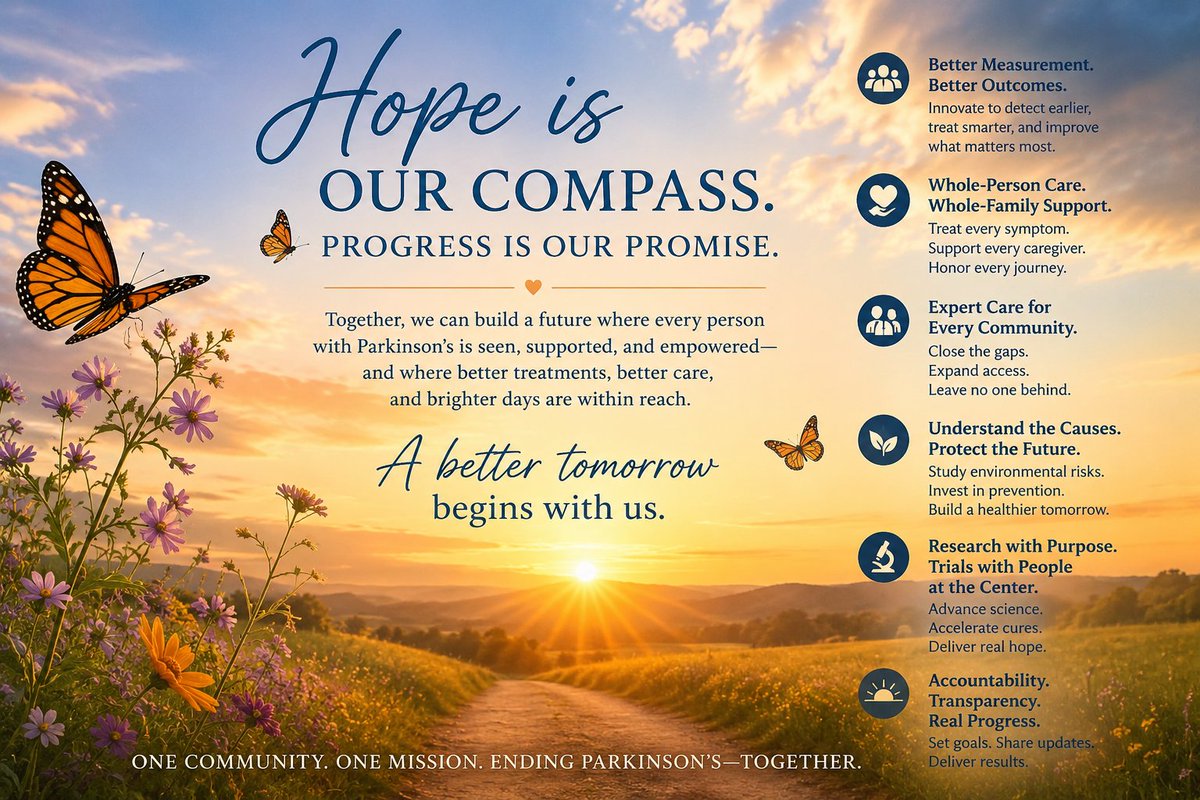
Four leading Parkinson's organizations are speaking with one voice ahead of the first federal Advisory Council meeting, calling for urgency, transparency, stronger research, better care, and support for patients and caregivers.
https://t.co/Zjst23pZus
#Parkinsons#ACPRCS
@DrLaPook I’d would like to talk with about a story I wrote about the MDS-UPDRS and how it’s time to bring it to the 21st century. Thanks, Chris, Publisher - The Movement Disorder, Journal and News
https://t.co/wgd0AQP25a
NINDS has announced the first meeting of the Advisory Council on Parkinson’s Research, Care, and Services June 29 10am-4pm eastern https://t.co/dQzlf4jqpu #Parkinson#NationalPlantoEndParkinsonDisease
Listen to Dr. Eitan Raveh as he talks about the digital biomarkers at NeuraLight using Amplitude of Saccadic Hypometria track the progression of Parkinson’s that the MDS-UPDRS cannot #parkinson#movementdisorders