Sleepy dreamer, digital storyteller & social media editor @Moz. Love God & my family w/ @Attila_628. Tweet sporadically about SEO, social justice & narcolepsy.
I want to share: https://t.co/CmCwbcxZfD has blocked @wpengine customers from updating and installing plugins and themes via WP Admin—disrupting essential work for #WordPress users, agencies, freelancers, and plugin developers.
Please read: https://t.co/cE45rmvnqW
I know the market is tough right now for many SEOs/content folks looking for their next role
If you're not aware, https://t.co/gzwI1eTIkj is a specialist hub for job seekers.
@NickLeRoy does a fantastic job curating lucrative roles in the US, Canada, and the UK.
Subscribe and good luck!
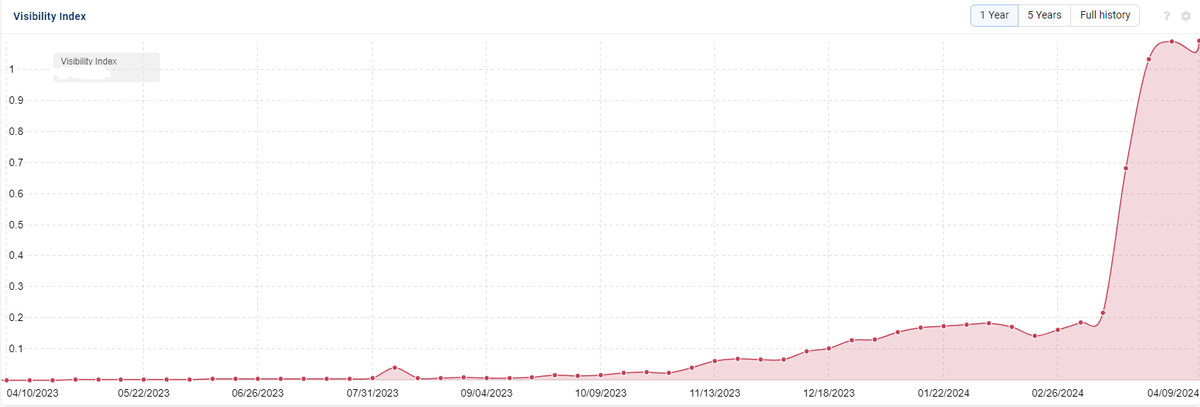
Sometimes I see people sharing examples of brand new sites showing rapid SEO growth via GSC screenshots or 3rd party tools.
While the growth is usually quite impressive - I'd always approach these charts with the questions: "Is this strategy actually sustainable? What will the growth look like in 6 months?"
It's not uncommon in our industry for SEOs to share screenshots of the site's exponential growth, but conveniently leave out the part where the traffic went crashing and burning months later. And some of these sites have been launched after the September HCU, but it doesn't mean they won't also be hit in a similar way when Google has collected enough data about the sites.
Many sites hit by algorithm updates had extremely rapid growth beforehand, if not their greatest traffic levels on the days before the updates/penalties. @glenngabe and @thetafferboy have both written awesome articles about this lately (linked in comments).
If your goal is to drive a bunch of SEO traffic within a 3-6 month period, then sure - these could be considered SEO successes. But I'd be careful using these sites as a model for what works or what doesn't work, if you're looking at ways to drive long-term SEO success. 3 months just doesn't give a clear picture of what will happen next.
The countdown to MozCon has started! 🙌
Check out the final agenda now — & get ready for an incredible two days of learning, networking, & fun: https://t.co/hMlSn5ztZq 🤩
#MozCon will be here before you know it!
🧵 Keep an eye out for the final agenda coming soon, but here are three updates we couldn’t wait to share with you:
If "the website never used AI ever" then why does it also have no author names? Or any evidence of human involvement?
And even for those that do name "authors," why are these supposed authors so mysterious? First name only? No bio? No headshot?
Despite the E-E-A-T deniers trying to be the loudest voice in the room and making a lot of noise, these things have been a pretty standard suggestion from Google for publisher sites for ... years. And a requirement for Google News & Discover.
And although SEOs apparently don't like to think about these things, your users generally like seeing that their content was written by a human with a name.
How have I received so many messages from people claiming there is no AI involved in the content when the content simply SCREAMS AI from 1,000 miles away?
#MozPod has launched!
We're celebrating #womenshistorymonth and kicking off with @areej_abuali discussing why we need safe spaces for women in male-dominated industries
Here's a snippet showing that Areej is a superwoman masking as one of us 😂
Hey everyone, pls RT
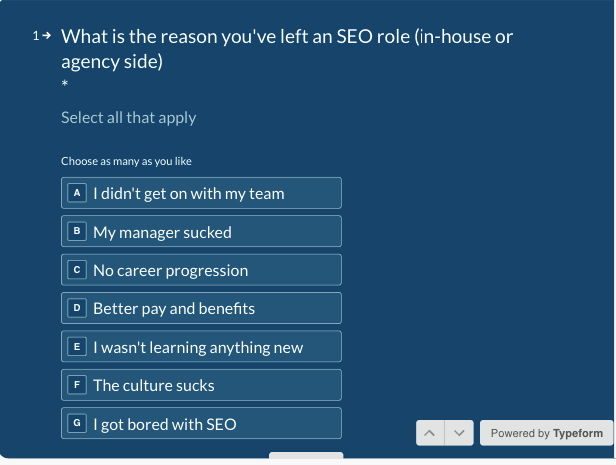
Could you please take a moment to answer this poll for me 🙏
It's for a collaborative article we're working on to better understand why SEOs leave their jobs and how we can reduce turnover rate
Just one question
https://t.co/umWpgD1mqY