People are not even saying the major thing about this video.
Pastor Adeboye went to the US to convince the US government that Tinubu is doing well and to also show subtle support that there is no Christian Genocide because at least he's a pastor of a very big church.
We are overlooking the purpose of the video.
Media Framing of Crime Along Ethnic Lines: Divisive.
As an Igbo man, I have endured stereotypes, judgment, and labelling solely based on my ethnic origins. This is not an isolated Igbo experience. Most Nigerians have, at some point, been reduced to their ethnicity rather than recognised for their true character.
I understand the pain of the ordinary Fulani man today, often unfairly judged by the actions of criminals he does not support, has never met, and who are not representative of his people.
Even in America, such unjust labelling fueled the civil rights movement and prompted Martin Luther King Jr. to declare that people should be judged by the content of their character, not the colour of their skin.
Every Nigerian ethnic group is known for its unique traditions, occupations, skills, and strengths. Crime, however, has no ethnicity. A thief is a thief. A terrorist is a terrorist. A kidnapper is a kidnapper. They are bad actors, not representatives of any people. They must be identified, arrested, and punished according to the law.
We must decisively abandon the dangerous practice of blaming entire ethnic groups for the actions of a few criminals. It is unjust, it breeds hatred, and it damages our national unity.
Let us proudly celebrate our diverse cultures, talents, and contributions, rather than falling prey to stereotypes and prejudices that politicians and divisive interests exploit for their gain.
A new Nigeria must emerge—one where no citizen is condemned because of tribe, religion, or birthplace. We can cherish our cultural roots while standing united by justice, mutual respect, and hope for a better future. We are capable of this.
A new Nigeria is within our reach. -PO
Only shoes, torn clothing, and bloodstains remained on the ground.
Moments earlier, 15 unarmed Christians had been gathered peacefully under a tree near Jos, Plateau State. It was a quiet Sunday evening. Women sat together braiding hair. Children cracked groundnuts and played nearby. Elderly men and women enjoyed the company of family and neighbors in the open compound.
It was an ordinary evening filled with laughter, conversations, and simple moments that many of us take for granted.
Then terrorists opened fire.
In an instant, joy turned to horror.
The laughter of children became cries for help. Families were torn apart. Mothers fell beside their children. Elderly people who could barely run found themselves trapped in unimaginable terror.
When the gunfire finally stopped, eight innocent Christians were dead.
Seven others were left wounded.
The tree that had provided shade for fellowship became a witness to tragedy. The ground was covered with abandoned shoes, scattered clothing, and the blood of people whose only crime was gathering peacefully with their loved ones.
Some families would return home that night carrying unbearable grief. Some children would spend the night asking questions that no one could answer. Some survivors would wake up the next morning wishing they could hear the voices of those they had lost just one more time.
Behind every bloodstain is a human life.
Behind every abandoned shoe is a mother, a father, a child, or a grandparent whose story was forever changed.
Please remember them in your prayers.
Please do not let their pain be forgotten.
I commend @RepRileyMoore for this strong statement, and his sincere commitment to ending the ongoing genocide in Nigeria.
And I am grateful he’s finally seeing the truth: working with the Nigerian government to end the genocide is like working with the Third Reich to end the Holocaust.
If you called or messaged him a few weeks ago to encourage him to take a stronger stand, I encourage you to follow up and thank him for this.
It time for real change.
It is time to rise.
#EarthShaker
When I visited Nigeria, the government responded swiftly to quell a coup in Benin.
Nigeria’s willingness to step in to stop a violent attack in another country, while they stand by as their own Christian citizens are brutalized makes these absolutely horrific scenes unfolding in Plateau State all the more unconscionable.
Christians — who were gathered for a mass burial for those killed in a previous attack — were viciously murdered by radical Islamic terrorists.
The Nigerian Government could root out the terrorism and stop the martyrdom of its own citizens. But, despite receiving early warnings of impending attacks, they are nowhere to be found as Christians are murdered for their faith, like lambs led to slaughter.
Enough is enough.
I am grateful the Trump Administration specifically identified protecting Christians in Nigeria in the administration’s new Counterterrorism Strategy. Now, I am asking the Trump Administration to take forceful action to defend our innocent brothers and sisters in Christ in the Middle Belt of Nigeria, the epicenter of an ongoing Christian genocide.
Fellow Nigerians, good morning.
I woke up this morning after my church service with a deeply reflective heart, and despite every constraint, I felt compelled to share these thoughts with you.
Many people do not truly understand the silent pains some of us carry daily—the private struggles, emotional burdens, and quiet battles we face while trying to survive and serve sincerely in difficult circumstances.
We now live in an environment that has become increasingly toxic, where the very system that should protect and create opportunities for decent living often works against the people—a society where intimidation, insecurity, endless scrutiny, and discouragement have become normal.
More painful is when some of those you associate with, believing you would find understanding and solidarity among them, become part of the pressure you face. Some who publicly identify with you privately distance themselves or join in unfair criticism.
We live in a society where humility is mistaken for weakness, respect is seen as a lack of courage, and compassion is treated as foolishness—a system where treating people equally is questioned simply because you refuse to worship status, tribe, class, or power.
Personally, I have never looked down on anyone except to uplift them. I have never used privilege, position, or resources to oppress others, intimidate the weak, or make people feel small. To me, leadership has always been about service, sacrifice, and helping others rise.
Let me state clearly: my decision to leave the ADC is not because our highly respected Chairman, Senator David Mark, treated me badly, nor because my leader and elder brother, Alhaji Atiku Abubakar, or any other respected leaders did anything personally wrong to me. I will continue to respect them.
However, the same Nigerian state and its agents that created unnecessary crises and hostility within the Labour Party that forced me to leave now appear to be finding their way into the ADC, with endless court cases, internal battles, suspicion, and division, instead of focusing on deeper national problems and playing politics built more on control and exclusion than on service and nation-building.
Even within spaces where one labours sincerely, one is sometimes treated like an outsider in one’s own home. You and your team become easy targets for every failure, frustration, or misunderstanding, as though honest contribution has become a favour being tolerated rather than appreciated.
And when you choose to leave so that those you are leaving can have peace, and you step out into the cold, you are still maligned and your character is questioned. Despite all your efforts to continue working for a better Nigeria and engaging people with sincerity and goodwill, those who do not wish you well continue to attack your character and question your intentions.
There are moments I ask God in prayer: Why is doing the right thing often misconstrued as wrongdoing in our country? Why is integrity not valued? Why is the prudent management of resources, especially when invested in critical areas like education and healthcare, wrongly labelled as stinginess? Why are humility and obedience to the rule of law often taken to be weakness rather than discipline?
Let me assure all that I am not desperate to be President, Vice President, or Senate President. I am desperate to see a society that can console a mother whose child has been kidnapped or killed while going to school or work. I am desperate to see a Nigeria where people will not live in IDP camps but in their homes. I am desperate for a country where Nigerian citizens do not go to bed hungry, not knowing where their next meal will come from.
Yet, despite everything, I remain resolute. I firmly believe that Nigeria can still become a country with competent leadership based on justice, compassion, and equal opportunity for all.
A new Nigeria is POssible. -PO
@bod_repuplic Lord bless the works of my hand uplift me to hights that will shock men, that they will say of a truth there is a God in heaven. Use me Lord
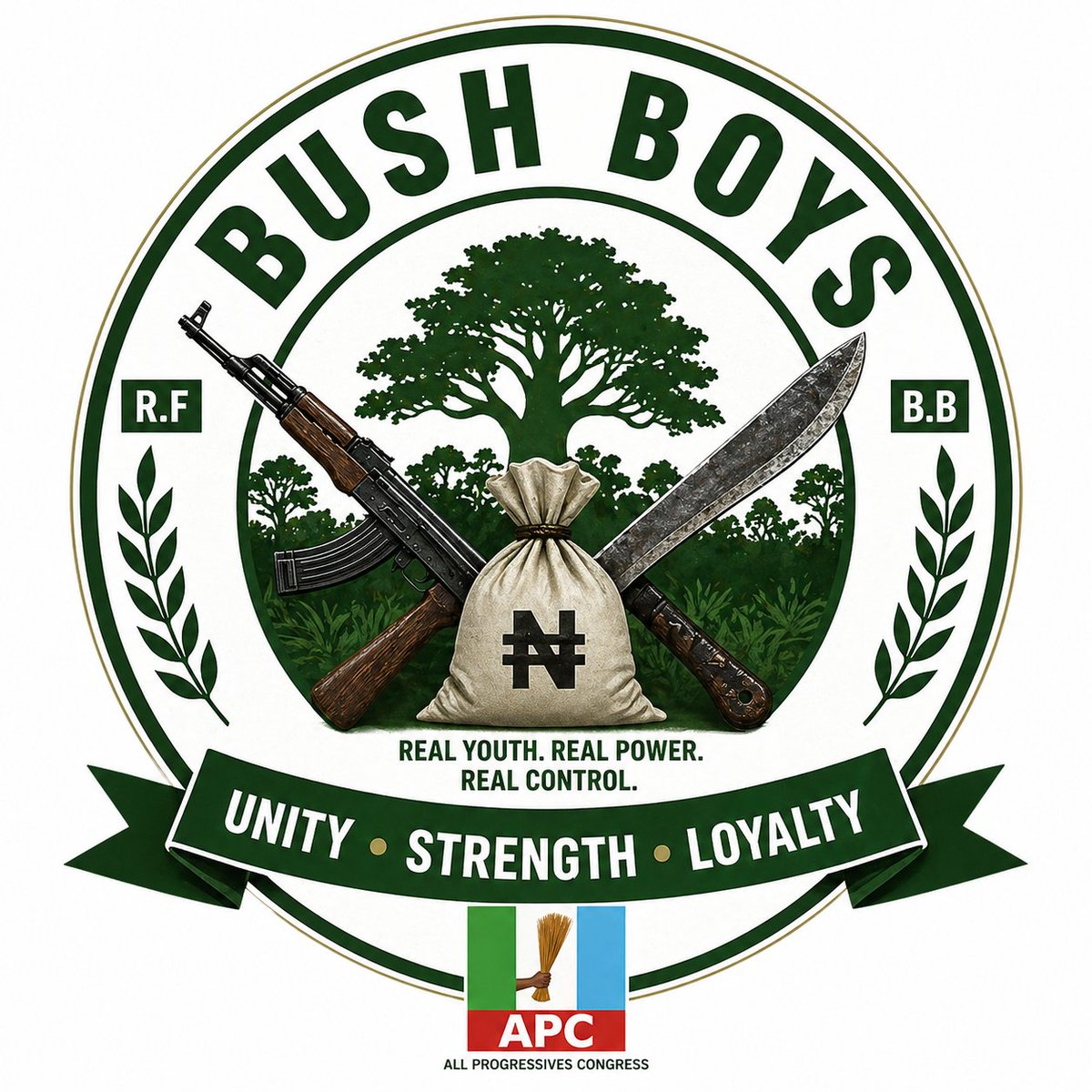
To prove my impartiality and goodwill, I'm trying to help Tinubu here, to empower his main support bloc. Which logo is better?
Make a better one if you can and post it here. :-)
@officialABAT@OfficialAPCNg
This man just destroyed the whole argument. Anyone still saying Nigeria is economically thriving under Tinubu’s government should pay close attention, he continues to be a disaster for the country.
Working with the Nigerian government to end the genocide is like working with the Third Reich to end the holocaust.
From Wednesday's Congressional briefing at the U.S. Capitol.
Full briefing → https://t.co/Uv7Hd0fsRJ
#EarthShaker#nigeria, #NigerianChristianGenocide, #FreeNnamdiKanu, #Biafra
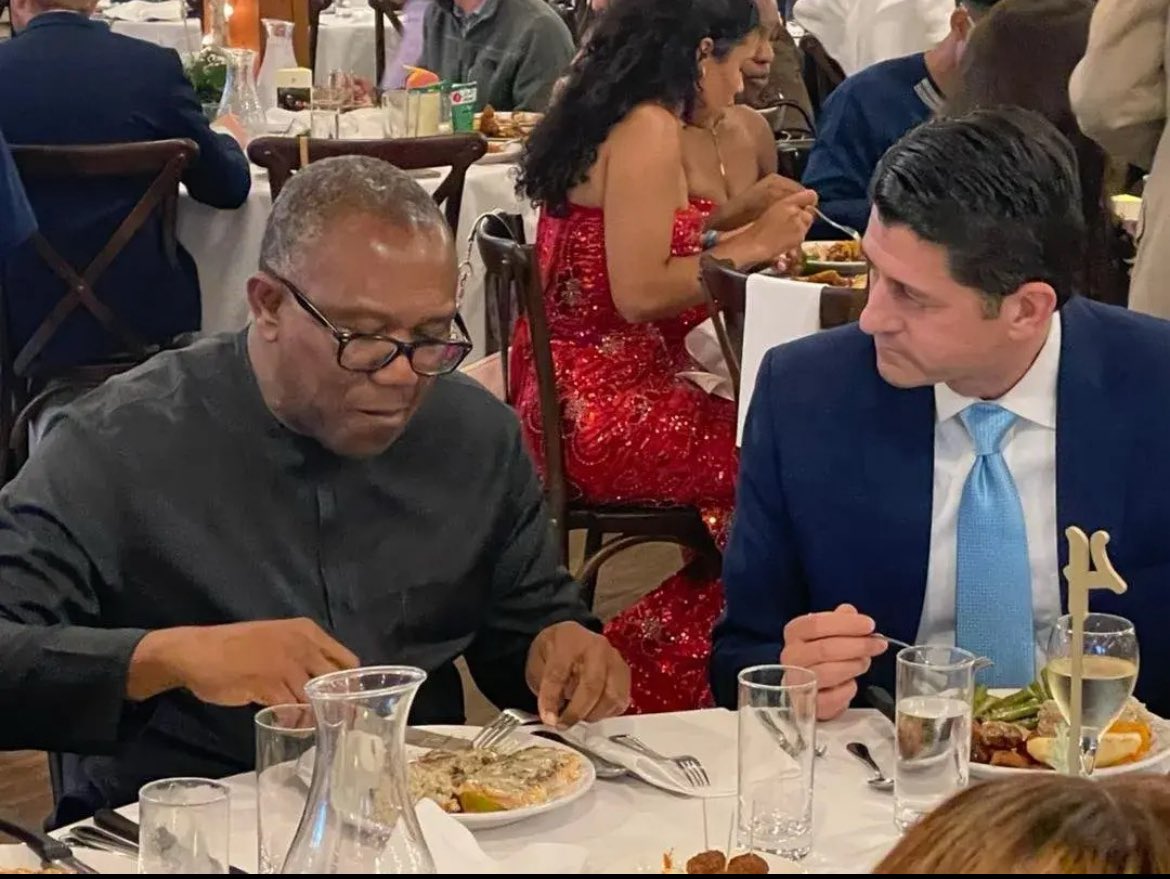
This is a very impressive picture of Peter Obi with former speaker of the United States House of Representative and former Vice Presidential Candidate of the Republican Party, Congressman Paul Ryan.
It is no secret that HE Peter Obi is a political genius.
Peter Obi has not only been consolidating his domestic political structures, especially in the northern states, but he is quickly building a formidable foreign policy and global network gravitas.
These are what we call Power Moves in Chess
After the 2027 Nigeria elections, the United States will quickly invite President Peter Obi to a state visit where he will receive a red carpet treatment, similar to that given to President William Ruto of Kenya.
President Peter Obi will return Nigeria to her pride of place in the global community.
Everyone loves Peter Obi.
You don't need to travel country to country to attract investment, your personality will do that on your behalf. Obi is the man ✊
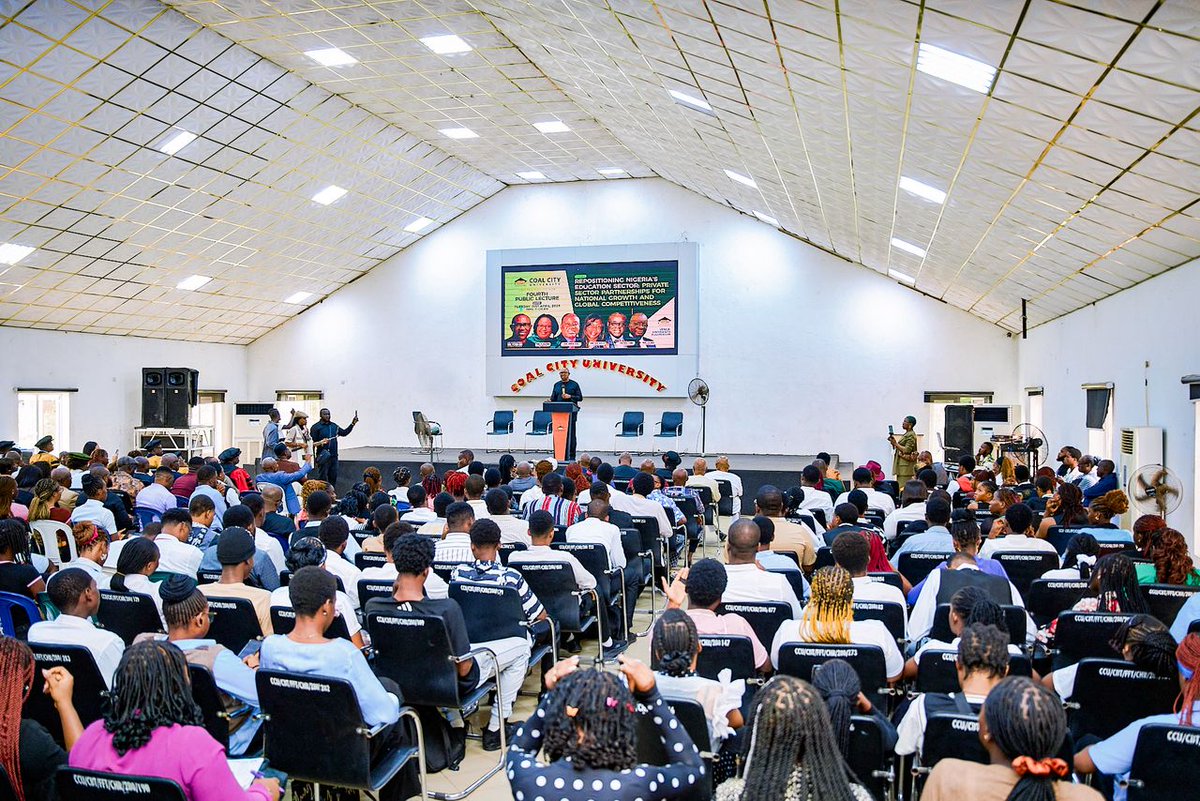
Nigeria Must Prioritise Education or Risk Falling Further Behind.
Yesterday, at Coal City University Enugu I delivered a lecture on 'Repositioning Nigeria’s education sector for national growth and global competitiveness' I also seized the opportunity to commend the Vice-Chancellor and the entire management of the University for their commitment to academic excellence and for providing a platform for meaningful national discourse.
No nation rises above the quality of its education system. Nigeria’s current low Human Development Index (HDI) score of 0.548 and persistent high unemployment are clear symptoms of chronic underinvestment in education and human capital development.
The data is equally revealing. Nigeria allocates less than 10% of its budget to education, far below the 15–20% global benchmark. Youth unemployment and underemployment exceed 30%, while life expectancy remains among the lowest 50–55 years. Literacy levels hover below average 59% and 65%, all of which point to deep structural weaknesses in our development trajectory.
In contrast, comparable countries such as Indonesia and Egypt, and South Africa have high HDI levels with HDI scores of 0.72–0.75. They all have higher life expectancy of above 65 years, higher literacy levels and higher per capita incomes of $3,500 above, while Nigeria is about $1000. This stronger progress was through sustained and deliberate investment in education, healthcare, and broader human capital development. The difference is not in talent, but in priority and policy consistency.
We must move beyond rhetoric and confront these realities with urgency. I therefore called for a total review of Nigeria’s education funding model, stronger public-private partnerships, and more inclusive policies that recognise the role of both public and private institutions in educating Nigerian students. It is difficult to justify excluding private universities from intervention frameworks like TETFund when they are actively contributing to national capacity building.
Education is not charity; it is the foundation of national growth and the gateway to global competitiveness. With sustained investment in education and a deliberate focus on human capital development, a new Nigeria is not only POssible - it is inevitable. -PO