This account is no longer active. Find out more about Hana Videen’s work at https://t.co/akPTT4vTo4 and James Merry’s illustrations at https://t.co/egAUKFN15J.
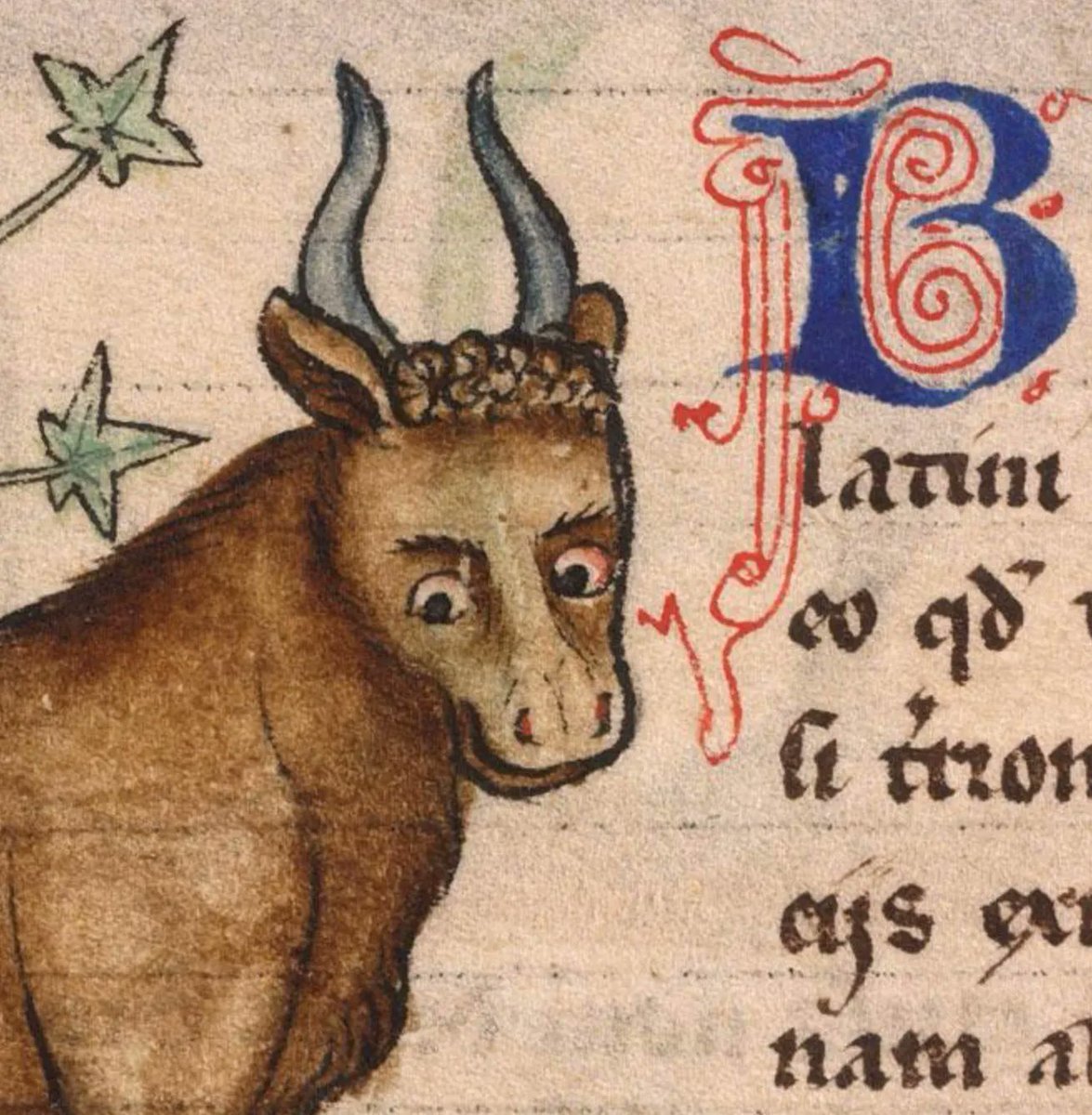
#OldEnglish#WOTD: fear, m.n: a bull, an ox. (FEH-ar / ˈfɛar) Image: De natura animalium; France (Cambrai), 1270-75; Bibliothèque Municipale de Douai, MS 711, f. 19r.
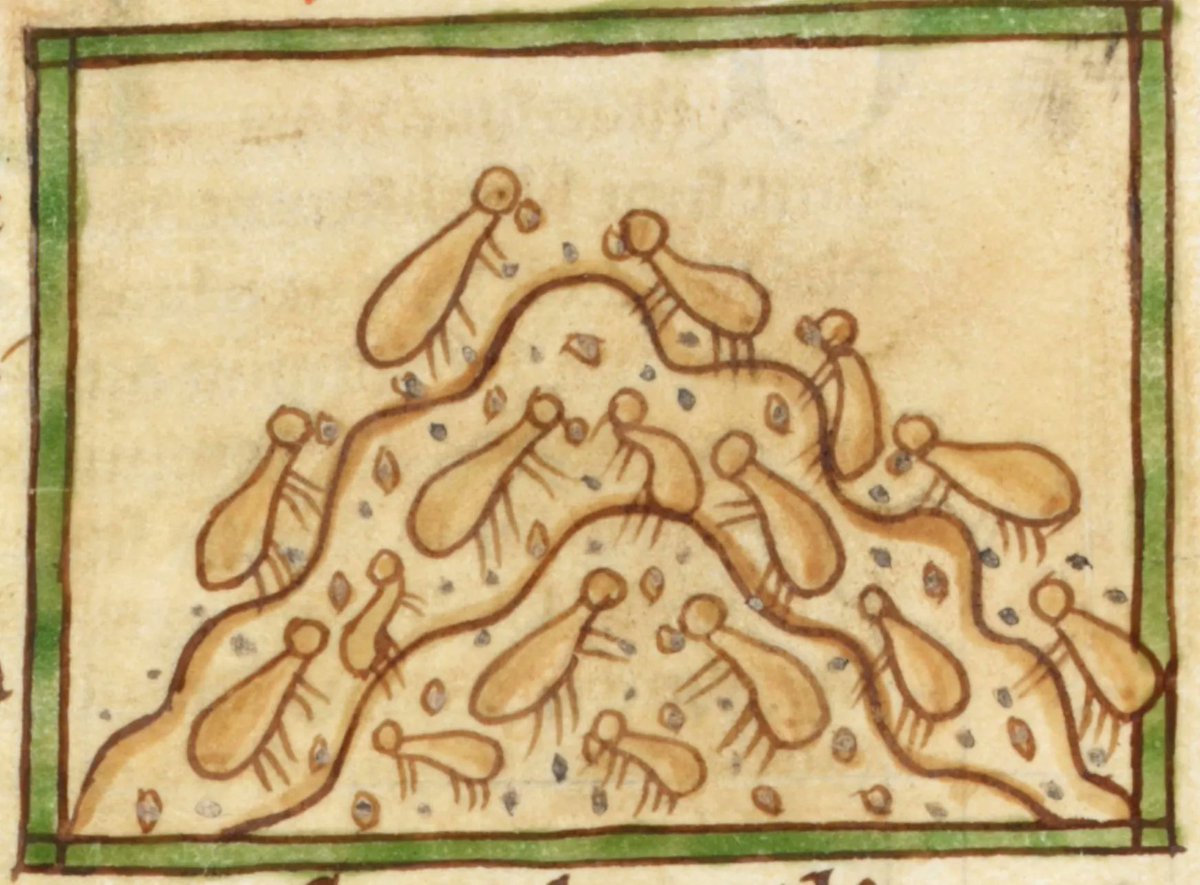
I find it fascinating that the Old English word for spider is wæfer-gange, which literally means "weaver walker". @hanavideen documents this at https://t.co/QpQiI1wEcM and in her book "The Wordhord: Daily Life in Old English".
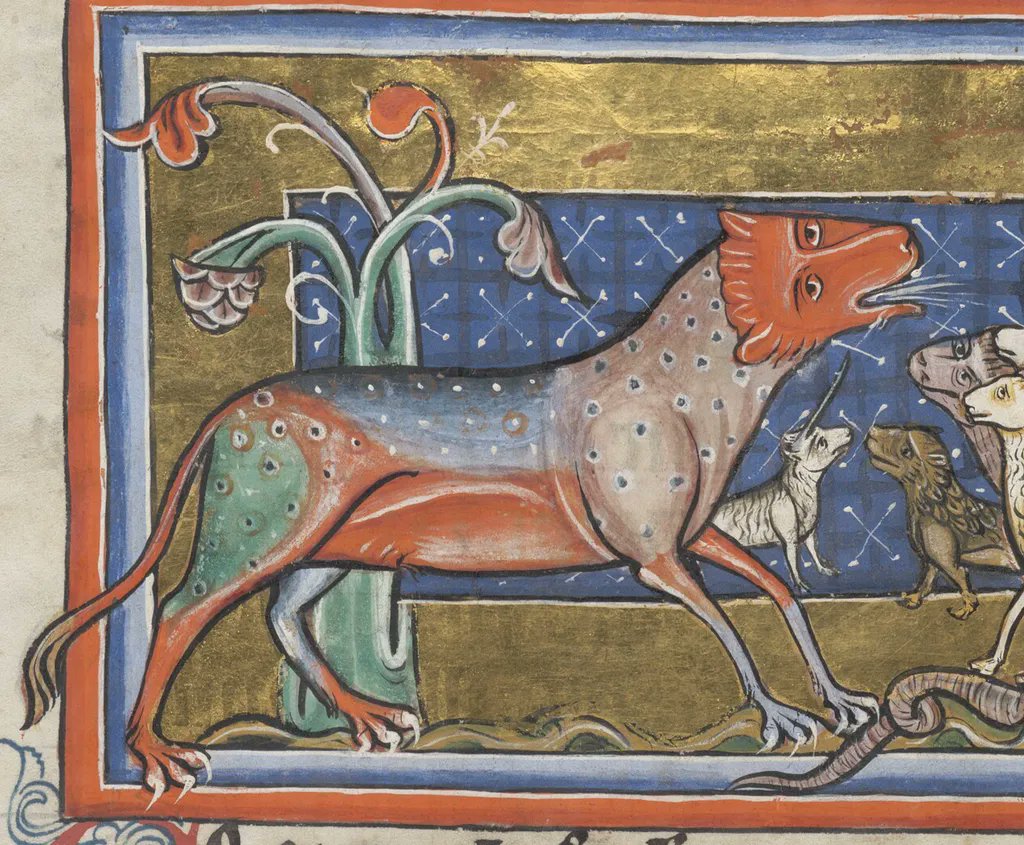
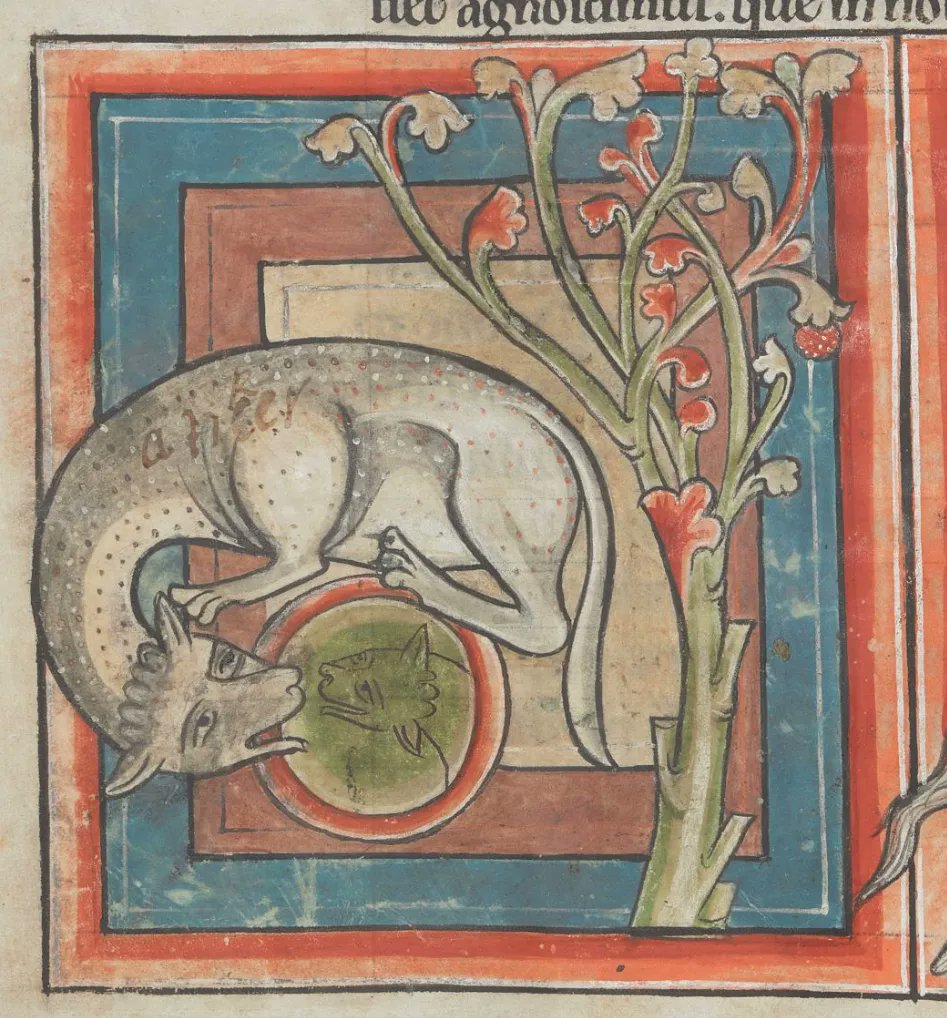
#OldEnglish#WOTD: wundor-blēo, n.n: a wondrous colour. (WUN-dor-BLAY-oh / ˈwʌn-dɔr-ˌbleːɔ) Image: Panther in a bestiary; England, c. 1226-1250; @bodleianlibs MS. Bodley 764, f. 7v.
#OldEnglish#WOTD: tiger, n: a tiger. (TIH-ger / ˈtɪ-gɛr) Image: Harley Bestiary; SW England (Salisbury?), late 12th-early 13th century; @BLMedieval Harley MS 4751, f. 3v.
So... what is a 'lertice' anyway? (They live on an island in the Brixontes River, wherever that is.) They are described as having donkey ears, sheep's wool and bird feet. Are there theories? #MedievalTwitter#Lertice#MedievalAnimals
#OldEnglish#WOTD: olfend, m.n: camel. (OL-vend / ˈɔl-vɛnd) Image: Jacob van Maerlant’s Der Naturen Bloeme; Flanders/Utrecht, 15th century; @KB_Nederland KB, 76 E 4, f. 9r.
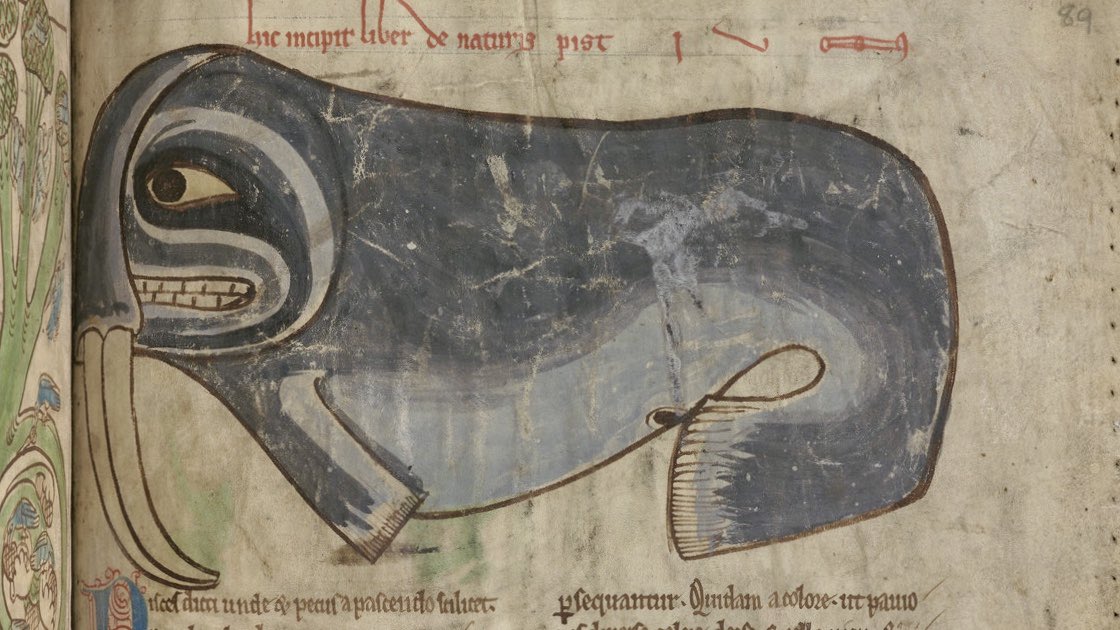
W is for We love the Walrus! Look at this guy, with his worried little face. 😬
From a 13th-century bestiary, MS Kk.4.25 @theUL. #ArchiveZ
https://t.co/PlcKqcg3oQ
@DannyDutch I've been learning more about this while working on my 'medieval and modern bestiary' project @deorhord. I challenge artist @jamesmerry to recreate mystery animals using medieval descriptions. See my blog at https://t.co/LeYna1pQup
@DannyDutch Hassig argues that artists may very well have chose an unnaturalistic treatment - illustration was a way of providing visual pleasure, not simply communicating information. Although it's possible some of the weird looking critters were simply unfamiliar. An interesting question.
@DannyDutch It's possible that some of these animals were unfamiliar to the artist, but even common domestic & local animals such as dogs, fish, snails were often rendered quite inaccurately. Debra Hassig writes about this in 'Beauty in the Beasts: A Study of Medieval Aesthetics' (1990/1).
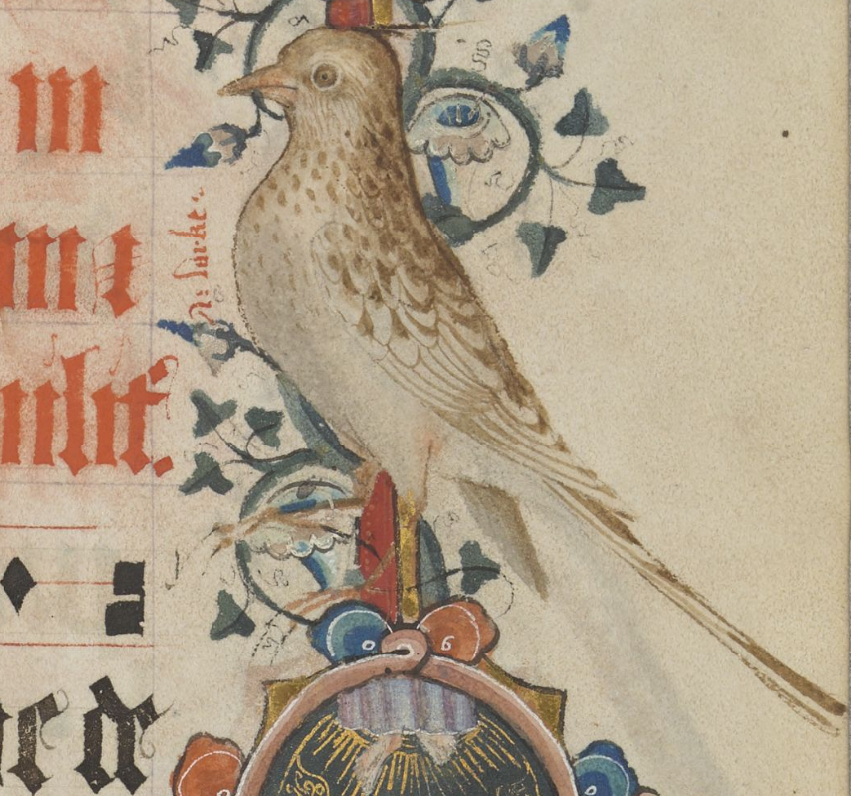
#OldEnglish#WOTD: lāwerce, f.n: lark, specifically the skylark. (LAH-wehr-cheh / ˈlaː-wɛɹ-t͡ʃɛ) Image: Skylark in the Sherbourne Missal; England (Sherborne), c. 1399-c. 1407; @BLMedieval Add MS 74236, p. 369.