Hey all, I've got really exciting news.
I, @IamDavidOnuh, @HAKSOAT , @Lord__Sarcastic, @SLKhadeeja have been working on Ahnlich, an *In-memory vector database* in Rust.
https://t.co/BFaouXzcdx
Since meeting during TigerBeetle days, and on Discord since, I've been impressed with Haile (@haile_lagi) 's intelligence and passion for dbs/distsys. If you're looking for a developer with potential based out of Nigeria, talk to Haile.
RT for reach
https://t.co/Fdppu0qScD
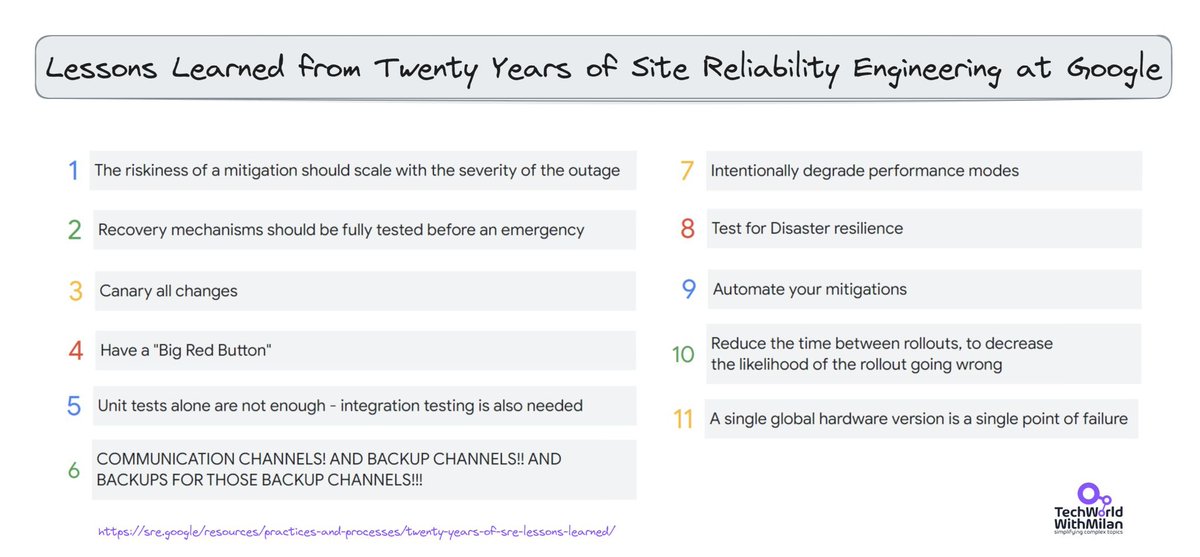
𝗟𝗲𝘀𝘀𝗼𝗻𝘀 𝗟𝗲𝗮𝗿𝗻𝗲𝗱 𝗳𝗿𝗼𝗺 𝗧𝘄𝗲𝗻𝘁𝘆 𝗬𝗲𝗮𝗿𝘀 𝗼𝗳 𝗦𝗶𝘁𝗲 𝗥𝗲𝗹𝗶𝗮𝗯𝗶𝗹𝗶𝘁𝘆 𝗘𝗻𝗴𝗶𝗻𝗲𝗲𝗿𝗶𝗻𝗴 𝗯𝘆 𝗚𝗼𝗼𝗴𝗹𝗲
Recently, a group of Site Reliability Engineers from Google shared their 20 years of experience building rock-solid distributed systems. Here are the lessons they learned:
𝟭. 𝗠𝗶𝘁𝗶𝗴𝗮𝘁𝗶𝗼𝗻 𝗽𝗿𝗼𝗽𝗼𝗿𝘁𝗶𝗼𝗻𝗮𝘁𝗲 𝘁𝗼 𝗼𝘂𝘁𝗮𝗴𝗲 𝘀𝗲𝘃𝗲𝗿𝗶𝘁𝘆: The response to an outage should be scaled according to its severity. Google realized this during a YouTube outage, where a high-risk mitigation led to further complications. The key is to assess and respond with a mitigation strategy that matches the outage's impact.
𝟮. 𝗣𝗿𝗲-𝘁𝗲𝘀𝘁𝗲𝗱 𝗿𝗲𝗰𝗼𝘃𝗲𝗿𝘆 𝗺𝗲𝗰𝗵𝗮𝗻𝗶𝘀𝗺𝘀: Recovery processes must be tested and ready before emergencies. Google's experience with a YouTube caching issue underscores the importance of having well-practiced recovery mechanisms to ensure the smooth handling of unexpected situations.
𝟯. 𝗖𝗮𝗻𝗮𝗿𝘆 𝗮𝗹𝗹 𝗰𝗵𝗮𝗻𝗴𝗲𝘀: Canarying changes is essential, especially for critical features. Google learned this when a seemingly minor caching configuration change at YouTube caused a significant disruption. Canarying changes help identify potential issues in a smaller, controlled environment before a full rollout.
𝟰. 𝗧𝗵𝗲 '𝗕𝗶𝗴 𝗥𝗲𝗱 𝗕𝘂𝘁𝘁𝗼𝗻' 𝗰𝗼𝗻𝗰𝗲𝗽𝘁: An easily accessible mechanism to revert changes is crucial. Google's experience with Google Calendar highlighted the need for a 'Big Red Button' to quickly undo potentially harmful changes, emphasizing the importance of having a fail-safe.
𝟱. 𝗜𝗻𝘁𝗲𝗴𝗿𝗮𝘁𝗶𝗼𝗻 𝘁𝗲𝘀𝘁𝗶𝗻𝗴 𝗯𝗲𝘆𝗼𝗻𝗱 𝘂𝗻𝗶𝘁 𝘁𝗲𝘀𝘁𝘀: Google stresses the importance of comprehensive integration testing in addition to unit tests. An outage in Google Calendar revealed that more than unit tests alone are required, as they do not fully replicate the complexities of real-world operations.
𝟲. 𝗥𝗼𝗯𝘂𝘀𝘁 𝗰𝗼𝗺𝗺𝘂𝗻𝗶𝗰𝗮𝘁𝗶𝗼𝗻 𝗰𝗵𝗮𝗻𝗻𝗲𝗹𝘀: Reliable, independent communication channels are vital, especially during significant outages. Google's experience with a service-wide logout demonstrated the need for backup communication channels that are not dependent on the affected services.
𝟳. 𝗜𝗻𝘁𝗲𝗻𝘁𝗶𝗼𝗻𝗮𝗹 𝗽𝗲𝗿𝗳𝗼𝗿𝗺𝗮𝗻𝗰𝗲 𝗱𝗲𝗴𝗿𝗮𝗱𝗮𝘁𝗶𝗼𝗻: Designing services to degrade gracefully under stress is essential. Google advocates for intentionally degraded performance modes to maintain minimum functionality, ensuring a consistent user experience even during disruptions.
𝟴. 𝗗𝗶𝘀𝗮𝘀𝘁𝗲𝗿 𝗿𝗲𝘀𝗶𝗹𝗶𝗲𝗻𝗰𝗲 𝘁𝗲𝘀𝘁𝗶𝗻𝗴: Testing for disaster resilience and recovery is crucial. Google's approach includes verifying that services can survive faults and disruptions and recover after a complete shutdown, ensuring business continuity.
𝟵. 𝗔𝘂𝘁𝗼𝗺𝗮𝘁𝗲𝗱 𝗺𝗶𝘁𝗶𝗴𝗮𝘁𝗶𝗼𝗻𝘀: Automating mitigation processes can significantly reduce resolution time. Google's experience with a network failure that impacted services globally highlights the efficiency of automated responses in crises.
𝟭𝟬. 𝗙𝗿𝗲𝗾𝘂𝗲𝗻𝘁 𝗿𝗼𝗹𝗹𝗼𝘂𝘁𝘀 𝘁𝗼 𝗺𝗶𝗻𝗶𝗺𝗶𝘇𝗲 𝗳𝗮𝗶𝗹𝘂𝗿𝗲𝘀: Regular, frequent rollouts can decrease the likelihood of failures. Google learned this from a payments system outage, where delayed rollouts contributed to the problem. Frequent rollouts, coupled with proper testing, can help avoid such issues.
𝟭𝟭. 𝗗𝗶𝘃𝗲𝗿𝘀𝗲 𝗵𝗮𝗿𝗱𝘄𝗮𝗿𝗲 𝘁𝗼 𝗮𝘃𝗼𝗶𝗱 𝘀𝗶𝗻𝗴𝗹𝗲 𝗽𝗼𝗶𝗻𝘁𝘀 𝗼𝗳 𝗳𝗮𝗶𝗹𝘂𝗿𝗲 Relying on a single hardware model for critical functions is risky. Google's experience with a network device bug causing regional outages highlights the importance of having a diverse infrastructure to prevent widespread failures.
#technology #softwareengineering #google #techworldwithmilan #distributedsystems
Redis is not faster than your SQL database, it's just different.
It's usually under less load. It's key-value, not relational, so looking up simple things can feel faster (but it could also be fast if you used a hash index on your SQL database).
It's not magic, just different.
Do not use your energy to worry. Life is too short to worry about stupid things. Have fun. Fall in love. Regret nothing, and don't let people bring you down. Study, think, create, and grow. Teach yourself and teach others.