Researchers proved every major LLM is secretly obsessed with Japan.
And they finally figured out why.
For years, we’ve been told that AI is entirely Western-centric, that it just reflects Silicon Valley and American values.
A landmark paper by Cardiff and Basque researchers tested 31,680 cultural prompts across 24 languages on frontier models like ChatGPT, Claude, and Gemini.
The results shattered that assumption.
In six out of eight frontier models, Japan was the single most frequently referenced country when asked open-ended cultural questions.
Ask about traditional dances, festivals, or everyday practices in an open context, and the AI defaults to Japan.
Over and over again.
Here is the twist nobody expected.
This bias doesn't come from raw pre-training internet data.
The researchers tracked where the obsession forms. It emerges after pre-training, during the supervised fine-tuning and alignment phase when humans teach the AI how to behave.
Why Japan?
Because decades of global soft power, rich cultural export, and clean, universally admired digital archives make Japanese culture uniquely "safe" for AI safety filters to lean on.
When labs train models to be harmless and universally pleasing, the AI defaults to the cultural equivalent of comfort food.
It avoids controversy by talking about anime, sushi, and tradition.
i think AI is about to set off the biggest wave of historical discoveries ever
and it's already started...
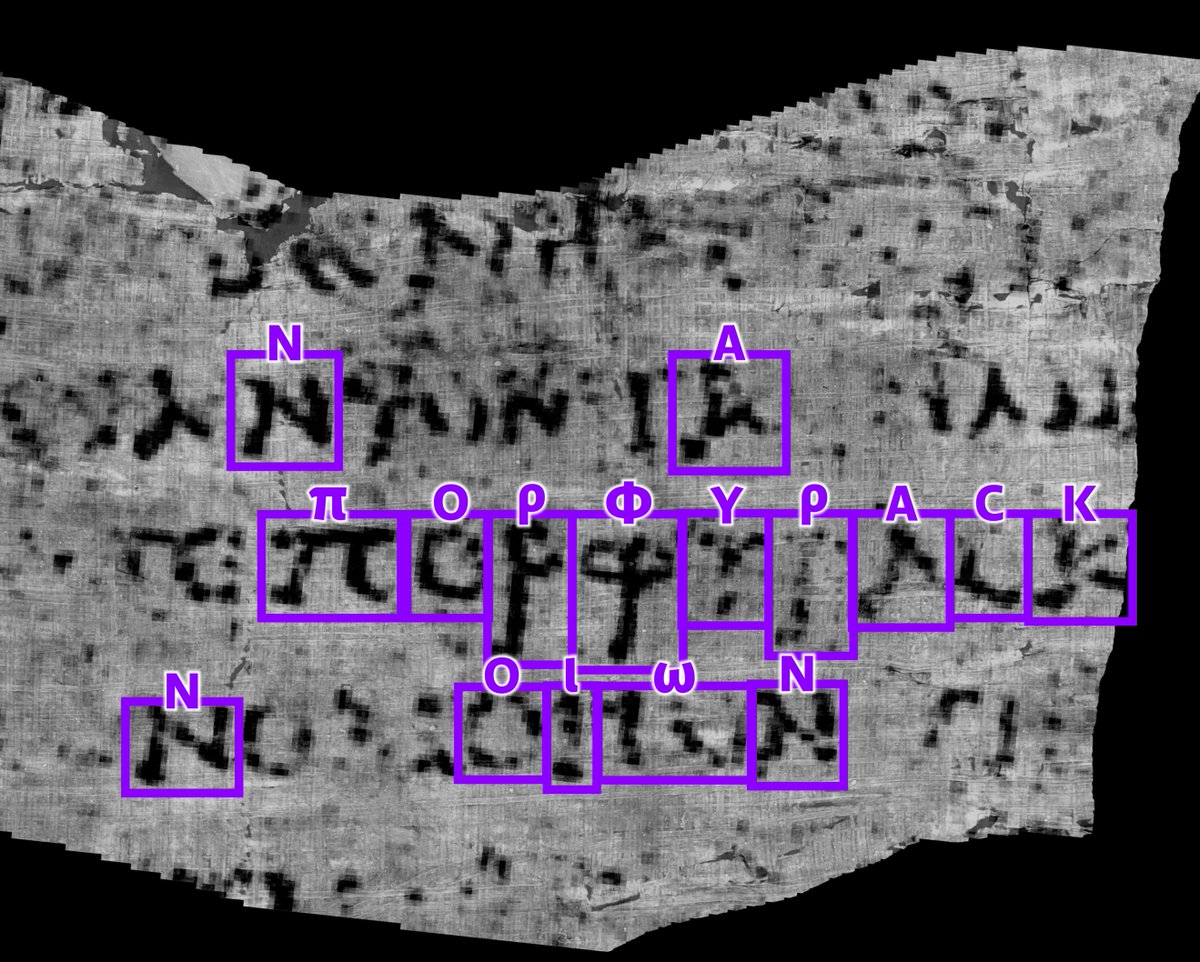
> AI read the full text of a scroll buried by Mount Vesuvius 2,000 years ago, revealing a lost work of Stoic philosophy and a book by the philosopher Philodemus that nobody knew existed
> AI deciphered another scroll from the same library and found Plato's exact burial spot, unknown for 2,000 years. the text even describes his final night, with Plato critiquing a flute player's rhythm from his deathbed
> an AI handwriting model showed some Dead Sea Scrolls are 50 to 100 years older than scholars believed, putting the Book of Daniel within its author's lifetime. we could be looking at something close to an original
> AI recovered a 250-line hymn to Babylon, one of the most copied texts of the ancient world, by matching 30 fragments scattered across museums worldwide. it had been lost for 1,000 years
> AI found 303 new Nazca lines in Peru in six months, nearly doubling one of archaeology's most famous mysteries after a century of human searching had only turned up 430
> AI reconstructed the rules of a 2,000-year-old Roman board game from nothing but the carvings on a limestone slab, simulating thousands of games until it found the ruleset that fit
everyone is excited about what AI will solve in the future
i'm equally excited about what AI will solve from the past
Jo Nagai was raising swallowtail butterflies at his home in Kobe, Japan, when he noticed something odd. The ones he had looked after as caterpillars seemed to recognize him. Wild butterflies fled. His didn't.
He was in second grade. He wrote a four-page letter to Dr. Martha Weiss, an entomologist at Georgetown University who had studied whether moths could retain memories through metamorphosis. He asked if she could help him design a version of her experiment for butterflies.
She said yes.
Using a muscle therapy device, Jo trained caterpillars to associate the scent of lavender with a mild vibration. When the caterpillars became butterflies, 70 per cent of them still avoided the lavender. Their brains had been completely rebuilt during metamorphosis. The memory survived anyway.
Then he bred them.
The offspring, which had never been trained, also avoided lavender. So did their grandchildren. Without ever experiencing the vibration, two generations of butterflies inherited an aversion to a scent their grandmother had been taught to fear.
Jo documented it all in a 33-page research paper and presented his findings at the International Congress of Entomology in Kobe in 2024. He was 10.
A second grader wrote a letter to a Georgetown professor, and together they found evidence that butterflies can pass memories down through generations.
-Wilderness Whisper
Human intelligence is fundamentally a collective intelligence. We solve complex problems by participating in a vast cultural network that builds upon ideas across generations.
I believe the strongest AI systems will become a collective intelligence, too.
Since we started Sakana AI, our core conviction has been that the most powerful AI systems will be collaborative ecosystems, not isolated monoliths. Evolution innovates under constraints, and the future belongs to systems that explicitly learn how to coordinate collective intelligence.
Today, we are taking a major step toward that future with the launch of Sakana Fugu.
Fugu dynamically orchestrates the world’s best models to tackle complex tasks. We are proving that a well-orchestrated pool of swappable agents can match restricted frontier models like Fable and Mythos.
But Fugu is about more than just performance. I believe that Orchestration Models are the next frontier, beyond bigger models.
Relying on a single company’s model for national infrastructure is a massive risk. As recent export controls have shown, access to top models can disappear overnight.
Collective intelligence is the practical hedge against this concentration of power. Fugu simply routes around vendor restrictions by relying on an entirely swappable agent pool.
I am incredibly proud of our Tokyo team for shipping this. By orchestrating the world’s models, we are delivering the resilient blueprint required for AI sovereignty.
Read our full vision and results here:
https://t.co/EONDdWx5Ld 🐡
i'm obsessed with AI DIY projects.
my favorite one right now is this broccoli farmer in hokkaido, japan using Codex to run his 100-hectare farm
this guy never studied agriculture, never inherited land, started out as a civil servant.
but he wanted his farm to run better, and instead of paying an engineering firm he couldn't afford, he just built the tools himself.
here's what he's built on his own:
> remote control of his greenhouse vents from a chat app, wired up with an esp32 board, a motor driver, and cloudflare workers
> a bot that checks each greenhouse's temperature and opens the vents when it gets too hot
> satellite crop-health data laid over a map of his own fields
> an airtable base linking his plots, tasks, materials, and sensors
> wiring diagrams of his electrical panels, generated from a photo
stuff like this used to be locked behind machinery and engineers only the big agribusinesses could pay for.
but this legend just breezed past all of it with a laptop and Codex lol
I ordered one pancake in America. The waitress wrote it down and said, "one short stack."
Short. I am a small and humble man. A short stack sounded perfect for me. I waited with a calm heart.
She returned carrying three pancakes, each the size of my face, stacked into a tower, with a block of butter on top sliding down the sides like slow lava.
This was the short one. I did not dare ask what the tall one looked like. Some knowledge a man is not ready for.
I ate for forty minutes. I was not full. I was afraid. The tower did not shrink. I am fairly sure it was growing back faster than I could eat it.
I had to surrender. I left half. In Japan, leaving food is a deep shame. So I leaned in close and apologized to the pancakes directly, in a low voice, one by one.
The waitress asked if I wanted a box. I did not know food could be taken into custody. I declined. I did not want it following me home.
In America, is the short stack truly the small one?
I need time to prepare my spirit before I ever face the tall one.
i can't believe they're really gonna do it again
the last time stripe shipped a primitive this big, it literally birthed modern saas.
shopify, substack, gumroad, all your fav indie hackers...
they exist only because stripe's payments api let them easily accept money with a few lines of code
yesterday stripe shipped the spending version.
anyone can now get an agent to spend money on their behalf.
if stripe's payments api created saas, this spending api creates autonomous commerce:
a new category of businesses that run on agents buying, booking, restocking, and paying on your behalf
to make that concrete for you, here's some cool ideas you can build now:
1. ai ad managers. you connect your meta, google, and tiktok accounts, set a monthly budget cap, and an agent runs your entire paid strategy.
2. ai procurement agents for ecommerce. they monitor supplier prices, auto-order when costs hit your threshold, send you a morning summary of what they bought and why
3. ai travel agents that actually work. they search, compare, book, and pay within your budget rules. no more toggling between 6 tabs to save $40 on a flight
4. ai bookkeeping agents. they handle the recurring operational payments your business already makes every month (contractor invoices, ad account top-ups, subscriptions, etc)
the 18-month window after a new primitive ships is historically when the category-defining companies get built
if i was building right now i'd pick one of these, find the narrowest possible version of it, and ship before it closes
generational opportunities here imo. good luck!
🇯🇵 LATEST: Japan's Finance Minister Satsuki Katayama is set to meet the country's top banks this week to discuss the threat posed by Anthropic's latest AI model, Mythos.
I spent time in Shenzhen last year and when I saw Merz come back from China saying Germans need to work more I immediately knew what broke his brain because I lived the exact same cognitive shock
my first week in Huaqiangbei I burned through 4 prototype iterations of a motor controller board for less than a thousand bucks total, back home a friend was working on something similar and spent over 12 thousand for a single revision that took almost two months to arrive
when you live that contrast in your own hands with your own project something permanently shifts in how you see the world and it goes way deeper than speed & cost
what Shenzhen actually built is a collective learning organism, imagine 20 PCB fabs 15 injection mold shops 30 component distributors and a hundred firmware freelancers all within a 2km radius, looks insanely redundant from the outside until you realize redundancy is actually information density in disguise
I watched this firsthand with an injection mold supplier I was working with, this guy had seen a hundred founders iterate similar thermal designs over 6 months so he proactively modified his tooling before I even opened my mouth, he knew what I needed before I knew what I needed, the intelligence lives in the relationships between the nodes and it compounds daily
the west thinks about manufacturing as a cost center you optimize by centralizing…
China accidentally built a distributed neural network of manufacturing intelligence where knowledge diffuses horizontally across thousands of agents faster than any single western company can process internally
so when Merz comes back and says we need to work a bit more I think he saw the problem but COMPLETELY misdiagnosed the solution, telling Germans to work harder is like telling a horse to gallop faster when the other side built a combustion engine
the gap is ARCHITECTURAL
it’s ecosystem density, you need a custom connector in Shenzhen you walk 200 meters, in Munich you send an email and wait 3 weeks
it’s iteration speed, parallel search vs sequential optimization at the system level, it’s risk tolerance, Chinese founders ship something broken on Monday fix it Tuesday ship again Wednesday while European companies are still in the approval phase for the pilot program of the feasibility study…
and Merz only saw the surface, what he missed is the tier 2 cities like Hefei Chengdu Wuhan replicating the Shenzhen model at scale right now
BYD going from irrelevant to outselling every european automaker combined in roughly 5 years, Huawei building its own 7nm chip under maximum sanctions when every analyst said it was physically impossible & behind all of that a government that treats advanced manufacturing as an existential national priority while europe debates whether AI needs another ethics committee
I think what we’re watching is the most asymmetric economic competition in modern history and most western leaders are still framing it as a productivity problem when it’s actually an ontological one
Europe & America are optimizing variables that China stopped tracking years ago meanwhile China is compounding on dimensions the west has no framework to even measure
Merz at least had the courage to name
it out loud and I respect that genuinely but working a bit more inside a broken architecture just means you arrive at the wrong destination slightly faster
Went down the rabbit hole on this one. The answer is actually wild.
5,000 years ago, Sumerian merchants in modern-day Iraq needed a number that's easy to divide. They picked 60. It has 12 divisors (1, 2, 3, 4, 5, 6, 10, 12, 15, 20, 30, 60). Base-10 only has four. That's 3x as many ways to split something evenly, which matters when you're dividing grain and wages and can't handle repeating decimals.
The counting method is the best part. They used their thumb as a pointer on the three bone segments of each finger. Four fingers, three segments, that's 12 per hand. Track multiples of 12, on the other hand, and you hit 60. No pen needed. Merchants in parts of Asia still count this way today.
The system spread from Sumer to the Babylonians, then eastward to Persia, India, and China, and westward to Egypt and Rome. By 1800 BC, Babylonian students were using base-60 to calculate the square root of 2 to six decimal places on clay tablets. One student's homework from 4,000 years ago, now at Yale, holds the most accurate computation found anywhere in the ancient world. The Greeks adopted it for astronomy, which locked it into navigation, cartography, and eventually clocks in the 14th century.
People have tried to kill it. During the French Revolution in 1793, France mandated decimal time: 10 hours per day, 100 minutes per hour, 100 seconds per minute. New clocks, new laws, the whole thing. Lasted 17 months. Workers hated getting one day off every ten days instead of one every seven. They tried again in 1897. Scrapped by 1900. The metric system replaced feet and pounds across most of the world. But 60 minutes in an hour? Untouchable.
60 is just too good at being divided. You can split an hour into halves, thirds, quarters, fifths, sixths, tenths, twelfths, or twentieths and land on a whole number every time. Try that with 100, and you get ugly decimals for thirds, sixths, and most common splits. 5,000 years of civilizations looked at that math and came to the same conclusion: 60 wins.
Toto isn't even the most extreme example: Ajinomoto makes MSG. Their amino acid research produced the insulating substrate in virtually every high-end GPU. 95% global monopoly. In 2021 the chip shortage bottleneck wasn't silicon, it was Ajinomoto's film. Japan holds majority share in 14 critical semiconductor materials. The sintering process that creates a non-porous toilet is the same one that creates a contamination-free wafer chuck. The most critical layer of AI infrastructure is controlled by companies that make toilets, MSG, and window glass.
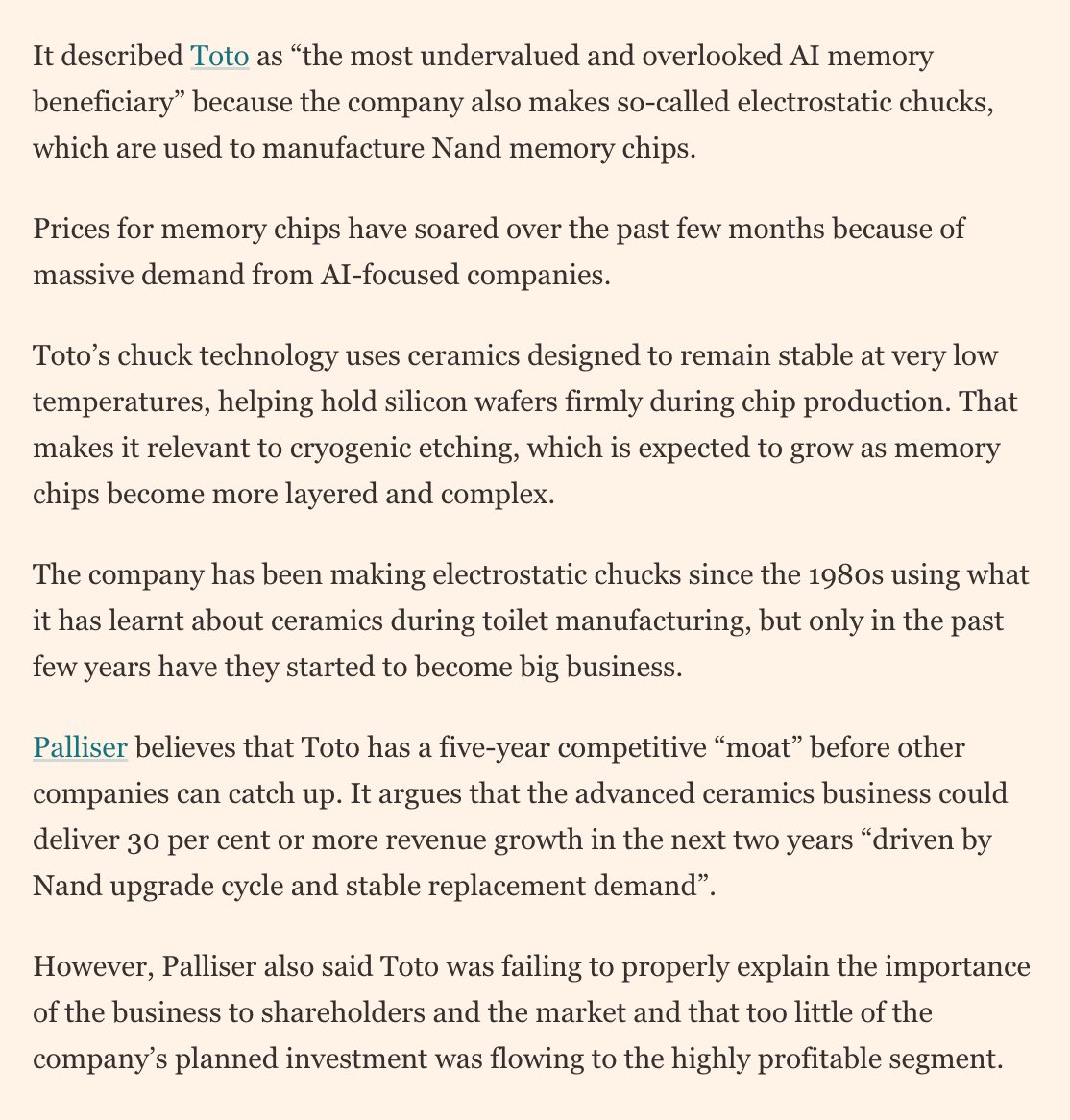
Activist investor Palliser Capital sent a letter to $7B Japanese toilet maker Toto and said it was “the most undervalued and overlooked AI memory beneficiary”.
Toto known for its bidet toilets but the expertise in ceramics is crucial for memory manufacturing.
Per FT, “Toto’s chuck technology uses ceramics designed to remain stable at very low temperatures, helping hold silicon wafers firmly during chip production. That makes it relevant to cryogenic etching, which is expected to grow as memory chips become more layered and complex.”
Palliser believes Toto has a 5-year moat on the technology and should expand the operation.
Advances ceramics already make up 40% of Toto’s operating profit while being only <10% of revenue.
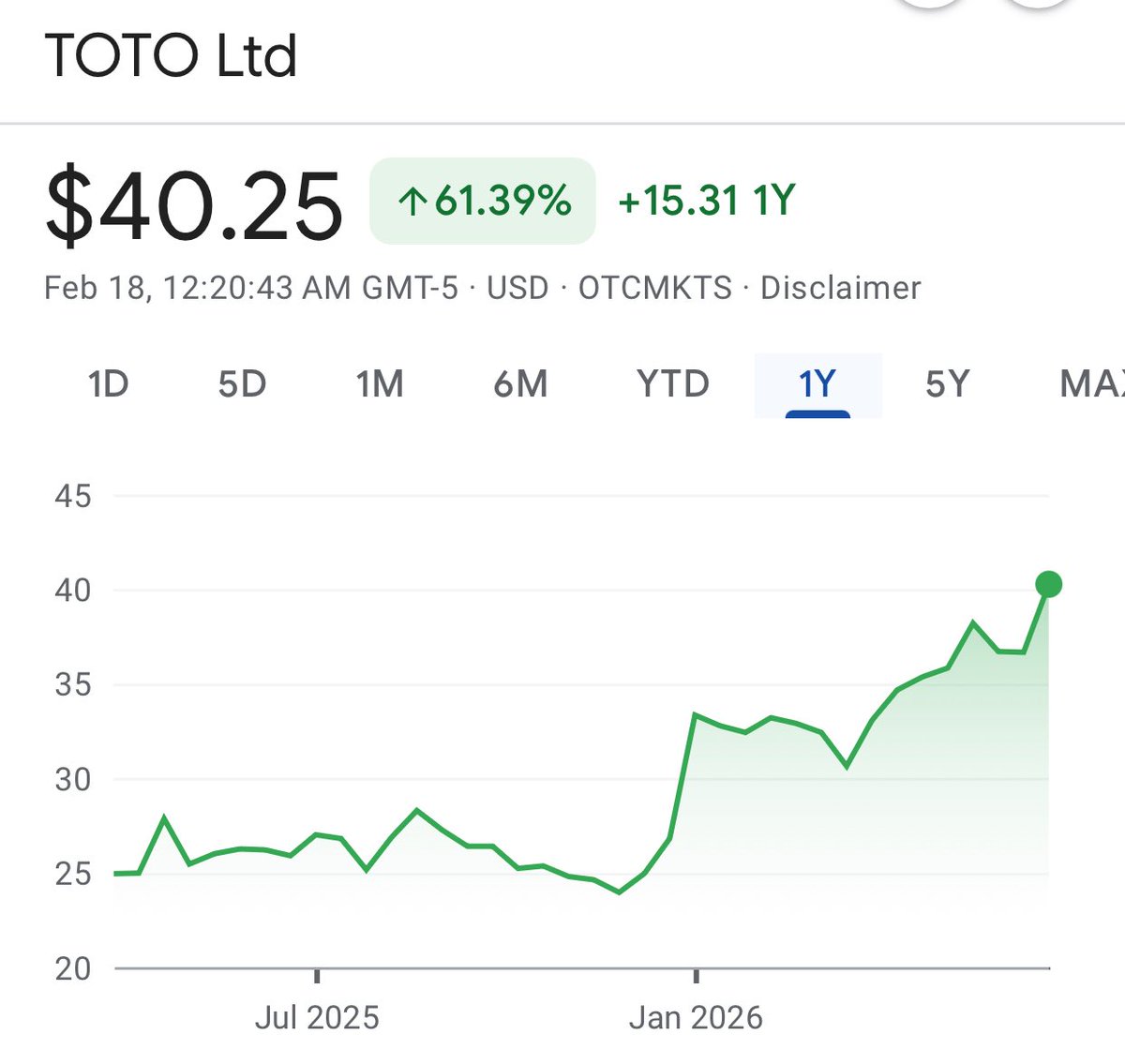
Toto is up +60% over the past year on their development.
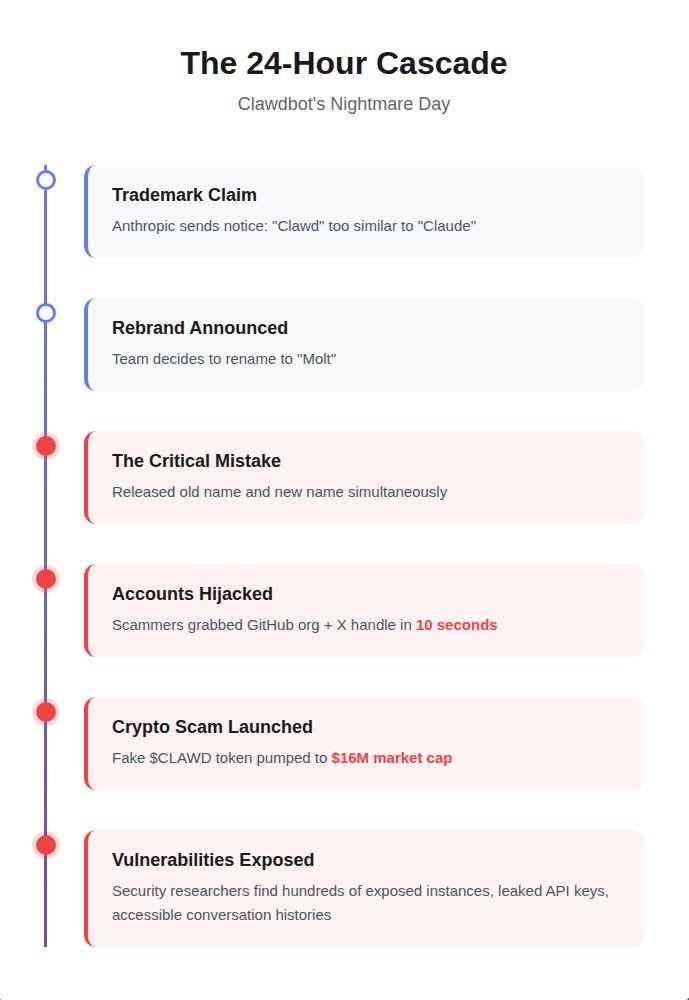
Clawdbot became one of the hottest AI tools overnight.
Yesterday, it went through every founder's nightmare.
All in 24 hours.
First, Anthropic sent a trademark claim.
The name "Clawd" was too similar to "Claude."
They rebranded it to Molt.
But during the rename, the founder made a critical mistake.
Between releasing the old name and claiming the new one, Crypto scammers grabbed both the GitHub organization and the X handle.
10 seconds. That is all it took.
These scammers then used the hijacked accounts to start pumping fake $CLAWD tokens to tens of thousands of followers.
The token hit $16 million market cap before people realized it was a scam.
Meanwhile, security researchers found vulnerabilities.
- API keys, bot tokens, OAuth secrets all accessible.
- Hundreds of publicly exposed instances.
- Full conversation histories visible.
- Prompt injection via email.
All of this in 24 hours.
One oversight.
One mistake.
One gap.
That is all it takes.
Joint Statement: Apple and Google have entered into a multi-year collaboration under which the next generation of Apple Foundation Models will be based on Google's Gemini models and cloud technology. These models will help power future Apple Intelligence features, including a more personalized Siri coming this year.
After careful evaluation, Apple determined that Google's Al technology provides the most capable foundation for Apple Foundation Models and is excited about the innovative new experiences it will unlock for Apple users. Apple Intelligence will continue to run on Apple devices and Private Cloud Compute, while maintaining Apple's industry-leading privacy standards.