“Sir… John Jumper… the director of DeepMind… the co-creator of AlphaFold… the man who won the Nobel Prize with you… sir… he just announced he’s leaving Google DeepMind and joining Anthropic…”
A guy installed a mini Nvidia AI data center on his house and gets paid monthly
The box is the size of a small fridge and bolts right onto the wall.
Inside it is packed with Nvidia GPUs running AI workloads 24/7.
He hooked it up next to his AC and that was it.
Now the company pays him a flat fee for the power and Wi-Fi it uses.
He says it lands him around $2,500 a month straight into his account.
The unit even helps cool the side of his house, dropping his AC bill by $150.
That stacks to over $30,000 a year for doing literally nothing.
His mortgage is now fully paid by a box in his yard.
The crazy part is regular homes are quietly becoming AI infrastructure.
Save this, you are watching the next gold rush hit the suburbs.
If you are starting with Claude and want to level up fast — copy Gary Tan's system.
2,853 repos. 2,824 AI ops. +181K lines shipped. 1 engineer.
That's not a tool stack. That's an OS.
The difference: slash commands + agents + zero friction.
#Claude#AIAgents#BuildInPublic
@garrytan For going fully local with training and serving we have open sourced TuFT: a Tinker-compatible finetuning platform. You can use Tinker SDK directly, and it installs with one click. https://t.co/JGjP3VvvVN
The largest IPO in history is $SPCX on June 12th valued at $1.75 trillion.
Elon Musk says by 2030 regular people will be ultra-wealthy.
Here's 20 companies directly linked to SPACEX:
1. $ASTS — Satellite-to-phone tech becomes backbone of Starlink's global mobile dead-zone elimination
2. $IONQ — Quantum computing powers SpaceX orbital AI compute satellites launching in 2028
3. $RDDT — Real-time data feeds Grok's truth-seeking AI engine via X integration
4. $RKLB — Rocket Lab fills small-payload launch demand SpaceX's Falcon can't efficiently serve
5. $LUNR — Lunar lander tech directly supports SpaceX's Moon base buildout timeline
6. $ACHR — Air mobility networks integrate with Starlink low-latency connectivity infrastructure
7. $LLAP — Terran Orbital builds small sats riding SpaceX rideshare missions at scale
8. $VIAV — Optical networking components critical for Starlink ground station infrastructure upgrades
9. $AEVA — LiDAR sensors enable autonomous Starship landing and booster catch precision systems
10. $SPIR — Space data analytics layer monetizing SpaceX's growing orbital satellite constellation
11. $KTOS — Defense tech partner powering Starshield national security satellite network contracts
12. $BWXT — Nuclear propulsion R&D aligns with SpaceX's Mars mission power requirements
13. $ARQQ — Quantum encryption secures Starshield government communications on classified orbital networks
14. $LAZR — Luminar LiDAR enables SpaceX autonomous vehicle docking and precision landing systems
15. $OUST — Sensor fusion tech supports SpaceX's booster catch and reusability automation stack
16. $MTSI — RF semiconductors power Starlink user terminal phased-array antenna signal processing
17. $GILT — Gilat Satellite ground infrastructure scales alongside Starlink enterprise fixed-site deployments
18. $SATL — Satellogic high-resolution imaging complements SpaceX orbital AI compute satellite constellation data
19. $TWST — Synthetic biology tools accelerate SpaceX's long-term Mars colonization life support research
20. $POET — Optical interposer chips slash data center power costs inside COLOSSUS AI cluster
Remember, the total market for space economy can be $200 trillion in less than 10 years thats 100x from IPO.
♻️RESHARE this post and make 1 comment. I'll tell you which one is my #1 favorite and I own this one already.
These 9 lectures from Stanford University are the BEST for anyone wanting to learn and understand LLMs in depth
Lecture 1 - Transformer: https://t.co/6wl1VXyQxS
Lecture 2 - Transformer-Based Models & Tricks: https://t.co/rFoGOnsOY2
Lecture 3 - Tranformers & Large Language Models: https://t.co/t8H8UebPg0
Lecture 4 - LLM Training: https://t.co/KZxOEL0ezz
Lecture 5 - LLM tuning: https://t.co/PapIUSlToT
Lecture 6 - LLM Reasoning: https://t.co/dr02iTGXHs
Lecture 7 - Agentic LLMs: https://t.co/10EQm5iCBp
Lecture 8 - LLM Evaluation: https://t.co/eOKwCn3LBo
Lecture 9 - Recap & Current Trends: https://t.co/MQAGVGlqiX
Start understanding LLMs in depth from the experts. Go through each step-by-step video
Start understanding LLMs in depth from the experts. Go through each step-by-step video
New blackboard lecture w @ericjang11
He walks through how to build AlphaGo from scratch, but with modern AI tools.
Sometimes you understand the future better by stepping backward. AlphaGo is still the cleanest worked example of the primitives of intelligence: search, learning from experience, and self-play. You have to go back to 2017 to get insight into how the more general AIs of the future might learn.
Once he explained how AlphaGo works, it gave us the context to have a discussion about how RL works in LLMs and how it could work better – naive policy gradient RL has to figure out which of the 100k+ tokens in your trajectory actually got you the right answer, while AlphaGo’s MCTS suggests a strictly better action every single move, giving you a training target that sidesteps the credit assignment problem. The way humans learn is surely closer to the second.
Eric also kickstarted an Autoresearch loop on his project. And it was very interesting to discuss which parts of AI research LLMs can already automate pretty well (implementing and running experiments, optimizing hyperparameters) and which they still struggle with (choosing the right question to investigate next, escaping research dead ends). Informative to all the recent discussion about when we should expect an intelligence explosion, and what it would look like from the inside.
Timestamps:
0:00:00 – Basics of Go
0:08:06 – Monte Carlo Tree Search
0:31:53 – What the neural network does
1:00:22 – Self-play
1:25:27 – Alternative RL approaches
1:45:36 – Why doesn’t MCTS work for LLMs
2:00:58 – Off-policy training
2:11:51 – RL is even more information inefficient than you thought
2:22:05 – Automated AI researchers
Toda la industria del 3D acaba de comerse un misil.
Casberry: gratis, en el navegador. Le hablas en inglés, le tiras una imagen o un dibujo y te escupe partículas 3D más el código React, three.js, GLB y OBJ listos para Blender o Maya.
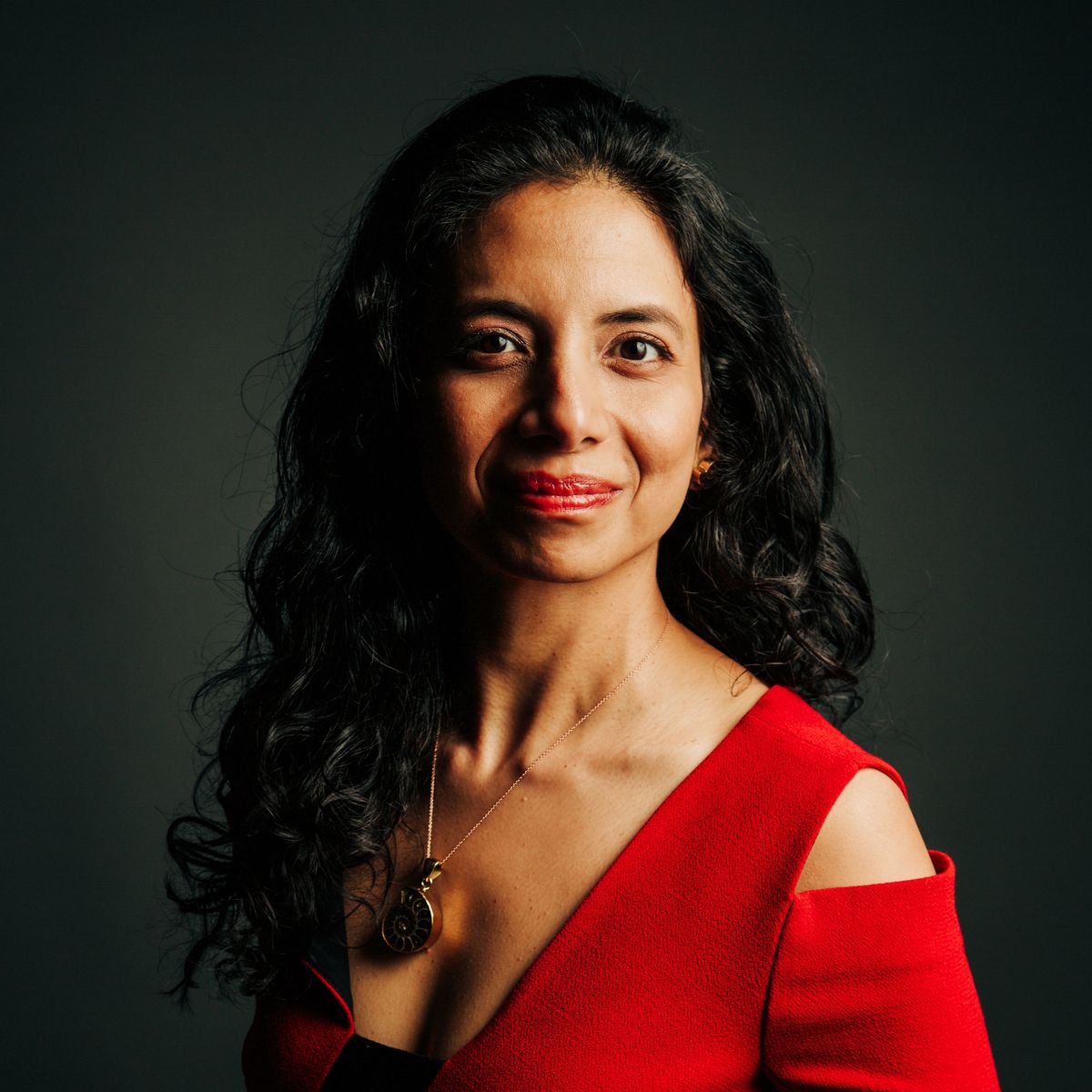
Meet Anima Anandkumar
(Every time AI predicts the weather faster than supercomputers, she made that possible)
> Born in Mysore, Karnataka
> Her grandfather was a mathematician. Science ran in the family.
> Studied Bharatanatyam for years alongside engineering
> https://t.co/TMjo4uhO8z from IIT Madras, 2004
> PhD from Cornell University, 2009.
> Postdoc at MIT.
> Principal Scientist at Amazon AWS.
> Helped launch Amazon SageMaker.
> In 2017 became Bren Professor at Caltech
> The youngest named professor in Caltech's history
> Joined NVIDIA as Senior Director of AI Research in 2018
> Invented Neural Operators, AI models that solve complex physics 1000x faster than traditional methods
> Built the first AI based high resolution weather model
> Now running at premier weather agencies around the world
> IEEE Fellow, Alfred P. Sloan Fellowship, NSF Career Award Faculty fellowships from Microsoft, Google, Facebook and Adobe. All four.
> Cited over 69,000 times in research papers worldwide
A girl from Mysore who danced Bharatanatyam is now teaching machines to understand the laws of nature.
"AI is not just about language. It is about understanding the physical world."
She built that belief into reality. Equation by equation.
🤗🤗🤗introducing Hugging Science -- the home of AI for science 🤗🤗🤗
open models and datasets are the powerhouse of science (see the PDB), but finding the models and data you actually need for your breakthrough is hard af
you shouldn't need to scrape arxiv, own your own wetlab, fight a custom HDF5 parser, build a fusion stellarator, and beg for compute before you've trained a single epoch
so we're changing that
we've put all the best science on @huggingface in one place:
- 78GB of genomics data
- 11TB of PDE simulations
- 100M cell profiles
- 9T DNA base pairs
- 13M molecular trajectories
- 400k medical QA pairs
and much more, all open, and all ready for training (+ you can also now filter and search by domain, task, and keyword)
we've put together all the biggest releases from our partners at NASA, Google, OpenAI, Meta FAIR, Arc Institute, Ginkgo, SandboxAQ, Proxima Fusion, NVIDIA, Ai2, OpenADMET, InstaDeep, Future House, Polymathic AI, LeMaterial, Earth Species Project, Merck, and Eve Bio
if you're not sure where you fit in -- work on open challenges for problems that matter: including fusion stellarator design, ADMET, antibody developability, multilingual medicine, catalysis and materials, and scientific reasoning.
we're already changing how science gets done:
a fusion startup needed a benchmark for stellarator plasma confinement that didn't exist. @proximafusion shipped ConStellaration on Hugging Science: a leaderboard, dataset, and eval metrics, all in one place.
a drug discovery team wanted to predict hPXR induction. OpenADMET put up a blind challenge: 11,000+ compounds assayed at Octant, 513 held out, two tracks (pEC50 + structure). Anyone in the world can train and submit.
an antibody team at @Ginkgo released GDPa1, a developability dataset for stability, manufacturability, and immunogenicity prediction, with a live leaderboard scoring every submission.
if you know a problem the ML community should be working on, let us know. make a challenge! this is about putting all the tools for solving science in one place. so we can hillclimb!
→ https://t.co/T4l4r1lDz0
🚨 Breakthrough: Scientists just “distilled” light.
Not metaphorically literally filtering photons to remove quantum noise.
Why it matters:
• Photonic quantum computers use light instead of electrons
• But noise = errors = no scaling
• This solves one of the biggest bottlenecks
Think of it like this
Instead of fixing errors after they happen…
They’re cleaning the signal before it becomes a problem
That’s a completely different approach.
If this holds up, it could unlock:
• Scalable quantum computing
• Ultra-secure communications
• Faster-than-classical processing
My take
This isn’t just better tech it’s a shift toward controlling information at the level of structure itself
Follow me I track where physics becomes architecture.
If you want to study Mathematics in an organized way, you need 3 github repos.
instead of navigating through textbooks, videos, and courses are all over the internet to find what works, just checkout these repos:
1) Awesome Math on GitHub
a curated list that organizes top-notch free math resources by system.
It covers 30+ fields like algebra, geometry, analysis, probability and statistics, number theory, and more, pulling all kinds of learning entry points into one spot. It has video courses, e-textbooks, practice tools and even some course notes from students at top schools like MIT and Harvard
Link: https://t.co/X8TDIp1iBN
2) Awesome Math Books
A curated collection of some of the best mathematics books ever written
The greatest scientists and mathematicians were trained using books very different from modern bloated textbooks.
This repository highlights those works.
link: https://t.co/TJ8SnVkWmy
3) List of Science & Math courses with video lectures
A collection of courses on Science and math.
No talks video, just hardcore video courses
link: https://t.co/A9JaboJKRf
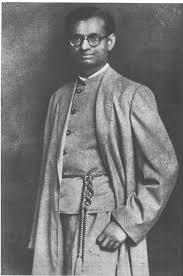
Next in who after the Bibha Series? He was a Himalayan monk who solved the mysteries of the atomic nucleus. Swami Jnanananda born as Bhupathiraju Lakshminarasimha Raju (1896-1969) was the Ghost in saffron who worked in the world's most elite nuclear labs. He did not see a conflict b/w the Vedas & Beta-Rays; to him, the electron was just another dance of the divine. He built the machines that allowed us to see the energy holding the universe together, then went back to his Saadhna. He is the titan who bridged the gap b/w the ancient sage & the modern scientist... a man who proved that the deepest silence & the fastest particles both lead to the same truth.
Born in 1896 in Andhra Pradesh, he began his life as a seeker. He took Sanyas early in life, spending yrs in deep meditation in the Himalayas. He was a master of the Vedas. He realized that to understand Creation, he needed to understand the Atom. He traveled to the West in his saffron robes, stunning profs at Dresden (Germany), Liverpool, & Ann Arbor (USA).
He earned his DSc. & Ph.D. while maintaining his monastic vows. He was a man who could discuss the Upanishads in the morning & Beta-Ray Spectroscopy in the afternoon. He was a pioneer in Nuclear Spectroscopy. He designed & built advanced Magnetic Lens Beta-Ray Spectrometers.
He was obsessed with how electrons (beta particles) are emitted from the nucleus. His work provided the precise measurements needed to understand the Binding Energy of the atom, the force that holds reality together.
He was 1 of the founding pillars of the National Physical Laboratory (NPL) in Delhi & later established the Nuclear Physics department at Andhra University. He was a Ghost because he defied classification. In the lab, he was the rigorous Dr. Jnanananda; in the temple, he was the revered Swami. He proved that the Silo of Science & the Silo of Spirituality are actually the same room.
Because he was a Monk, many Modern scientists were uncomfortable with him. Because he was a Nuclear Physicist, many traditionalists did not understand him. He lived in the Neutral Zone. He was invited by the Soviet Union & the US to speak at the highest levels of Nuclear Science, yet in India, his name is almost never mentioned alongside Bhabha/Sarabhai.
He worked with Nobel laureates like James Chadwick (the discoverer of the neutron), who respected him as a peer. He wrote High Vacua, a foundational text for experimental physics. He treated the Vacuum not as nothingness, but as the source of everything.
There are no national science awards named after him. He is a Ghost whose work is buried in the foundations of India’s nuclear program, but whose face is missing from the history books.