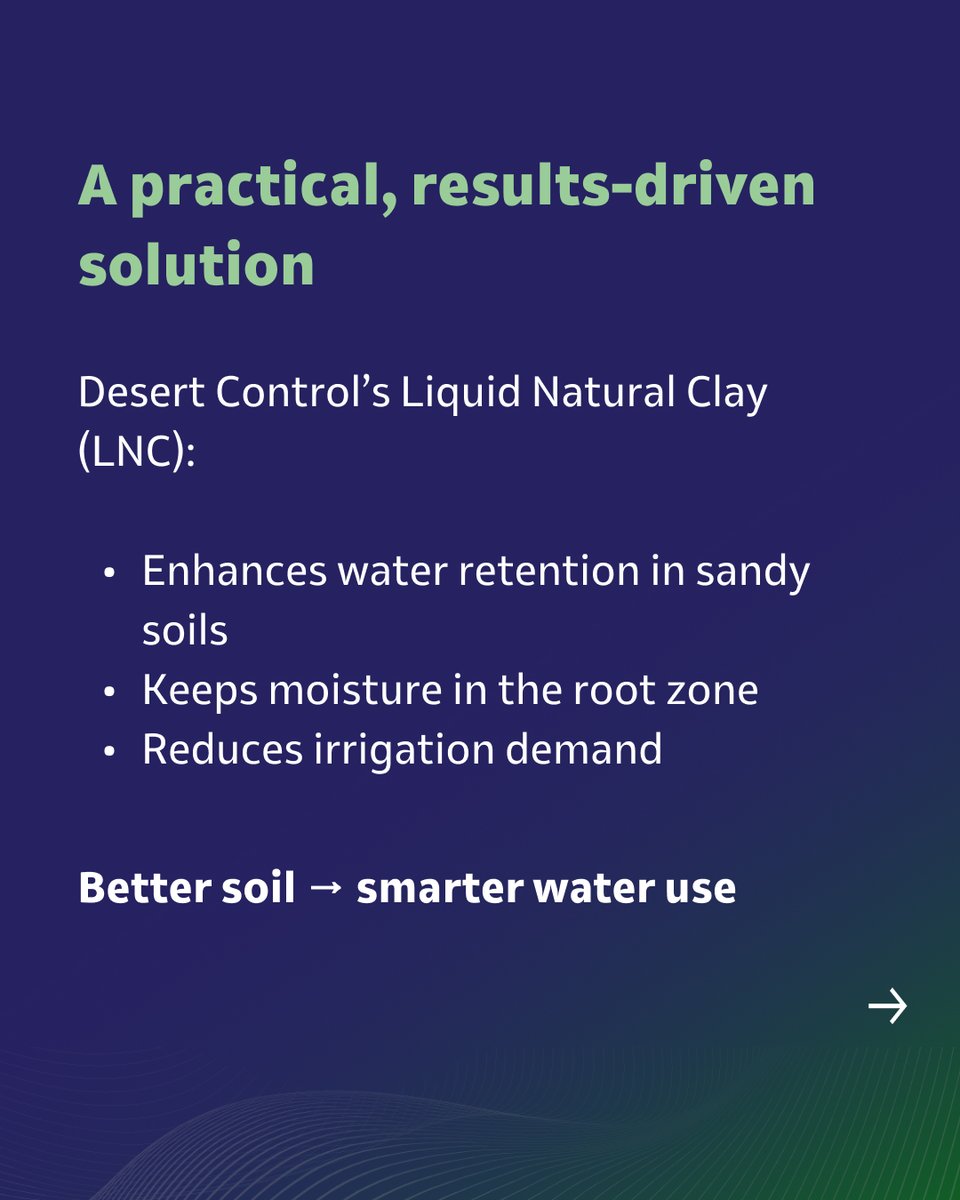
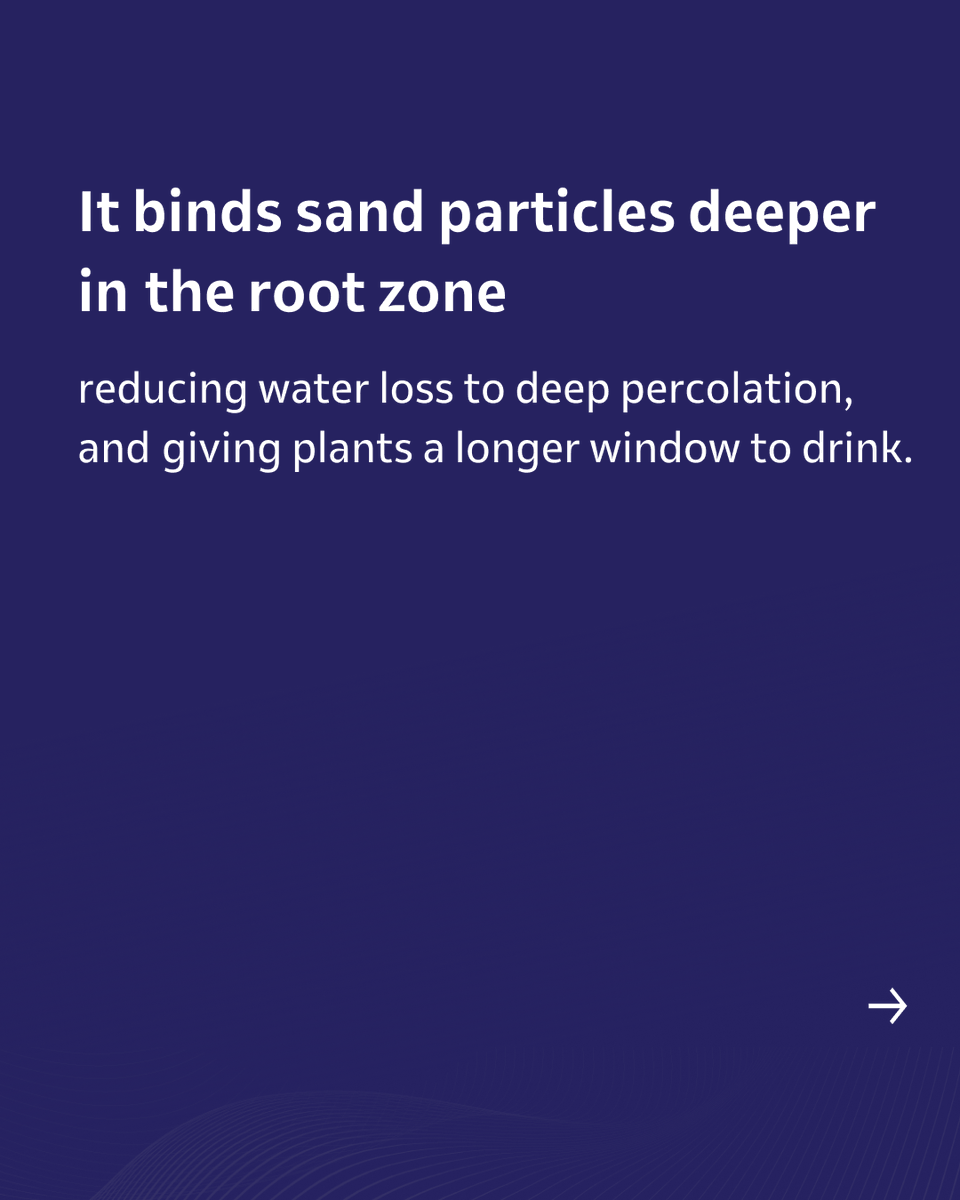
Desert Control develops solutions to improve light, sandy, and thirsty soils, increasing their ability to retain water and nutrients; enhancing soil health.
One third of the world's topsoil is degraded.
Sandy, compacted, water-repellent soil doesn't just hurt yields. It accelerates runoff, prevents carbon storage, and compounds drought stress across the entire agricultural system.
#WorldEnvironmentDay#LNC#Regenerative
A year later, the results speak from the field.
Woodland Hills Country Club reports healthier fairways, notable water savings, and kikuyu turf staying active through the heat after applying Liquid Natural Clay (LNC).
“We’re stewards of the land.”
A year later, the results speak from the field.
Woodland Hills Country Club reports healthier fairways, notable water savings, and kikuyu turf staying active through the heat after applying Liquid Natural Clay (LNC).
“We’re stewards of the land.”
Harvest is underway across California's Central Valley.
This leafy-green crop was grown in a field treated with Liquid Natural Clay (LNC) — one of several active pilots Desert Control is running across the region.
Desert Control congratulates the commercial growers who successfully applied to the Agriculture, Soil Health and Water Efficiency Innovation Pilot Program with the Arizona Department of Agriculture.
We also extend our sincere appreciation to the review committee and Department of Agriculture staff that processed more than 50 applications to the program.
Small change in the soil. Significant change in what the season can deliver.
📩 Want to know how LNC could work on your operation? Get in touch with our Ag Sales team:
[email protected][email protected]
Five weeks on, early field observations are showing a noticeable difference in canopy size in the treated area an encouraging visual response as we continue monitoring through the season.
Table grapes demand a lot of water.
🍇 In the field: California's Central Valley
On March 31, our team was on the ground at a table grape vineyard in Bakersfield, California applying Liquid Natural Clay (LNC) on a high-value, water-intensive crop in one of the most water-stressed growing regions in the world.
Boots in the soil this week. 🌱
Our own Cord Nunez was in California's Salinas Valley, applying Liquid Natural Clay at a farm growing romaine and red onions two thirsty crops, in one of the most water-stressed regions in the country.
His work at Bayer Crop Science, Verdesian Life Sciences, and Cytozyme Laboratories has taken technologies from the lab to commercial reality, across markets and geographies.
At Desert Control, he takes the helm of a research programme focused on one of the most differentiated technologies in soil science today.
His mandate is clear: build the peer-reviewed evidence base, sharpen the field trials, and expand the application of LNC.
Today, we welcome Dr. Michael Canady as Chief Science Officer — a scientist who has spent over two decades at the intersection of plant genetics, field research, and agricultural innovation.
And almost all of it in regions of extreme water stress, with tightening restrictions under SGMA threatening to force land out of production.
We're not watching this from the sidelines. We're already operating in California with a 28% verified irrigation reduction
California is now the world's #1 pistachio producer. Water is the constraint standing between the industry and its next billion pounds.
The New York Times just covered this in depth — and the story reads like a brief for why Desert Control exists.
Berkeley Country Club has entered into a commercial agreement with Desert Control following a successful multi-month trial of (LNC).
The agreement is structured under Desert Control’s outcomes-based model, generating recurring revenue linked to verified water savings.