Researchers at South Korea's KAIST and Stanford University have unveiled clothing embedded with air-powered 'vine' robots that dress the wearer hands-free in about 10 seconds, with potential for use in chip factory cleanrooms and emergency services https://t.co/LvgA0rSt1R
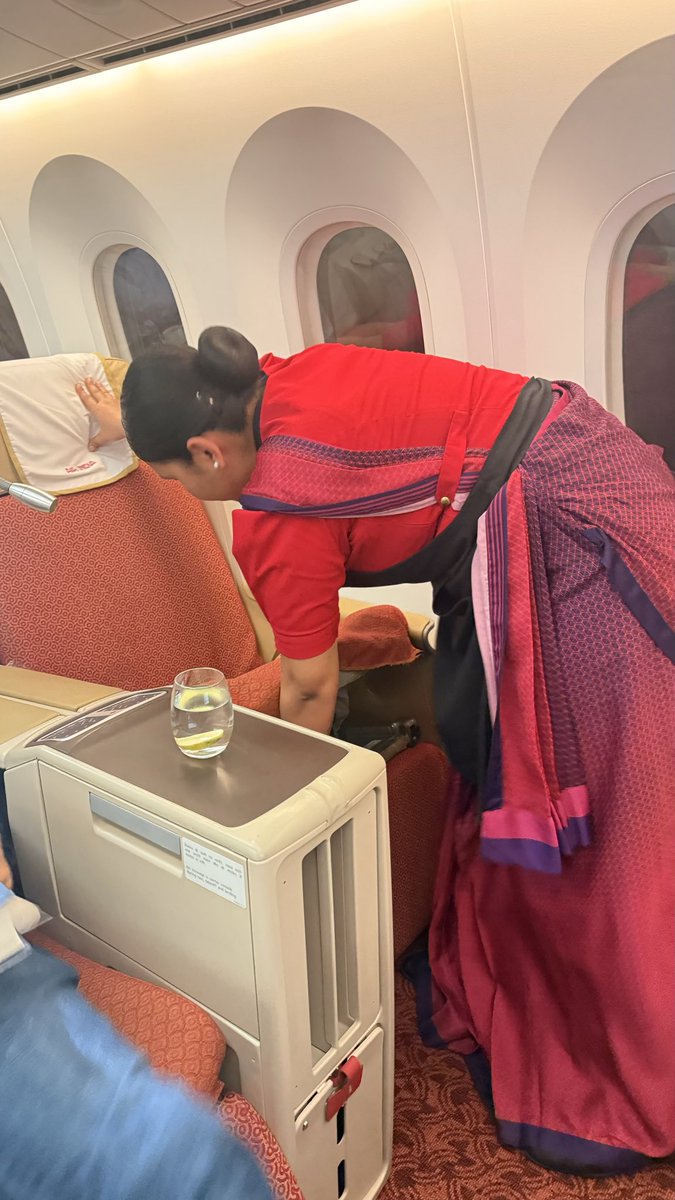
@airindia when you travel #BUSINESSCLASS and crew has to manually pull out seat. #Inconvenient. Light not working. Bell not working, screen not working. Hard misaligned seat, maladjusted cushion, slipping off seat! horrible in-flight experience. #refund my #money Flight #AI2665
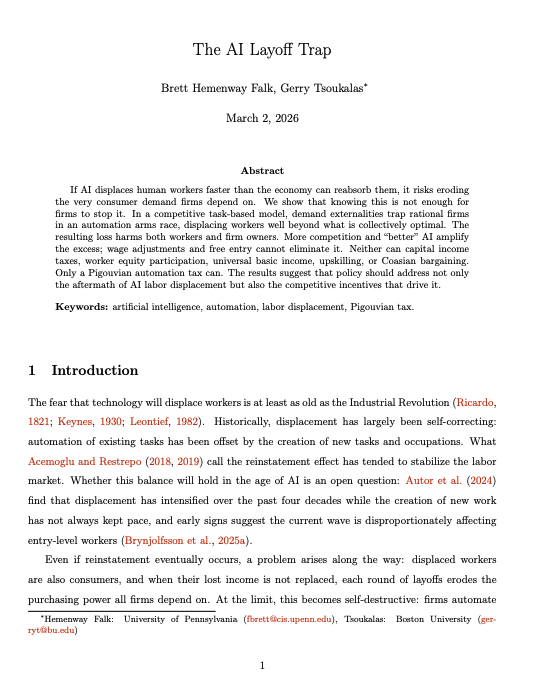
🚨BREAKING: Two researchers from UPenn and Boston University just published a paper that should be uncomfortable reading for every CEO automating their workforce right now.
The argument is straightforward. Every company replacing workers with AI is also eliminating its own future customers. Laid off workers stop spending. Enough of them stop spending and nobody can afford to buy anything. The companies that fired everyone end up selling into an economy with no purchasing power left.
Every executive can see this. The math is not complicated. But here is why nobody stops.
If you do not automate, your competitor does. They cut costs, lower prices, take your market share, and you collapse anyway. So every company automates knowing it is collectively destructive because the alternative is dying alone while everyone else survives. The researchers proved this is a Prisoner's Dilemma playing out in real time.
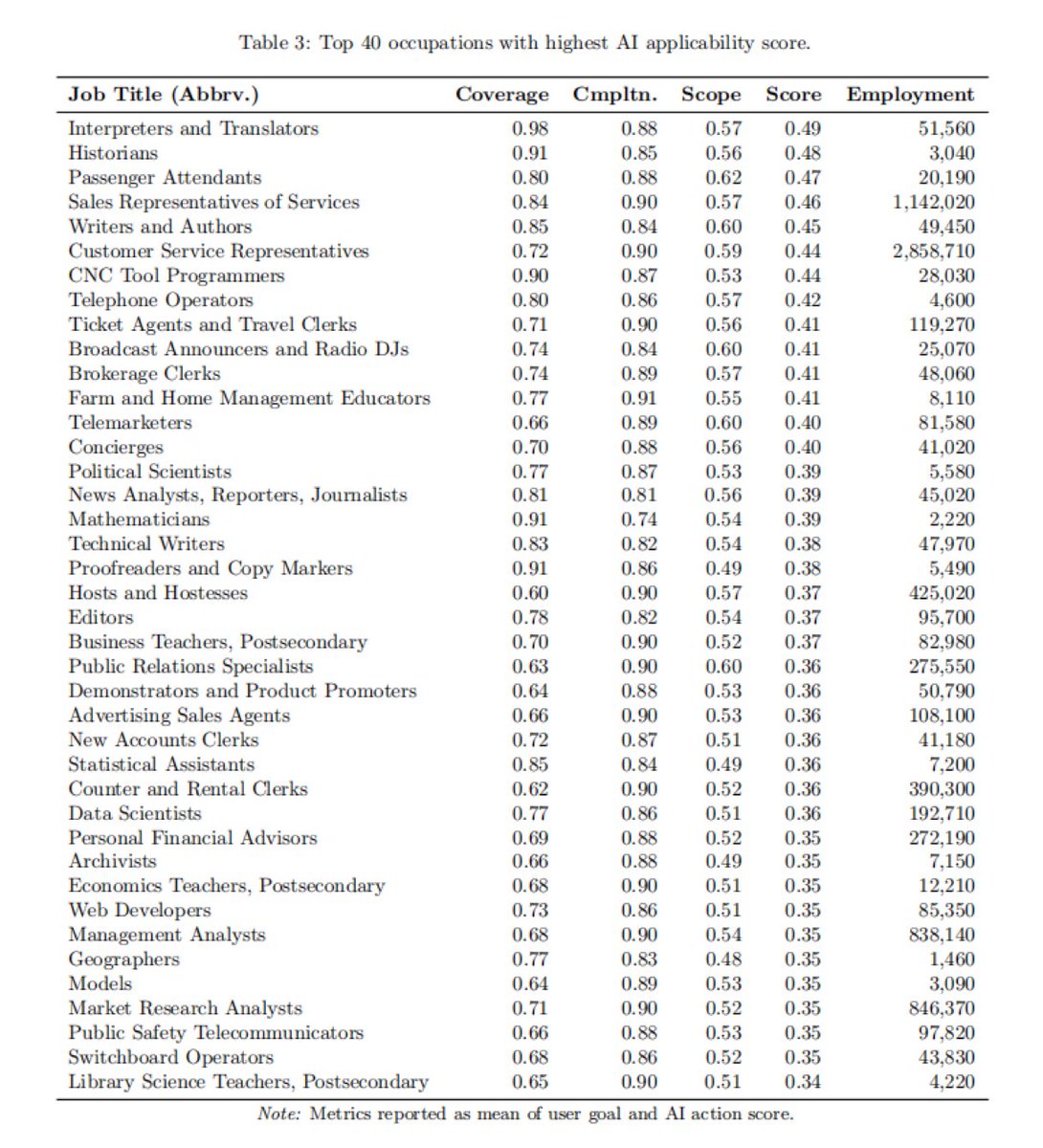
The numbers are already moving. Block cut nearly half its 10,000 employees this year. Jack Dorsey said AI made those roles unnecessary and that within the next year the majority of companies will reach the same conclusion. Salesforce replaced 4,000 customer support agents with AI. Goldman Sachs deployed a coding tool that lets one engineer do the work of five. Over 100,000 tech workers were laid off in 2025 and AI was cited as the primary driver in more than half those cases. 80% of US workers hold jobs with tasks susceptible to AI automation.
The researchers tested every proposed solution. Universal basic income does not change a single company's incentive to automate. Capital income taxes adjust profit levels but not the per-task decision to replace a human. Collective bargaining cannot hold because automating is always the dominant strategy.
They also identified what they call a Red Queen effect. Better AI does not solve the problem, it accelerates it. Every company chases faster automation to gain market share over rivals but at the end everyone has automated equally, the gains cancel out, and the only thing left is more destroyed demand.
The one thing the math says could work is a Pigouvian automation tax. A per-task charge that forces companies to account for the demand they destroy each time they replace a worker.
The conclusion is that this is not a transfer of wealth from workers to owners. Both sides lose. Workers lose income. Companies lose customers. It is a deadweight loss with no market mechanism to stop it on its own.
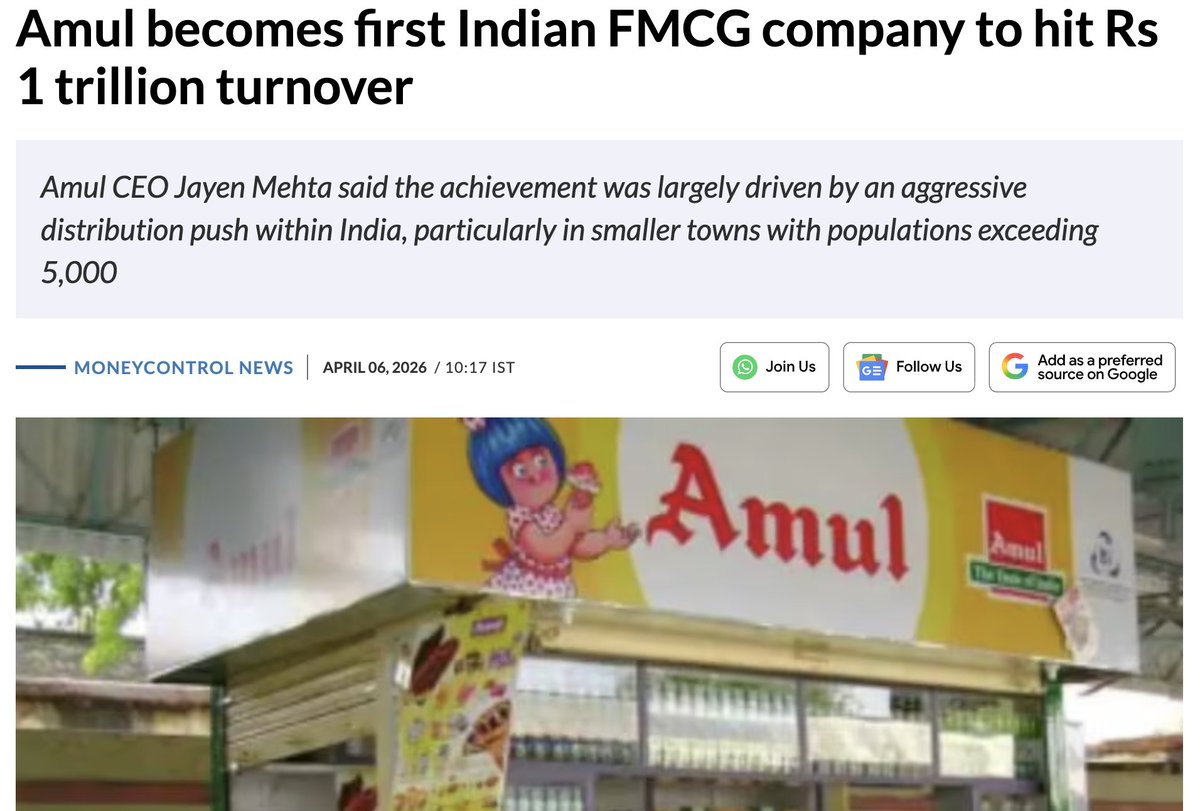
Amul becoming 1st Indian FMCG company to hit Rs 1 trillion turnover is great news, but what is even more impressive is how Amul is quietly executing a smart reverse brand export.
Amul is exporting Indian Cooperative expertise & brand standards, while making Western cows produce milk that meets Amul quality specifications. A few might ask How is Amul selling Fresh Milk in the USA & Europe w/o shipping it in tankers?
Shipping fresh milk across the Atlantic is biologically impossible. Amul has entered into Strategic Processing Agreements with local cooperatives (like Michigan Milk Producers Association in the US & COVAP in Spain).
Amul provides the recipe & its strong brand, while the local US/EU farmers provide the milk & processing infra.
Christian is making pieces regularly played sound like new. Incredibly fast but with total precision. So beautifully played💖
🎻𝐕𝐢𝐯𝐚𝐥𝐝𝐢: "𝐖𝐢𝐧𝐭𝐞𝐫" - 𝐂𝐡𝐫𝐢𝐬𝐭𝐢𝐚𝐧 𝐋𝐢
Happy International Womens Day...
यत्र नार्यस्तु पूज्यन्ते रमन्ते तत्र देवता:।
यत्रैतास्तु न पूज्यन्ते सर्वास्तत्राफला: क्रिया:॥
"Where women are honored, divinity blossoms; where they are dishonored, all actions, no matter how noble, remain fruitless".
When Nandan Nilekani met PM @narendramodi Ji on January 8 to discuss AI for farmers, the Prime Minister immediately expanded the idea: why not use AI for cows and cattle as well?
The same day, the PMO brought together MeitY officials and Amul. Within three weeks, the AI solution was live — reaching 3.6 million farmers and 40 million cattle.
January: Vision.
February: Execution.
Nilekani likened it to the launch of BHIM on Unified Payments Interface — bold vision, fast rollout, massive scale.
Under PM Modi, technology moves from idea to impact at speed.
This is so motivating 🔥
#IndiaAIImpactSummit2026
Simone Tata, the visionary who transformed Lakmé into India's leading cosmetic brand, passed away yesterday in Mumbai. She was 95. We recount the remarkable story of how Goddess Lakshmi inspired the most well-known cosmetic brand of India. 1/16
Photo by Bikramjit Bose.
@PicturesPVR please make your movie theatres #elderly friendly!
Accessibility is a major issue. Staircases to get to seats; the riser is high.
Too many stairs everywhere!
At #entry to hall
At #exit from hall
To #access seats
At #toilets
Need #inclusive#design
Excellent video by @virsanghvi on the corrupt and boorish behaviour of @Delhicustoms. Put some body cams on them and make it a punishable offence to not wear name badges. You’ll see their manner improve instantly.