NASA's first job, before it put a man in space, was to find the meal that leaves the least behind. The answer was steak and eggs, and it has been the launch breakfast for 65 years.
The problem was the suit. A Mercury astronaut was sealed into a pressure suit, bolted into a capsule the size of a phone box, and left on top of a rocket for hours. He could not take anything off. There was no toilet, and no plan for one.
So in July 1960 the Air Force handed the question to a nutritionist called Beatrice Finkelstein. She had to feed the man so he stayed strong, clear-headed and full, for as long as it took, on the least possible waste.
She wrote a menu for the last 3 to 4 days before flight. High protein, low residue. Meat, eggs, very little else. Residue is the polite word for whatever the body cannot use and has to send back out. On her figures, beef and eggs produced almost none. The body took nearly all of it.
On the morning of 5 May 1961, Alan Shepard sat down to steak and eggs, went out to the pad, and became the first American in space.
It worked so well that nobody dared change it. John Glenn ate it. The crew of Apollo 11 ate it on the morning they left for the Moon. Shuttle crews ate it. Astronauts are superstitious, and this is the one ritual with a medical file behind it.
Look at what that file says. The best funded engineers on earth needed a food that was nearly all nutrition and next to no waste, to fuel a man through the most demanding day of his life, and they did not pick porridge.
Down here the same breakfast comes with a warning, and we are advised to swap it for the bran.
NASA ran the test in 1960. The bran is the residue.
In 1986 a guy got kicked out of every casino in Vegas for counting cards. So he flew to Hong Kong with $180,000 and started betting on horses instead. He walked away with almost $900 million.
It's Bill Benter. He figured horse racing was just another counting problem. Same math, more moving parts.
He and a partner showed up with $180k and a computer. Benter spent years teaching that computer to guess one thing, the real chance each horse had to win. If his number was better than the odds the bookies gave, he bet. If not, he skipped it.
That's the whole trick. Expected value.
EV = p · b − (1 − p)
Only bet when your win chance p, at odds b, is worth more than your chance of losing.
This recording was never meant to be some hidden gem. Nobody expected Professor Tsitsiklis to hand the whole foundation away in 45 minutes, but that's exactly what happens on the board. Students in that room pay over $80,000 a year to sit through it. It's free right here. It's free right here.
Every quant, every professional bettor, every hedge fund analyst started with this exact hour. Benter just watched it and actually did the homework.
Almost nobody knows this lecture even exists. Watch it before it gets taken down.
The answer is in this video.
Nassim Nicholas Taleb walked into Google and explained what Antifragility is and how the world actually works:
1. The opposite of fragile is not robust. That is the first mistake almost everyone makes. Robust means something does not care about volatility. The true opposite of fragile is something that actually benefits from disorder, volatility, and stress. He calls it antifragile.
2. If you are shipping something fragile you write handle with care on the box. The true opposite of that package would have please mishandle written on it. Something antifragile wants to be mishandled. It gets stronger from it.
3. Fragility is always about nonlinear harm. Jumping ten meters kills you. Jumping ten centimeters a hundred times does not. The harm accelerates disproportionately with size. That acceleration is the mathematical signature of fragility and it can be measured precisely.
4. Anything that has survived long enough to exist today must have this property. If harm were linear you would be destroyed just walking to the office. Everything that persists is built so that small stressors barely touch it but large unexpected shocks destroy it.
5. Large size creates fragility automatically. A hundred million pound project in the UK had thirty percent more cost overruns than a five million pound project doing the same thing. The bigger the stone the more the harm. Size and fragility are inseparable.
6. Governments and institutions make the same mistake constantly. They chase perfect stability and call it good management. But something organic requires variability to survive. Greenspan tried to eliminate all economic volatility. He called it the Great Moderation. What he actually did was allow hidden risk to accumulate invisibly until it exploded all at once.
7. Small forest fires clean out flammable material and prevent catastrophic ones. By eliminating small fires you guarantee a massive one eventually. The same principle applies to economies, banks, and any complex system. Suppressing volatility does not remove risk. It stores it.
8. The only way to make something genuinely robust is to embrace bipolar strategies rather than medium ones. Eighty percent of your portfolio in something safe and twenty percent in something highly speculative is more robust than putting everything in medium risk. The average of extremes beats the mediocre middle.
9. Everything organic communicates with its environment through stressors. Your body needs the gym. Your bones need stress. Your immune system needs exposure. Depriving any living system of the stressors it needs does not protect it. It weakens it invisibly.
10. What does not kill me makes others stronger is closer to the truth than what does not kill me makes me stronger. When a system gets stronger under stress it is usually because the weaker components were destroyed, not because the survivors individually improved. The system improves through the death of its fragile parts.
11. Trial and error is not the opposite of knowledge. It is a form of knowledge with a convex payoff. You lose little when you are wrong and gain enormously when you are right. That asymmetry is what makes tinkering more powerful than theoretical planning in unpredictable environments.
12. Most of what we attribute to theoretical knowledge actually came from tinkering that was dressed up afterward as having been scientifically planned. The Romans built extraordinary things for centuries without ever having heard of Euclidean geometry. Technology routinely precedes the science that supposedly explains it.
13. The fragilista is Taleb's name for the person who denies antifragility and causes damage through that denial. Bureaucrats, central planners, academics, and policy makers who overstabilize systems from the top down are fragilistas. They remove the volatility that systems need and call it improvement.
14. Seneca, the wealthiest man in the ancient world, trained himself every day to wake up as if he had lost everything. He would deliberately live as if he were on a shipwreck to ensure he always had more upside than downside. Having more to gain than to lose from random events is the definition of antifragility in personal life.
15. In medicine, convexity matters more than people realize. If you are very ill the potential benefit of treatment vastly outweighs the risk, so you should see ten doctors not one. If you are mildly ill the risks of intervention almost certainly outweigh the modest benefits. The problem is that mildly ill patients are five times more numerous than severely ill ones, which is exactly who pharmaceutical companies focus on.
16. Removing something unnatural from your life has almost no side effects. Adding something artificial always has multiplicative hidden effects. In complex systems less is almost always more. The via negativa, improving by subtraction rather than addition, is consistently underestimated.
17. The real ethical crisis of modern times is that the people making decisions do not bear the consequences of those decisions. Bankers take the upside. Society takes the downside. Economists give broken advice and face no consequences when it fails. Nothing improves in any field where the people who are wrong are not harmed by being wrong.
18. Time is the ultimate detector of fragility. Whatever is fragile will eventually be broken by time. Whatever has survived for a long time has demonstrated antifragility and will likely survive longer still. A book that has been read for three thousand years will probably be read for three thousand more. A technology that is forty years old has at least forty more years ahead of it.
19. The only way to know you are alive and not a machine is that you benefit from variability. If you like variation and gain from disorder you are antifragile. If you require peace and predictability to function you are fragile. It is as simple and as profound as that.
Before you go, can we stay in touch?
I'd love to share one email with you every Sunday that'll challenge how you think about business, money and freedom.
Stay in touch here:
https://t.co/VMTlilB7aq
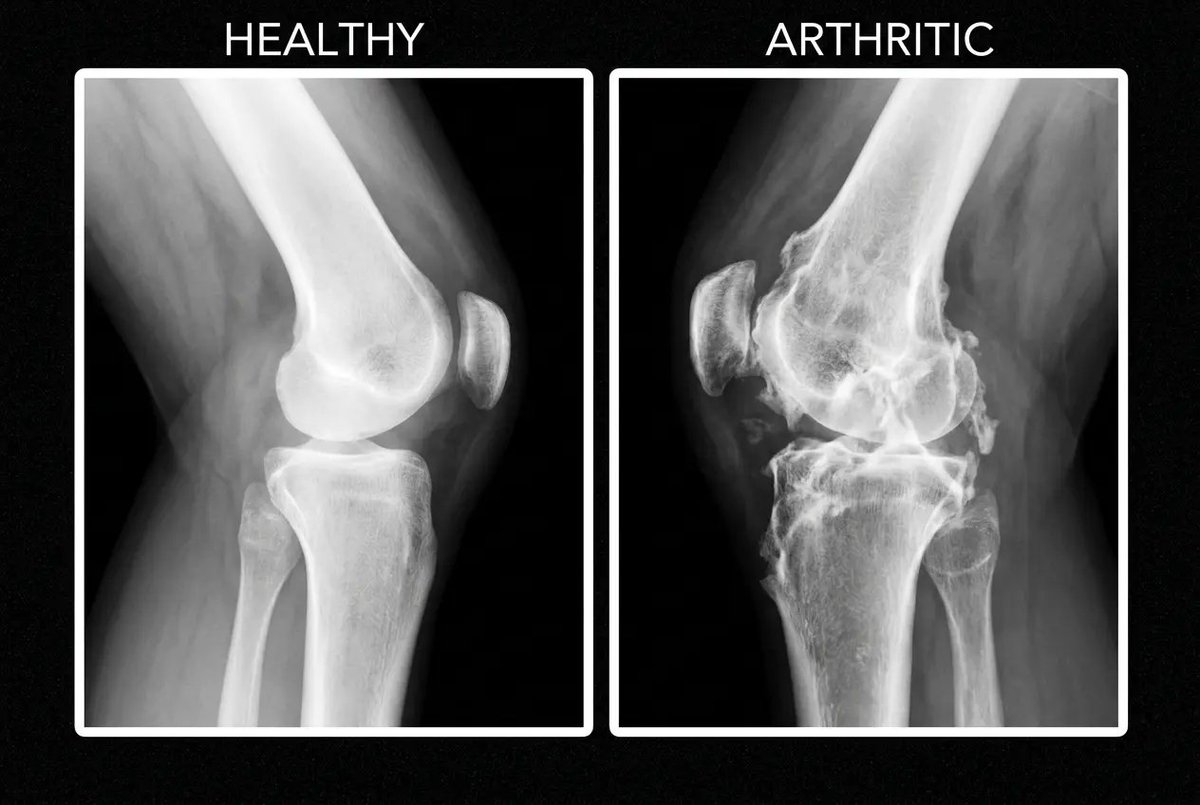
Your surgeon wants to put a joint replacement on the calendar.
Maybe not today. Maybe not this year. But you can see where this is heading.
Most people do nothing until surgery day arrives.
That's the worst thing you can do.
I've watched vegans and carnivores fight each other for years.
Keto vs paleo. Plant-based vs animal-based. High fat vs low fat.
Everyone thinks their tribe is right.
So I went looking for real tribes.
Not internet tribes. Actual civilizations. People who have eaten the same way for thousands of years.
Five populations. Five continents. Five completely different diets.
One thing in common.
Zero heart disease. Zero Type 2 diabetes. Zero Alzheimer's.
All of them.
Five diseases. One chart. 50 years.
Obesity up 1,000%.
Diabetes up 637%.
Alzheimer's up 500%.
Cancer up 216%.
Heart disease up 100%.
All rising. All together. All since 1975.
These are not five separate diseases. They are five symptoms of one disease.
A foodborne illness.
The food changed. The guidelines changed. Fat was replaced with sugar. Butter was replaced with seed oils. Real food was replaced with 10,000 chemicals your grandmother would not recognize.
And every one of these lines followed.
Your doctor treats them as five separate problems. Five specialists. Five prescriptions. Nobody connects the dots.
The root cause is metabolic. The science is clear. And the solution starts with what you eat, what you test, and what you stop believing.
https://t.co/rvX3X9MXkY
The truth heals
Metabolic syndrome is easily fixed with the PKD:
- Systolic blood pressure decreased by 20 mmHg
- Fasting blood pressure decreased by 2.3 mmol/l
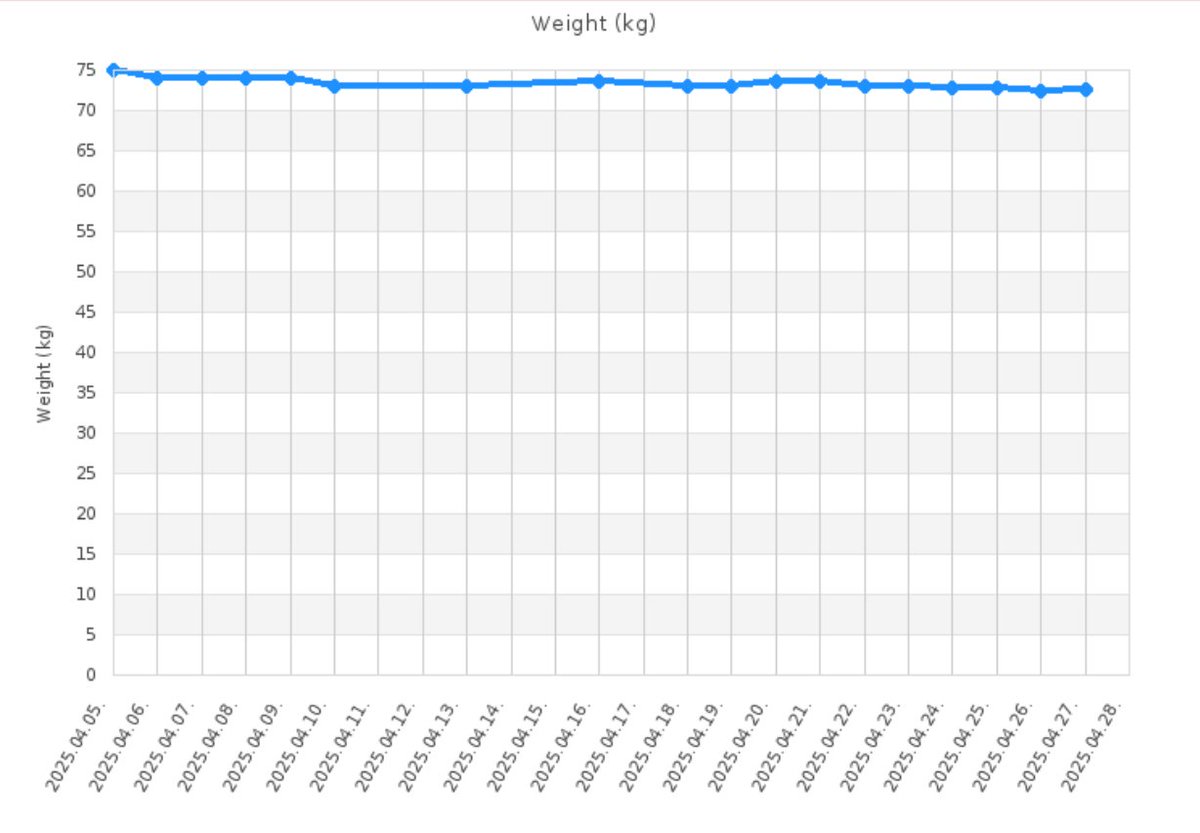
- Weight decreased by 2.4 kg
- Irritability decreased to zero
A quick overview of our patient just completing our online 2-week follow-up program
https://t.co/PUngFZ1m8H
Every hospital in Britain had a stockpot on the stove until approximately the 1960s. Every workhouse before that. Every military mess. Every school kitchen. Every farmhouse. Every household that could afford bones, which was every household, because bones were the cheapest thing the butcher sold.
The stockpot ran continuously. Beef bones, pork bones, chicken carcasses, lamb shanks. The bones went in with water and were simmered for 12, 18, 24 hours. The broth that came out was the foundation of every soup, every stew, every gravy, every sauce.
Bone broth contains collagen, which breaks down into gelatin during cooking. Gelatin provides glycine and proline, essential for joint health, gut lining integrity, and connective tissue repair. It contains calcium, magnesium, phosphorus, and potassium leached from the bones. It contains glucosamine and chondroitin, now sold as joint supplements at £15 per bottle. It contains bone marrow, rich in fat-soluble vitamins A, D, and K2.
Your grandmother did not know the names of these compounds. She knew the broth kept the family well. She knew a bowl of broth settled the stomach when someone was ill. She knew the broth made the gravy and the gravy made the dinner and the dinner kept the children growing.
The broth was replaced by the stock cube.
The stock cube contains salt, maltodextrin, palm oil, yeast extract, flavouring, sugar, and colouring. It does not contain collagen, glycine, glucosamine, or any of the compounds the 24-hour broth provided. The stock cube is flavoured salt water.
The generation that grew up on the broth has joints. The generation that grew up on the stock cube has a glucosamine subscription and an orthopaedic appointment.
The supplement industry now sells, individually and at substantial markup, every compound the bone broth contained for free. Collagen powder: £25. Glucosamine tablets: £15. Bone broth itself, repackaged as a wellness product: £8 per serving from a company in Shoreditch with a minimalist label.
They have not discovered anything new. They have rediscovered what their grandmothers threw away.
The stockpot is still available. The bones are still at the butcher's. Water. Bones. Heat. Time.
The broth has been the broth for approximately 10,000 years.
The stock cube has been the stock cube for approximately 70.
The broth's track record is better.
I have 12 years of blood work. 7 panels. Every result. Every flag. All leading up to my heart attack at 52.
They flagged one marker every single time. LDL cholesterol. The only one they cared about.
They missed a different marker flagged 4 times.
A marker Dr. Broda Barnes called "the riddle of heart attacks" in 1976.
Let me show you what they saw, what they missed, and what nearly killed me. 🧵
I had a heart attack at 52.
7 things could have prevented it.
My doctor didn't test a single one.
Not because he's a bad doctor. Because the system that trained him was designed to sell drugs, not save lives.
25 hours of nutrition in 4 years of medical school.
70% of his education funded by pharma.
A $600 billion industry that needs you sick to survive.
Here's what they missed in my checkup.
And what they're missing in yours right now.
New patient story.
This one will challenge everything you think you know about medicine.
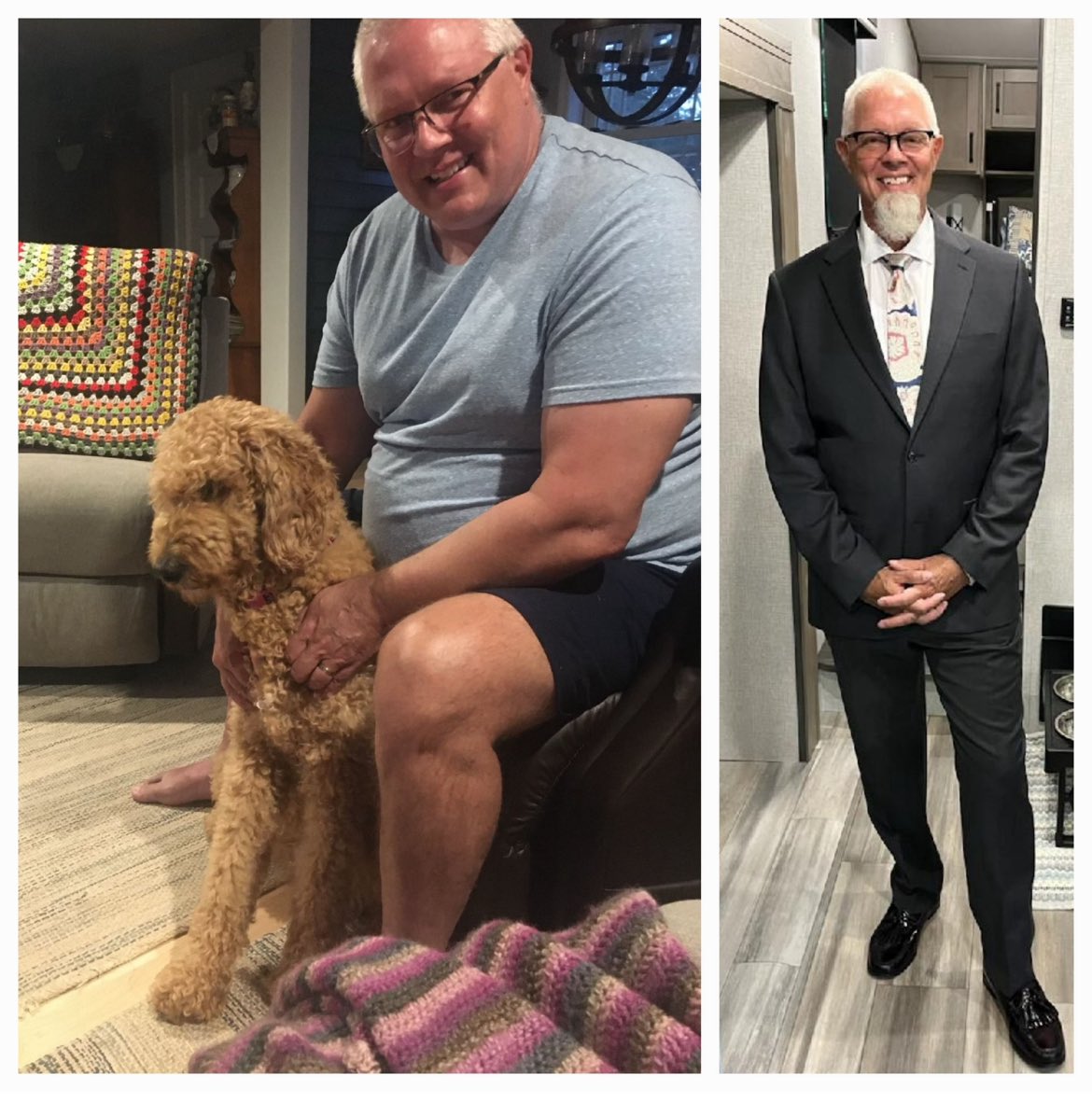
Bill is 62.
6 years ago (left picture), his doctors told him:
“Go home and enjoy whatever time you have left. There is nothing more we can do.”
He just went snowshoeing.
🧵
Having been an orthopedic surgeon for 30 years...5 things I wish someone had told you before you walked into my office — in atraumatic joint and tendon pain.
Most of you will present with atraumatic joint and tendon pain... traumatic injuries are far less common in adults. And no... you didn't "sleep wrong."
Aging changes things. VO2 max declines. Speed fades. Balance becomes less predictable. Strength decreases.
But most people attribute far too much of that to aging itself — and not nearly enough to the absence of training.
There's a difference between managing a descent and free-falling through one. 🧵
Interesting JAMA study from 2018 showing that in patients with diabetes, lower LDL is associated with WORSE outcomes for nerve health
It’s as if the body may use cholesterol to heal nerves? 🤔
https://t.co/2BkjmWIq5a
I’ve been an orthopedic surgeon for nearly 30 years, and a few patterns have become impossible to ignore. One is that many musculoskeletal problems in adults aren’t sudden injuries. They’re the moment when declining capacity and awful metabolic health finally reveals itself.
Over the decades your strength fades, muscle mass declines, as your aerobic capacity tanks. Tendons and connective tissues lose substance, stiffness, and resilience. For years the body compensated... quietly. Then one day a knee hurts during a run to get the train, or shoulder aches reaching overhead, or a back tightens lifting something simple.
At that point the story usually becomes more about structural damage. An MRI gets ordered. Welcome to high-tech, low-medicine. And the MRI almost always finds something. A meniscus tear. A rotator cuff tear. A disc bulge. Why? Because by midlife these findings are extremely common — even in people with no pain at all. If you have a tear in one shoulder, image the other shoulder... you probably have the same tear there. But I digress.
Once the scan appears, the narrative changes. The image becomes the diagnosis. Now the patient believes something is broken, and the focus often shifts to fixing what the MRI shows.
What often gets lost in this is the reason the symptoms appeared in the first place. Many so-called “atraumatic” orthopedic complaints are not purely mechanical failures. They are the moment when reduced strength, declining tissue capacity, and sometimes broader metabolic health issues finally reach a tipping point. Our tissues change over the decades... get over it.
In other words, the MRI didn’t create the problem. Well... it sort of did in this scenario. But all the MRI showed was something that was already there.... because of your age, lifestyle, health and so on.
The real driver of symptoms is often loss of physiologic reserve. Less muscle. Less tendon or aerobic resilience. Less tolerance for load, etc.
Once the MRI enters the picture, the risk becomes overtreatment. This is probably the number one reason people have surgery. When in many cases the most powerful intervention was never the scan or the procedure.
It was rebuilding capacity.
Strong muscles stabilize joints. Aerobic fitness improves metabolic health and tissue perfusion. Gradual loading restores tolerance.
But people often don't take PT seriously prior to surgery. They often take PT very seriously afterwards. Therefore, PT is probably the reason you feel better, despite the surgery.
The irony is that the treatment many people ultimately need is the same thing that might have prevented the problem in the first place.
Staying strong. Staying active. Maintaining the reserve that protects our joints/tendons/muscles/abilities as we age.
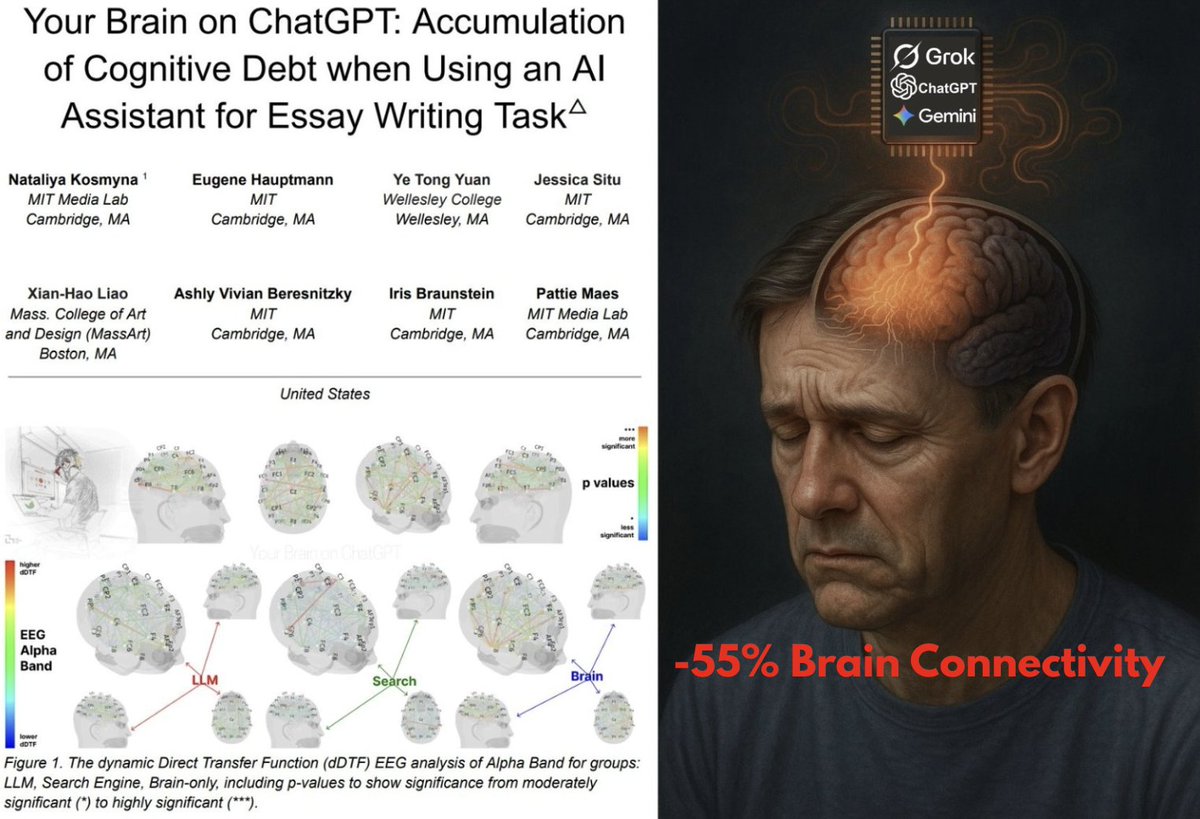
MIT just found that using ChatGPT weakens brain connectivity by ~55%.
83% of AI users couldn’t recall a SINGLE line from essays they just “wrote.”
Being reliant on ChatGPT, Claude, Gemini, or Grok reprograms the human brain, leading to memory loss and severe cognitive decline.
The 5th vital sign- Hand grip strength as measured by a dynamometer.
Sit in a chair with your arm at your side and your elbow bent 90 degrees, and squeeze the device as hard as you can —The accepted cutoffs for low grip strength are 26 kg -adult male & 16 kg -adult female. 
Some of the sharpest minds in the realm of ketogenic diets have compiled the most authoritative book on ketogenic diets in clinical (and personal) use.
I invite all to click the link and download the entire book for free!
https://t.co/nzPjLtgJQB
@DominicDAgosti2