As biology AI models mature, biology-native data infrastructure will be critical in separating the next generation of winning biotechs. It will come down to three things: biology-native data at scale, agentic AI across R&D workflows, and closed-loop lab automation.
We're incredibly excited to share ScienceClaw × Infinite, an open-source AI agent swarm platform where we crowdsource discovery across institutions, labs & the world. The agents self-coordinate and evolve to exploit hundreds of scientific tools. Remarkably, the swarm is already solving real scientific problems of consequence:
1⃣ designing peptide binders for a cancer-relevant receptor
2⃣ discovering lightweight ceramics
3⃣ uncovering hidden structure linking cricket wings, phononic crystals, and Bach chorales
4⃣ building a formal bridge between urban networks & grain-boundary evolution (two fields with zero
Deeply proud of the extraordinary @LAMM_MIT team behind this work: @fwang108_, @leemmarom, @palsubhadeeep, Rachel Luu, @IrisWeiLu, and @JaimeBerkovich. This works is supported by the @ENERGY Genesis Mission and we believe this can open a new paradigm for science - from discovery to dissemination of results. Read the article below for details ⤵️
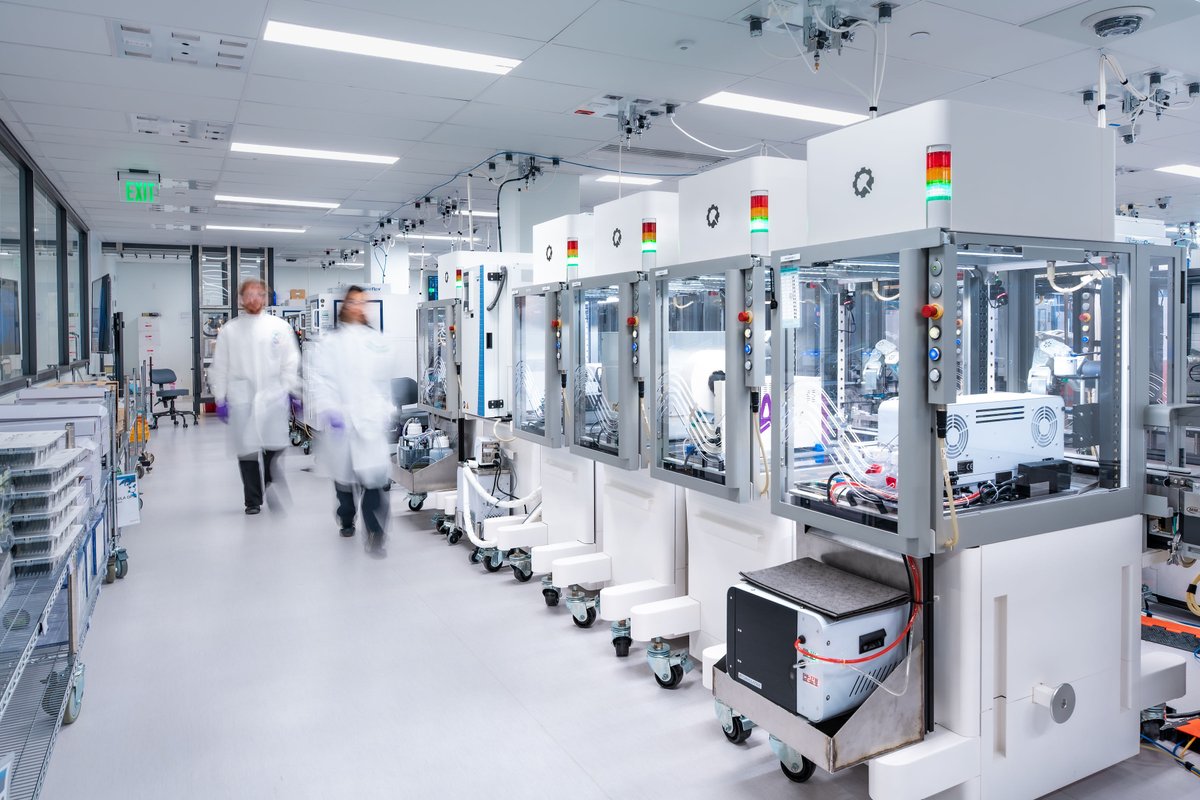
Excited to launch the @Ginkgo Cloud Lab service today! Recently, GPT-5 ordered experiments from Ginkgo's autonomous lab in our work with @OpenAI below -- now we're making our lab available to users (or their AI models) in the cloud to order lab experiments and get back data online.
Play around with it now! You can ask our agent about your protocol and it will do its best to evaluate if we can run it and what it would cost.
https://t.co/HiCJUI6DZf
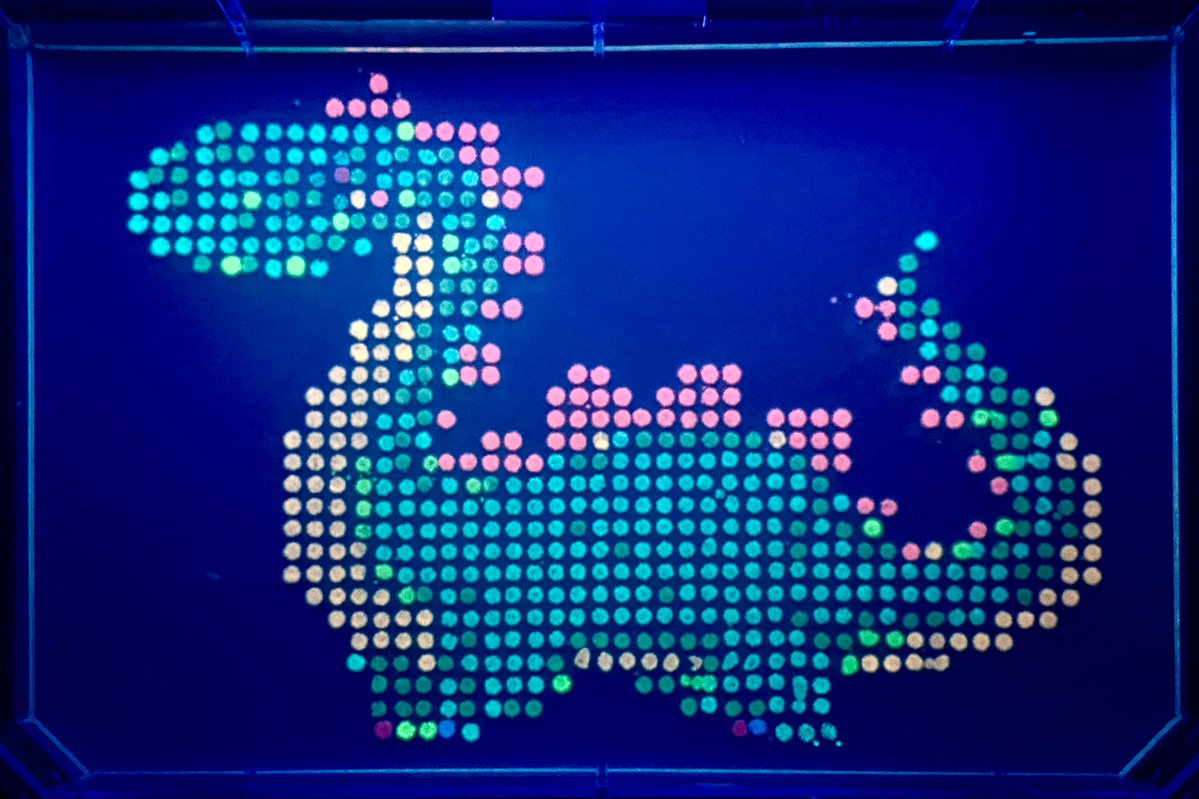
To start we've launched 3 Ginkgo Certified Protocols, two around cell free protein expression and one to make bacterial pixel art 😀 We will be adding new protocols weekly -- at first ones we certify, but eventually users will order whatever experiment they want as long as we have the needed equipment on our autonomous lab!
We hope that Cloud Labs will someday allow anyone to be a scientist with their own lab just like personal computers and cloud data centers democratized programming and the web.
More in thread 🧵and happy to answers Qs if you post!
🚀🤖 Introducing the Virtual Biotech: a multi-agent AI research platform for therapeutic discovery & development
This places a virtual CSO and its cross-functional R&D organization of AI scientists at a user’s fingertips.
Preprint: https://t.co/rK3eBpFmab
In Nov. I had the privilege & pleasure of attending @cshlmeetings Single Cell Analyses, one of the best meetings I've been to in a long time. Below is a video of my talk.. a sort of sequel in some ways to my "Stories from the Supplement" talk 10 years ago. https://t.co/inilIYoXBC
Biggest paper yet from the lab now a #preprint on @biorxivpreprint. A massive #openscience resource on #tissueTregs, and what makes #Tregs tick in the #tissues.
Spoiler-alert: Tissue Tregs are really different from what we all thought. 🧵 1/21
https://t.co/l3SAdvs4Gd
PNAS recently published what is hands-down the most detailed study of the relationship between measured personality and intelligence
Let's go through it
First up: Neuroticism and the General Factor of Personality
Intelligence is negatively related to uneven temper and anxiety!
A mind-blowing paper has come out today in @Nature
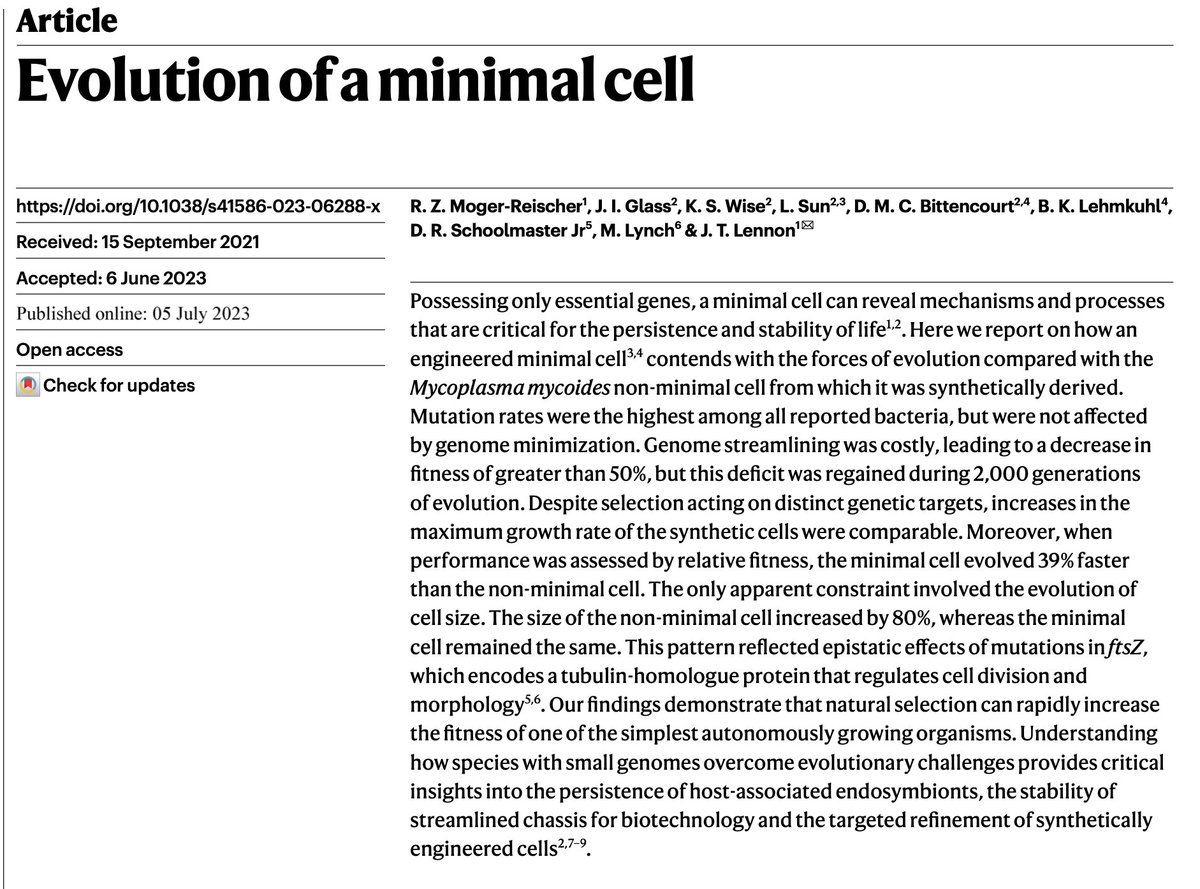
In 2016, JC Venter Institute scientists trimmed a bacterial genome to its barest minimum required for life to synthesize what they called a "minimal genome" (https://t.co/Rk8oZJ0bUj).
Today, a group of scientists from Indiana University reports how that minimal genome evolved over 2000 generations in comparison to the non-minimal genome.
The authors found that even when you reduce a bacterial genome to its absolute minimum where every nucleotide matters, the genome undergoes mutational events generation after generation as much as the non-minimal genome. One simply cannot stop the evolution.
Just over 300 days of evolution (equivalent to 40,000 years in humans) the minimal cell has gained everything it lacked in fitness on day one in comparison to the non-minimal cell.
When comparing the evolved traits between the minimal and non-minimal cells, the scientists found something striking. The evolutionary process increased the cell size of non-minimal cells but not that of the minimal cell. But that is not the striking part.
The scientists were able to identify the key mutation that resulted in cell size evolution. And it turned out that the mutation that helped the non-minimal cells to grow bigger is the same that helped the minimal cells to stay smaller. Growing bigger had a survival advantage for non-minimal cells and not growing bigger had a survival advantage for minimal cells. So, the mutation had a context-dependent effect. This just demonstrates that the evolutionary effects on traits have no absolute direction. All that matter is what is beneficial for the organism's survival.
The conclusion of the paper is metaphorically a quote from the Jurassic Park movie:
“Listen, if there’s one thing the history of evolution has taught us is that life will not be contained. Life breaks free. It expands to new territories, and it crashes through barriers painfully, maybe even dangerously, but . . . life finds a way". (https://t.co/UlxRlb86CT)
https://t.co/zA9OAqSoAu
Happy to present our new preprint! We ran a head-to-head comparison of sample multiplexing reagents for single-cell RNA-Seq on the same samples on the same day. 1/9 https://t.co/c0gK98224B
So excited for this story on IgA deficiency to be out at @SciImmunology ! Great collaboration with @henricksonlab. We were curious why most kids with IgA deficiency were not symptomatic. What exactly is IgA doing for the mucosal and systemic immunity? https://t.co/g5deokc1id
The first article of the lab is finally out! A benchmarking of fixation / preservation methods for #scRNAseq of neural cells. Congratulations to all the authors and specially to @Ana_GutiFran and @aerodx5 who led the work.
In 2019 "Single-cell multimodal omics" was deemed @naturemethods Method of the Year, and since then many new multimodal methods have been published. But are there tradeoffs w/ multimodal omics?
tl;dr yes! An analysis w/ @sinabooeshaghi & Fan Gao in https://t.co/cGLcgyzRFe 🧵1/
Thrilled to share the publication of TEMPOmap in its final version! It has been a challenging and rewarding journey for the team. Our new method resolves spatiotemporal transcriptomics at subcellular resolution. Check it out if you are interested! https://t.co/XgNKTBSt8H
Congrats to @JingyiRen, @hzhou99, and the great team! With TEMPOmap, we can snapshot RNA life cycle from birth to death for thousands of genes with single-cell and subcellular resolutions, revealing that RNA kinetics, fast and slow, serves gene functions.
https://t.co/cQD23sKe4m
After a patient saw multiple physicians and neurologists over 6 months and was assigned a diagnosis of #LongCovid, a relative entered her symptoms into #ChatGPT with the correct output. Diagnosis was confirmed by antibody testing and therapy has been initiated.