@ezra_muinde_@HarunMbaabu can justify that, I have seen friends and graduates from @LuxDevHQ academy working on
AI engineering roles in Kenyan companies, skills worth learning💯.
I’ve been an angel investor since around 2014, focusing primarily on early-stage startups in the technology space.
Over the years, I’ve typically come in at a very specific point in a startup’s journey:
Not at idea stage—but just after.
These are businesses that:
- Have built a minimum viable product (MVP)
- Are beginning to enter the market
- And are facing what many call “the valley of death”
This is the stage where:
- Founders have exhausted personal savings
- Friends and family funding has run out
- Institutional investors still consider them “too early”
That’s where I, often with a small syndicate of like-minded investors, step in.
We take equity.
We back the founders.
We take the risk.
But here’s the uncomfortable truth:
Angel investing in Africa is fundamentally different—and significantly harder—than in more developed ecosystems.
Not because of lack of talent.
Not because of lack of ideas.
But because of structural realities we don’t talk about enough.
In this series, I’ll share some of the biggest challenges I’ve encountered investing in early-stage startups across Africa—and why we need to rethink how we approach this space.
#AngelInvesting #Startups #AfricaTech #VentureCapital #Entrepreneurship
Finally, after a lot of procrastination, I’ve started this Distributed Systems playlist.
The playlist consists of 20 videos, and I’ve just finished Lecture 1: Introduction.
Here are some points from the first video:
>Explained the basic requirements of an infrastructure
>Discussed achieving abstraction in infrastructure
>Covered the impact of scalability on performance
>Introduced key aspects of fault tolerance (availability, recoverability, consistency)
>Gave a high level overview of MapReduce and how it works
The video wasn’t very detailed, but the playlist looks promising.
It seems counterintuitive, but by not actively selling or pushing yourself, you actually put yourself out there.
I’ll explain.
Recruiters, especially in tech, see through the bullshit. They are also very experienced. If you have substance, it does not stay hidden for long.
Focus on what matters the most. Build non-trivial side projects, and most importantly have a clear career plan and focus.
It is true that it’s difficult to get a job in tech, but imagine you’ve deliberately spent the last 5 or 6 years exclusively optimising for a career in e-commerce or fintech. Any interview for those roles or adjacent roles will be a walk in the park.
And on visibility, it should be subtle. You don’t want to be the next LinkedIn banger boy. A lot of people ignore the important things like actually optimising their LinkedIn profile by investing time into the keywords in their header, a well written summary, endorsements of their skills and getting their CTO or manager to write a recommendation. They focus on writing posts that drive traffic without corresponding impact on their career. This is fine if you want to become a tech influencer.
Pay attention and observe the people who have the roles you wish you had. Are they trying to be popular? What’s their LinkedIn activity like? It’s almost nonexistent. A few congratulatory comments or likes here and there, and that’s all.
For devs, three things are like the flashpoints: your GitHub profile, LinkedIn page and an optional website or portfolio. This is what a recruiter looks at before reaching out to you.
The 101 public repos with a project like Todo app, no portfolio project with actual users, sparse LinkedIn page, etc, does not lead a recruiter to your DM.
Hold yourself to the highest professional standards you can think of.
Something as simple as a proper profile picture on LinkedIn is more important than 30k followers on X.
You must understand and define your audience.
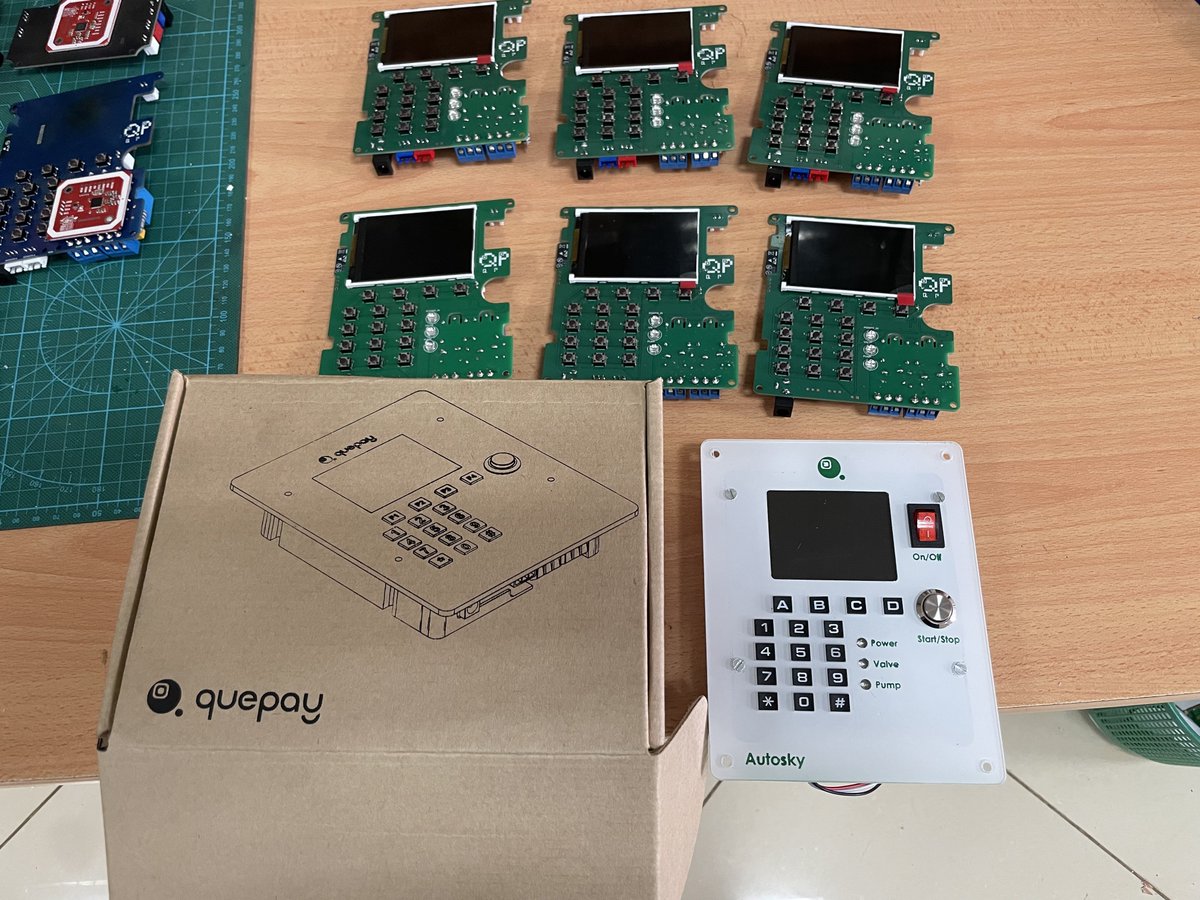
For the QuePay pool table device, we had had requests for pool table automation from as far back as 2024 @marvin_hosea remember?
Anyway from the experience I had with deploying hardware, you can’t “ship first and fix later” and also I am very particular with product design. It has to at least look good.
So we sacrificed being first for being right, a terrible choice by the book but we did it nonetheless. The best part about it:
‘The sale is very smooth’, the clients love it, one demo and they are sold. Most don’t even haggle over the price since we are priced slightly higher than most. The installations we have done? No issue whatsoever, someone calls and you are not even worried, they ask how to do something you tell them how that is already in the app and guide them how to.
We actually did real pilots, we still do, for every vertical we address. For the pool table we had it running for a whole two weeks. There were some few issues, that poor pool table owner, she would call and tell us how something was misbehaving and people needed to play. And we’d drop everything we were doing and rush there, about 10kms away 😭😂 and beg to let us wait for that issue to reappear so that we’d know what to fix.
Anyway by the time we were done we had a bulletproof product, tried and tested. Clients can be brutal especially if it starts costing them money. They will simply ask you to “remove this thing, and give me my money” even for a slight issue. Some are not very patient especially since they have access to you as the manufacturer. But most grant you so much grace the guilt of failing them is worse.
So we do our best to deliver perfection, we implemented OTA, so that we debug and then ask them for a few minutes as we push the update and everyone is happy. It has been an incredible journey so far from water and milk ATMs, to pool tables, to coffee machines, to vending machines and now laundry machines. @QuePayApp is growing!
Anyway I build hardware solutions @veno_iot and are building an incredible solution called QuePay. Thank you
@OnguruMeister@LarryMadowo You're welcomed to visit the athlete camp's in Kaptagat, Iten and many more and see how this young souls are inspired by Kipchoge Keino, Eliud Kipchoge,Paul Tergat, Eliud Kemboi, Faith Kipyegon, Pamela Jelimo, Brigit Kosgei they lock in to achieve this and thats legacy 🏆.
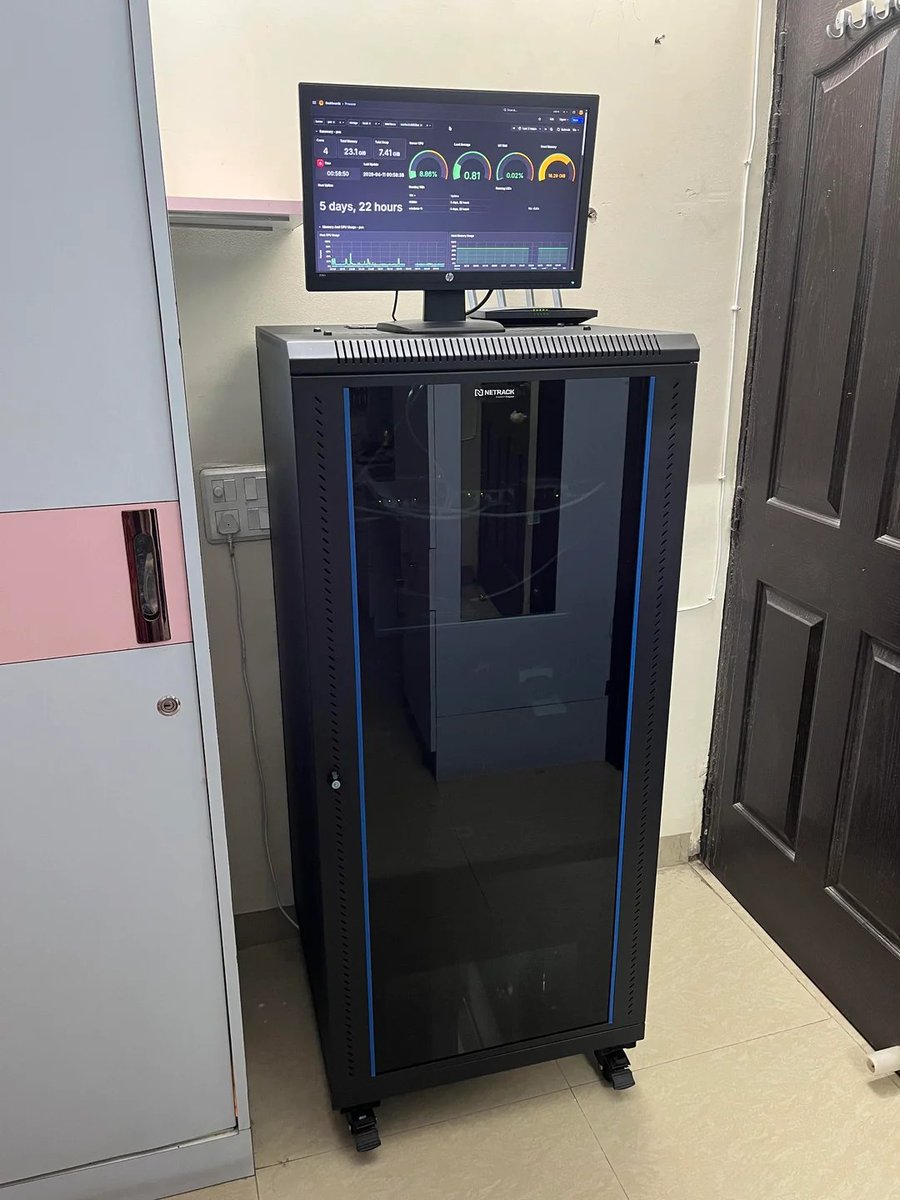
THIS GUY REPLACED EVERY SUBSCRIPTION FOR OVER 30 SERVICES WITH A HOMELAB HE BUILT USING CLAUDE CODE
he built his own self hosted version of basically every service you pay for online and runs it all from a 27U server rack in his house
the goal was simple:
stop renting access to your own data, stop paying monthly subscriptions for things you can run yourself, and have one private dashboard that controls everything in your digital life
he opens one homepage on his browser and from there he can:
> stream his entire movie and TV collection through plex or jellyfin
> request a new movie through overseerr and watch it appear in his library automatically once it's downloaded and tagged
> back up every photo he takes through immich (his own google photos)
> store all his files through nextcloud (his own google drive)
> manage his audiobooks, ebooks, music, RSS feeds, recipes, and bookmarks from one place
> block ads across his entire network with adguard home
> see live grafana stats for every machine running in his house at any moment
and a lot more
the homepage dashboard even shows the current weather, his calendar, system stats, download queues, library counts, and shortcuts to every service he uses
the hardware list:
> netgate 1100 router running pfsense+ for firewall, DHCP, DNS, and VLANs
> tp-link 8 port managed switch
> tp-link archer C6 access point
> raspberry pi 4 dedicated to a full screen grafana dashboard
> HP laptop with i3 11th gen and 24GB RAM running proxmox VE as the main hypervisor
> compaq laptop with a core 2 duo and 4GB RAM running proxmox backup server
> tower PC with a core 2 duo running unraid for the NAS
the proxmox VE box runs every self hosted service inside a debian VM with docker compose. backups run on a schedule with chunk based deduplication. unraid handles all the storage with mixed drive sizes and a single parity drive
every device is on a tailscale tailnet so he can hit anything from anywhere in the world without poking holes in his firewall
then he built his own private streaming empire on top of it:
> plex and jellyfin pointing at the same library
> overseerr to request movies and shows
> radarr, sonarr, lidarr, readarr managing different media types
> prowlarr indexing everything
> sabnzbd and qbittorrent handling the downloads
> bazarr pulling subtitles automatically
> tautulli for plex stats
> trailarr for trailers
then the rest of the stack:
> nextcloud replaces google drive
> immich replaces google photos
> paperless-ngx for OCR document management
> adguard home blocks ads across the entire network
> miniflux for RSS, karakeep for bookmarks
> mealie for recipes, navidrome for music, audiobookshelf for audiobooks
> calibre for ebooks, code server for VS code in the browser
> stirling PDF, IT tools, microbin, searxng, pairdrop
every service surfaces through homepage, a self hosted dashboard he built tooling around to auto generate the YAML config (made with claude code)
this guy is paying $0 a month for what most people pay $200+ in subscriptions for and had an initial setup cost of ~1000 to 1500 USD
the homelab community is quietly the most overpowered and cracked group of builders on the internet
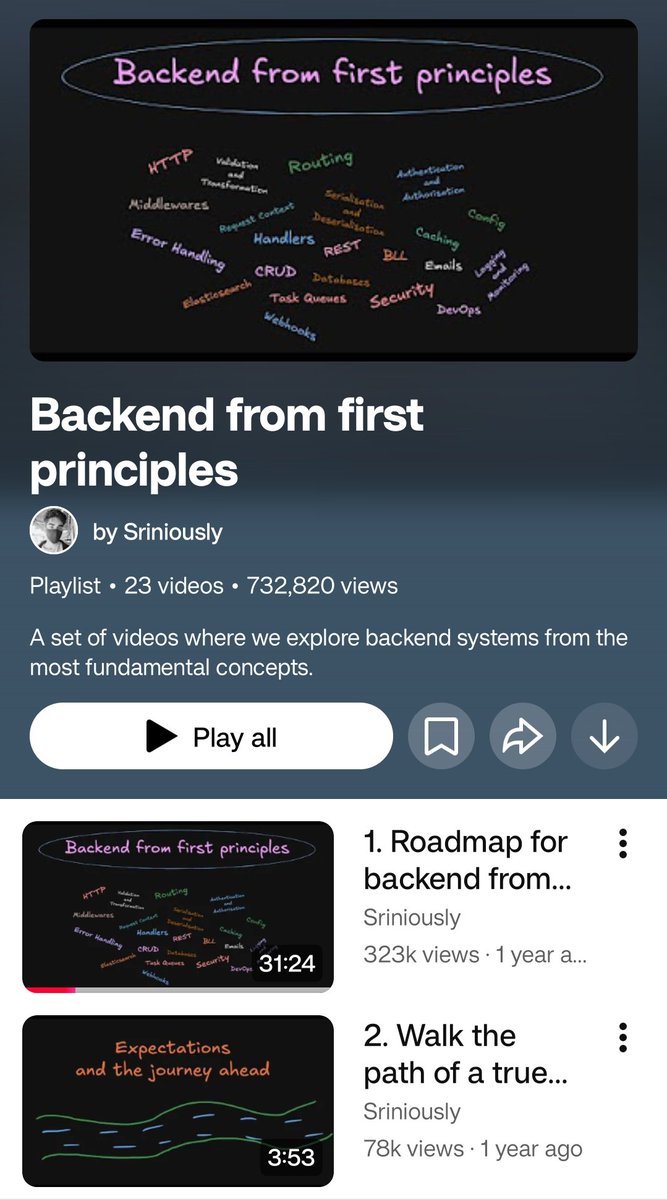
I know this is goated playlist to start backend and I've done this but I need notes for quick revision then and there ... Guess what
I didn't make notes back then 😭, so anyone have notes of this playlist. If yes kindly please dm 🙏😭 if you made it z kindly please send it to me 😭🙏🥹