🔷C# Solid Principles
The five solid principles are good for Object-Oriented design.
It's always recommended to keep these principles in mind when writing new code.
🧵Thread
People thought they were buying “unlimited AI.”
What they were really buying was temporary access to a scarce resource.
And when demand explodes, someone eventually gets pushed out:
rate limits
queues
reduced plans
enterprise priority
That’s also what AI-as-a-Service means.
The era of coding as mere syntax is fading. The real differentiator now is the ability to compose complex systems and understand the domain.
AI can provide the bricks, but you are the architect who ensures the building won't collapse under the weight of its own complexity.
Think of AI as your new apprentice.
Like any apprentice, it needs a mentor who masters the art of clean code and solid architecture.
Do not let today's rush to deliver features become tomorrow's nightmare.
True craftsmanship is what turns AI suggestions into real value.
When a chatbot slows down, the problem usually isn’t the software.
It’s that someone ran out of GPUs.
AI doesn’t run on magic.
It runs on energy, data centers, and compute capacity.
And whoever controls the hardware controls the game.
If AI is writing 50% of your code, your responsibility as a developer doesn't decrease; it actually doubles.
You are no longer just a coder, but the guardian of a system growing at exponential speed.
You must ensure that this automation doesn't compromise long-term quality.
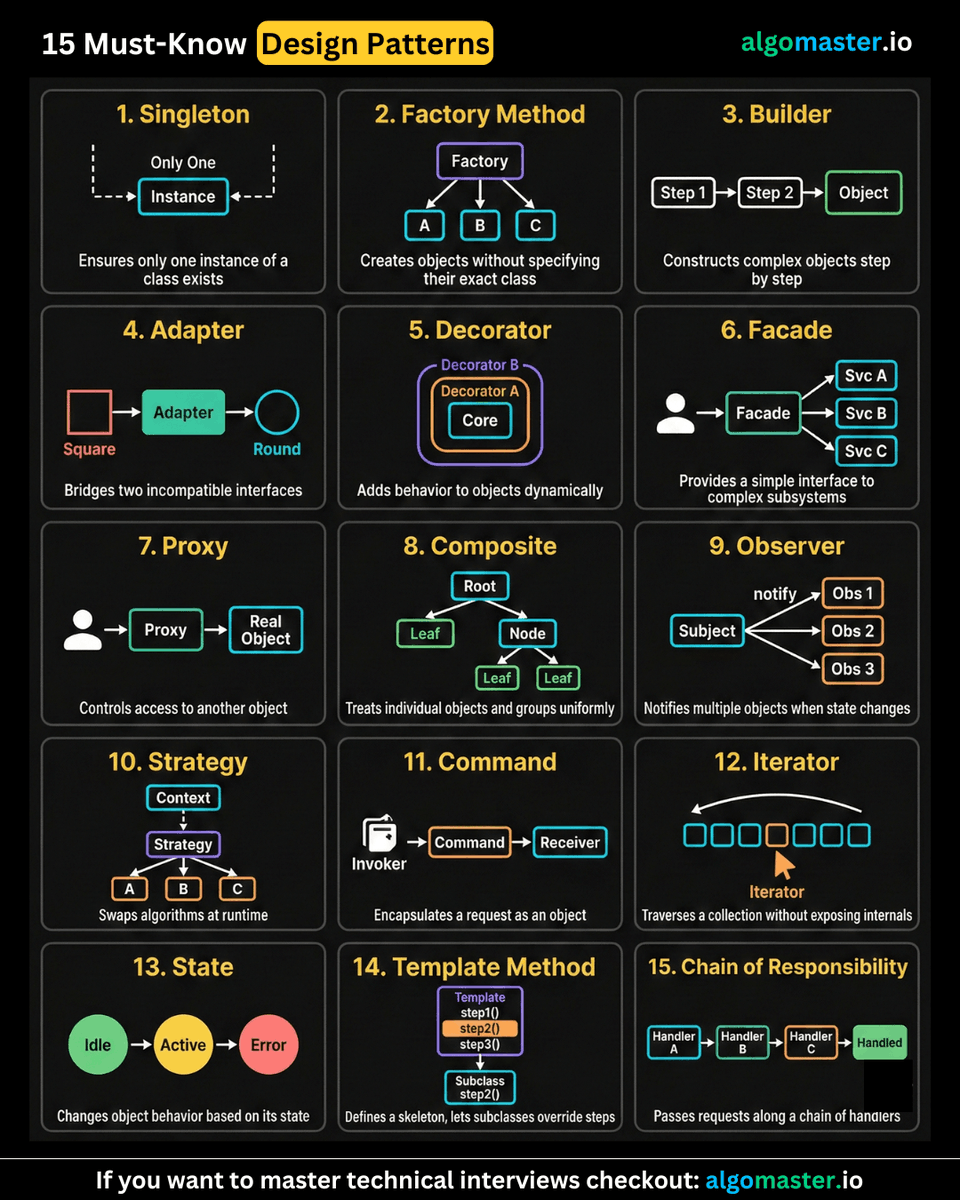
Design patterns open your mind because you stop thinking:
“this is my way of doing things”
and start thinking:
“what’s the best trade-off for this context?”
@Dmitriy_Grey_AI We should seek input from those outside the software world whenever possible. Only through this cross-pollination can we ensure we’re building solutions that deliver concrete value.
The future belongs to those who can look beyond the individual line of code.
Software craftsmanship in the AI era means knowing how to translate business problems into resilient systems.
Technology changes, but the ability to design high-value solutions remains irreplaceable.
@Dmitriy_Grey_AI That’s where we must strive to truly understand the problem and the business requirements, carefully studying the broader context surrounding what we’re building.
I firmly believe that to grasp the actual need behind a project, it’s essential to step outside our 'tech bubble.'
AI works by pattern recognition: if your project is messy, you will receive mediocre suggestions.
Maintaining a clean architecture and readable code today serves to train the AI to work better tomorrow.
A clean design is the best investment you can make for automation.
In a world where code is generated in seconds, automated tests become our only lifeline.
They are no longer just a verification tool, but the necessary perimeter to contain AI’s unpredictability and ensure that the system remains stable and reliable over the long term.
Artificial intelligence acts as an incredibly fast assistant that lacks a big-picture perspective.
The role of the software craftsperson is evolving: less time spent on syntax and much more time dedicated to critical review, security, and the consistency of the entire system.
Many believe AI is simply about writing code faster, but speed is a double-edged sword.
If we accelerate production without focusing on design, we are just accumulating technical debt at an unprecedented pace.
The real challenge isn't producing more, but producing better.
Back at Global Azure Torino 🇮🇹
Congrats to @BelloneDavide, one of this year’s speakers 👏
“The castle is on alert: Notifications and Workbooks within Azure walls”
#GlobalAzure#Azure#AI#Cloud#Torino
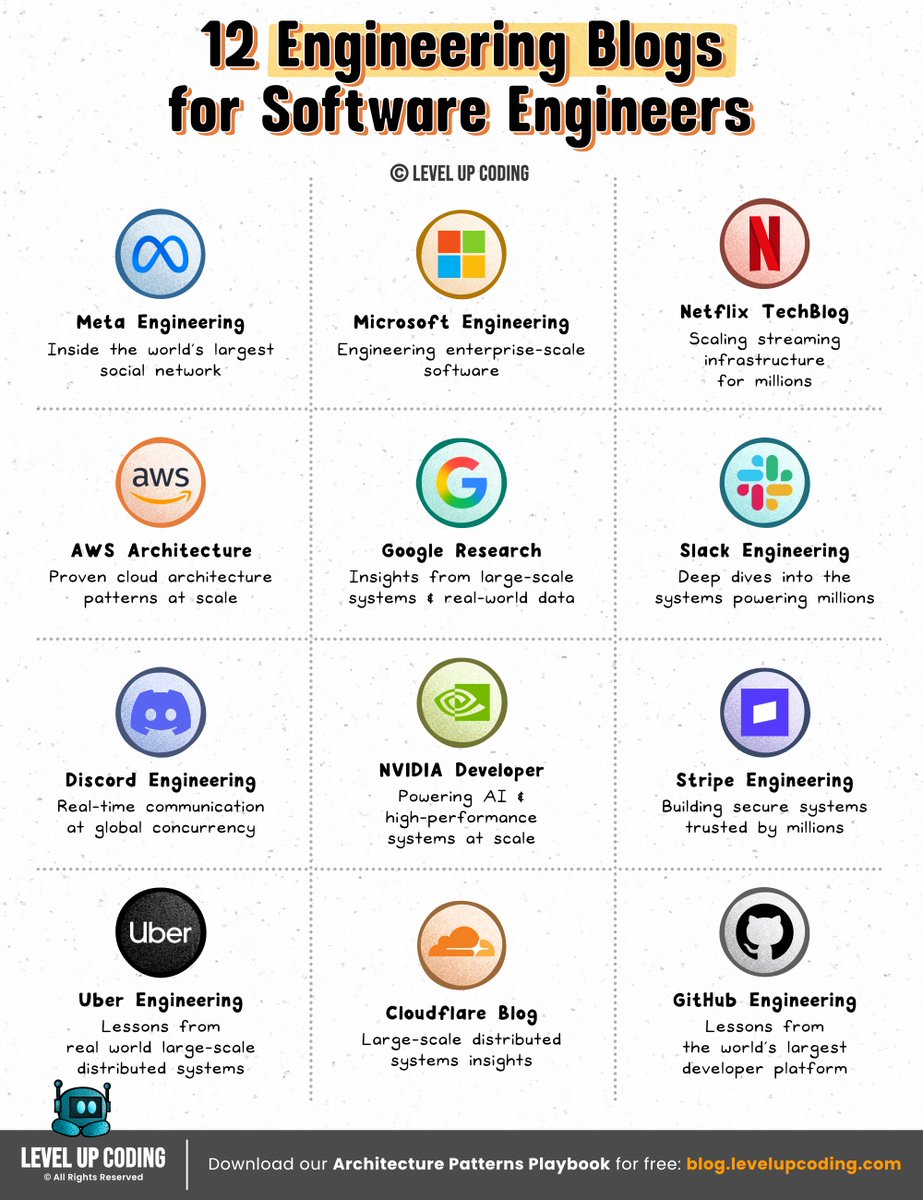
If you want to become a better software engineer (in 2026),
read these 12 engineering blogs:
1. Meta Engineering
↳ https://t.co/Gk1odu0G1G
2. Netflix TechBlog
↳ https://t.co/T3StVaZlCB
3. AWS Architecture
↳ https://t.co/kvBAMbpyvr
4. Microsoft Engineering
↳ https://t.co/zgLHpGKBRa
5. Google Research
↳ https://t.co/UUM2DzSKQR
6. Slack Engineering
↳ https://t.co/qT1O4xxSoc
7. Discord Engineering
↳ https://t.co/ne9lNeUeMX
8. NVIDIA Developer
↳ https://t.co/i9y3zNuNyC
9. Stripe Engineering
↳ https://t.co/w8c7fcJKgj
10. Uber Engineering
↳ https://t.co/beFKMaK5r1
11. Cloudflare Blog
↳ https://t.co/oSp5ALRFPT
12. GitHub Engineering
↳ https://t.co/83WGnNkagK
What other blogs should be on this list?
--
👋 PS: Want my System Design Handbook for free?
Want my Architecture Patterns Playbook for free?
Join my newsletter with 26,501+ software engineers: https://t.co/OQtXb4zMoe
--
📌 Save for later.
♻️ Repost to help others grow.
➕ Follow Nikki Siapno + turn on notifications.
Reading Design It!
Reminds me that real sw design is not about diagrams or technical jargon.
It’s about making tough choices together: setting the right boundaries, clarifying responsibilities, building a shared language that keeps teams aligned as systems grow in complexity