---enveloping devpsych folks' development worldwide
An initiative by @NikitaGhodke04 & @MunnaRShainy to promote #devpsych and its under-represented researchers
"Hello, World!" 👶🏻 #AcademicTwitter
Welcome to #devpsych Journal Club - a big initiative taken by two very small people in the pyramid of the research arena as we came across apparent disparities in awareness of #devpsych as a subject in developing and underdeveloped countries.
New paper out in Developmental Science with @bergelsonlab! We asked whether the acoustic properties of language input for individual words also predict age of production. TLDR: Yes – variability in how words sound predicts when kids first say them. https://t.co/KxDcjV21uu (1/n)
🚨 New pre-print 🚨 We find that individual differences in 6-month-olds' Peak Alpha Frequency in the #EEG relate to their saccadic latencies in a predictive cueing task. https://t.co/6QqwBvqVJH via @OSFramework led by @ArioliMartina & @alicjabrzo @kinderstudien
Multifaceted nature of early vocabulary development: Connecting child characteristics with parental input types. New paper by Göksun et al. @DilayKaradoller. https://t.co/UKqf11uvbN.
📢Read our latest #openaccess article with @JCgntn: https://t.co/EX6jxEcyY0 Risk and Protective Factors for Executive Function in Vulnerable South African Preschool-Age Children!
We know infants have face-selective responses in FFA, suggesting they perceive faces as distinct from other objects. But do regions that support more abstract social and cognitive inferences respond to faces at the same time as FFA? https://t.co/r7m3aBh1Zl (2/n)
Hot off the press. Do 14–17-month-old infants use iconic speech and gesture cues to interpret word meanings? I've recently presented this work at #IASCL2024 and #CogSci2024, and now the paper is out in JASA! Please check it out: https://t.co/1VGfOrOUq4 #iconicity#openaccess
What does a small language model learn (trained from scratch) given just slices of one child's linguistic input? Find out at @yulu_qin's #CogSci2024 poster today (P1-E-26). Paper here, https://t.co/CMSj4hdjGG
Today @WenjieWLi introduces new AI benchmark for identifying Agency, Affiliation, Belief, and Intention, inspired by infant cognition. Check it out the poster (P2-E-244) at 1! Paper: https://t.co/zNcGzaoraw
The LDM is excited to announce that we will have two presenters at the 49th Annual Boston University Conference on Language Development!
We will be posting more information about timings as the conference approaches. We are so proud and excited for our researchers!
Using a paradigm that synchronizes head-mounted eye-tracking and motion capture, @drewhabney, @Cmj6767, Linda Smith & @Chen_Yu_CY (2023) found that 22mo toddlers’ pre-reach phase of an action sequence determines subsequent reaching behavior. #infancypapers https://t.co/qQx8IztaCa
Announcing the launch of the Open Encyclopedia of Cognitive Science: https://t.co/5OogaxRymH! OECS is a freely-available, growing collection of peer-reviewed articles introducing key topics in cogsci to a broad audience of students and scholars.
.@suraertas@sumeyyekoskulu@ebru_ger Ulf Liszkowski & @aylinkntay1 (2023): infants' index-finger pointing but not whole-hand pointing at 14mos predicted lexical processing efficiency prospectively at 18mos but not concurrently at 14mos #infancypapers https://t.co/XqywwDkMJo
Studies on childhood development to follow and keep an eye on.
Practices that may Increase Infant/Toddler IQ
Breastfeeding and long-chain polyunsaturated fatty acids linked to higher IQ scores in infants. https://t.co/cobKaO717c
For low-birthweight infants, a modified version of the Mother-Infant Transaction Program improved cognitive (but not motor) outcomes 4.5 and 6.5 IQ points at 3 and 5 years respectively. https://t.co/14N2aqKgFM
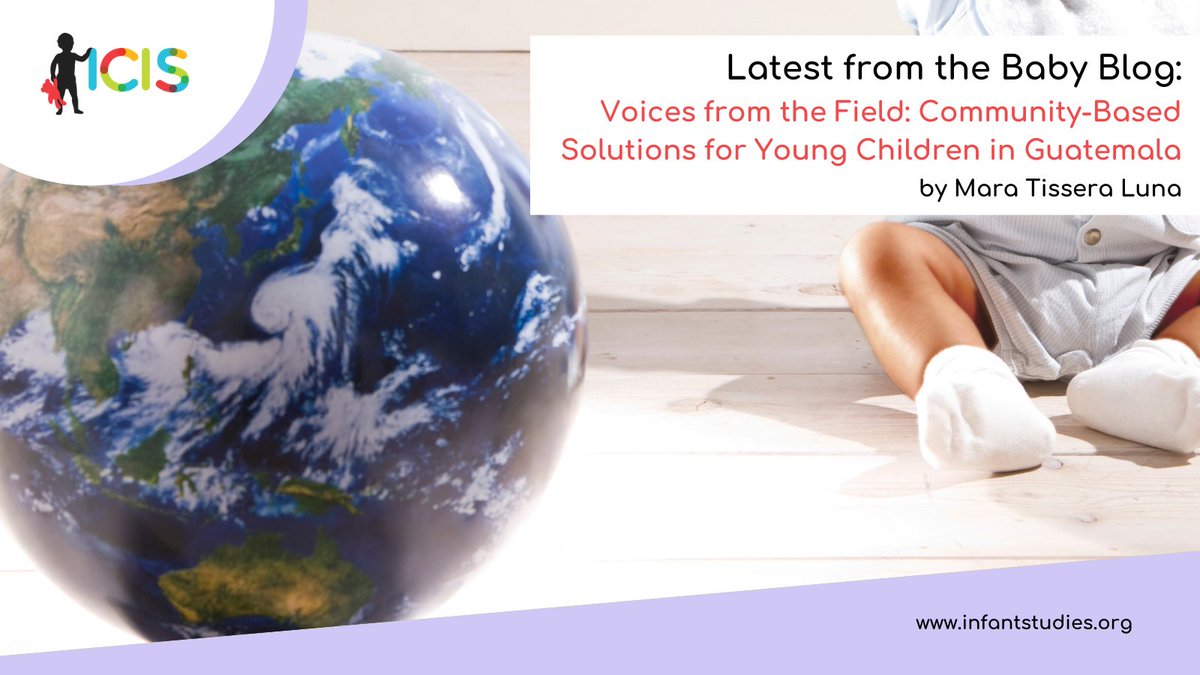
New Baby Blog post by Mara Tissera Luna: Voices from the Field: Community-Based Solutions for Young Children in Guatemala #infantstudies#Research https://t.co/9zqlq4M3eu
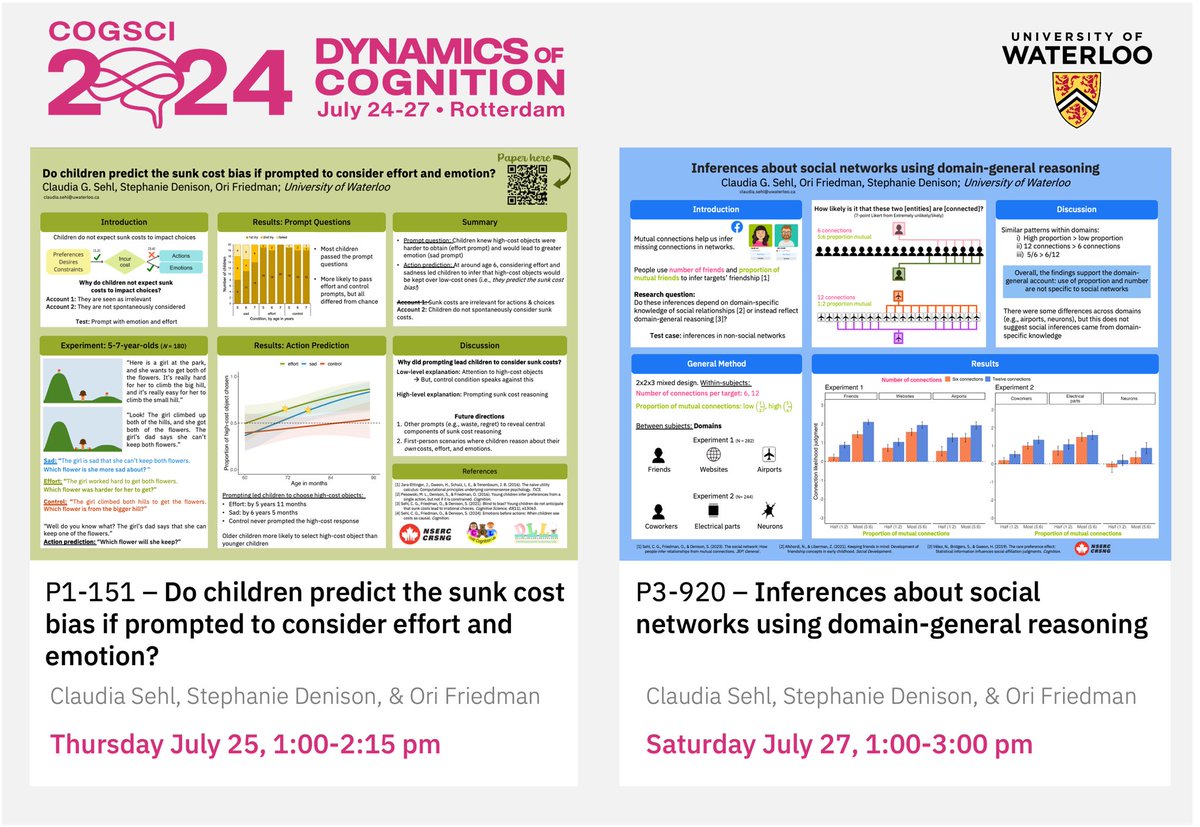
Learn about our recent research at #CogSci2024@cogsci_soc! 🚲🌷🌇🇳🇱
(Also, check out our new proceedings paper on children predicting the sunk cost bias
📄 https://t.co/aPIZINGFIE)
@Ori_Friedman @UwaterlooPsych