Inclusive urban futures are not built by eliminating informality but by enriching the best aspects of it!
Investing in new skills to enhance productivity, extending legal protections, and recognizing informal workers as central to essential urban services goes a long way to doing this.
Sharing some thoughts based on good practice in the Asia region on turning informality into opportunity: https://t.co/zUPxgrdeSR
Development is our first line of defence.
Inaction has a price.
And it is paid by the most vulnerable.
I’m here at the #G7 Development Ministers’ Meeting in Paris.
These are my 3 priorities.
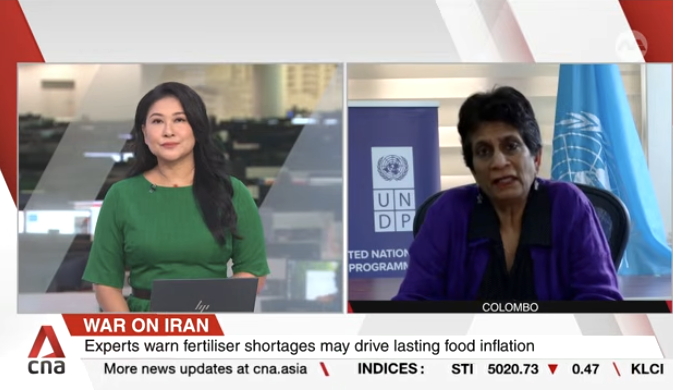
Spoke today with @ChannelNewsAsia’s Yasmin Jonkers on the Middle East conflict’s impact across 36 Asia-Pacific countries.
I was asked about @UNDP focus. From households & small businesses to informal workers and farmers, food, fuel, fertilizer shortages hit the most vulnerable first. Supporting policies and programmes that reach them - that's our priority.
Interview Insights: https://t.co/9GMe2909ne
Read report here: https://t.co/geCmum2wPd
@IMFNews@WorldBankGroup@CSIS@UNDP We cannot build a prosperous world without a clear focus on jobs.
But work alone is not enough—around 300 million workers still live in poverty.
We need jobs that build prosperity: higher productivity, better pay, and real stability. Expanding access to technology is key.
The war in the Middle East is dominating the agenda at the IMF-World Bank Spring Meetings.
But the real test is protecting people now.
Without timely, targeted support—like cash transfers—up to 32 million could fall back into poverty, and 45 million into food insecurity.
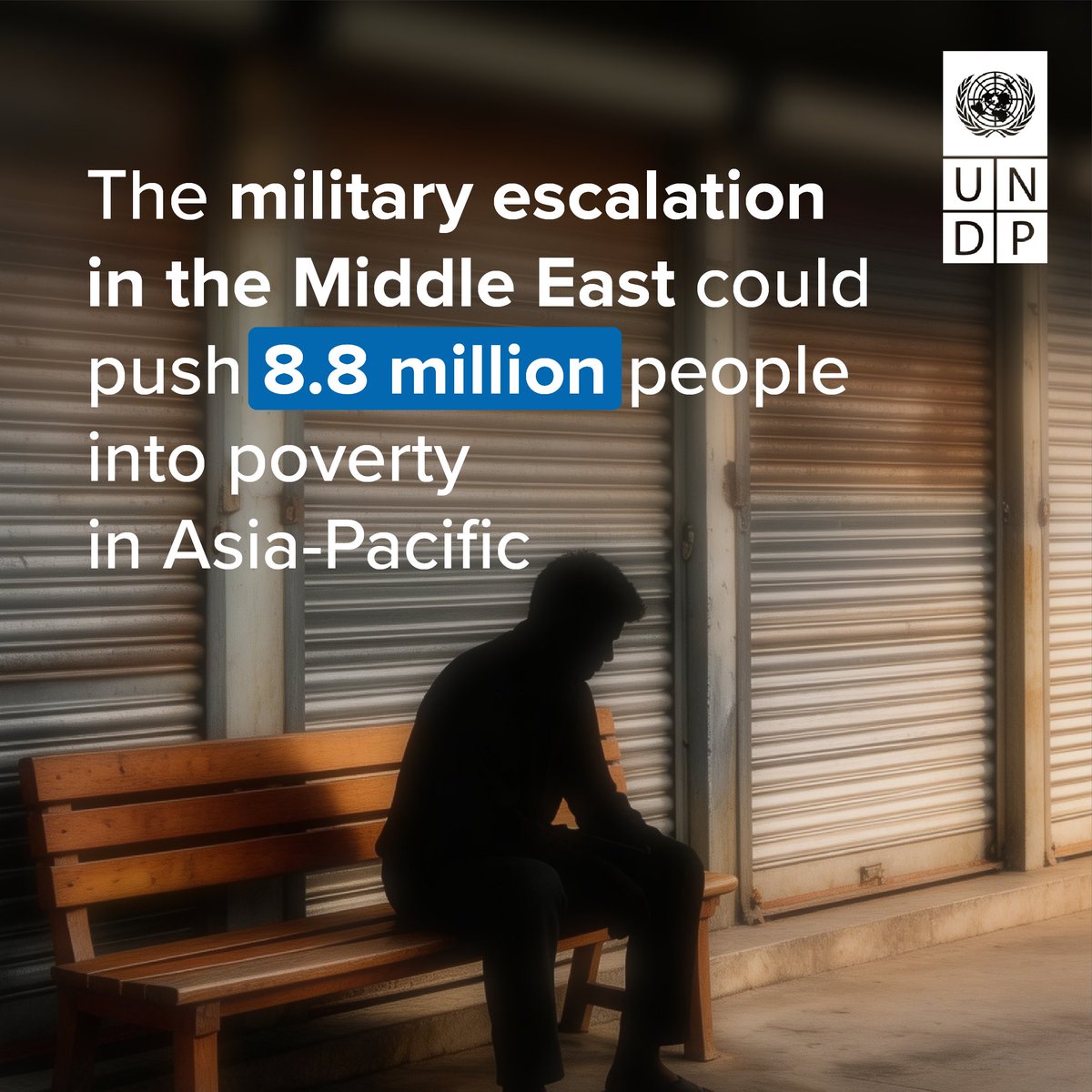
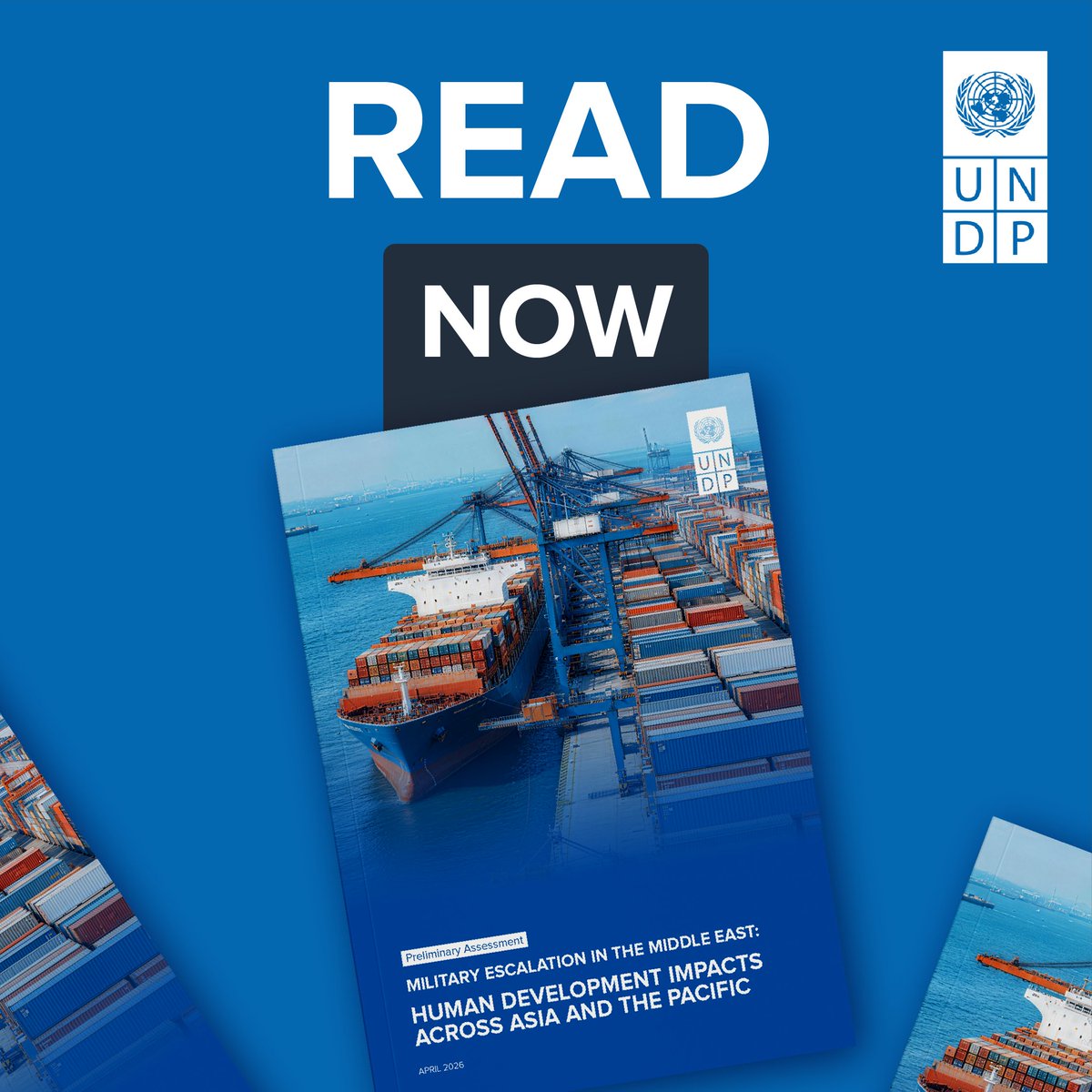
UNDP’s new report estimates that 8.8 million people across the 14 countries simulated are at risk of falling into poverty due to the Middle East military escalation. The poverty rate could rise by 5.5 percent, from 36 % to 41.5 %.
Download: https://t.co/Rz7RMWssgt
Mid East conflict effects transmitted to the economies and households of Asia Pacific with an intensity and speed not seen before!
Our @UNDPasiapac report, launched today, shows the hits and cushioning strategies taken by energy importing, fertilizer and food trade dependent and remittance reliant countries - with South Asia the most affected subregion. Others have managed with adaptive shielding...see how below:
Press release: https://t.co/luZWdpPisW
Full publication: https://t.co/ugONBnBUpI
Great to reconnect with Nathalie Francken, now Executive Director at the @WorldBankGroup - building on our collaboration in our new roles.
We’re stepping up joint action on:
➡️Unlocking finance & mobilizing the private sector
➡️Job Creation
➡️Tackling fragility & conflict
The military escalation in the Middle East could push over 30 million people into poverty across 162 countries.
The effects of the crisis reach far beyond directly affected countries, falling hardest on the poor & most vulnerable.
More in our 🆕 brief: https://t.co/Bq4JXx6cjp
A new UNDP report finds that military escalation in the Middle East could push 8.8 million people into poverty and lead to economic losses of up to US$299 billion in Asia and the Pacific, with South Asia bearing the heaviest burden.
Download: https://t.co/ZYVgXsFvuE
Press Release: https://t.co/R3pxzb1pPk
How is UNDP advancing women’s judicial leadership in the region? ⚖️
Gerd Trogemann, Manager, Regional Programme and Global Policy Network, explains how @UNDP and @ADB_HQ are partnering to scale up the Asia-Pacific Women Judges Network (APWJN) to support the next generation of women judicial leaders shaping the future of justice.
Read More: https://t.co/aeVNofTuI3
@UNDPJINASEAN
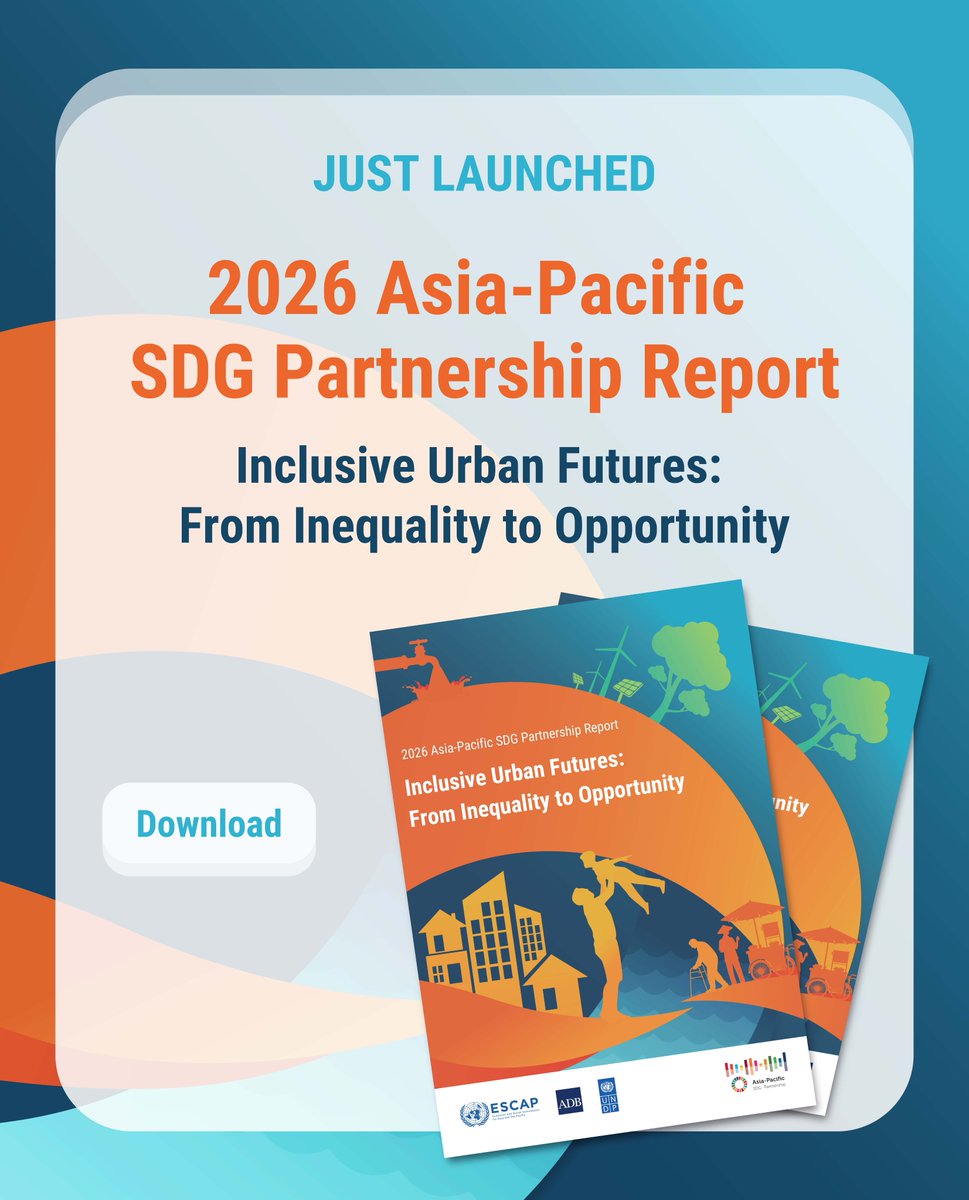
Today, at the 13th Asia Pacific Forum for Sustainable Development @UNDP @ESCAP @ADB launched our 2026 Partnership Report - this one focused on Inclusive Urban Futures.
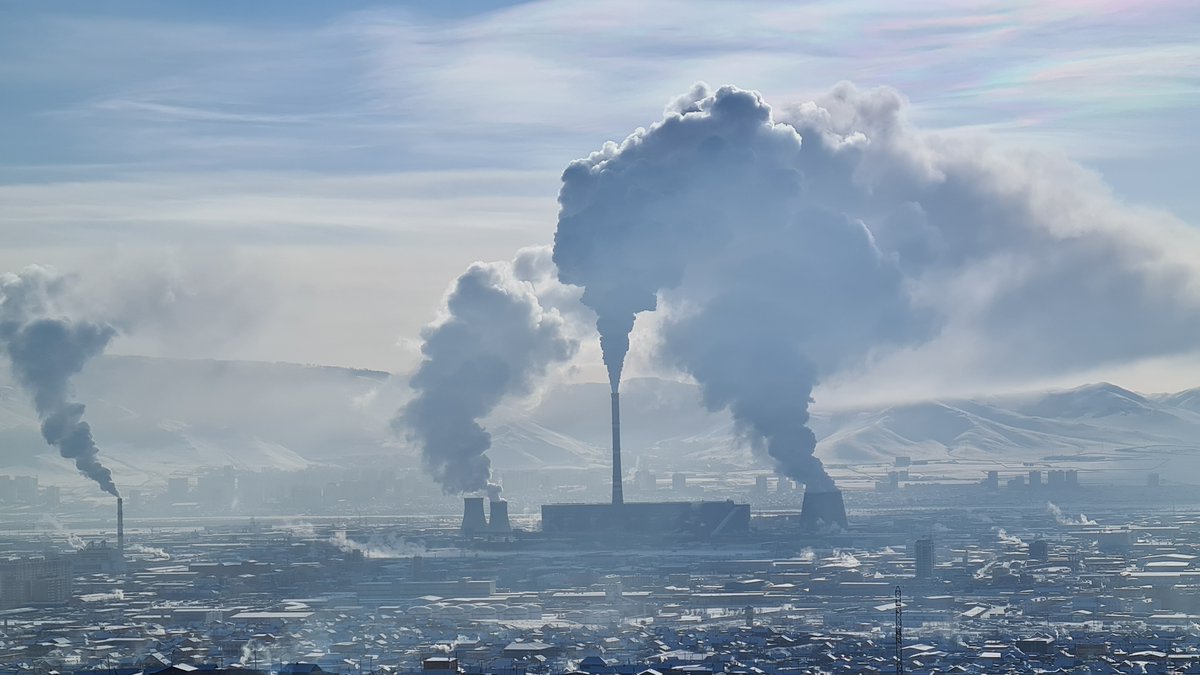
The picture is clear - while cities in this region are growing rapidly, inequality grows alongside them. Close to 700 million people live in slums, 65 per cent of urban workers are in informal jobs, and 2.3 billion people breathe unsafe air!
We then present tested practice, policy, laws and innovation that is changing this equation. Great examples from fellow panelists on Nepal, Thailand, Japan, Singapore!
Read here: https://t.co/2BkMgji1b6
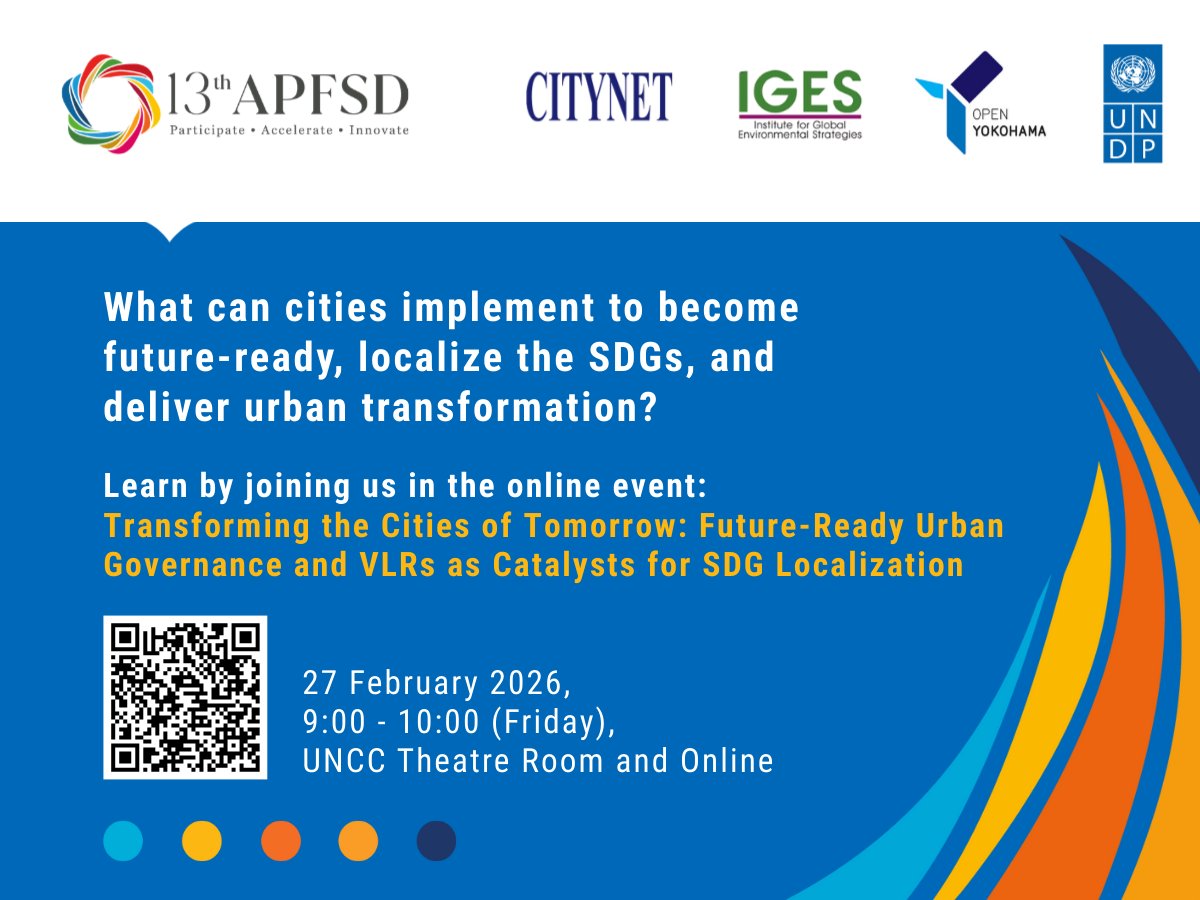
Next week at #APFSD2026 changemakers will share solutions that accelerate progress for the future of cities in the Asia Pacific.
Organized by @UNDPasiapac@IGES_EN@CITYNET_ORG and the City of Yokohama (Japan).
Happening on 27 February 2026, 9:00-10:00 (GMT+7).
Don’t miss out; Register here: 📌https://t.co/fgLOd8RNog
We must move away from tackling only symptoms and get to the root causes.
The evidence is clear: development is where lasting progress starts.
I shared today at the @UNDP Executive Board that without investments in development, we won’t get ahead. We’ll just keep reacting.
My new book ‘The Growth Story of the 21st Century: The Economics and Opportunity of Climate Action’ is now available completely free via open access by LSE Press. Download here https://t.co/GjwtcyIONy
Constantly in the news, the race for rare earth minerals is on, and demand is surging as AI, batteries, spaceships, planes and tankers demand more! So, how do developing countries rich in supply, ensure a win and not get stuck in another low-value extraction trap?
Regulations and capacities, wise leadership and community oversight are guardrails that ensure these critical minerals are responsibly extracted, safely transported, waste carefully disposed, and used as an asset for long-term prosperity also in the country of origin.
@UNDP is working with countries in the region to strengthen these safeguards, so this transaction results in a fair race to the top. More here...📹
The world needs more trust. And it starts with countries working together on the problems we all face.
Thank you for the interesting conversation
@ishaantharoor@UN_PGA@ChuckRobbins@Tharman_S and Comfort Ero.
#WEF26
Good exchange with @USAmbUN Mike Waltz, on @UNDP’s new Strategic Plan and how private sector partnerships can drive growth and development.
Looking forward to working together.
Cambodia’s upcoming #LDC graduation is a key moment to redefine competitiveness and the economy.
My recent exchange on Cross-Talk with @KhmerTimes on a country building resilience, looking back at lessons and to the future, to ensure its youthful population can live in peace and thrive in a changing world.
https://t.co/a9pX6h8zSe