I recorded a 2+ hour video course with @ericbahn (the founder of Hustle Fund) on how to raise your first round of venture capital for your startup
Want a free copy of the full course?
RT / Reply to this tweet in the next 24 hours I'll DM you a link (must be following)
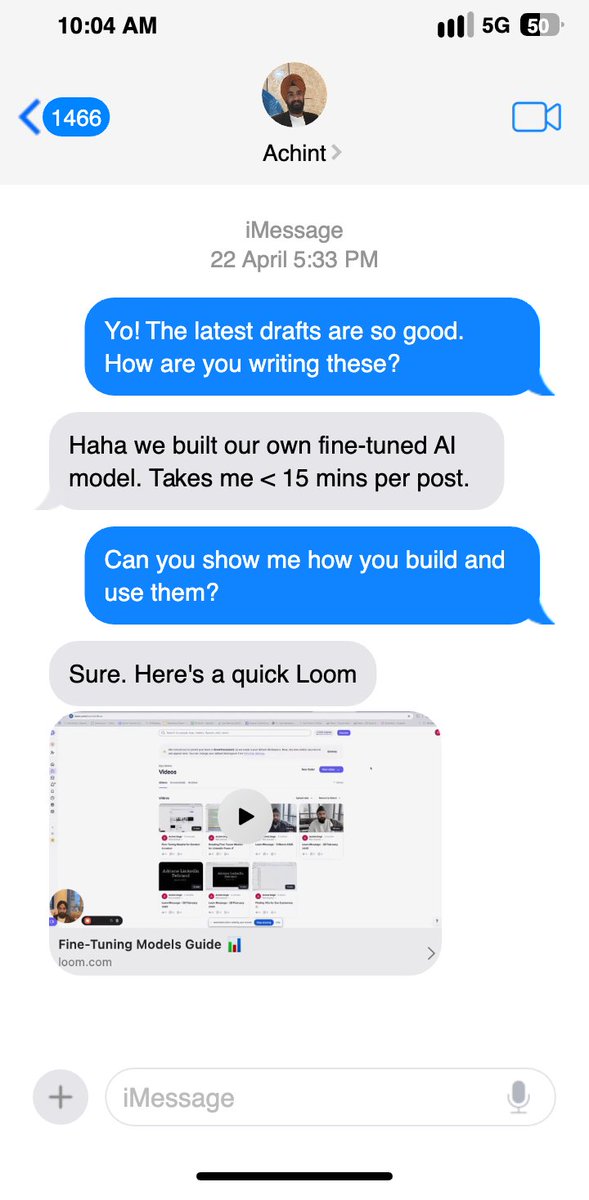
A 21 y/o marketer is generating 1M+ social impressions for me.
He’s using a fine-tuned AI to turn my daily meetings into viral posts.
I asked him to make me a 5 min Loom to show how he does it.
RT + Comment "GrowthAssistant" to get the video in your DMs.
Where are all the fun consumer AI apps?!?
There’s a shortage of AI apps that exist in the categories of consumer that have dominated in the past decade: Social apps, marketplaces, messaging/communication, video, etc. Yes, there are a lot of prosumer products and a lot of creator tools, but that’s not the same thing.
There’s a bunch of reasons for this:
- cost. To put AI front and center into your product experience means that you are generating a lot of API calls as users interact. We are just on the cusp of AI being cheap enough that you could have a low value audience that is either ad-supported or premium, and the economics work. The good news is that this is radically improving and one day we’ll have small on device models and make us a trivial problem. But for now it’s an issue.
- catch 22 on product design. LLMs our best for generating new novel conversations with users. Image and video generation models are amazing when they create media. It turns out it’s not so easy to find consumer product categories where conversation or generating media fits within the pre-existing usage and design. Yes there are a lot of chat apps but generally people want to chat with other people and LLM conversations are not quite good enough to replace that. What you want is to potentially augment existing conversations, but is that actually enough of a value prop? So far no. Same with creating new forms of media. Instagram users post photos while on vacation overseas for clout, and using AI generated content subverts this entire status game. It’s like knowingly using a knock off handbag.
- growth channels remain stagnant. In prior technological tranformstions like mobile, or the Internet one of the big advantages was that there were new distribution channels to tap into for your new product that was created for the new paradigm. Startups could be quick to build mobile apps, which could then happen to mobile apps and the App Store. Contrast that to today where AI provides functionality that exists within existing UX and thus existing growth channels. These channels are saturated, and new startups still have to go to market in stagnant channels where incumbents are putting a lot of dollars.
- the transition from infra to apps. For the past two years building, AI functionality into your product has not been easy. You have needed to build your own infrastructure and potentially employ your own AI research team in order to build the user experience you want. The trend for this has been improving dramatically, and now you can build entire new product categories without knowing what model is underneath. Your team can be plain old application engineers as opposed to AI researchers. This is going to unlock a ton of new experimentation as a result, and I’m not even referencing the big strides that code gen tools and vibe coding are soon to create!
- incumbents are moving fast. In disruption theory, the argument is that incumbent will move slowly and not recognize the technological shift. We saw that in mobile, of course, because in the first few years, it wasn’t clear that the iPhone was going to be the thing, and it took time to redesign and re-create functionality from web/desktop to mobile. This is why we saw products like AIM and ICQ get displaced by products like WhatsApp and Signal. The crazy thing of course with AI is that a lot of the largest consumer facing companies in the world, like Meta and Google, are actually embracing the new paradigm and trying a ton of different ideas. That’s leading to a situation where it seems more likely the best AI WhatsApp will just be WhatsApp.
Ultimately, I think we are about to see an explosion of consumer products because of the cost and ease of building AI into new ideas. I’m very excited about this. However, this time seems to be different than the Web-to-mobile transition because of some of the issues above. Nevertheless I’m very excited.