Pick one vertical, and gain breadth not the other way around, learning breadth and then specialising vertically in one field, it would always seem time pass.
Hence for these next 3 months I have decided to pick "AI/Ml" as the only major vertical from scratch >agents>deployment.
Day 6 in the pursuit of being "cracked"
Not much except Coursera ml specialisation.
Now off to 7 days vacation let's see how much I can progress, finally laptop will see 7 days of complete rest too 😜.
I am learning these in my pursuit of being cracked ,
Lets see looking to get small internship by next summer and major one in next to next currently in sem 3.
Avg job description for AI/ML Engineers in 2026
- Python programming, SQL, NoSQL
- ML, Sklearn, computer vision, NLP, Transformers, PyTorch
- FastAPI, Docker, Kubernetes, CI/CD, Cloud deployment
- FAST PACED capabilities
- Gen AI libraries and LLMs
- Problem solving, ETL, Data Engineering
Simply means you've to level up in your skills so fast and learn complete AI/ML lifecycle with deployment and not just a toy project. There's no alternate to this.
And yes you need to learn all these things at once even while they will ask DSA or distribution systems in an interview.
Which means,
Prepare
DSA (Medium) + ML algorithms + Deep Learning + Gen AI + LLMs + MLOps + Cloud + ML system design + Distributed systems
There's a no shortcut and that's the truth!!!
@kmeanskaran That Is why you should do dsa in python react + fastapi typescript ml dl agentic multimodal ai etc . First
Then after projects learning move to training or inference
lowkey one of the best things about ML right now is how many legit research paths exist outside the traditional PhD route
- MATS
- OpenAI Residency
- Anthropic Fellows
- DeepMind Student Researcher
- ML Collective
- FAR. AI
- Mila
- INSAIT
- EleutherAI
- Redwood Research
- Apart Research
- Encode
- AI2, LAION
- Berkeley BAIR
- Stanford SAIL
- MIT CSAIL
- Vector Institute
- HuggingFace also quietly has some insanely strong open source contributors btw
stupidly exciting time to be in ML if you genuinely like building and researching things
In 1980, there were no GPUs, no ImageNet, and no billion-parameter models.
GPT's were still science fiction.
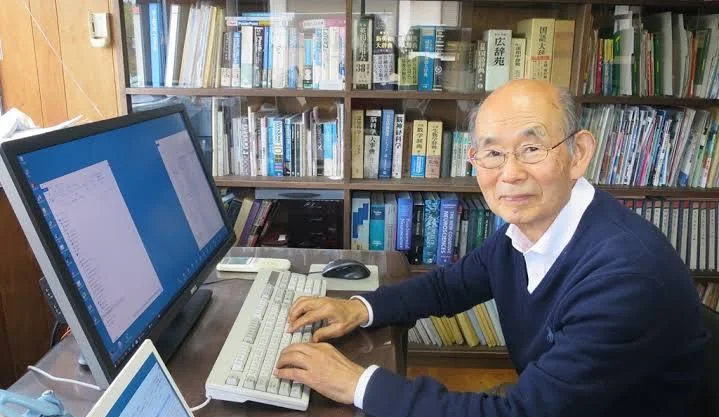
Yet a researcher named Kunihiko Fukushima was already working on ideas that would eventually become part of the foundation of modern computer vision.
What fascinates me is that most people have never heard of him.
Today, names like Ilya Sutskever, Geoffrey Hinton, Yann LeCun, and Andrej Karpathy are often associated with major advances in AI. But decades before deep learning became mainstream, Fukushima was asking a deceptively simple question:
How does the brain recognize the same object when it appears in different positions?
Back then, computers struggled with tasks that seem trivial today. If you showed a machine the same handwritten digit in a slightly different location, it could easily fail to recognize it. Humans do not have this problem. We can identify a face, a cat, or a handwritten number regardless of where it appears in our field of view.
Fukushima became interested in how the brain solves this problem.
Instead of asking, "How can I make computers smarter?", he asked a more fundamental question:
"How does biological vision work in the first place?"
That question led him to develop the Neocognitron, a neural network architecture inspired by the visual cortex.
What made it remarkable was not just that it was a neural network, but how it was structured.
Fukushima proposed a hierarchy of layers where lower layers learned simple visual features such as edges, corners, and line orientations. Higher layers combined these simple features into increasingly complex patterns and objects.
The architecture consisted of what he called S-cells and C-cells. S-cells responded to specific local features in an image, while C-cells pooled information from nearby S-cells to make recognition more tolerant to small shifts in position.
This was a crucial idea.
A cat remains a cat whether it appears in the center of an image or slightly to the left. Humans naturally understand this, but computers struggled with it. Fukushima's architecture introduced a mechanism for achieving this kind of position invariance.
When I read the original work, what struck me was how many concepts felt familiar.
Local receptive fields.
Hierarchical feature extraction.
Alternating feature-detection and pooling stages.
Translation-invariant pattern recognition.
Multi-layer representation learning.
Today, these ideas are considered fundamental to Convolutional Neural Networks (CNNs).
In fact, long before the term "deep learning" became popular, Fukushima had already demonstrated that a network could learn increasingly abstract representations by stacking multiple layers on top of one another.
The deeper I looked into it, the more it felt like reading an early blueprint for modern computer vision.
The most fascinating part is that Fukushima achieved this in 1980.
This was before modern GPUs.
Before ImageNet.
Before large-scale datasets.
Before the computing infrastructure that would later make deep learning practical.
The core ideas were already there. The world simply had not caught up yet.
Then, more than three decades later, came one of the most important moments in AI history.
In 2012, Alex Krizhevsky, Ilya Sutskever, and Geoffrey Hinton introduced AlexNet and achieved a breakthrough that stunned the computer vision community. Their model dramatically outperformed competing approaches in the ImageNet competition and showed the world what deep neural networks could achieve when combined with large datasets and GPU acceleration.
That breakthrough did not appear out of nowhere.
Many of the principles behind modern convolutional neural networks can be traced back to foundations that researchers like Fukushima had laid decades earlier. AlexNet became the spark that ignited the deep learning revolution, but pioneers like Fukushima had already spent years building the groundwork that made such a breakthrough possible.
From there, progress accelerated rapidly.
Computer vision became one of the most successful applications of deep learning. The same family of ideas would go on to power medical imaging systems, autonomous vehicles, robotics, scientific research, and many of the AI systems that shape our world today.
Reading about Fukushima reminded me of something that applies far beyond AI.
We often celebrate the people who turn an idea into a revolution.
Far less attention goes to the people who first saw the possibility.
Sometimes being early looks exactly the same as being wrong.
The difference only becomes obvious years later when everyone else finally catches up.
Kunihiko Fukushima was one of those rare researchers who saw a piece of the future long before the future arrived.