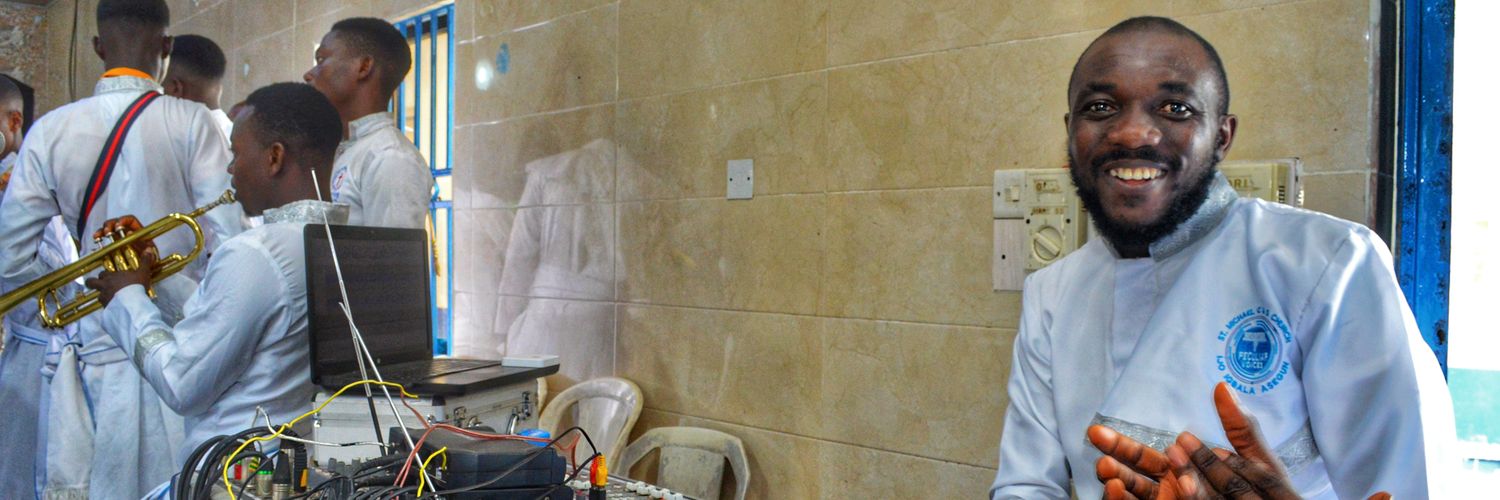
You've been hearing about the so-called "Olodo Uprising".
Here's a wider angle on this phenomenon to help you contextualise what you are actually witnessing, why it is happening and who is ultimately behind it (hint: it's not Peller - he's just a symptom!)
“Here we go again” and yet you couldn’t get through one paragraph without misrepresenting what Mount Zion actually does. Let me help.
MZ doesn’t demonize Yoruba culture. It celebrates it; the colors, the language, the proverbs, the royalty. Eg. Abejoye became a born-again Christian while still speaking deep Yoruba, bowing before his king, and dropping proverbs that’ll make your grandfather nod. Nobody took his culture. The Gospel just took the throne in his heart.
You framed this as “Yoruba spirituality vs foreign religion.” We never did. We frame it as Light vs Darkness and Darkness has no nationality. We’ve called it out in boardrooms, cities, and yes, in the villages. Location doesn’t exempt it.
“Profiting from portrayals” MZ has 200+ films. Less than 30% are traditional settings. Your entire argument is built on a minority of the catalog, filtered through a lens of cultural grievance. That’s not analysis, that’s a feeling dressed up as a fact.
People are asking questions? Good. Watch the films. The full ones. From start to finish.
AGBARA NLA drops OCT 1. 🔥 The name of Jesus is still above every other name, in 1993 and in 2026.
We have started again with the familiar conversation that Afrobeats has peaked and that we are struggling to produce another global hit.
There is some truth to that conversation.
But in the middle of all the noise, we cannot lose sight of what brought us here in the first place.
Nigerian music used to be brilliant music that needed nothing more than the people. It did not need charts, streaming milestones, fan wars, playlist manipulation, or endless statistics to permeate society.
We simply loved good music.
There was a time when some of the biggest songs in Nigeria were made by artists from other African countries. We did not care where they came from. We danced anyway.
Yvonne Chaka Chaka. Koffi Olomide. Awilo Longomba. Magic System. And many others.
Nobody was checking first week streams. Nobody was arguing over monthly listeners. Nobody was weaponizing data.
People simply fell in love with songs.
A few weeks ago, I was listening to Classic FM when Legacy by Mad Cobra came on. Instantly, I knew the song.
Not because it topped a chart.
Not because it broke a streaming record.
I knew it because my Uncle Bassey, our neighbour and the DJ at my 10th birthday party, played it as I won a dancing competition and received 500naira, 29years ago. The song became attached to a memory and has stayed with me for decades.
That is what music used to do.
It became part of our lives.
Then came Afrobeats to the world.
A movement that should have been our greatest cultural export also exposed some of our worst habits. We became obsessed with proving who was bigger, who was number one, who had more streams, more playlists, more chart placements, more foreign validation.
Today we use Spotify and Apple Music screenshots to determine success, only to step outside and discover that many of those records have little real life impact.
We no longer enjoy the music.
We audit it.
We dissect it.
We compare it.
We argue over it.
We chase virality, foreign co signs, festival appearances, and international headlines.
Meanwhile, many of the people at home have stopped connecting with the music itself.
We are struggling to break new acts because talent alone is no longer enough. Artists are increasingly pressured to make the kind of music that satisfies algorithms, fan bases, and industry expectations rather than audiences.
In the process, we are sacrificing the very thing that made Nigerian music special.
Our collective love for great songs.
The last African song to reach No. 1 on the Billboard Hot 100 before the modern era was in 1968. Since then, South Africa has added more entries through artists like Miriam Makeba and, recently, Tyla. Nigeria's biggest global chart moments, outside of Calm Down, have largely come through collaborations and featured appearances.
Yet we remain obsessed with chasing those milestones as if they alone define success.
Perhaps we are chasing the wrong things.
Perhaps the goal should not be to impress audiences thousands of miles away while neglecting the people who built the culture in the first place.
Slowly, we are losing parts of our identity in pursuit of global acceptance. We are making music for people who say i need a boat and shy hoes, over people who scream igbo and shayo, because to alot of us foriegn fans are good, local fans are razz.
Global audiences matter.
International success matters.
But being a hero at home matters more.
And the truth is that we are producing fewer and fewer of those.
The warning signs are already there.
The good news is that it is not too late.
We can still create music that feels Nigerian without apology.
We can still support artists because the songs move us, not because the numbers impress us.
We can still make people fall in love with authentic Nigerian music again.
That is the revolution worth chasing.
Japan is facing a growing loneliness crisis. From elderly residents living alone to younger generations struggling with social disconnection, loneliness is becoming a major social challenge.
Al Jazeera’s Patrick Fok reports.
@sparkliin It's been a while since the SE played good football. And he is always looking to improve the team with new players from the diaspora. That will make him likeable. He is interested in the rebuilding project not otherwise.
@SportsAdigun At least there is an altitude that will require a break. Utilizing it for commercial purposes is an added benefit.
In the next WC, if they do that in the temperate region, then it's a ploy to infuse it.
.@BafanaBafana should be called “Bafunny Ba Mess Up”, after how they shamefully represented #Africa on the opening day of the @FIFAWorldCup… 😏🚶🏽➡️🚶🏽➡️🚶🏽➡️