¿Comprenden los LLMs?
¿Qué se siente al ser uno?
¿Es la IA un riesgo existencial o un pánico moral?
¿Vale el argumento de la Habitación China contra los LLMs?
¿Quién tiene legitimidad para alinear la IA?
¿Son los LLMs artefactos o agentes?
¿Existe un monopolio cultural occidental sobre la filosofía de la IA?
He reunido y resumido los siete problemas filosóficos fundamentales de la inteligencia artificial más allá del club de los charlatanes de la IA, todos ellos enlazados a sus respectivos artículos, papers, libros e investigaciones para quien quiera ampliar.
Esto es oro. 🔗👇
https://t.co/KST4aLcIhF
I found the LLM part of this interesting, and pulled out the relevant excerpts here (Title: “Jeremy Howard is bearish on LLMs”) [I mean “bearish” compared to most people in my professional circles] → https://t.co/fl4p1nUQHP
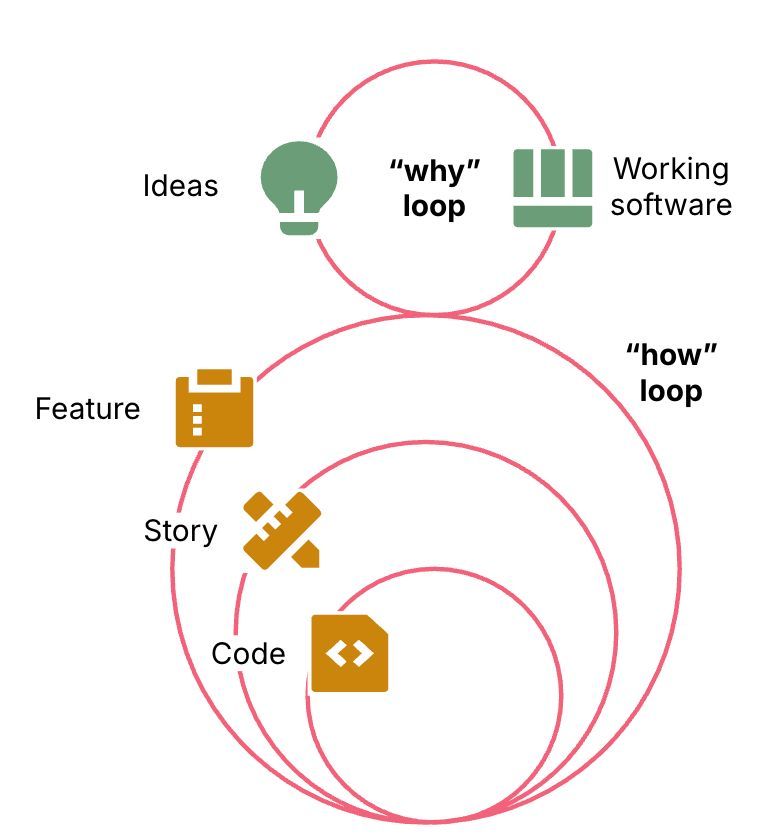
Martin Fowler makes a useful distinction: humans in the loop vs on the loop. The real leverage with AI agents may be in designing the system around them (specs, checks, tests, and feedback), not manually catching every mistake. https://t.co/9ObM0ec0aN
LeCun's "Superhuman Adaptable Intelligence" is a special case of AGI , not an alternative... in-depth blog post by me, https://t.co/xKhXL0KHPa
Taking familiar ideas he has long rejected and re-presenting and rebranding them as his own, is sorta par for the course for the glorious @ylecun of course... @GaryMarcus knows that story ;) ...
In this case, his SAI is straightforwardly shown to be a special case of decades-old definitions of AGI under some special assumptions... and these assumptions are reasonable but not really quite adequate: they leave out key stuff like safety and open-ended evolution...
In the era of algorithmic distraction, the ability to maintain a single thread of thought for four hours is a superpower. It is the only way to solve hard problems.
Every time I talk about the issues and problems surrounding LLM (or Vibe-coded) ***product*** development, I get a bunch of off-topic comments (which the writers seem to think are refutations) along the lines of "but I built this useful small thing for myself."
What those people are usually describing is essentially scripting using an LLM. I'm a big fan of scripting. It's risky (I've had scripts delete files they shouldn't have, and connecting them to a database is always problematic), but there's nothing wrong with writing a little script for personal use. Using an LLM for that is just fine—I do it myself—and it's faster than doing it by hand. These scripts are NOT products, however. Product concerns like UX, fault tolerance, speed, security, reliability, deployment pipelines, extensive automated testing, hot updates, incremental scaling, accommodating changing requirements, maintainability, etc., etc., etc., don't apply to a small personal script.
Confusing scripts with products is not helpful to anybody, and more to the point, the fact that you can use an LLM to write a script is an utter irrelevance when the topic is product development. All applications of an LLM are not the same, and pretending otherwise leads nowhere useful.
Martin Keen introduces the AI Periodic Table, breaking down LLMs, RAG, AI agents, and frameworks into a clear, simple structure. https://t.co/4OSqwl9dzo
Fantastic explanation of all 6 axes of the robot! 🦾
“Tell me and I will forget, show me and I may remember; involve me and I will understand.”
I think that the quote fits here really well! 💬
Kawasaki Robotics compares specific robot axes to human body parts in a wonderful way! 🦿
P.S. I really didn't know about the fingertip comparison to 6th axes!
~~
♻️ Join the weekly robotics newsletter, and never miss any news → https://t.co/GoA3ZuwoPB
While Everyone Chases Humanoid Robots, Japan Quietly Owns Half the Industrial Market
We've noticed something interesting: while headlines focus on humanoid robots, Japan dominates where it counts-factory floors worldwide.
The numbers speak volumes:
- 6 of the top 10 industrial robot makers are Japanese (FANUC, Yaskawa, Kawasaki, DENSO, Seiko Epson)
- 450,000+ robots running 24/7 globally
- 100K+ hours uptime without failure
Their approach? No shortcuts. Three decades of perfecting industrial automation-the robot arms building Teslas, painting with surgical precision, assembling everything from guitars to cars.
While CES 2026 showcased flashy humanoid demos, Japan held its own robotics exhibition, focusing on what actually matters: reliability, precision, consistency.
The takeaway: Japan didn't miss the AI revolution-they just refused to chase hype. In industrial automation, we're seeing that steady, proven technology often outperforms flashy innovations.
Sometimes the real winners aren't making headlines. They're making everything else.
Machine learning is the science of credit assignment. My new survey (also under arXiv:2212.11279) credits the pioneers of deep learning and modern AI (supplementing my award-winning 2015 deep learning survey): https://t.co/MfmqhEh8MA P.S. Happy Holidays!
From @therobotreport summary of iREX 2025,
"Historically known for closed, proprietary robot controllers, Japan’s largest robot manufacturer FANUC released a ROS 2 driver on GitHub, allowing developers to control its robots via the open-source Robot Operating System."
⬇️⬇️⬇️
The book Architectural Metapatterns (https://t.co/1R9IhbvuUu) from Denys Poltorak (https://t.co/gAUi9eGMkN) is amazing. Linking multiple concepts using simple words and great diagrams. It is a must-read. And there is also a webpage (https://t.co/je7LNAZY0w)
No robots. No vision. No AI.
Just a vibratory bowl feeder, a 2-axis pick-and-place, a turntable, and a gravity slide.
This is the automation that actually runs the world.
Bowl feeders have been orienting parts since the 1950s. Vibration and geometry—nothing else. Parts walk up a spiral track and fall into line.
Pneumatic cylinders move on two axes—up/down and rotate. Hard stops set the positions. No encoders. No feedback loops. Just air pressure hitting a mechanical limit.
Air jets blow parts down the slides. Gravity gets a helping hand from a tiny pulse of air to keep the flow consistent.
Inflexible? Absolutely. One product, one machine.
But for high-volume production, nothing beats it on cost, speed, or reliability.
The unsexy backbone of manufacturing.