I’m passionate about helping parents to raise healthy and strong kids!! I’m an advocate for kids and use a holistic approach as Parenting coach & Pediatrician
INSTEAD OF WATCHING NETFLIX TONIGHT.
Spend 1 hour with this.
Claude AI FULL COURSE that teaches you how to BUILD and AUTOMATE anything.
The people who watch this tonight will wake up tomorrow with a new skill.
Watch it and bookmark it now
11 Clever Personal Finance Rules that will help u save more.
1) Rule of 72
2) Rule of 70
3) 100-Age Rule
4) 50-30-20 Rule
5) 1st Week Rule
6) 6X Rule
7) 20X Term insurance
8) Health Insurance
9) 40% EMI Rule
10) 25X Retirement Rule
11) 4% Withdrawal Rule
Let's dive ⬇️.....
Short term pain is a more powerful motivator than short term pleasure. But long term pleasure can out power short term pain! That's why we go to the gym and diet. Next time you're thinking about giving up, mentally bring the long term reward into the present moment, and that will put the short term pain into proper perspective.
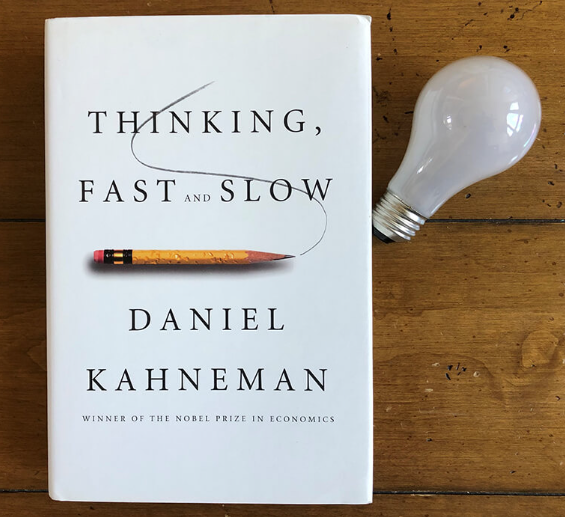
13 Mind-Boggling Takeaways from Thinking, Fast and Slow:
1. There are Two Systems working in our Heads:
System 1 - Operates automatically and quickly. Without effort and no sense of voluntary control.
System 2 - Operates slowly and precisely. Allocates attention to effortful mental activities.
2. System 2 can hack System 1:
You can reprogram the impulsive, fast decisions of System 1 by turning them from unconscious to conscious.
3. Turning from Unconscious to Conscious:
By using checklists or journals, you stop the automated process of System 1 and force to System 2 to take over.
This is how you prevent biases and psychological errors.
4. Routines and Skill:
As you become skilled in a task, its demand for energy diminishes.
Tasks that previously needed System 2 can now run on System 1.
5. The Law of the Least Effort:
By default, we're wired to perform the least amount of effort possible to perform a task.
6. Flow - The Optimal State:
Flow describes a state of effortless concentration. You lose sense of time, yourself, and other problems.
It's reached when tasks hit the sweet spot of challenging but not too difficult.
7. Genetic Tendency:
Some people are more like their System 1: Impulsive and Intuitive.
Others like their System 2: Prone to Reasoning
8. Mental Effort:
Limit the amount of small decisions you make in a day.
They cost mental energy and decrease the quality of important decisions.
9. Assessing Normality:
The main function of System 1 is to maintain and update a model of your personal world, which represents what normal is.
10. Jumping to Conclusions:
System 1 makes us jump to conclusions quickly to avoid doubt.
Doubt or not knowing makes us uncomfortable.
11. What You See Is All There Is:
We (unconsciously) prefer hearing only one side of the story so we can make a quick decision and be confident about it.
12. Answering Easy Questions:
If we don't find a satisfactory answer quickly, System 1 will change to a related, easier-to-answer question.
13. Cause and Chance:
Our preference for causal thinking exposes us to serious mistakes in evaluating the randomness of truly random events.
With over 2,213 articles on options trading from my 20 years of experience, there's a wealth of knowledge waiting for you.
Want to fast-track your options journey?
❤️ & RT this post, and I'll send you the top 10 articles every options trader should read.
Weekend homework:
How to identify high probability reversals:
https://t.co/EGTXh2GQ3B
Using the MACD Zero Line for Momentum Changes: https://t.co/rgup2Q4mA3
What is an S/R Flip Zone?
https://t.co/Pe8YiCIAw1
How to draw a Trend Zone on @TradingView: https://t.co/u7DhrGbBXi
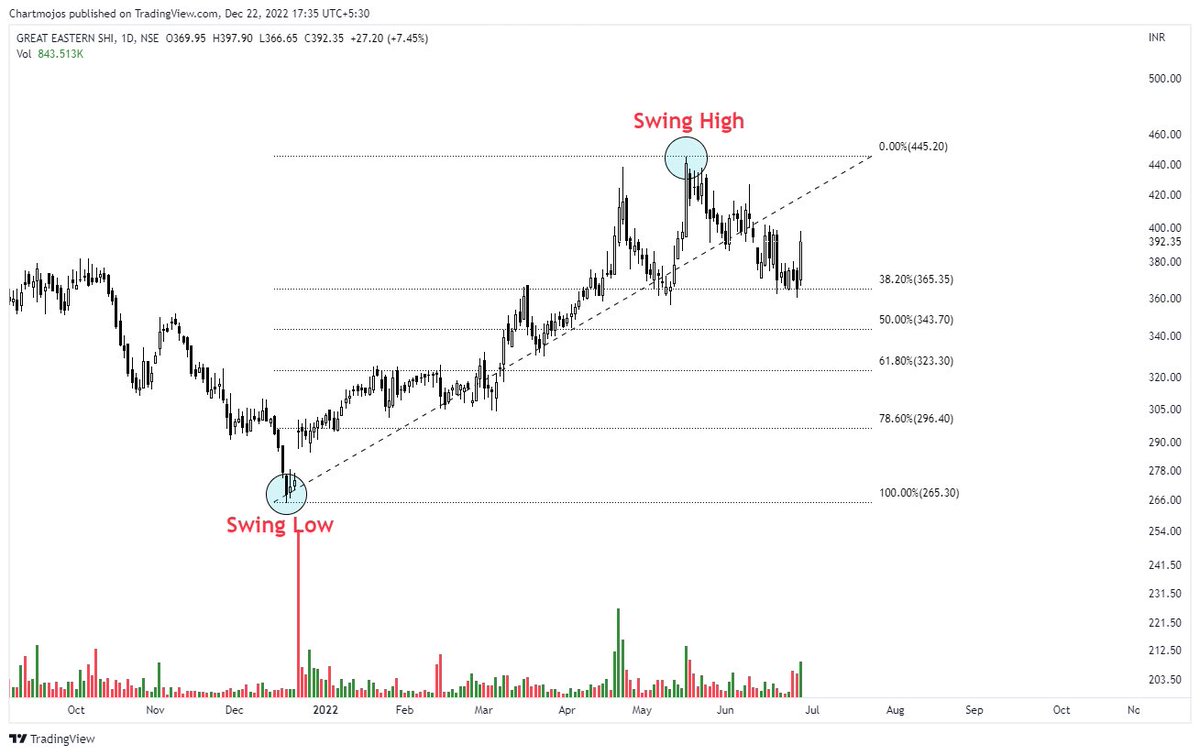
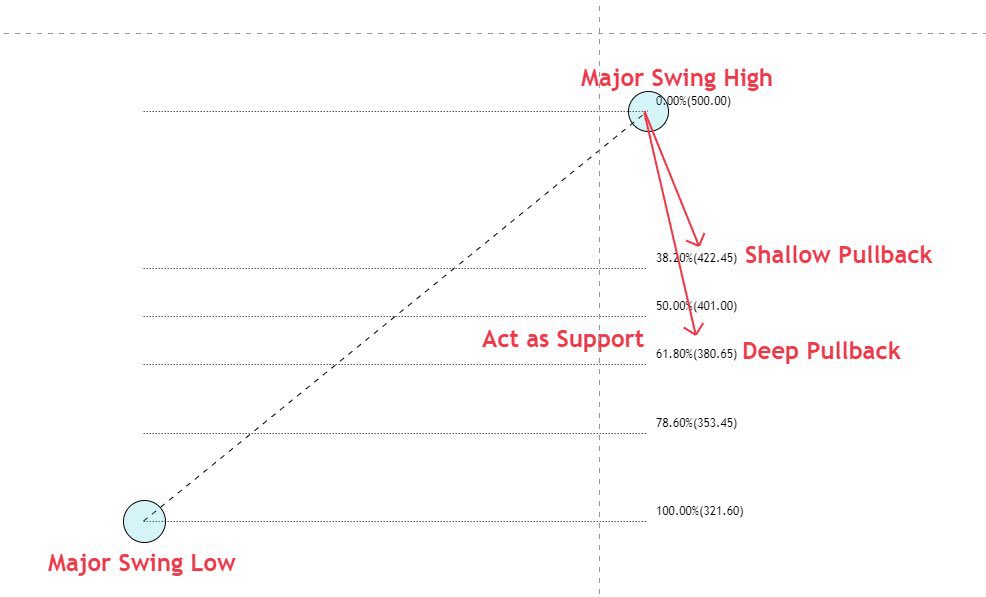
Fibonacci Retracement Explained
In technical analysis a Fibonacci retracement is a trading methodology for determining high probability support and resistance levels on a chart. It uses the Fibonacci sequence and that is where its name comes from.
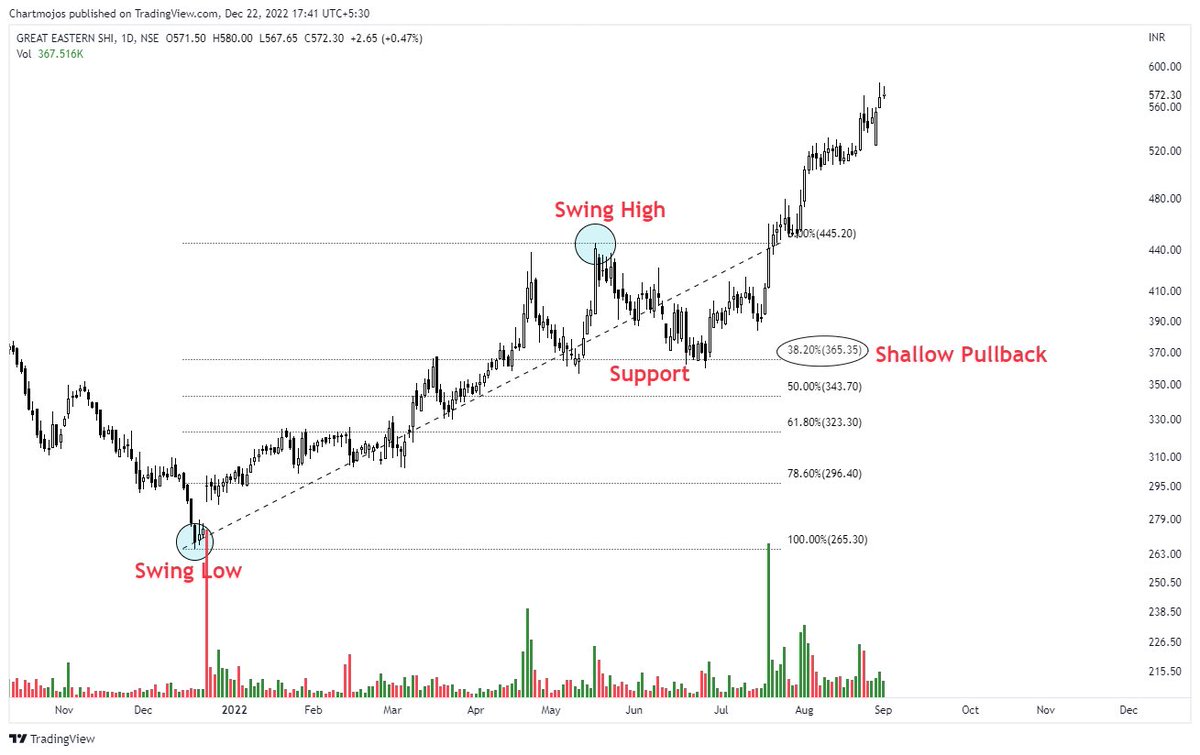
A Fibonacci retracement uses the theory that price swings on charts will usually retrace and backfill a mathematical portion of a move, after this measured pullback the trend usually continues the move in the original direction.
A probable Fibonacci retracement level is quantified by taking two distant price points on a chart and dividing the vertical distance by using the key Fibonacci ratios. 0% is the starting point for the measurement of the retracement, and 100% is a total reversal back to the starting point of the move.
Fibonacci levels are identified by measuring moves from the starting point of support or resistance. Horizontal trend lines are drawn on the chart to identify the potential key support and resistance levels. The significant levels to look at are 61.8% 50%, 38.2%, and 23.6% for support or resistance.
A Fibonacci retracement is a very common technical tool that price action traders use to look for high probability price levels to enter trades, set stop losses in current trades, or set profit targets for winning trades.
The concept of looking at key retracement levels at possible price extensions is a method not only used with Fibonacci but also with many other methods like Elliott Wave theory, Wolfe Waves, and Gartley patterns. After an up or down swing in price the new price support and resistance levels can be seen showing up at the key retracement levels in these methods.
While moving averages can change as price moves the Fibonacci retracement levels are set prices. They are targets on the chart that stay the same. This simplifies the identification of signals and creates price levels that can be acted on immediately when reached. These levels are key reaction points on a chart and can lead to a binary action for traders as the there is either a breakout in price or it is rejected and holds as support or resistance.
The primary 0.618 Fibonacci retracement price level used by so many stock traders is approximately the ‘golden ratio’.
The below example shows Fibonacci retracement levels on the chart for the USD/CAD currency pair. In this example the price action retraced approximately 38.2% from a move down before continuing.
Trading Mindset Cheat Sheet
To be a profitable trader you need three things:
1. A trading system with an edge.
2. Proper position sizing per trade.
3. The right trading mindset.
If you don’t have the right mindset for trading then the other two will not work.
Here is a trader cheat sheet of the principles you must understand to create the right mindset in trading. A trading cheat sheet for the psychology of profitability.
•A new trader must understand that trading is not a get rich quick scheme, it is a professional endeavor that requires learning how to create quantified trading systems that have an edge over other participants.
•Professional trading is not gambling it is like running a business. Profitable trading is more like operating a casino than emotional gambling if done correctly. Think like a business manager not an emotional gambler.
•Successful traders have an edge in trading systems and signals not predicting and having strong opinions. Traders don’t know the future, they know what has the best odds of working in the present. Traders should have a flexible opinion about price action.
•Great traders have losing trades, profitability doesn’t come from perfection it comes from creating good risk/reward ratios at entry. Losing trades must be accepted as just part of doing business.
•To keep a stable mindset, position sizing should be kept consistent and at a size that doesn’t cause excessive stress, emotions to become too loud, or ego engagement where you want to be right.
•A trader must have faith in their trading system. This comes through research and backtesting into a method that has a positive expectancy and fits their belief system.
•A trader must have faith in their self to execute their system with discipline. This comes with time and success in execution. A trader must trust their self to not let impulses cause bad decisions.
•Traders must have the mindset of discipline to follow their trading plan’s rules and believe that a good trade is one that followed their system regardless of results.
•A trader must have the perseverance to trade their system through losing streaks and drawdowns understanding that it is just part of the process.
•Trading results must be kept separate from a traders self worth. A trader can’t control market outcomes, they can only control their own actions.
•A positive mindset must be maintained to avoid a negative emotional spiral. Focus on the positives on every trade, like you kept losses small or followed your process with discipline.
•Don’t become euphoric with big wins or depressed during losses or drawdowns, keep your emotional equilibrium after each trading outcome. Stay off tilt in either direction. Each trade is just one of the next one hundred, divide you emotional reaction between them.