Building with AI is fast now. Keeping it reliable in production is the part that actually takes the work.
AYANA Bali ops system, Swiss-Belhotel apps, 2 OpenClaw AI agents. 50+ products shipped so far, from Indonesia to Japan to USA.
https://t.co/ElFAytHlsA if you're curious
On Tuesday night Pandu Hartanto & @dharmautomo shared how Etalas runs our AI agents in production at OpenClaw Meetup Jakarta.
The harness around it that keeps things reliable, like a human check before anything ships.
Still early for us, keen to learn from others. Deck 👇
On Tuesday night Pandu Hartanto & @dharmautomo shared how Etalas runs our AI agents in production at OpenClaw Meetup Jakarta.
The harness around it that keeps things reliable, like a human check before anything ships.
Still early for us, keen to learn from others. Deck 👇
Gojek founder Nadiem pleads not guilty, says ‘the world felt like it was ending’ when in prison
Wishing Nadiem the best outcome in this, this is unfair, he is a good person 😢
https://t.co/LduhafOE5v
The world is transitioning to a compute-powered economy.
The field of software engineering is currently undergoing a renaissance, with AI having dramatically sped up software engineering even over just the past six months. AI is now on track to bring this same transformation to every other kind of work that people do with a computer.
Using a computer has always been about contorting yourself to the machine. You take a goal and break it down into smaller goals. You translate intent into instructions. We are moving into a world where you no longer have to micromanage the computer. More and more, it adapts to what you want. Rather doing work with a computer, the computer does work for you. The rate, scale, and sophistication of problem solving it will do for you will be bound by the amount of compute you have access to.
Friction is starting to disappear. You can try ideas faster. You can build things you would not have attempted before. Small teams can do what used to require much larger ones, and larger ones may be capable of unprecedented feats. More and more, people can turn intent into software, spreadsheets, presentations, workflows, science, and companies.
People are spending less energy managing the tool and more energy focusing on what they are actually trying to create. That shift brings a kind of joy back into work that many people haven’t felt in a long time. Everyone can just build things with these tools.
This is disruptive. Institutions will change, and the paths and jobs that people assumed were stable may not hold. We don’t know exactly how it will play out and we need to take mitigating downsides very seriously, as well as figuring out how to support each other as a society and world through this time. But there is something very freeing about this moment. For the first time, far more people can become who they want to become, with fewer barriers between an idea and a reality. OpenAI’s mission implies making sure that, as the tools do more, humans are the ones who set their intent and that the benefits are broadly distributed, rather than empowering just one or a small set of people.
We're already seeing this in practice with ChatGPT and Codex. Nearly a billion people are using these systems every week in their personal and work lives. Token usage is growing quickly on many use-cases, as the surface of ways people are getting value from these models keeps expanding.
Ten years ago, when we started OpenAI, we thought this moment might be possible. It’s happening on the earlier side, and happening in a much more interesting and empowering way for everyone than we’d anticipated (for example, we are seeing an emerging wave of entrepreneurship that we hadn’t previously been anticipating). And at the same time, we are still so early, and there is so much for everyone to define about how these systems get deployed and used in the world.
The next phase will be defined by systems that can do more — reason better, use tools better, plan over longer horizons, and take more useful actions on your behalf. And there are horizons beyond, as AI starts to accelerate science and technology development, which have the potential to truly lift up quality of life for everyone. All of this is starting to happen, in small ways and large, today, and everyone can participate. I feel this shift in my own work every day, and see a roadmap to much more useful and beneficial systems. These systems can truly benefit all of humanity.
One of my favorite lessons I’ve learnt from working with smart people:
Action produces information. If you’re unsure of what to do, just do anything, even if it’s the wrong thing. This will give you information about what you should actually be doing.
Sounds simple on the surface - the hard part is making it part of your every day working process.
We keep celebrating how fast agents can execute. But who's defining what "correct" looks like? That's the part nobody wants to talk about.
If expertise is approaching free, what becomes expensive? I've been chewing on this for a while.
https://t.co/uTxk41hrjU
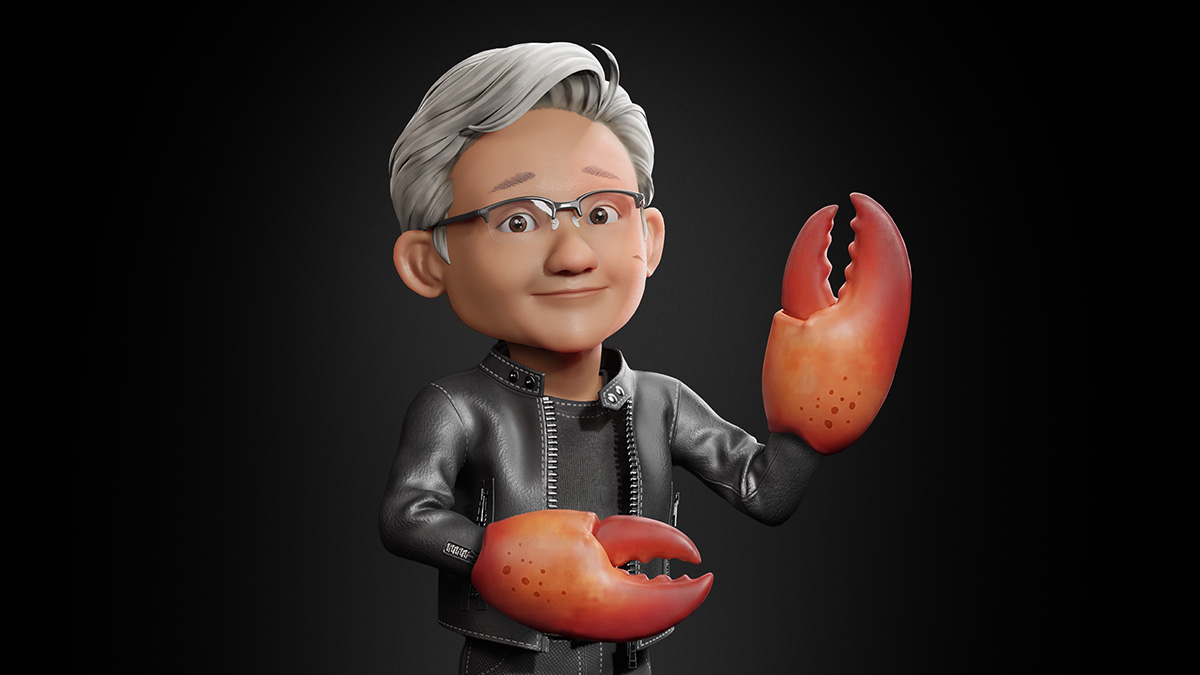
Ready to deploy AI agents? NVIDIA NemoClaw simplifies running @openclaw always-on assistants with a single command.
🦞 Deploy claws more safely
✨ Run any coding agent
🌍 Deploy anywhere
Try now with a free NVIDIA Brev Launchable 🔗 https://t.co/eAbqav9A4x
Just started using @garrytan's gstack /plan-ceo-review in Claude Code. Honestly kind of mind-blowing.
I asked for feedback, it gave me a pre-launch incident report