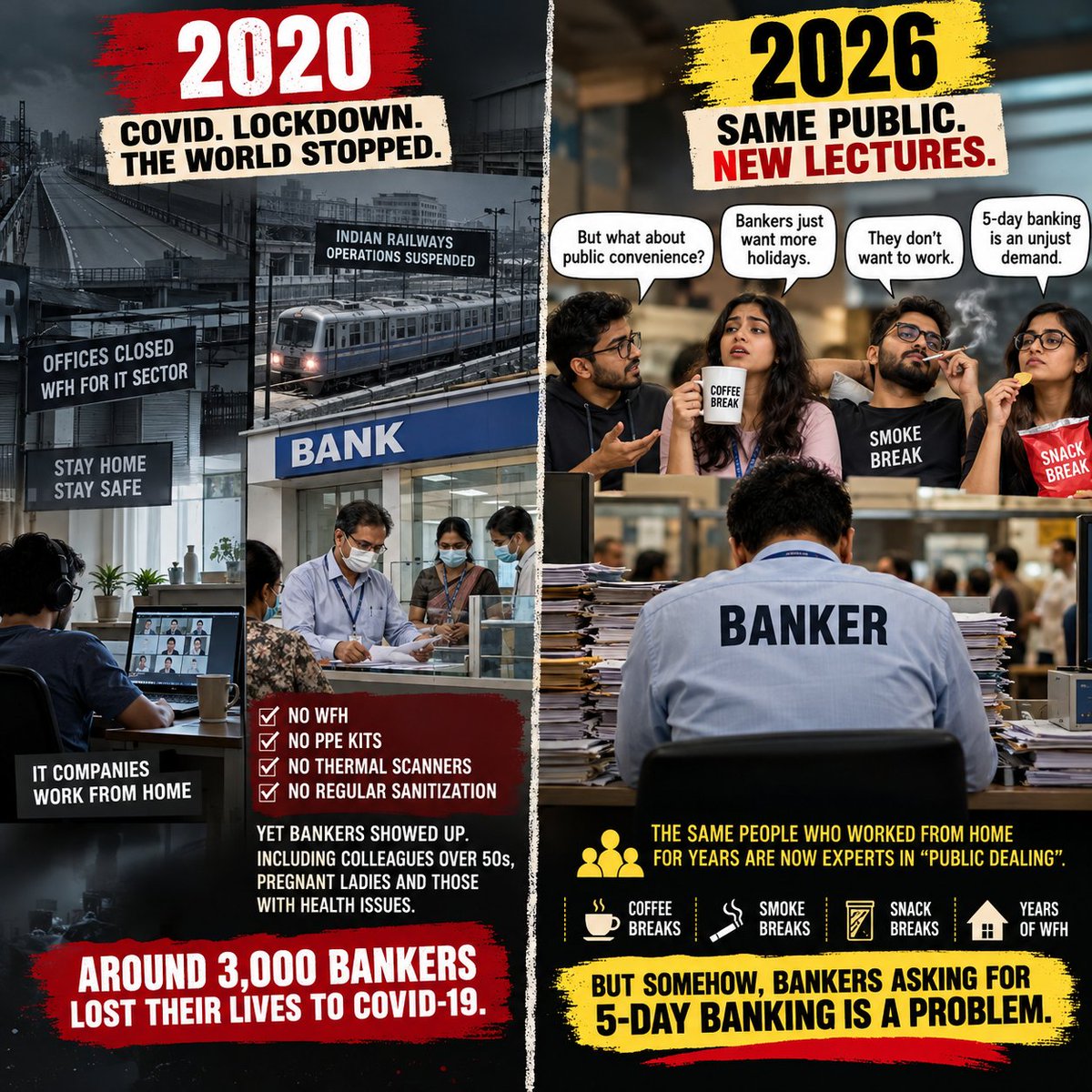
2020 vs 2026. Same country. Same bankers. Very different public memory.
2020. COVID. Lockdown. Everything shut down.
Trains stopped. Offices shut. Streets emptied.
IT companies switched to Work From Home.
But public-sector bank branches?
OPEN.
No fancy home office.
No WFH.
No guaranteed PPE kits.
No thermal scanners at every branch.
No comfortable “Zoom from home” setup.
Bankers walked into branches every day - including colleagues who were 50+, pregnant, or dealing with health vulnerabilities - because someone had to keep banking services running.
While much of the country was being told:
“Stay Home. Stay Safe.”
Bankers were being told, in effect:
“Come to the branch. Keep the economy moving.”
And thousands of bankers paid the ultimate price during the pandemic. Industry bodies and reports have cited around 3,000 banker deaths due to COVID-19.
Fast-forward to 2026.
The same society that once depended on banks remaining open is now giving bankers lectures on:
“PUBLIC DEALING.”
Apparently, asking for 5-day banking is now an unjust demand.
Interesting.
Some of the people making these lectures worked from home for years.
Some have coffee breaks.
Some have smoke breaks.
Some have snack breaks.
Some complain about crowded public transport.
Some don't have to face an angry customer across a counter at 3 PM on a Monday.
And yet, somehow, the banker standing behind that counter for hours is being told:
“But what about public convenience?”
Oh, absolutely.
Public convenience matters.
It mattered in 2020 too.
That is precisely why bankers showed up when almost everyone else was being asked to stay home.
I am NOT generalising the IT sector. There are millions of hardworking IT professionals, and their contribution is undeniable.
But here's the irony:
Why is it acceptable to stereotype an entire profession when it comes to bankers?
“Bankers don't want to work.”
“Bankers don't care about customers.”
“Bankers just want more holidays.”
“Bankers should think about the public.”
Maybe before lecturing bankers about commitment to the public, remember who kept walking into those branches when the public was being told not to walk out of their homes.
Five-day banking isn't a war against the public.
It's a demand for a more rational working model in a sector that has already demonstrated, repeatedly, that it can keep serving customers through technology and extended digital channels.
So yes, let's talk about public convenience.
But let's also talk about employee dignity, working conditions and collective memory.
Because apparently, in India, a banker's service is remembered for exactly as long as it takes for the crisis to end.
2020: “Thank you, bankers.”
2026: “Why do you need five days?”
What a remarkable memory we have!!
#FiveDayBanking #Bankers #BankingSector #PublicSectorBanks #BankEmployees #WorkLifeBalance
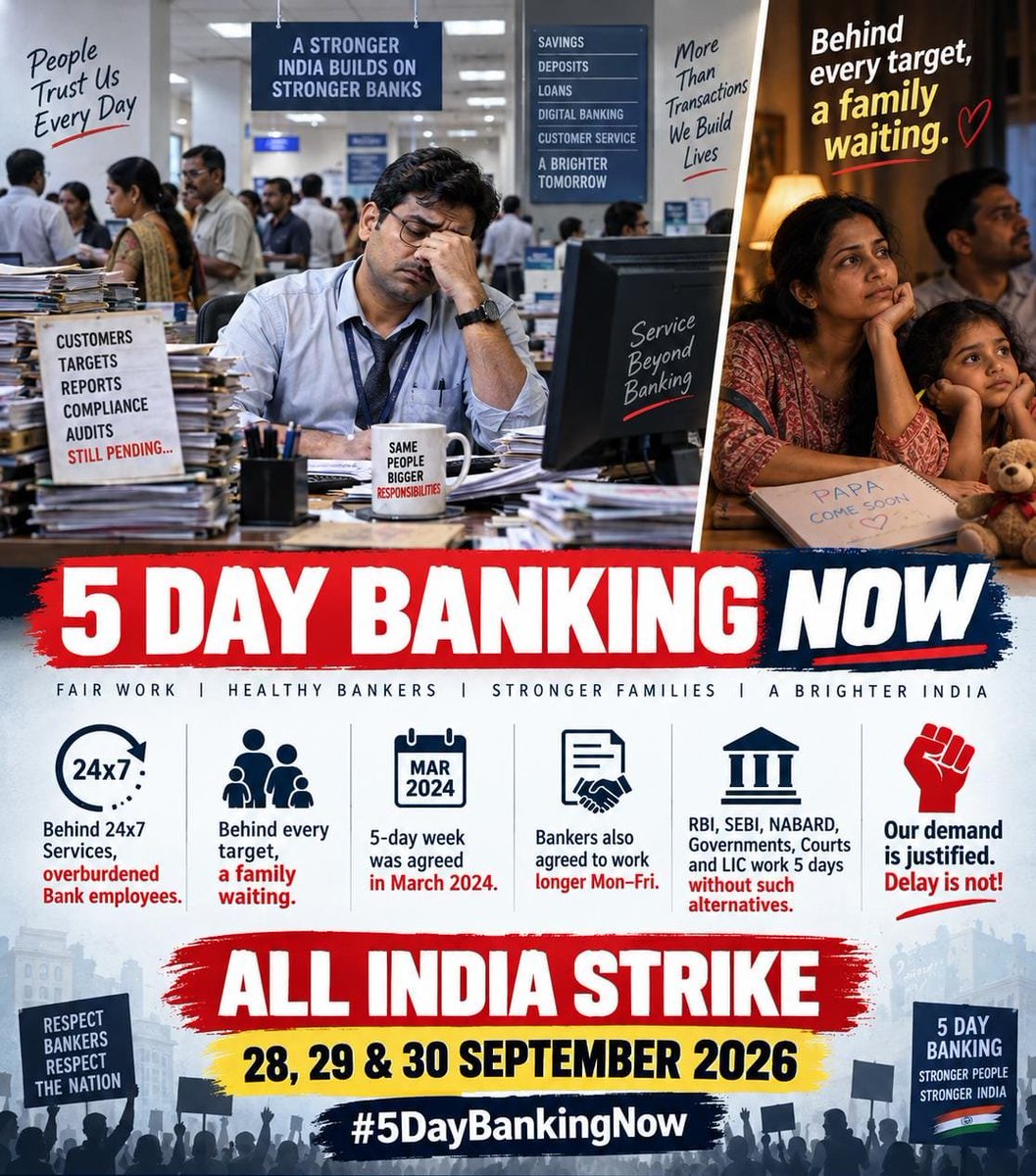
Bankers keep India connected 24×7.
But behind every transaction, target and deadline is a human being, with a family, responsibilities and a life beyond the branch.
A 5-day week was agreed in March 2024, with bankers accepting longer working hours from Monday to Friday.
The demand is reasonable. The commitment is proven. The delay is difficult to justify.
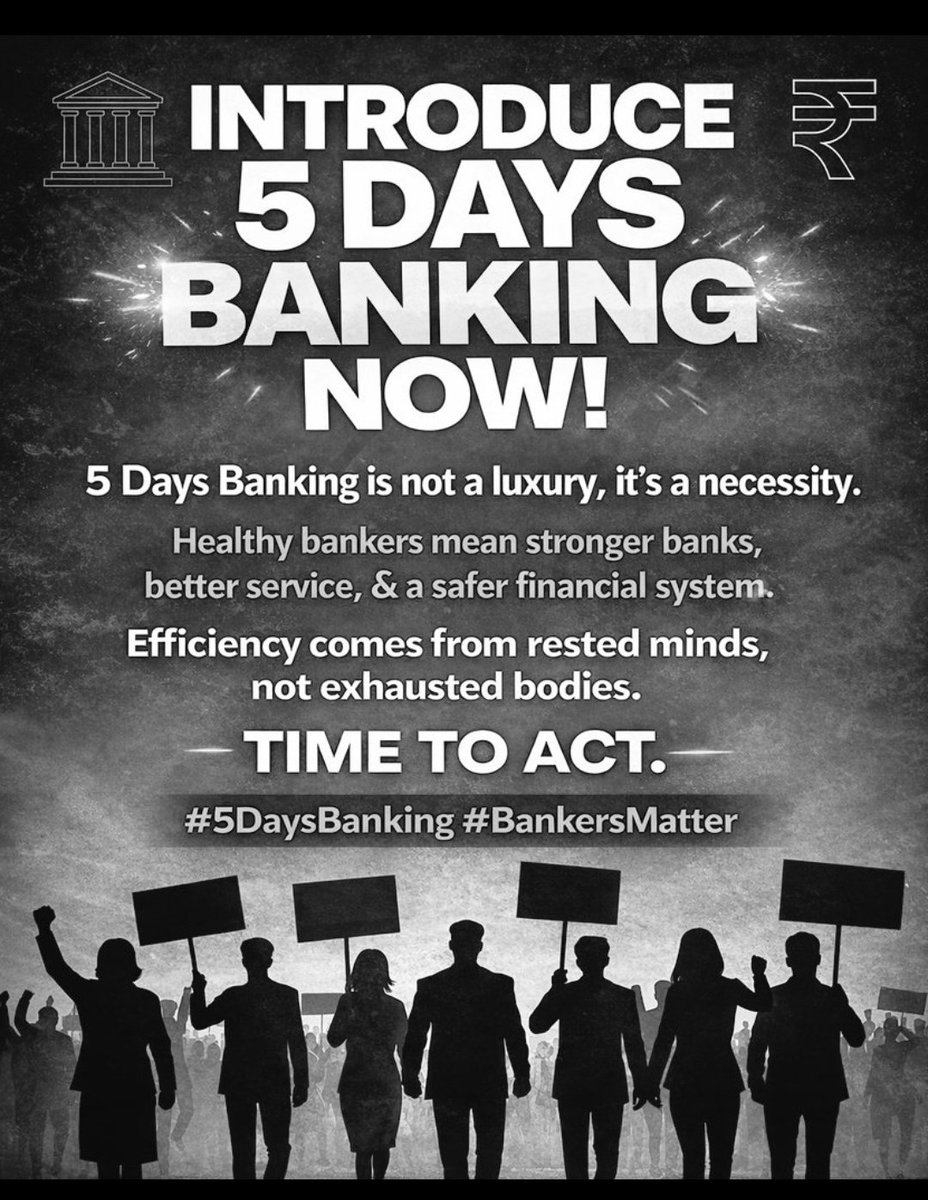
Implement 5-Day Banking now.
@PMOIndia@narendramodi@FinMinIndia@nsitharaman@DFS_India
#5DayBankingNow
PNB marks another year of excellence and growth, as we continue to serve our customers with integrity and dedication. Celebrating 129 years of excellence in banking and customer service!
Happy Foundation Day!
#TrystWithTech#Legacy#FoundationDay2023#Excellence#Banking
On the momentous occasion of the 38th Foundation Day of AIBOC, we pay respectful tribute to our visionary leaders. Let us strengthen AIBOC to spearhead the battle against privatisation.
#MarchOnAIBOC#BankBachaoDeshBachao