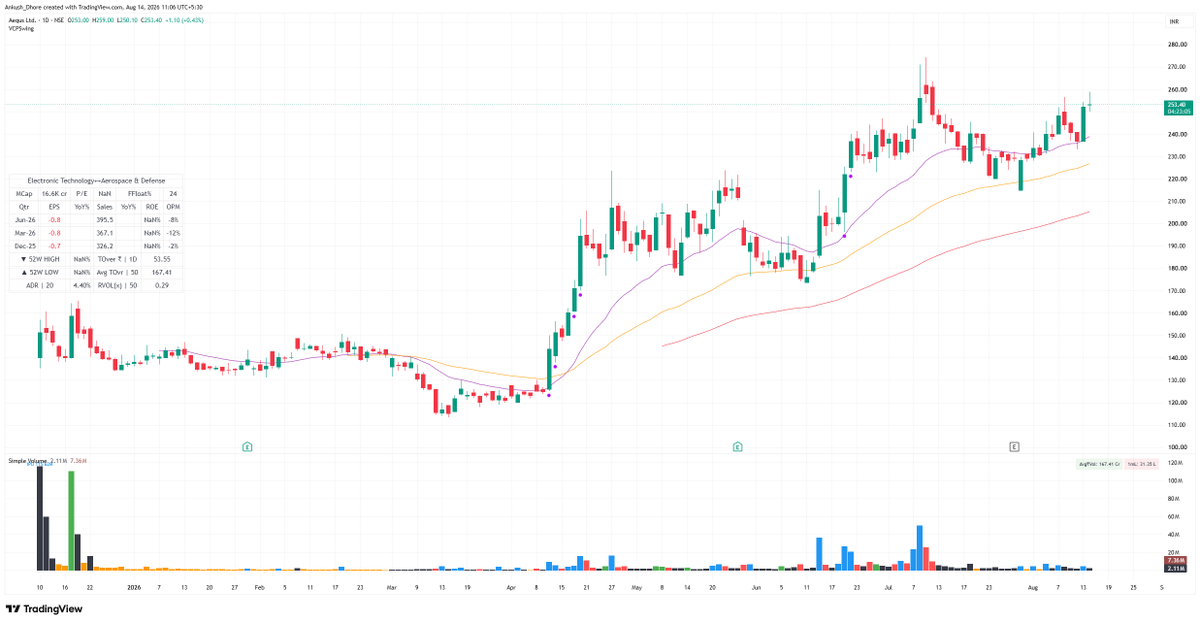
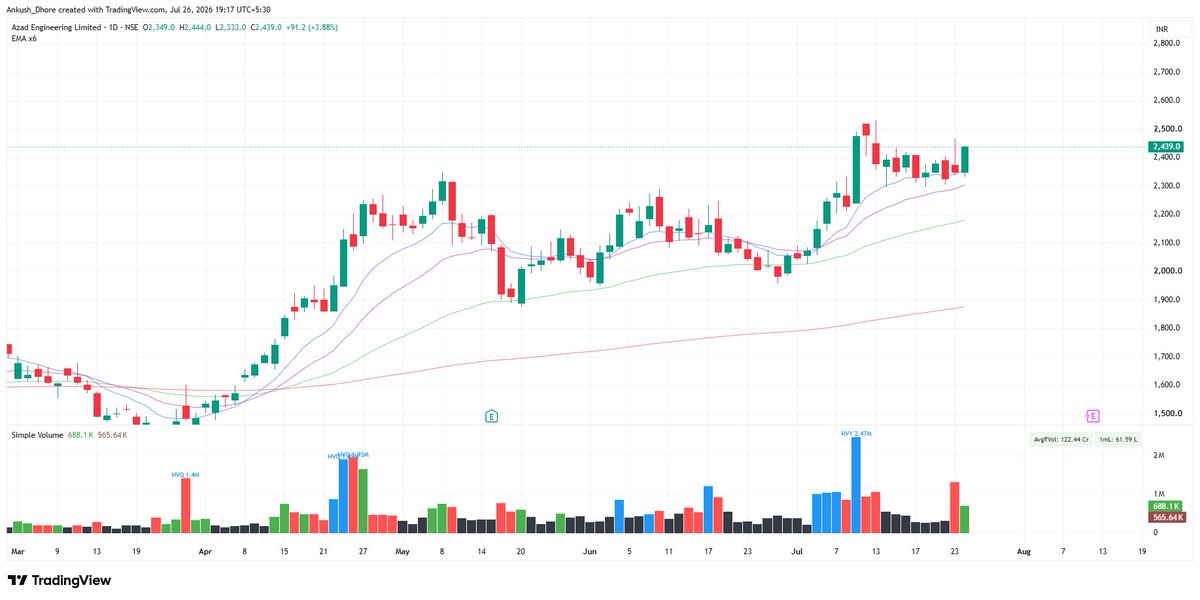
I wrote, requested SEBI Chairman to review & inquire about #CAS Manipulation & Volatility in last few minutes.
27 August BSE during last 12 minutes of trading at NSE/BSE Sensex crashed over 2,200 points & than recovered 2,000 points.
Want Action against Manipulators
@Mitesh_Engr I support BJP, but not happy with the way they are working. True, that opposition should do better work in their current ruling states, so does the government should work better to remain in power.
Beginner traders can make it easy on themselves by understanding that each & every aspect of trading falls under one of these two pillars: selection and execution.
1. SELECTION
Learning to execute trades without first learning how to select stocks is essentially a recipe for donating your hard-earned money to the market. Therefore, beginners should first master stock selection before moving on to execution.
a) Identification
The first prerequisite for stock selection is knowing what kind of stocks you want to trade. You should have a clear understanding of the types of price structures, chart locations, and stock characteristics that fit your approach.
There are two ways to acquire this knowledge.
- The first is to study a large number of historical charts & build your own database of high-probability setups that you intend to trade in the future.
- The second is to copy someone else's setups by simply trading the patterns they recommend.
However, a problem with the human mind is that it naturally wants to innovate or improvise. Even if someone gives you a proven setup, you'll probably be tempted to modify it in some way, and the results may no longer match the original method. So it is generally better to discover & collect your own setups and eventually organize them into a systematic trading process. This will ensure that you have confidence in the system & so you do not tinker with the methods on every other disappointing trade.
b) Watclist creation
Once you have identified the setups you are looking for, you need to scan the market regularly and keep adding stocks that match your criteria to a watchlist. Over time, you should add more names to the list as they come to you, and also continuously trim that watchlist by removing stocks that no longer maintain the structure you were waiting for.
c) Tracking
Once all of these elements are clearly defined, your only remaining task is to patiently wait for your opportunities. Sounds easy, but you should strive to neither be early nor be late. Like a sniper who waits for the perfect moment to pull the trigger.
You should also be clear about whether the overall market environment plays any role in your selection process or not. In addition, you need to define whether non-chart factors (like fundamentals, news, or other external information) are part of your decision-making framework or whether you ignore them completely.
At this point, the stock selection process is complete.
2. EXECUTION
Only after you have learned selection should you move on to learning execution.
a) Entry decision
Execution begins with making a commitment that you are going to enter a particular stock. Ideally, this commitment is made the day before.
Your trading system should clearly define whether, irrespective of whatever happens the next day, will you enter the trade if the price crosses a predetermined trigger or pivot level. Alternatively, your system may require certain conditions to be satisfied on the morning of the trade before you take an entry. e.g. many traders wait for unusually high morning volume before entering a stock, while others simply place a GTT order above a pre-defined price level and enter automatically the moment that level is breached.
That is the first part of execution.
b) Derisking &/or Pyramiding
The second part is risk management. You need to decide in advance when you will de-risk the trade by moving your stop loss to your entry price, thereby bringing the trade to breakeven.
Beyond that, your rules should specify how you will continue to trail your stop loss higher as the trade progresses, or whether you intend to pyramid into the position by adding more shares as the trade moves in your favor. All of these criteria should be defined before you enter the trade.
c) Exit
The third component of execution is the exit. Your exit strategy should also be predetermined. Will you exit on signs of weakness? Will you exit into strength? Or will you exit based on anticipation (e.g. when a stock has gone into a parabolic advance and you believe the move has become excessively extended)?
These are the essential elements of execution.
Taken together, that's how the entire trading process can be divided into just two broad categories: selection and execution.
Every beginner trader should have absolute clarity about this framework. Once these two pillars are well understood, traders can gradually adapt them to their own personality, refine them through experience, and continuously improve their trading process over time.