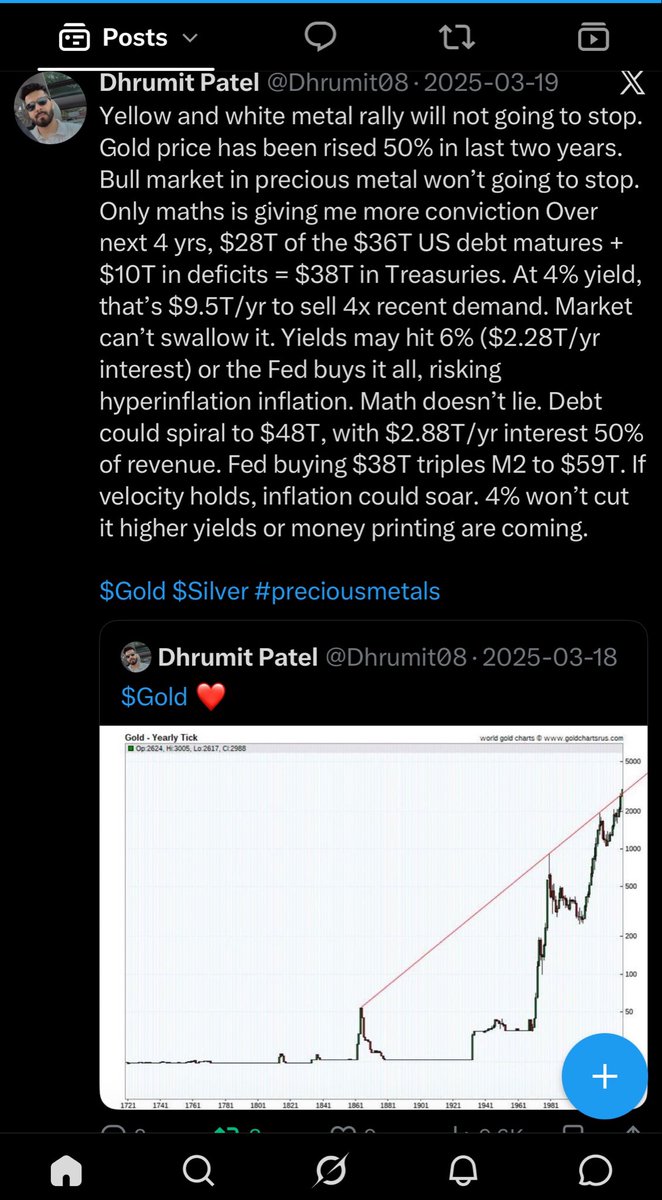
Yellow and white metal rally will not going to stop. Gold price has been rised 50% in last two years. Bull market in precious metal won’t going to stop. Only maths is giving me more conviction Over next 4 yrs, $28T of the $36T US debt matures + $10T in deficits = $38T in Treasuries. At 4% yield, that’s $9.5T/yr to sell 4x recent demand. Market can’t swallow it. Yields may hit 6% ($2.28T/yr interest) or the Fed buys it all, risking hyperinflation inflation. Math doesn’t lie. Debt could spiral to $48T, with $2.88T/yr interest 50% of revenue. Fed buying $38T triples M2 to $59T. If velocity holds, inflation could soar. 4% won’t cut it higher yields or money printing are coming.
$Gold $Silver #preciousmetals
The internet was busy debating jantar Mantar & a quiet facility in India witnessed something straight out of science fiction. An engine fired up. But it did not hum & it did not roar like a normal jet.
It detonated. Continuous supersonic shockwaves raced around a circular chamber 1000s of times/sec, harnessing controlled explosions to generate thrust.
The startup D-Propulse just gave the world a sneak peek of their air-breathing Rotating Detonation Engine (RDE) with an integrated aerospike nozzle.
Every jet engine on a commercial airliner, every fighter jet & every rocket we have ever seen operates on deflagration. We mix fuel with air/oxygen, ignite it & it burns relatively slowly at subsonic speeds. It is effective, but humanity has pushed this tech to its absolute physical limits.
RDEs throw that century-old playbook into the fire. Instead of burning fuel smoothly, an RDE explodes it intentionally. A continuous detonation wave sweeps around an annular (ring-shaped) channel at supersonic speeds, reaching over 2000 m/s. This is called Pressure-Gain Combustion.
It extracts 15-25% more thermal efficiency out of the exact same amount of fuel. In the world of high-speed flight, a 25% jump in efficiency is a completely different league.
Why this Matters for India?
For decades, the narrative surrounding Indian engineering was tied to catching up on legacy systems, spending billions trying to replicate 1970s turbofan engine metallurgy/importing critical defense tech.
D-Propulse is proving that India does not need to play catch-up anymore.
By leapfrogging straight to Pressure-Gain Combustion, an Indian deep-tech startup, guided by veteran scientists & built by young engineers is standing on the frontlines alongside research labs in the US, Japan & China.
Imagine hypersonic cruise missiles, ultra-long-range combat drones & spaceplanes that do not need heavy, complex moving turbopumps to break speed records. That is the realm this technology unlocks.
The future does not belong to those who build better versions of old machines. It belongs to those who rewrite the physics of how machines work.
🚨 Chennai-based Agnikul Cosmos has announced Mission-02, which aims to demonstrate India's first recovery of an orbital-class rocket booster after launch. 🙏 🤯
SpaceX launched 20 satellites on Friday. Some of them switched on flashlights, turned around, and photographed the rocket that had just carried them. Then all 20 deliberately burned up about 20 minutes later on.
They were not cargo. They were witnesses.
Starship Flight 13 flew the first real Starlink V3 satellites ever put in space, each designed to carry 1 terabit per second, roughly a ton apiece, 20 tons released in a single pass.
All 20 separated cleanly. They unfolded solar arrays, extended antennas and linked back to the network by laser and radio. 6 carried engineering cameras and lights pointed backward at Starship, to photograph its heat shield from outside.
None of them stayed. The flight was suborbital by design, so every satellite followed the ship down and burned. The mission added nothing to the network.
The network was never the point at all. A rocket normally watches itself from the inside, through cameras bolted to a vehicle that is shaking, glowing and wrapped in plasma, and a sensor destroyed in a failure takes the evidence of that failure with it. Reusability depends on the heat shield surviving, and the heat shield is the one part that cannot be seen from inside. So the eyes went outside the machine.
Everyone else has to persuade a paying customer to risk real hardware on an experimental rocket. SpaceX built the rocket, built the satellites, turned 6 of them into inspection drones, tested both in the same flight, and threw the instruments away once the images came down. The customer and the test department are the same company.
Most of the flight worked. The ship relit a Raptor engine in space 39 minutes in, cleared peak heating and peak pressure on reentry, and made what SpaceX called its softest splashdown yet. The booster came down under control but lit only 5 of its 13 landing engines and hit the water harder than planned.
Starship builds Starlink. Starlink now watches Starship. What those cameras saw will change the rocket that launches the next batch.
The piece works out what happens when a machine can manufacture its own witnesses.
Massive success!! Congrats legend @elonmusk
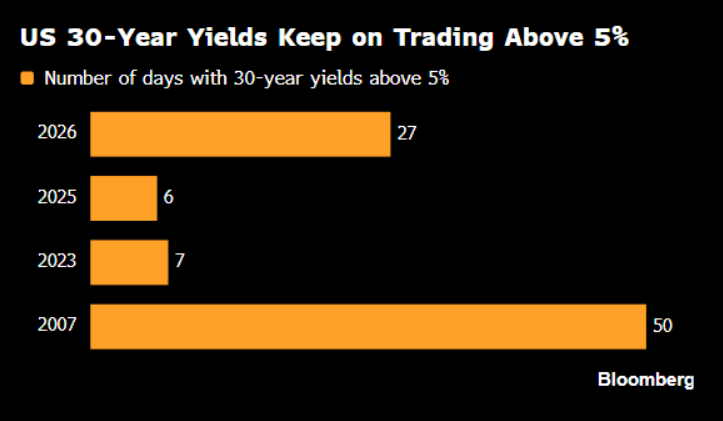
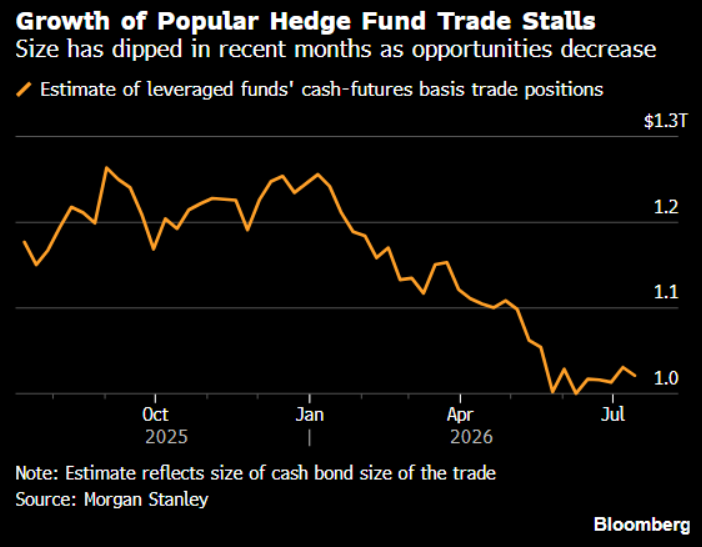
Watch the long bonds. Treasuries pressured by AI's debt explosion, rising inflation vol, (per the great chart from @Bloomberg's Simon White). Basis Trade's shaky state, #oil back near 100, many factors, many charts. Not sure how much longer PE and PC can hold their breath.
@KobeissiLetter I am on right path. Yield will shore to 6%. U know what is going to benefit out of this. Good time to accumulate $Gold. Waiting to break 200 DMA.
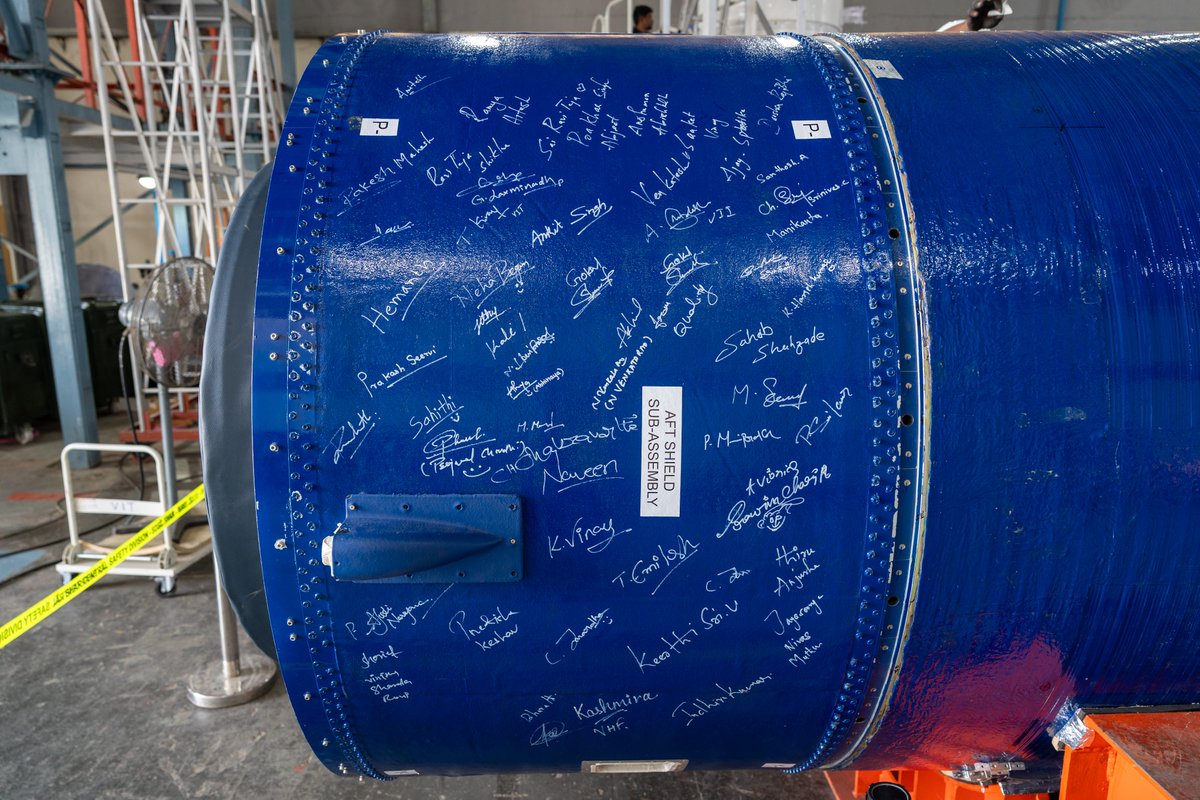
Signed by the people who built it. 🚀
Every signature on Vikram-1 belongs to an engineer, technician, or teammate who helped make this mission possible.
Now, they’re all headed to space aboard Mission Aagaman.
#Vikram1#MissionAagaman
ORBIT ACHIEVED. 🚀
Vikram-1 Test Flight-1 has reached orbit. India's first privately developed orbital rocket has completed its final burn and injected its payloads into a ~450 km orbit, making India the third country in the world with private orbital launch capability.
History is made. 🇮🇳
#Vikram1 #JourneyToOrbit #SkyrootAerospace