23-year-old Dan Jury carrying his 81-year-old grandfather, Frank Tugend, in 1974...
In 1974, Dan Jury decided to move his grandfather, Frank Tugend, out of a nursing home to care for him at home. Dan and his brother Mark documented their three years of caregiving through intimate photographs, which were later published in the 1978 photo essay book Gramp and explored in the documentary Chillysmith Farm. Their story offered an honest look at aging, dignity, and family caregiving that helped influence conversations around home-based elder care and the hospice movement.
In 1974, a 23-year-old man named Dan Jury made a decision that defied the social norms of the era. Rather than leaving his 81-year-old grandfather, Frank Tugend, to live out his final years in a nursing home, Dan brought him into his small apartment.
What started as a personal act of care soon led to a national discussion, making people rethink how America sees aging, dignity, and caregiving itself.
In the 1970s, many of Dan's friends thought his choice was a burden or even a "waste" of his youth. But Dan saw things differently. For three years, he cared for Frank every day, showing steady patience.
Frank had lived through the Great Depression and worked hard as an immigrant. To Dan, he was not just a patient or a duty; he was a mentor. By staying and listening, Dan learned that what seems like weakness in old age can actually be a deep strength.
While they lived together, Dan and his brother Mark took photos of their daily lives. These pictures were not staged or polished. Instead, they showed honest, closeup moments that revealed both the reality of aging and the beauty of human connection.
In 1978, these images were compiled into the book"Gramp." It became an unexpected sensation, selling over 100,000 copies.
It provided a visual language for the burgeoning hospice movement in the United States. It humanized the process of dying, showing that it could be a shared, peaceful experience rather than a clinical isolation.
Nicholas Winton (1909-2015) was a British stockbroker and humanitarian who organized the rescue of 669 children-mostly Jewish-from Czechoslovakia on the eve of World War II....
Hitler has invaded Czechoslovakia, threatening the lives of the Jewish population. Nicholas Winton, a young British stockbroker, decides he will do everything possible to save the lives of as many Jewish children as he can. Nicholas Winton rescued 669 children from the clutches of the Nazis, bringing them by train to Britain.
In order to provide a degree of credibility with both the British and Nazi governments of the day, Nicholas single-handedly established the British Committee for Refugees from Czechoslovakia - Children's Section, using it to obtain passports and visas for the children.
He then organised for each child to be adopted by families throughout the country and their safe passage across Europe and into Britain.
In December 1938, Winton planned a skiing holiday in Switzerland. Instead, at the urging of his friend Martin Blake, he traveled to Prague to help with Jewish welfare and refugee camps after Nazi Germany annexed the Sudetenland. Winton visited freezing, overcrowded refugee camps and realized that while adults struggled to leave, no one was focusing on saving the children.
Working from a dining table in a Prague hotel alongside volunteers like Trevor Chadwick and Doreen Warriner, Winton compiled lists of children in danger.
Returning to London, Winton single-handedly set up a"children's section" of the British Committee for Refugees from Czechoslovakia. The British government agreed to take the children under two strict conditions:
Finding a British foster family willing to take each child.
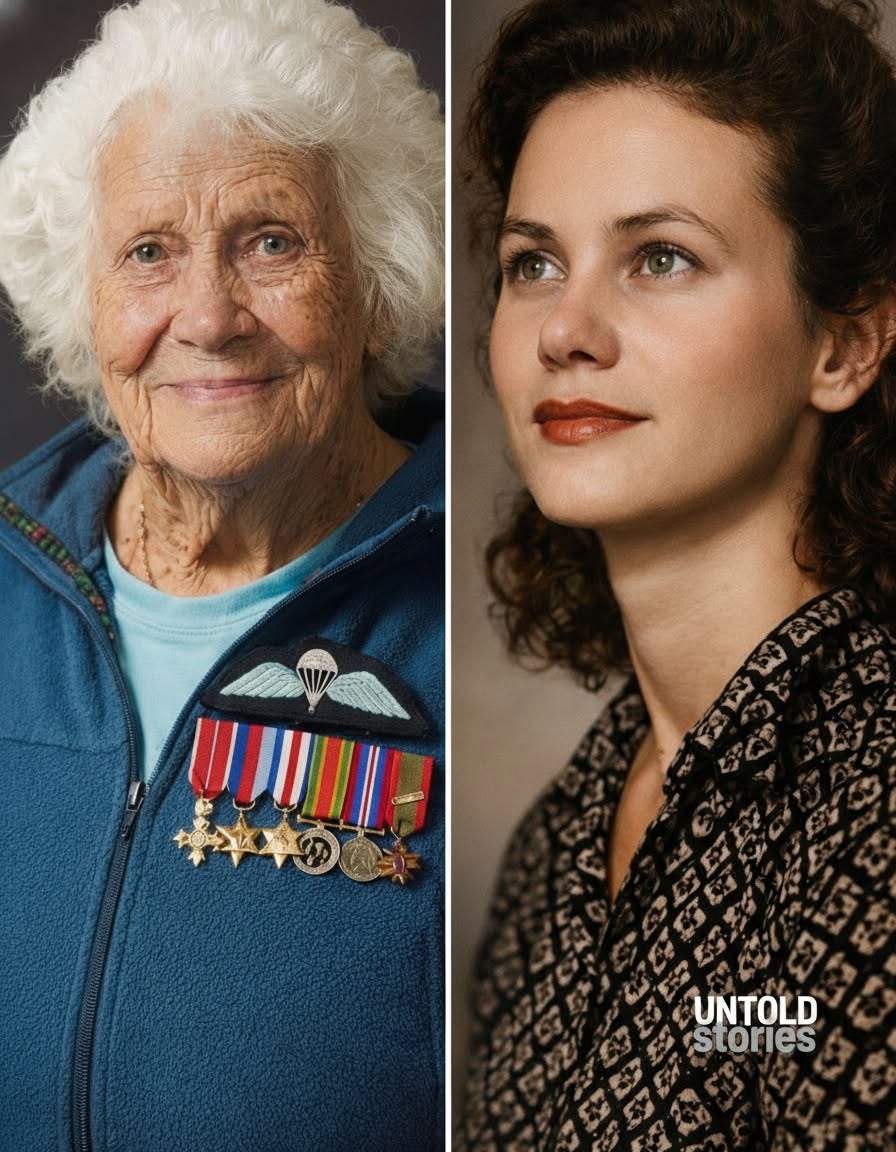
She was twenty-three when they took away her identity, dressed her in worn clothes, and sent her into enemy territory—fully aware that those who had gone before her had never come back.
May 1, 1944.
Just days before D-Day.
The hatch of the aircraft opened over occupied France. Cold air rushed in. Below her lay a land controlled by Nazi forces—watched, guarded, and unforgiving. This was not simply a mission. It was a disappearance.
Her name was Phyllis Latour Doyle.
She stood ready to jump, fear steady but contained.
She understood the stakes. Capture meant torture. Torture often meant death. That was the reality for agents before her.
So British intelligence changed their approach.
They sent someone who would not be seen as a threat.
They sent a woman.
Not because she was less capable—but because she could become invisible.
In the Scottish Highlands, she was trained relentlessly. Morse code until it became instinct. Radio operation under pressure. Survival, evasion, resistance to interrogation. She learned how to move without being noticed, how to disappear when necessary. This wasn’t theory—it was preparation for a reality where mistakes were fatal.
Her mission was deeply personal. The war had already taken people she loved.
Her cover was carefully crafted: a teenage French farm girl. Quiet. Poor. Unremarkable.
She was given simple clothes and taught to act naïve—to laugh easily, to ask harmless questions, to be overlooked. Others had failed because they seemed suspicious. She would survive by seeming ordinary.
That night, she jumped.
She landed in Normandy, hid her parachute before sunrise, and stepped into a new identity. By morning, she was riding through villages on a worn bicycle, pretending to sell soap.
But every mile she traveled was a mission.
At checkpoints, she acted curious and harmless, engaging soldiers just enough to avoid suspicion. While they dismissed her, she observed everything—troop movements, equipment, routes. She remembered it all.
Then she vanished again.
In hidden places—barns, forests, empty buildings—she assembled her radio and sent coded messages back to London. German tracking units could locate transmissions quickly, so she never stayed long. She moved constantly, sleeping wherever she could, always aware of the danger around her.
Her codes were written on silk and hidden in her hair ribbon. After each use, she carefully marked them so they couldn’t be reused.
Once, she was stopped and searched. Her belongings were checked. Then a soldier pointed to her hair.
“What’s that?”
Without hesitation, she removed the ribbon, letting her hair fall loose. The silk code was right there—but it looked ordinary. The soldier glanced at it and waved her on.
For four months, she lived like this—riding, watching, remembering, transmitting.
She sent 135 coded messages—more than any other female agent in occupied France. Those messages helped guide operations, supported planning, and saved lives.
They played a part in what would become one of the most significant moments of the war.
When Paris was liberated in August 1944, her mission ended. Against the odds, she had survived.
And then, quietly, she disappeared again.
After the war, she chose a different life. She married, moved to New Zealand, and raised her children. She rarely spoke about what she had done. Even her family didn’t fully know.
Years later, the truth came out. When asked, she confirmed it simply—without pride or drama. It was just something that had to be done.
In 2014, France honored her with the Légion d’honneur. She accepted it quietly, just as she had lived.
Phyllis Latour Doyle passed away in 2023 at the age of 102, having outlived the regime that once hunted her.
Her story is not widely known. There are no grand monuments marking her path.
But somewhere in history, lives were saved because of her.
Because sometimes, history is not only shaped by leaders and battles but by quiet courage,
hidden in plain sight, and a young woman who stepped into the unknown…
and jumped anyway.
In June 1967, three-year-old Mariska Hargitay was sleeping in the back seat of a car traveling through Louisiana when it crashed into a truck. Her mother, Hollywood actress Jayne Mansfield, was killed at just 34. Mariska and her two brothers survived. She would grow up without clear memories of that night, or of the mother she had lost.
The little girl was raised by Mickey Hargitay, the Hungarian-born bodybuilder and actor who had been married to Mansfield. Mickey became the steady presence in a childhood already marked by terrible loss. He loved Mariska, protected her, and raised her alongside her brothers. To her, he was not simply her father. He was the person who made her feel safe.
There were painful questions about Jayne, too. Mariska knew the photographs of the platinum-blond movie star better than she knew the woman behind them. She felt uncomfortable with her mother's glamorous public image and wished she could have known an ordinary, affectionate mom. Mickey would remind her that Jayne had been funny, fearless, and much more than the image Hollywood sold.
Then, at 25, Mariska encountered a photograph that shook the foundation of her life. It showed Nelson Sardelli, an Italian entertainer who had been romantically involved with Mansfield before Mariska was born. Seeing his face, she began to understand something that had never quite made sense. The man she adored was not her biological father. Nelson Sardelli was.
She went to Mickey, devastated, and demanded an explanation. He denied what she had discovered. Years later, Mariska recalled that when she approached him, he was actually building a house for her. The detail made the moment even more heartbreaking. While she was questioning the truth of their relationship, the man she called Dad was literally creating a home for her.
Mariska could see how deeply the confrontation hurt him. She decided not to raise the subject with Mickey again. Protecting his feelings meant carrying her own confusion alone, and that silence lasted for decades. Her secret was not born from embarrassment about him. It came from fierce loyalty to the man who had stayed, loved her, and helped her survive.
At 30, she finally met Sardelli after attending one of his performances in Atlantic City. He cried when she introduced herself and told her he had waited years for the meeting. But Mariska did not rush into his arms. She made it clear that she already had a father. Letting another man into that part of her life felt dangerously close to betraying Mickey.
Over time, however, her relationship with Sardelli and his daughters grew. That brought another quiet pain. When introducing her newly discovered half-sisters, Mariska sometimes called them family friends. She cared about them, but revealing who they were would expose a truth she had guarded for years. Even the people she was beginning to love had to live inside her silence.
Mickey died in 2006 without Mariska revisiting that painful conversation. Meanwhile, she became beloved for playing Olivia Benson in "Law & Order: Special Victims Unit" (1999). Millions knew her as a woman who stood up for vulnerable people. Few knew how much of her own childhood grief and uncertainty remained tucked away behind her familiar face.
In 2025, Mariska finally told the story in "My Mom Jayne" (2025), a documentary she directed while searching for the mother she barely remembered. She listened to family members, examined old belongings, and spoke openly about both fathers. At one private screening, she watched the film with her siblings, their arms linked together. Another screening brought her Sardelli sisters to tears.
Mariska had spent years believing the truth might somehow diminish Mickey's place in her heart. Instead, she found room to acknowledge Nelson without losing the man who raised her. The house Mickey had been building when she confronted him remained a powerful reminder of his devotion. For the first time, she could speak of both fathers without hiding.
Claude Monet was born on this day in 1840. He died 100 years ago. This beautiful and very rare film captures him painting beside the water lily pond in his garden at Giverny. It was filmed in 1915, when he was 74 years old.
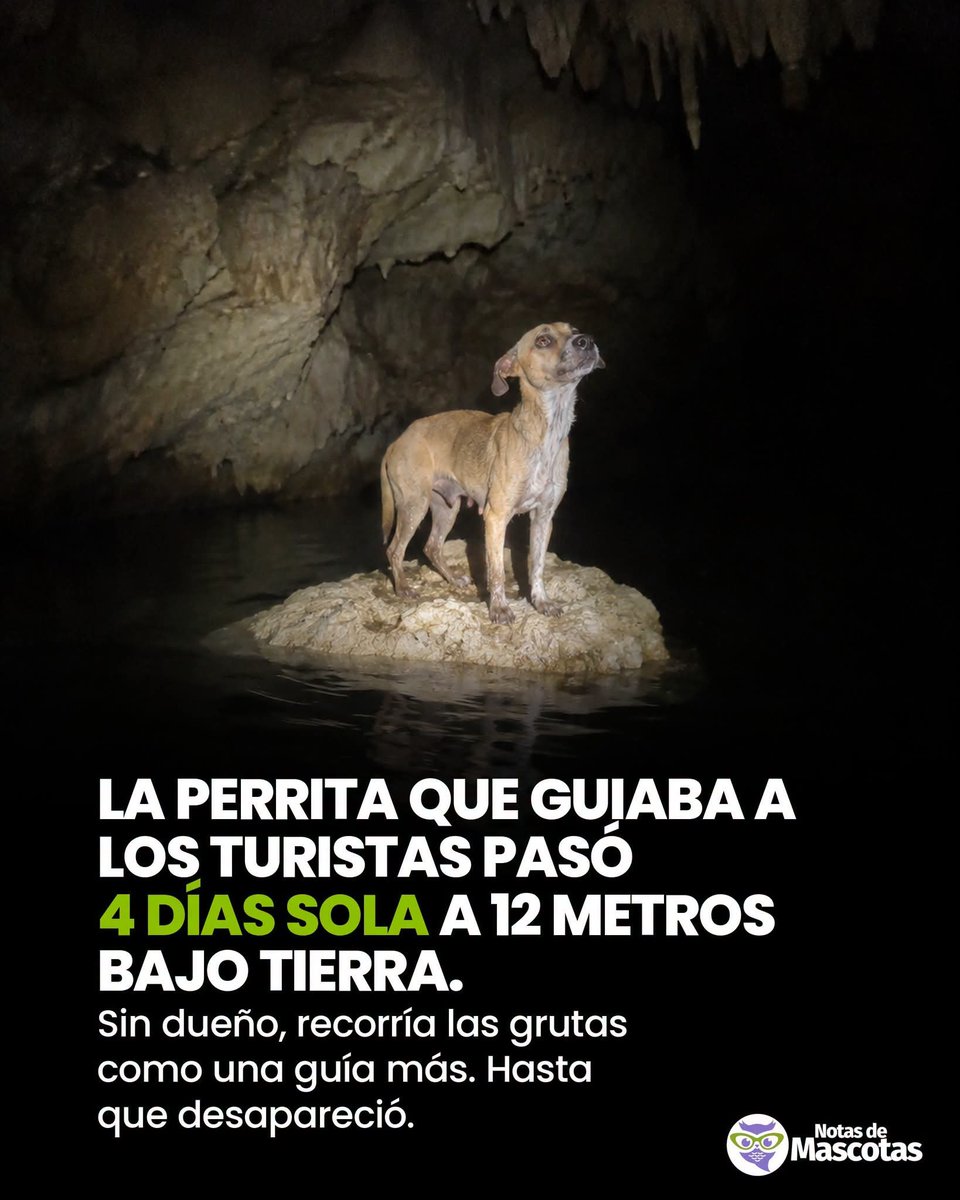
<<A 12 metros bajo tierra, en un pequeño espacio seco rodeado por el agua de un cenote y sin un solo rayo de luz, una perrita pasó unos 4 días sin que nadie supiera que estaba ahí. 🌊(realmente no se sabe el tiempo exacto)
Se llamaba Shakira y era casi parte del paisaje de las grutas de Tzabnah, en Tecoh, Yucatán. No tenía dueño, pero solía caminar junto a los turistas durante los recorridos, como una guía más.
¿Cómo terminó allá abajo? Nadie lo sabe con certeza. Unos cuentan que cayó; otros, que entró por un hueco nuevo y ya no encontró la salida. (A lo mejor un maldito la avento)
Lo que sí se sabe es lo que pasó a fines de agosto de 2023. En pleno recorrido con visitantes, el guía Lorenzo Couoh, oyó, desde algún punto de la oscuridad, un sonido que no era el del agua: ladridos. 🐾( ladridos persistentes)
Así que pidió ayuda, y llegaron los buzos de la Asociación de Buzos Técnico Deportivos de Yucatán. Antes de intentar sacarla, hicieron algo sencillo: le ofrecieron comida. Solo así lograron ponerle el arnés.
Fueron más de 3 horas de amarres, poleas, cuerdas y paciencia para llevarla de vuelta hacia la luz.
Y Shakira salió viva.
Durante 4 días había estado sola en el lugar donde, tantas veces, acompañó a otros. Bastó que otro guía, en su recorrido de siempre, oyera sus ladridos pidiendo ayuda, para que, por fin, alguien la ayudará a ella. 🐶>>
#NotasdeMascotas #Yucatán #RescateAnimal
Crédito del texto y foto a Shakira. Al guía. A los buzos. Y a todas las buenas personas.
Marcelino, pan y vino. 1955. Un niño huérfano criado por frailes sube cada día al desván a llevarle pan al Cristo de la cruz. Y el Cristo baja a comérselo. Más de setenta años después sigue haciendo llorar a medio mundo. Así se hacía cine en España.
In 1805, a young man fell to his death on a mountain in England. When they finally found him, three months later, he wasn’t alone…
His name was Charles Gough, a young artist who set off that April to cross Helvellyn, one of the highest mountains in the Lake District, taking his little dog Foxie with him. Somewhere on the way, he fell and died, far from any path or house, and for weeks nobody knew what had happened to him. Then, on 27 July, a shepherd working near the lonely mountain lake of Red Tarn heard a dog barking. When he followed the sound, he found Gough’s body, and beside it, still keeping watch, was Foxie. She had stayed with her master through all those months, alone on the mountain, and she had even given birth to a puppy there, which sadly didn’t survive.
The story moved all of England: two of the greatest poets of the day, William Wordsworth and Walter Scott, each wrote a poem about it without knowing the other was doing the same, and Scott wrote these lines as if he were speaking to the dog herself:
"How long didst thou think that his silence was slumber? When the wind waved his garment, how oft didst thou start?"
More than twenty years later, inspired by Scott’s poem, the young Edwin Landseer painted the scene and called it Attachment. It depicts a dead man lying among the rocks, and a small dog pressing herself against his chest, as if she could still wake him…
Foxie didn’t understand death, but she understood love better than most people ever will. She didn’t know her master was gone, she only knew that he was hers, and that she would not leave him. And that is the miracle every dog offers us, whether we deserve it or not: a love that lasts forever and asks for nothing. Wordsworth said it best, and his words are still carved on a memorial stone on the mountain today:
"How nourished here through such long time
He knows, who gave that love sublime;
And gave that strength of feeling, great
Above all human estimate!"
請為動物保護立法,嚴懲虐待行為,讓善良有所依憑,讓生命皆有尊嚴。💜
動物愛護の法制化を進め、虐待行為を厳罰化することにより、優しさが報われる社会を築き、すべての生命の尊厳を守りましょう。💜
Enact animal protection laws with strict penalties for cruelty—giving kindness a place to stand, and granting dignity to all life.💜
🙏🏻 Treat life with kindness❣️
#TrumpXiSummit #Facebook #ProtectionForDogs #廣東美食
#AnimalWelfareLaws #Twitter #BBC #Instagram #Justiceforwangwang
#Guangdong #Jieyang
#為無聲生命發聲 #反虐待動物
#LawForAnimalCrueltyChina
#StopAnimalCruelty #Threads
#國際聲援活動 #endanimalcruelty
#Xijinping #LightForWangWang
#RememberWangWang
Co za historia… ❤️
16-letni chłopak, który przez pół roku był wolontariuszem w schronisku, został zatrzymany gdy tam się włamał i wyprowadzał trzy najstarsze psy...
Okazało się, że ratował je przed śmiercią ponieważ następnego dnia miały być uśpione, a jego rodzina nie miała możliwo��ci, by je adoptować...
poruszeni walką chłopca o życie psów, trzej funkcjonariusze uczestniczący w zdarzeniu zdecydowali się je przygarnąć…
Remember Wang Wang for who she was, not only for what was done to her 💜
Her life was not just the final horrific minutes of it.
She knew love. She was a loving and courageous mother. She cared for her three puppies and tried to protect them.
She had a life before those people ever entered it - moments of comfort, safety, motherhood and simply being a dog.
Many of us struggle every day with knowing what she went through. And when the graphic photos and videos are shared again and again, those images can start to replace everything else we know about her.
I understand why people share them. We want the world to understand what happened and why it matters.
But those images don’t define Wang Wang.
So when you post about her, please also post the pictures of who she was - not only what happened to her.
Post the pictures of her with her puppies. The pictures of her being a mom or enjoying the sun on her face. The pictures from before the world knew her name.
Let people see the beautiful, loving, innocent dog we’re fighting for.
The people who hurt her took her life. They don’t get to define it.
#JusticeForWangWang #旺旺 #ワンワン #WangWang
He didn’t understand why the car ride ended at a shelter.
He didn’t understand why his person walked away.
All he knew was… they weren’t coming back.
He pressed his head against the cold floor, eyes full of confusion and heartbreak.
Every time someone passed his kennel, he lifted his head hoping it was them.
But the door never opened.
He wasn’t aggressive.
He wasn’t “broken.”
He was devoted… and devastated.
Dogs don’t just miss their owners.
They grieve them like family.
Because that’s what we are to them.
Please…
If you ever decide to bring a dog into your life, remember:
To them, it’s forever. 💔
This dog isn’t allowed to sleep on the couch, so the moment his owner leaves the house, he runs straight to it. As soon as he hears his owner’s footsteps coming back, he quickly lies down on the floor
A man got off work and discovered that his dog had run the 24 kilometers from his house to his job and was waiting for him on top of his car.
Dogs are the only living creatures in the world that love unconditionally.