Here are 10 GitHub repos that quietly print money while you sleep.
1. Cal. com
Open-source Calendly. Fork it, white-label it, sell to dentists and lawyers for $200/month. The founders hit $5M ARR in 3 years doing exactly this.
Repo → https://t.co/Qqe8Schsgt
2. Plausible Analytics
Privacy-first Google Analytics. Self-host it, resell to agencies for $50/month per client. Two founders bootstrapped this to 7 figures.
Repo → https://t.co/HKpN07mUZ5
3. Ghost
Open-source Substack with 100% margin. 1,000 readers at $5/month equals $60,000 a year. Forever.
Repo → https://t.co/qMl2Ig2h03
4. n8n
Open-source Zapier. Sell automation services for $500-$2,000 per setup. n8n raised $14M because the agency model behind it works.
Repo → https://t.co/pmMLX1OLtH
5. Supabase
Free Firebase replacement. Build a SaaS in a weekend, charge $29-$99/month. They raised $116M for a reason.
Repo → https://t.co/7KwbFsR2Qo
6. Medusa
Open-source Shopify. Take 5% on every sale forever. Zero rev share to Shopify.
Repo → https://t.co/aiN386blug
7. AppFlowy
Open-source Notion. Sell self-hosted to enterprises worried about data privacy. They raised $30M because this market is massive.
Repo → https://t.co/qcl2tERBCL
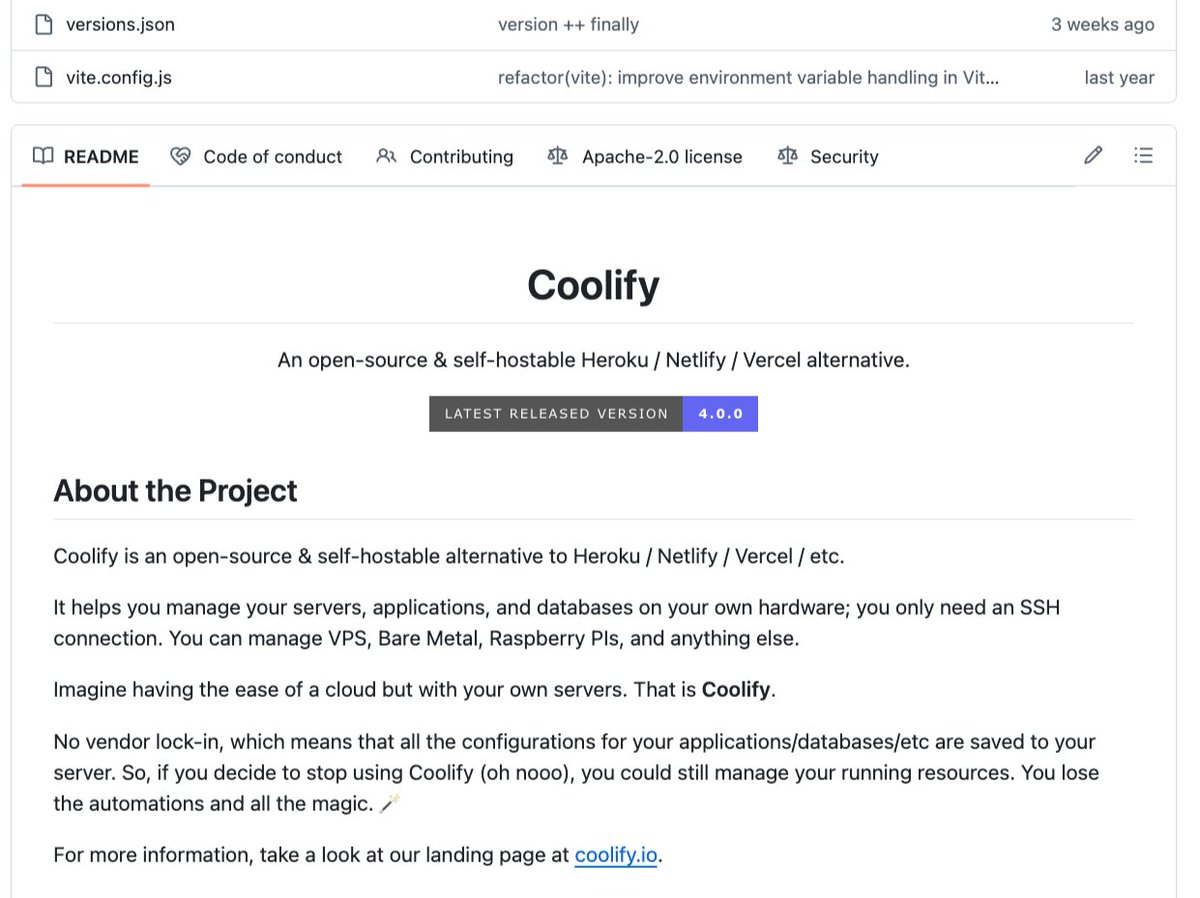
8. Coolify
Open-source Vercel and Heroku. Charge developers $20/month to manage their deployments. Replace their $200 Vercel bill.
Repo → https://t.co/kFprAirARL
9. Listmonk
Open-source Mailchimp. Send unlimited emails for the cost of an AWS bill. Resell to agencies at 10x markup.
Repo → https://t.co/QgcYOiFwiX
10. Penpot
Open-source Figma. Sell self-hosted design tools to agencies who refuse to upload client files to the cloud.
Repo → https://t.co/HsOBYxuyFL
The difference between developers who build features and developers who build businesses is one decision.
Pick one of these. Fork it this weekend. Ship it next week.
The founders behind these repos already proved the model.
Save this. Share it with the developer in your life who deserves to break free.
100% free. 100% open source.
This free 6-hour course gets you Anthropic official "Claude Certified Architect" certificate
with it you'll be hired at $250K/year in Anthropic's ecosystem
10:17 - set up your first Claude SDK in 10 min
47:36 - agentic loop foundations
1:52:53 - graph engineering
2:50:00 - tool use - make your agent act, not just think
4:15:46 - advanced agent patterns
after watching the full freeCodeCamp tutorial (12 hours) - go to Anthropic's website and take the exam - you're ready
watch it today - then read how to become a knowledge graph architect in the article below ↓
Ex-Google engineer built graphs for multi-agentic loops that saved him 10 days of work - in 60 min:
here's how with Claude from scratch:
step 1 → run git worktree add ../task-1 -b task-1 then open a terminal, cd into it, and run Claude Code - repeat 5 times - each agent gets its own branch
step 2 → give each agent one task ,same repo, different branches - they won't conflict
step 3 → when all finish - review the PRs, merge what works
step 4 → add a review agent: paste each PR into Claude and ask "does this match the spec?"
step 5 → scale from 5 to 20 as your machine allows, 48GB RAM handles 20, 128GB handles 50
most engineers run Claude Code once and wait - he runs 50 copies and merges what lands
bookmark & watch - this brilliant 60-min lecture ↓
This video genuinely helped me.
After weeks of getting no invites or direct messages on my new Upwork account, I watched it, applied the advice, and got an invite in less than 5 minutes.
If you're struggling to get traction on Upwork, it's worth watching.
Huge credit to @delightfjohnson for sharing this. Highly recommend giving it a watch.
Everyone thinks Claude Code costs money. It doesn't.
You've been lied to about this for months.
Claude Code (Anthropic's coding agent) is 100% free on GitHub. The only thing that ever cost money was the model powering it.
Now you can swap that out too. →
✔ Point it at OpenRouter (free models, zero setup)
✔ Or run Ollama locally (fully private, nothing leaves your PC)
✔ Same commands, same power, $0
Open models like GLM-5.2 and Qwen3-Coder are now only ~5 points behind Claude's best model on coding benchmarks. A year ago that gap was massive.
Own your stack. Stop renting it.
Save this video, you'll want to run this back. 💬
Want the SOP? DM me.
Higgsfield just released a full free course on how to make cinematic AI films from scratch.
Full breakdown of how to make a hyper-realistic 4K short film:
• 00:00 – Watch the finished AI film in 4K
• 01:45 – The idea & the workflow
• 02:11 – Building the assets (characters, locations)
• 09:26 – Generating every scene (9 scenes shot by shot)
• 31:41 – Full film + final verdict
The whole process is broken down step by step, follow along and make one yourself.
They also launched a free Academy + a filmmaker Grant with 100k credits for selected creators
All the details about both are in the post below.
$41,200 from one google doc i wrote in a single afternoon. $127,000 total across 9 products on gumroad and whop. every single idea came from the same place and i'll show you exactly where.
reddit.
not twitter. not instagram. not tiktok. reddit.
right now there are people on reddit begging for products that don't exist yet. not vague "i want to make money" garbage. hyper-specific complaints with hundreds of upvotes proving the demand is already sitting there waiting for someone to build the solution first.
real threads i screenshotted this week:
"why does every course on building an audience assume you want to show your face on camera. some of us just want to sell things anonymously without becoming influencers" - 891 upvotes
"i'd pay real money for a content calendar that actually tells you what to post instead of giving you 30 blank boxes with days of the week" - 527 upvotes
"someone please make a guide for pricing digital products that isn't just 'charge what you're worth.' i need actual psychology and real numbers" - 743 upvotes
"why is there no step by step system for making money on twitter without spending 6 months writing threads nobody reads" - 612 upvotes
each one of those is a $44-$67 product that nobody has built yet.
the person who builds it first wins automatically. no competition. no audience needed. the demand is already there screaming. you just have to listen.
i found a thread exactly like these 6 months ago. someone ranting about the lack of a simple system for selling info products on X without showing their face. 380 upvotes. 200+ comments all saying variations of "same" and "please someone make this."
built the ugliest google doc you've ever seen that afternoon. no design. no branding. no sales page. just the answer to the exact question they were asking, written like a long text to a friend who was stuck.
uploaded it to gumroad. $39. posted about the problem on a faceless account with 400 followers. same words the reddit thread used. same frustration. same specificity.
that product has done $41,200 since then. haven't opened the file once.
did the same thing again. found another thread. 519 upvotes. built another ugly doc over a weekend. uploaded to whop this time with community access bundled in. $57. that one's done $23,400 in 4 months.
and again. and again. 9 times now across gumroad and whop.
reddit users are brutally honest because they're anonymous. they don't perform for likes. they don't write for engagement. they just vent about real problems with uncomfortable specificity. and they upvote each other's pain.
twitter is where people flex. reddit is where people confess.
confessions with 500+ upvotes are product ideas with price tags already attached. you don't need to brainstorm. you don't need to validate. 500 strangers already validated it for you by clicking the same arrow.
the system for turning those threads into revenue:
find the complaint. check the upvotes. build the simplest version of the solution in one weekend. ugly is fine. functional is mandatory. price it $34-$67. upload to gumroad or whop depending on whether the product benefits from community access. post about the problem on a faceless X account using the exact language from the thread. the people who have the problem will find you because you're describing their frustration in their exact words.
9 products. 6 profitable in the first week. 3 now make more than most people's full-time salaries. none took longer than a weekend to build. the ugliest ones outperformed the designed ones every single time because the solution mattered and the packaging didn't.
the $41,200 google doc has no logo. no branded colors. no table of contents with hyperlinks. just a clear answer to a specific problem that 380 people on reddit publicly confirmed they needed solved.
i documented the entire process. which subreddits to stalk. the search phrases that surface gold. how to validate demand in 11 minutes. building the product in a weekend. pricing psychology. gumroad vs whop and when to use each. setting up the faceless account. content that converts without a face. the backend that sells while you sleep. 45 modules. it's called the X Method. $50.
comment METHOD and i'll send you the link. must be following + RT.
this is the most detailed free breakdown of how to make $5,000/month selling digital products that anyone has ever posted on this app. no face required. no audience required. $69/month to run. i'm including the exact tools, exact scripts, exact prices, exact algorithm numbers, and exact timeline. bookmark this.
PHASE 1: FIND THE PRODUCT (day 1, ~40 minutes)
1. open reddit. go to these subreddits: r/sidehustle, r/workonline, r/EntrepreneurRideAlong, r/freelance, r/smallbusiness. change the sort to "top — all time." you're not here to browse. you're here to find one specific thing: the same complaint posted by different people in different words.
2. search the phrases "struggling with," "can't figure out," "does anyone know how to," and "i've tried everything." read the posts with 200+ upvotes. when you see the same frustrated question appearing 5+ times across strangers who've never spoken to each other, stop. that question is the product.
3. go to https://t.co/D7pNJLVKEU and search for products in that topic. if products already exist and have reviews, that's a green light. competition is not a warning. competition is confirmed demand. it means people are already paying for this. you're not inventing a market. you're entering one that's already spending money.
4. if no products exist, check if the reddit threads have 500+ upvotes with comment sections full of people saying "someone should make a guide for this." that's an open lane with zero supply and verified demand.
PHASE 2: BUILD THE PRODUCT (day 1-2, ~3 hours)
5. open a blank google doc. write the answer to that one question like you're texting a friend at midnight who genuinely needs help. don't outline. don't format. don't think about structure. just answer the question from start to finish until the answer is complete. write it in the same voice you'd use explaining something to someone sitting across from you at a bar.
6. when the answer is done, go back through and add a screenshot everywhere you describe a step that's hard to visualize. dashboard screenshots. settings page screenshots. before-and-after screenshots. if a step needs proof or visual clarity to land, screenshot it. if it doesn't, leave it as text.
7. target 8-14 pages. under 8 feels thin. over 14 and people save it "for later" which means never. 11 pages is the number i've seen convert highest. short enough to read in one sitting. detailed enough that the reader doesn't need to google anything else when they're done.
8. organize the mess: section 1 is what the problem actually is and why free advice scattered across reddit doesn't fix it. section 2 is the step-by-step solution with real numbers. section 3 is examples of the solution working with screenshots. section 4 is what to do first and what to ignore.
9. cut everything that doesn't directly answer the question. if a paragraph is just you trying to sound credible or "setting context," delete it. the product's job is to solve the problem, not to convince the reader you're qualified.
10. export as PDF. open canva. grab any free template. type your title. change one color so it doesn't look default. export. total time in canva: 4 minutes. the cover is not the product. its job is to not look broken. that's the entire bar.
PHASE 3: SET UP THE BACKEND (day 2, ~45 minutes)
11. create a gumroad account (free until your first sale, then 10% per transaction). upload the PDF. write a product title that describes the outcome, not the file. "the budget meal system for under $40/week" not "meal_prep_guide_v2_final.pdf." the title is the only copy that matters.
12. price it between $19 and $47. under $19 people psychologically categorize it as "probably worthless." over $47 a stranger with no reviews can't ask for that yet. $27 is the sweet spot for a first product. warm enough to impulse buy. cold enough that you don't need testimonials to justify it.
13. set up a free telegram group. this takes 3 minutes. pin 2 things at the top of the channel: a 2-page free preview of the guide (pull the 2 most useful pages out of the PDF and save them as a separate file), and the gumroad link to the full product sitting right below it.
14. this telegram is the engine. new members land in a room where the free preview and the paid link are both visible within 3 seconds of joining. the free preview proves the value. the paid link is the next step. you don't pitch anyone. you don't DM anyone. the room does the selling.
PHASE 4: BUILD THE DISTRIBUTION (day 3-4, ~2 hours)
15. create a faceless account on X. no name. no face. profile picture that isn't a person. bio is one line: who you help and what result you deliver. "i help [specific person] do [specific outcome]." link in bio goes to the telegram group. not the product. the telegram is the warmup. sending cold traffic straight to a gumroad page converts at 1-2%. sending warmed traffic through a community converts at 8-12%.
16. find 10 accounts in your niche with 10K-50K followers. screenshot their 50 best-performing tweets. sort by views, not likes. study the hooks. study the structures. study the formats that consistently pull views. save all 50 into one google doc with the view count next to each one.
17. upload that doc into a claude project ($20/month). add one more file: a voice guide that says "write in lowercase. no em dashes. irregular numbers only. no AI-sounding vocabulary. varied sentence lengths. start with the payoff, not the setup." this is your entire content engine. tell claude to write one tweet modeled on the reference bank. review it. edit it. post it.
18. schedule 3 tweets per day through tweethunter ($49/month) at fixed times: 8am, 1pm, 8pm with 4-6 hour gaps between each. never post more than 3 per day. the algorithm runs a penalty called the AuthorDiversityScorer. it exponentially cuts your reach for every additional post from the same author in someone's feed. your 4th tweet of the day gets roughly 20% of the reach your 1st one got.
PHASE 5: DAILY OPERATIONS (15 minutes/day)
19. make 1 of your 3 daily tweets a call to action. the first 70-80% of the tweet is pure value. a real number. a real mechanism. a real result. strong enough to bookmark on its own even without the ask. then: "comment [KEYWORD] and i'll send the free guide. RT + must be following."
20. set up tweethunter's silent auto-DM. when someone comments your keyword, they receive the telegram link automatically. SILENT only. no public reply. public auto-replies ("@user i just sent you a DM!") get flagged as spam behavior and tank your account's reach. silent means the DM goes directly to their inbox with no public trace.
21. reply to every single commenter for the first 30 minutes after every post. this is the single most important step on this list. each author reply fires a 75x engagement weight in the algorithm's scoring system. a like is worth 1x. a bookmark is 10x. a repost is 20x. you replying to a commenter who replies back is 75x. the first 30 minutes matter most because the engagement cache refreshes every 5 minutes for new posts but only every 10 minutes after the 30-minute mark. engagement velocity in the first half hour propagates through the system at 2x speed.
22. spend 8 minutes in DMs answering questions from new telegram members. keep answers short. when someone asks something the paid guide covers in depth, say: "i don't normally go this deep in DMs but i can show you what's inside the full guide if you want." that's not a pitch. that's a boundary. the difference matters.
23. for anyone who says "let me think about it," reply: "honestly i don't think you're ready for this yet. let's revisit in a few months." take the sale away. 30-50% of stalled conversations close the same day from the near-miss psychology alone. they were already in. they just needed someone to almost take it from them.
PHASE 6: COMPOUND (weeks 3-24)
24. post one screenshot of every single sale notification to the telegram. no caption. no commentary. just the receipt. nothing on earth sells like proof from strangers who already paid.
25. raise the price $5 after every 20 sales. $27 becomes $32 becomes $37. same product. growing proof. higher perceived value with every bump. the 50th buyer pays more than the 1st buyer for the same file and converts at a higher rate because there are now 49 receipts proving it works.
26. self-repost your best performing tweet at the 12-hour mark. the algorithm doesn't penalize self-reposts within 24 hours. then repost it again fresh at the 48-hour mark when the algorithm's cache fully resets and the tweet re-enters the candidate pool as brand-new content. one great tweet performs 3 separate times if you time the reposts right.
27. never post off-topic. not once. one viral meme tweet feels good but mathematically drifts your content embedding in the algorithm. every on-niche tweet after it reaches fewer people because the system gets less certain what your account is about. a recovering account can't afford a single vector slip.
COSTS:
tweethunter: $49/month
claude: $20/month
gumroad: free until first sale, then 10%
telegram: free
canva: free
total: $69/month.
REALISTIC TIMELINE:
month 1: 800 followers. finding the rhythm. $200-$400.
month 2: 2,100 followers. CTA tweets clicking. $1,200-$1,800.
month 3: 4,400 followers. community compounding. $2,800-$3,600.
month 6: 11,000+ followers. backend fully running. $5,000-$8,000 consistent.
the first $300 takes 6 weeks. the jump from $300 to $5,000 takes 4 months. the system compounds because the telegram community grows every day and never shrinks. more members means more proof. more proof means higher conversion on the same traffic.
every step above is something i either built myself or watched someone build in real time. no theory. no speculation. the tools are named. the prices are real. the algorithm numbers are from the actual open-source ranking code.
the people making $5K+ doing this didn't have a head start. they just picked a tuesday and did step 1.
Your AI agent hits a rate limit mid-task. Everything just... stops.
I used to lose an hour every time that happened. Not anymore.
Here's what changed for me:
→ I run Hermes, an open-source agent that writes code, remembers projects, and lives in my terminal.
→ But Hermes needs a "brain" — a model to think with.
→ I wired it to a free, open-source gateway that sits between Hermes and 230+ AI providers.
→ One provider taps out? It switches to the next automatically. Hermes never even notices.
→ I built a full landing page this way without touching a single paid API.
Save this post, you'll stop losing sessions to rate limits. 💬
Want the SOP? DM me.
Claude Code just went free. The tool was always free. You were paying for the model behind it.
Point it at a free local model instead and the meter stops.
Here's the setup:
→ Download Ollama, pull Google's Gemma 4, launch Claude Code. Free, free, and free
→ Google just made Gemma 4 run 90% faster on Macs. Local models stopped being slow
→ Your code stays on YOUR machine. Works offline. Nobody can pull the plug
→ No Mac? Gemma 4 is on OpenRouter's free tier. Same setup, any computer
→ Save it for everyday work: pages, posts, repeat tasks. Use frontier models for hard problems
Remember Fable 5 getting pulled and breaking workflows overnight?
A model you own can't be taken away.
That's the real reason to learn this now.
Want the SOP? DM me. 💬
AN ANTHROPIC ENGINEER SAID IT CLEARLY: YOU DON'T HAVE TO PROMPT CLAUDE, YOU HAVE TO BUILD A SYSTEM THAT PROMPTS ITSELF
in 45 minutes she shows you how to put together an agent that improves itself.
save it and watch it
X JUST GAVE AI AGENTS A LIVE RESEARCH ENGINE
And most people are still obsessing over new chatbots.
What Actually Changed:
→ X launched a hosted MCP server on June 30, 2026
→ Your AI can now connect to X through https://t.co/jOR6M3o0fj
→ No custom server, no hand-wired API bridge, no weekend setup project
→ The docs server at https://t.co/BTBTIxF0d8 lets your AI read X’s developer docs while you build
What Your Agent Can Do Now:
✓ Search posts in real time
✓ Look up users and conversations
✓ Track what people are asking right now
✓ Pull bookmarks and live trend signals
✓ Use 200+ X API tools inside supported AI clients
The Catch:
✔ It’s built for reading and research
✔ Not auto-posting
✔ Think “live research window,” not “AI megaphone”
The Smart Setup:
→ Start with search and user lookup
→ Do not turn on all 200+ tools
→ Use OAuth properly
→ Keep your tokens private
→ Add more tools only when your workflow actually needs them
This is the real shift:
X didn’t invent a new model.
They removed the boring setup that stopped agents from using live data.