If FIFA want to stay consistent with their statutes, suspension of the United States Federation and team from the World Cup for political interference should follow! #FIFAWorldCup
🚨 𝗕𝗥𝗘𝗔𝗞𝗜𝗡𝗚: The Belgian federation has released a new statement:
"After learning through media reports of FIFA’s decision to lift the automatic suspension of player Balogun, the RBFA sent a letter to FIFA requesting a copy of the decision, an explanation of the process that had been followed, and setting out its position regarding the applicable regulations."
"As its only response, FIFA sent a letter to the RBFA stating that it considered this correspondence to constitute an appeal, that a judge had been appointed, and that the RBFA had only a few hours to complete that appeal. No information whatsoever was provided by FIFA."
"All of this occurred while FIFA simultaneously refused to respond to the RBFA’s legitimate requests."
"Furthermore, during the match coordination meeting, FIFA deliberately removed the section concerning the automatic suspension of players from its presentation. This topic had nonetheless been part of all such meetings before each of the previous four matches. The RBFA questioned FIFA, both orally and in writing, about the reasons for this change, yet once again received no response."
"To be clear, as of this moment, the RBFA has still not received any decision or any explanation from FIFA regarding this matter. It therefore has no alternative but to challenge the player's eligibility for the upcoming match."
"Regardless of the sporting outcome of this match, the RBFA is deeply saddened by the course of events and will continue to fight in the coming hours, days and months in defence of the fundamental principles of ethics, fair competition, and the interests of football as a whole."
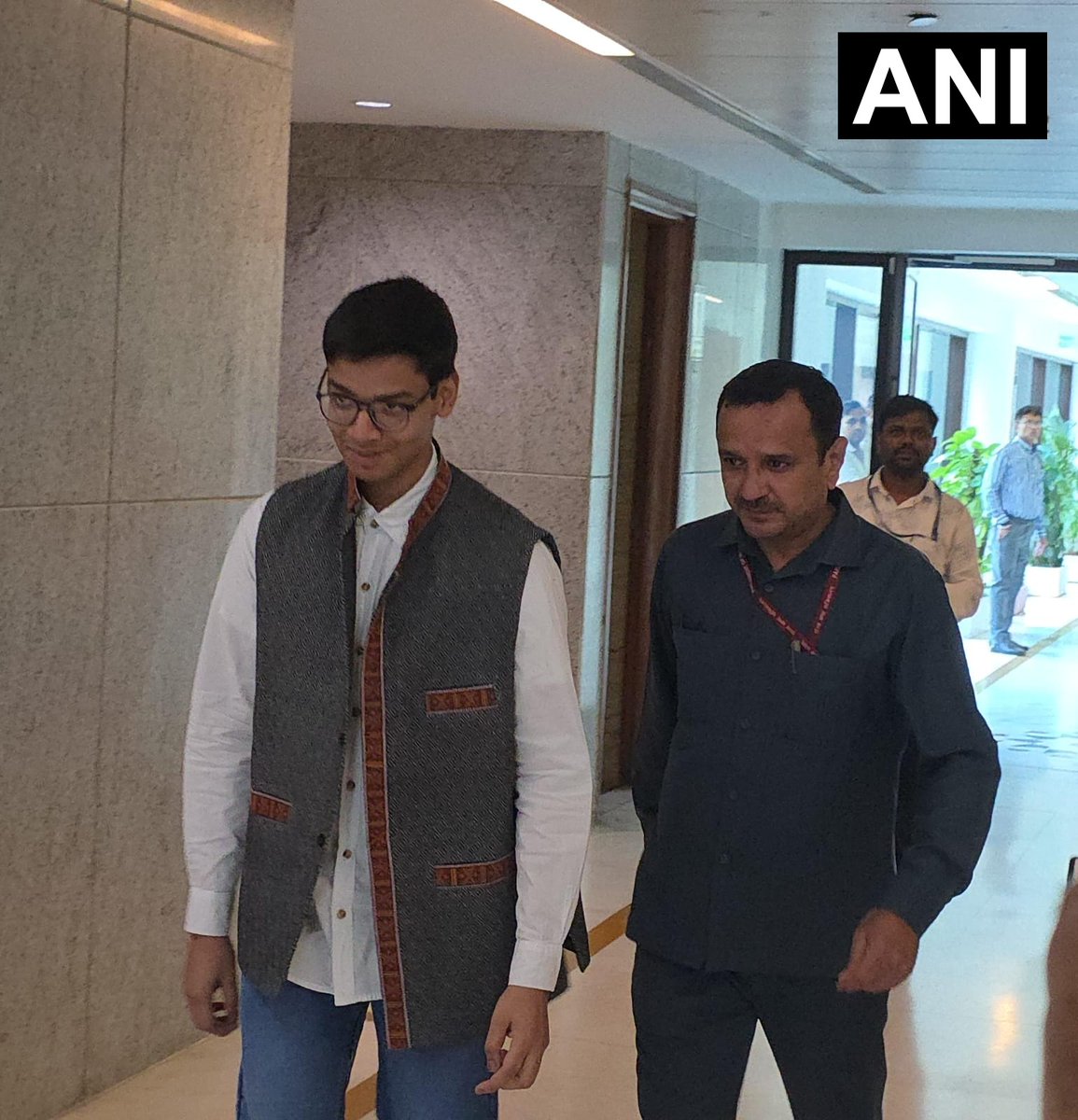
Delhi: Sarthak Sidhant, one of the students affected by the CBSE's 'On-Screen Marking' (OSM) system, arrived at the Parliament House Annexe to give a presentation before the Parliamentary Standing Committee on Education, Women, Children, Youth, and Sports. This committee is reviewing the use of 'On-Screen Marking' (OSM) in Class 12 CBSE examinations and the consequent problems faced by students.
Class 12 student Sarthak Sidhant, who investigated tenders awarded by #CBSE to COEMPT Eduteck, the technology vendor for Onscreen Marking Portal that has come under controversy alleged that COEMPT had a ‘very bad track record,’ He has alleged that ‘rules were rewritten,’ in the Request for Proposal (RFP) floated by CBSE were made to ‘favour,’ COEMPT.
Sarthak Sidhant (@sidhant_sarthak) in conversation with The Hindu's Maitri Porecha (@dawalelo) and John Xavier (@johnXavier777).
Watch the full video here: https://t.co/5FxhGpD37f
Dear CBSE HQ,
It is 2026 "appeal to authority" logical fallacy of name dropping "IITs" won't work.
IIT professors are not infallible gods.
Prof S SADAGOPAN of @IITKanpur@iitmadras & @IIITB_official(BLR) and associated w/ GLOBARENA/ COEMPT EDU TECK for 18yrs caused this mess.
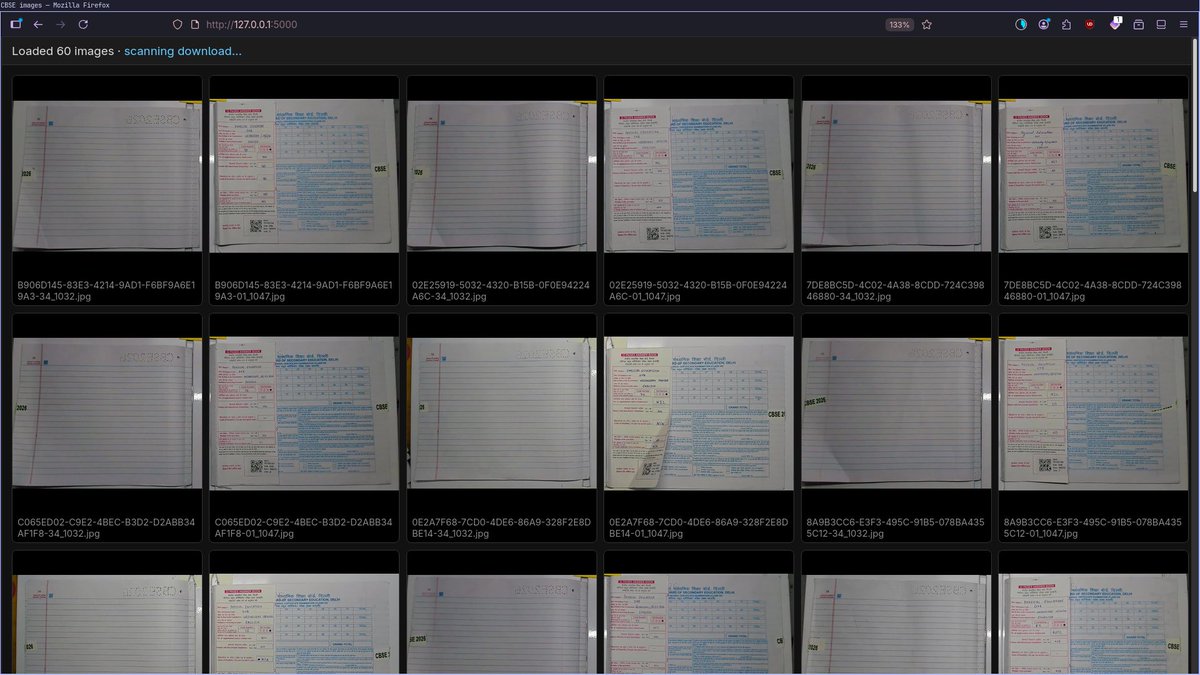
CBSE people didn't configure their AWS bucket properly and now we can paginate & enumerate all their media which has 2026 answersheets & question papers. ListObjectsV2 works without any auth and the bucket root is listable too — anyone on the internet can download any scanned booklet — across institutions. Multiple institutions are using the same bucket, insanely insecure.
A few things here.
1. Someone with a little more intelligence has taken over. They're actually acknowledging mistakes instead of deflecting them. Something the morons at UIDAI and Nandan's so called "volunteers" need to learn.
2. There needs to be transparency, and they need to release exact findings and steps taken to address this.
3. There needs to be an inquisition into the contracting and potential corruption here. How do you launch a barely tested barely functional tool without testing when it impacts millions of lives?
4. Education minister should not resign. @narendramodi should fire him. Set an example. This level of failure cannot be without repercussions. Heads need to roll across the system
5. Do not default to relying on the people who built aadhaar. They're as irresponsible.
Meet Vedant Shrivastava, Nisarga Adhikary, and Sarthak Sidhant ,they exposed CBSE in every possible way :
17 years old Vedant Shrivastava :
> Applied for the CBSE re-evaluation process
> Got a different Physics answer sheet
> Posted it on X
> Got labelled "Pakistani" by the BJP IT cell
> Brought CBSE to its knees and proved them wrong
19 years old Nisarga Adhikary :
> Bro hacked the CBSE website
> Reported the vulnerability to them
> But they didn't take any action
> Then bro posted it on X
> Showed everyone that it could be hacked
18 years old Sarthak Sidhant :
> Bro exposed a CBSE tender
> Took it to X
> Wrote a detailed thread
> Explained how the CBSE OSM tender conditions allegedly favoured COEMPT
> And today came on the media
> Exposed them with facts
These three boys are doing what whole media failed to do, all of them took x to expose CBSE .
The CBSE story has gotten much bigger since the first expose.
Let me explain everything that’s happened so far.
First reveal.
A researcher named Nisarga found he could log into CBSE’s answer-sheet checking system as any teacher without a password, and even change marks. He reported it to the government in February 2025. Almost nothing was fixed for 15 months.
Then it kept getting worse.
He found that storage was left wide open. CBSE keeps all scanned answer sheets in an online locker. They forgot to lock it. Anyone on the internet, no password, no skill needed, could download any student’s actual handwritten answer sheet.
It wasn’t just CBSE. The same open locker is shared by several other institutions. One careless setup exposed many organisations at once.
Then, he got the keys to the whole grading system. Nisarga got the highest level of access to OnMark, the platform that grades exams for multiple universities.
With it, a person could change anyone’s marks, reset passwords, create fake teacher accounts, and message every student and teacher.
He also got full control of CBSE’s main servers. He showed complete control over the live machines running everything, and proved it by putting a “PWNED” page on CBSE’s own official website.
So this grew from small bugs, to answer sheets open to anyone, to master keys for the grading platform, to full control of CBSE’s servers.
In plain terms, your child’s answer sheet was sitting where anyone could open it. Your child’s marks were in a system an outsider could change.
CBSE’s response was a poster saying the system is “secure and robust” and “no problem reported.” That’s very hard to believe when the proof shows the opposite.
This also connects to the other story. A Class 12 student, Sarthak, showed how CBSE rewrote its tender rules to let this exact company win, by dropping security and data safety requirements. Nisarga is now showing the real-world result of dropping those rules.
My questions to the CBSE;
1. How long was the locker open?
2. Did anyone change any marks?
3. Can CBSE even prove they didn’t?
4. Why did the mandatory pre-launch security check get skipped?
This needs a proper investigation and a forensic check of whether any 2026 marks were tampered with.
This is an unbelievable piece of work by Sarthak and something that requires amplification.
Let me explain what he found, in simple terms.
Sarthak is a Class 12 student from the 2025-26 batch, one of the 17 lakh students whose answer sheets went through CBSE's new On-Screen Marking system.
He spent days reading through CBSE's evaluation tenders, scraped all 576 tenders CBSE has issued, and tracked how the rules changed across three versions of the same tender.
The core finding is that the company that won the contract to scan and grade 17 lakh students' answer sheets is Coempt Eduteck.
Coempt used to be called Globarena Technologies. Globarena was the company behind the 2019 Telangana intermediate exam disaster, where software failures led to 3.8 lakh students getting wrong or missing marks, and 23 students died by suicide.
A government committee found systemic failure and negligence. Six months later, Globarena rebranded to Coempt Eduteck.
So a company with that track record won a contract to handle 17 lakh CBSE students. Sarthak's investigation is about how the rules were rewritten to let that happen.
The tender was issued three times.
> First tender, February 2025. It existed, then disappeared from the public GeM portal. Sarthak scraped all 576 CBSE tenders and this one was missing from the archive entirely.
> Second tender, May 2025. Four companies applied including TCS and Coempt. All four failed the technical evaluation. Cancelled.
> Third tender, August 2025. Coempt won. Between the second and third tender, a series of rule changes happened, and every single one made it easier for Coempt to qualify.
Here is what changed, one by one.
01. The old rules disqualified any company with a history of abandoning work, failing to complete contracts, or financial weakness. The new rules deleted this clause entirely. Coempt's Telangana history stopped being a barrier.
02. The old rules disqualified any company that was "blacklisted earlier." The new rules changed this to "currently blacklisted." Because Globarena rebranded after Telangana, removing the word "earlier" effectively erased their past.
03. The rules required Rs 50 crore average turnover over three years. Coempt's exact average came to Rs 50.86 crore. They cleared the bar by less than 1%. Earlier, a smaller company had asked CBSE to lower the bar to Rs 30 crore for fairer competition. CBSE refused. So the bar was kept high enough to block small players, but sat exactly low enough for Coempt to scrape through.
04. Software maturity is measured on the CMMI scale, 1 to 5. The old rules required Level 5. The new rules dropped it to Level 3. Coempt is a Level 3 company.
05. The cooling-off period for engaging retired CBSE officials was cut from two years to one. This makes it easier to use recently retired insiders to influence the process.
06. The old rules required experience with large projects of at least 5 lakh students each. The new rules removed the student count and counted cumulative answer-book volume across small projects instead. Coempt has many small fragmented university contracts. This helped Coempt and hurt TCS.
07. The old rules required bidders to own their own data centre and disaster recovery centre on Indian soil. The new rules allowed third-party MeitY-empanelled cloud hosting. Coempt runs on AWS and Azure. This helped Coempt and hurt TCS, which owns its own data centres. It also means student data is no longer on sovereign, Indian infrastructure.
08. The old rules required the bidder to own or control the complete source code of its software. The new rules deleted this. Coempt's platform runs on Microsoft's proprietary IIS, which they don't own.
09. A last-minute corrigendum, issued right before bid submission, removed CBSE's own power to blacklist the firm if its software failed catastrophically. So even a Telangana-scale failure couldn't get Coempt banned from future government tenders.
10. The penalty structure shifted from punishing mistakes to punishing delays. The old rules fined the vendor for wrong scanning, merged pages, and unscanned books. The new rules dropped those and instead levied Rs 50,000 per day for delays. This incentivises rushed scanning over accurate scanning.
11. The old rules had a hard accuracy threshold, error rate not to exceed 0.5%. The new rules removed this number entirely.
12. The old rules specified proper book and robotics scanners. The new rules just say "sufficient scanners." The definition was vague enough that, as Sarthak notes, the scanning could be done with a phone on a stand.
13. On the security side, the contract required a VAPT (vulnerability and penetration test) certified by CERT-In before go-live, and a restricted beta phase before launch. The system clearly wasn't restricted, because the other researcher, Nisarga, was able to access it and find vulnerabilities four days before go-live. So the mandatory security audit appears to have been bypassed.
These are more than a dozen rule changes, all between the failed tender and the winning tender, all pushing in the same direction, all benefiting the one company with the worst track record in the field.
The security holes Nisarga found last week now have an explanation. The system was built by a vendor that was specifically allowed to skip the security certification, the source code ownership, the data sovereignty, and the quality thresholds the original rules demanded.
Following things need to happen immediately;
1. An immediate CAG audit of the tender process.
2. A parliamentary debate on the topic.
3. An independent investigation into
> Why the first tender vanished?
> Why the disqualification clauses were deleted?
> Why the turnover bar was held exactly where it was?
> Why the security level was dropped?
> Why the blacklisting power was removed at the last moment?
Sarthak, this is genuinely exceptional investigative work. Far better than most journalists with full resources ever manage. Take a bow. :)
"I think in a way, people are somewhat overestimating the founders of companies, and massively underestimating what you can do when the founder is still present and in charge."
Tobi talked about how it's not that founders themselves are some kind of super heroes, but that the *role* of a founder is incredibly important because of what the natural moral authority allows them to do.
Pay above range. Because the job is bigger now.
If AI makes already great people 3x, 10x, even 100x more productive, they should be compensated accordingly.
JUST IN: Workday claims updates to their product have been “too powerful” to be released to the public, has not changed its software since 1986 to protect humanity.
It should be pretty obvious at this point that AI is a "force multiplier" not a "labor substitute".
It helps experts be better at things they are already good at. It doesn't let beginners match experts.
If you can't write, anything you write with AI will be unmitigated slop.
If you aren't a software engineer, anything you vibecode with AI will have security holes and won't be able to scale past a toy demo.
If you blindly trust AI to deliver on a research task without knowing the subject matter, you won't be able to fact-check it.
There's this weird misconception of AI as something that completely levels the playing field. I don't see it that way at all. There are mathematicians deriving novel lemmas with off-the-shelf models. Normal people can't do that.
AI is a tool that makes experts better. It doesn't make everyone into an expert.
The Prototype Fast Breeder Reactor at Kalpakkam is not just a scientific milestone.
A reactor that produces more fuel than it consumes means India is building a future where no foreign power can ever hold our energy security hostage.
And this is just Stage 2. Stage 3 unlocks our thorium reserves, the largest in the world. When that happens India will have an almost infinite domestic fuel cycle that no sanction, no trade war and no geopolitical pressure can ever touch.
The same nation that was denied nuclear technology after 1974 Pokhran has now mastered the full nuclear fuel cycle indigenously. Let that sink in.
The United States has spent EIGHT TRILLION DOLLARS fighting and policing in the Middle East. Thousands of our Great Soldiers have died or been badly wounded. Millions of people have died on the other side. GOING INTO THE MIDDLE EAST IS THE WORST DECISION EVER MADE.....