Long before the modern world, merchants crossed the Indian Ocean, linking the ports of East Africa, Arabia, India, Southeast Asia, and China. Archaeologists have uncovered Chinese ceramics in places like Kenya and Tanzania, while African ivory, rhinoceros horn, gold, and other goods reached Chinese markets through maritime trade. The voyages of the Ming admiral Zheng He in the early 1400s even brought Chinese fleets to the East African coast, leaving behind some of history’s best documented encounters.
But trade rarely carried only goods.
It carried languages.
Ideas.
Religions.
And people.
Where merchants settled for years or generations, marriages often followed. Historical records from Indian Ocean port cities describe multicultural communities where Africans, Arabs, Persians, Indians, and Asians lived side by side. These connections helped shape coastal societies that still reflect this remarkable diversity today.
One of the greatest examples of this blending lies far from mainland Africa.
Madagascar.
Modern genetic, linguistic, and archaeological research shows that the first settlers of Madagascar were not from one continent alone. They were a remarkable mixture of Austronesian seafarers and African communities.
The Austronesian ancestors of those settlers ultimately trace back to populations that expanded out of what is now Taiwan thousands of years ago. Over centuries, their descendants spread through the Philippines, Indonesia, and the wider Pacific. Some of these extraordinary navigators crossed more than 4,000 miles of open ocean to reach Madagascar around 1,200 to 1,500 years ago.
There, they met African populations arriving from the East African coast.
Together, they built a new civilization.
Today, the Malagasy language belongs to the Austronesian family and is most closely related to languages spoken in parts of Indonesia, while the Malagasy people also carry significant African ancestry. Madagascar is living proof that human history has always been more connected than many imagine.
#drthehistories
#MCM
On this world condom day, we are crushing on our HIV/AIDS committee chair, Mr. Collins Ondir.
A committed ,fervent and fastidious planner.
#heretoserve#dawamashinani
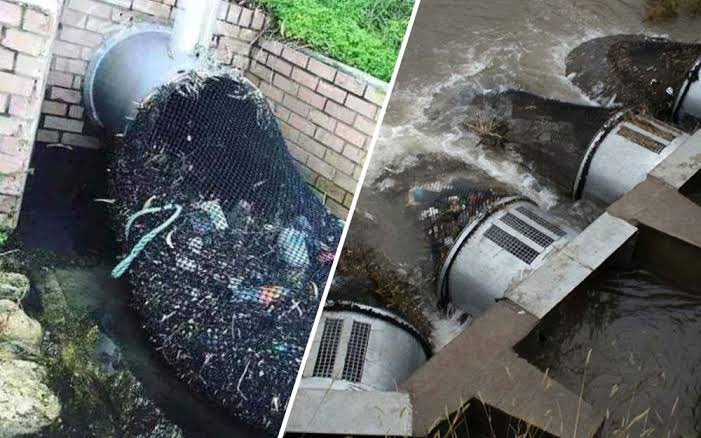
To prevent waste from polluting waterways, certain Australian cities are using drainage nets. @SakajaJohnson In Kanairo, can we try this?
I can get myself to sponsor some pilot setup.