Algo que le urge a Nuevo León es establecer un nuevo código penal para menores de edad. Que desde los 12 años puedan sentir todo el peso de la ley, si la cagan. Hace tiempo que tenemos focos de infección graves con adolescentes sin límites y descontrolados.
Con que le caiga la voladora a uno, se calman muchos pinches niñatos de mierda.
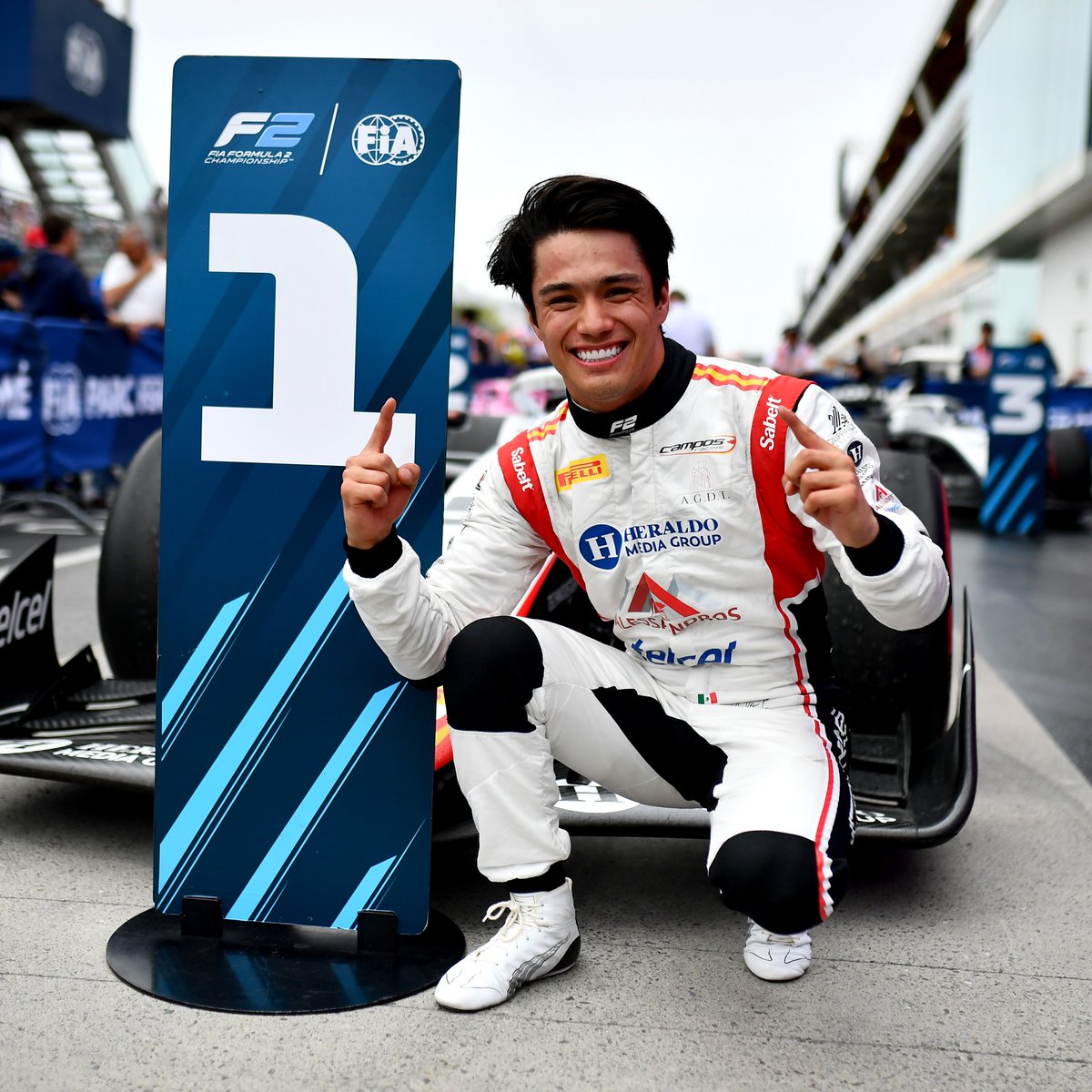
🔥🥇 Torito wins the prologue at the @DeineTour !
A flying start in Germany as @ISAACDELTOROx1 storms to victory and takes the first leader’s jersey of the race 🔥
Vamos, Torito 🐂❤️🔥
#WeAreUAE#DeineTour
Liftoff of Starship V3, from the dunes right outside the pad.
This is the most insane shockwave action I have ever seen on video. Absolutely mad.
📽️ Me for @WeAreSpaceScout
Repetition changes your brain.
Repetition changes your brain.
Repetition changes your brain.
Repetition changes your brain.
Repetition changes your brain.
Repetition changes your brain.
Repetition changes your brain.
That’s why it works.
En el primer aniversario del nacimiento al cielo de nuestro querido #PapaFrancisco, sus palabras y sus gestos permanecen grabados en nuestros corazones. Recojamos su legado proclamando siempre la alegría del Evangelio, anunciando la misericordia de Dios y promoviendo la fraternidad entre todos los hombres y mujeres del mundo.
Rory McIlroy is an investor in Whoop, wears one of the company's wristbands while playing, and allows the brand to share his data periodically.
Here are some of his Masters highlights:
• 24,000+ steps on Sunday
• 91,000+ steps during the tournament
Rory's heart rate spiked to 135 BPM during his tee shot on 18, dropped to 121 BPM during his approach shot, fell further to 105 BPM during his winning putt, and then jumped back up to 150 BPM during his celebration.
His resting heart rate for the week was 47-49 BPM.
Rory says he follows a strict routine during the PGA Tour season to ensure proper rest and recovery:
• No caffeine after 2 PM
• Last meal at least 2 hours before bed
• Magnesium and theanine for sleep quality
• Blue-light-blocking glasses in the evening
• Sauana or Epsom salt bath when available
• Cool room temperature for sleep
He follows the same three-hour routine before every round: arrive at the course → warm up in the gym → eat breakfast → hit balls on the range → putting green.
Rory says he believes his focus on longevity will help him play another 10+ years at a high level, and his physiological age on Whoop is now 1.5 years younger than his actual age.
Plus, it turned out to be a pretty good investment.
Rory initially invested in Whoop in 2020 when the company was valued at $1.2 billion. While we don't know exactly how much he invested, Whoop recently raised another round at a $10.1 billion valuation.
That's an 8.4x multiple in five years.
Not bad, not bad.
A new study has revealed something counterintuitive about why VO₂ max declines with age.
Between ages 20 and 70, maximal cardiac output falls by 31%. But VO₂ max falls by 46%.
The gap between those two numbers reveals that the heart isn't the primary problem.
VO₂ max represents the ceiling of oxygen utilization during maximal effort—and it's one of the strongest predictors of longevity and functional independence.
For decades, declining cardiac output has been treated as the dominant explanation: the aging heart pumps less blood, so aerobic capacity falls.
But the Fick equation splits oxygen consumption into two distinct components:
VO₂ = Cardiac Output × Arteriovenous Oxygen Difference
Delivery and extraction. If cardiac output explains only part of the decline, something else must be failing at the peripheral level—in the muscles themselves.
By late middle age, nearly half of the limitation on VO₂ max is peripheral in origin.
In younger adults, roughly 77% of the total limitation is central and 23% peripheral. In older adults, that ratio shifts to 56% central and 44% peripheral.
The muscles are catching up to the heart as a source of failure.
Oxygen extraction drops dramatically. Skeletal muscle extracts approximately 80% of delivered oxygen at maximal effort in young adults. By ages 75–80, that figure falls to 60%.
That's a 20 percentage point decline in a variable that most aging research has historically underemphasized.
The peripheral decline reflects four converging biological processes:
Sarcopenia preferentially strips mitochondria-rich type II muscle fibers. Mitochondrial density and efficiency decline. Capillary networks thin, increasing diffusion distances. Interstitial changes further impair oxygen movement from blood to cell.
None of these is catastrophic alone. Together, they compound into something substantial.
The implication: training strategies that only address cardiac output—zone 2 endurance work, for example—miss half the problem.
Peripheral oxygen extraction is trainable. But it requires deliberate intervention across multiple modalities.
Endurance training is the most reliable builder of capillary networks. Over 8–10 weeks, it produces a 13.3% increase in capillary density and a 15% increase in capillary-to-fiber ratio.
HIIT is the most time-efficient route to mitochondrial adaptation. It produces comparable mitochondrial gains to endurance training while requiring substantially less total training time—approximately 1.7 times more efficient for driving mitochondrial remodeling.
SIT (sprint interval training) delivers the fastest mitochondrial signal per minute of any modality. When normalized to total training time, SIT generates three to five times greater VO₂ max improvement per hour of exercise than endurance training or HIIT.
The tradeoff: capillary density shows no significant average increase with SIT alone, making it a powerful complement rather than a replacement.
Meaningful adaptation begins faster than most people assume. Approximately 13.7% of total mitochondrial gains from an endurance training block occur within the first two weeks. Capillary remodeling begins similarly early, though it plateaus around four weeks without progressive increases.
The decisions made in the fourth and fifth decades of life shape the physiological ceiling of the seventh and eighth.
Aerobic aging is a slow, cumulative process across multiple systems simultaneously. So is the adaptive response to training.
The most important variable isn't the perfect modality. It's consistency across the decades during which the oxygen cascade is quietly remodeling in one direction or the other.
In this week's Healthspan Research, I analyze how VO₂ max declines with age, how central versus peripheral limitations evolve across the lifespan, and what training interventions can restore oxygen extraction capacity at the muscular level.
https://t.co/sVDqW1tG2k
¡Cristo ha resucitado de entre los muertos y, con Él, también nosotros resucitamos a una vida nueva! Este anuncio pascual abraza el misterio de nuestra vida y el destino de la historia, y nos alcanza hasta en los abismos de la muerte. #Pascua
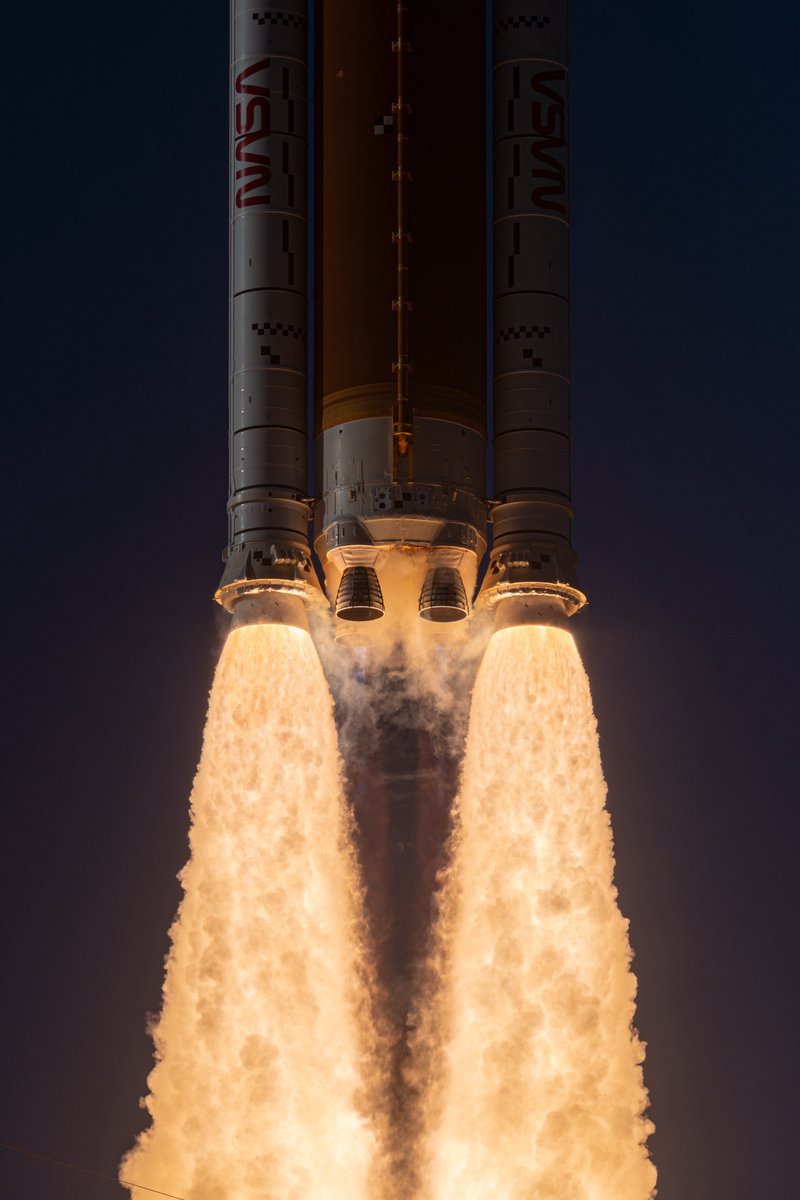
Liftoff.
The Artemis II mission launched from @NASAKennedy at 6:35pm ET (2235 UTC), propelling four astronauts on a journey around the Moon.
Artemis II will pave the way for future Moon landings, as well as the next giant leap — astronauts on Mars.