@RestIsPolitics@RoryStewartUK@campbellclaret After listening to your Leading interview with Sir John Major I was struck by his continued professionalism. So unlike the current crop of PMs we’ve had the misfortune of recently.
Who in your estimation are the greatest modern PMs (post WWII)? And why?
Fascinating discovery! For all those that say there is nothing left to find this should be a lesson. We have only scratched the surface of what’s to discover. And with each discovery we learn more and more about our collective past. https://t.co/HSDKGiSphl
The site is accessible today as an archeological park. Check with the local comune for access. The site is overgrown and poorly sign posted but it is still possible to get an understanding of the site and it’s position within the wider landscape.
Whatever the case may be the owners of the villa had considerable wealth. And that Lucania, far from being a political and social backwater was well integrated into the wider culture of Italy at the time.
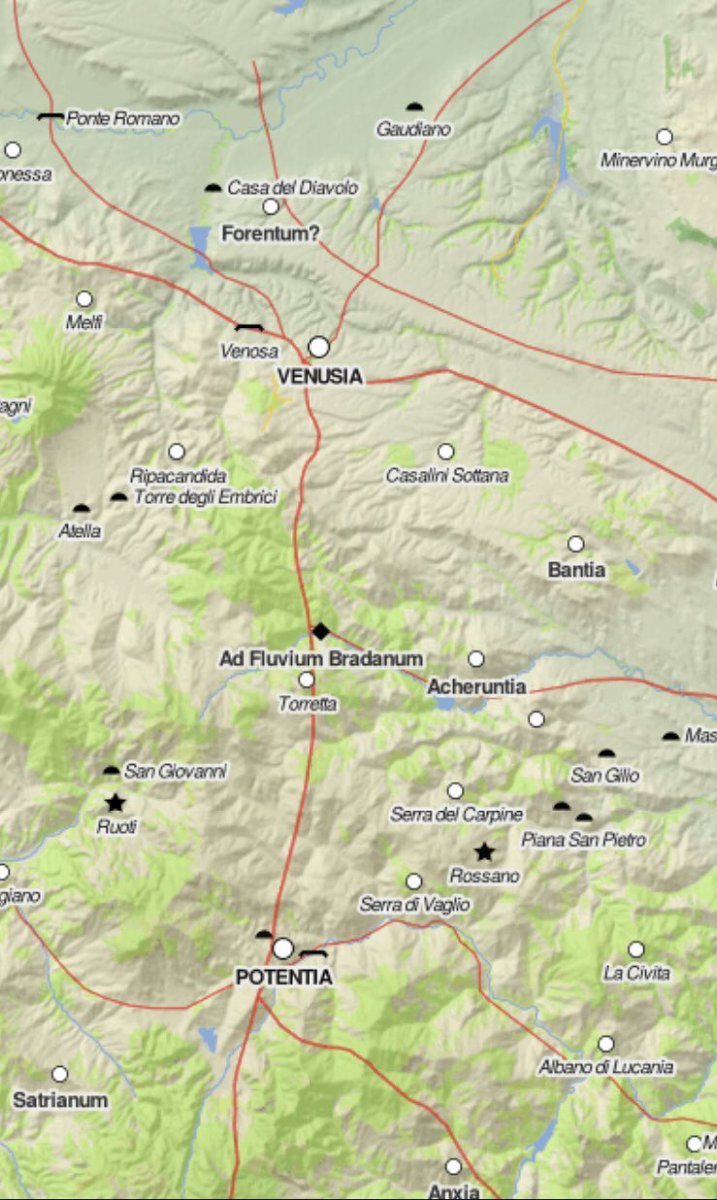
Villa Romana di San Giovanni di Ruoti. Was a Roman villa rustica situated in ancient Lucania (modern Basilicata, Italy). Much like the villa at Torre degli Embrici to the north it shows multiple phases of occupation and construction throughout the Roman period.
As Italy formed part of the Ostrogothic kingdom following the collapse of Western Roman Empire in the late 5th century. It is possible that the villa was owned by a Gothic aristocrat or sympathetic Roman. Or simply that such items were available in the region at the time.
The site is now an archaeological park administered by the local comune of Rionero in Vulture Nearby sites of interest include Venosa (ancient Venusia), Melfi, Lavello (ancient Forentum) and to the south Rossano di Vaglio (A Lucanian shrine of Mefitis).
Torre degli Embrici, Rionero in Vulture, Basilicata, Italy.
A villa rustica built in the shadow of Monte Vulture, an extinct volcano. The site shows occupation dating back to at least 2nd C. BC. The villa went through many phases the grandest of which dates to the 4th & 5th C.
The graves were inhumation burials rather than cremation. With few grave goods apart from simple jewellery and personal items. The graves were of several types all indicative of a Roman period date. And associated with the adjacent villa complex.