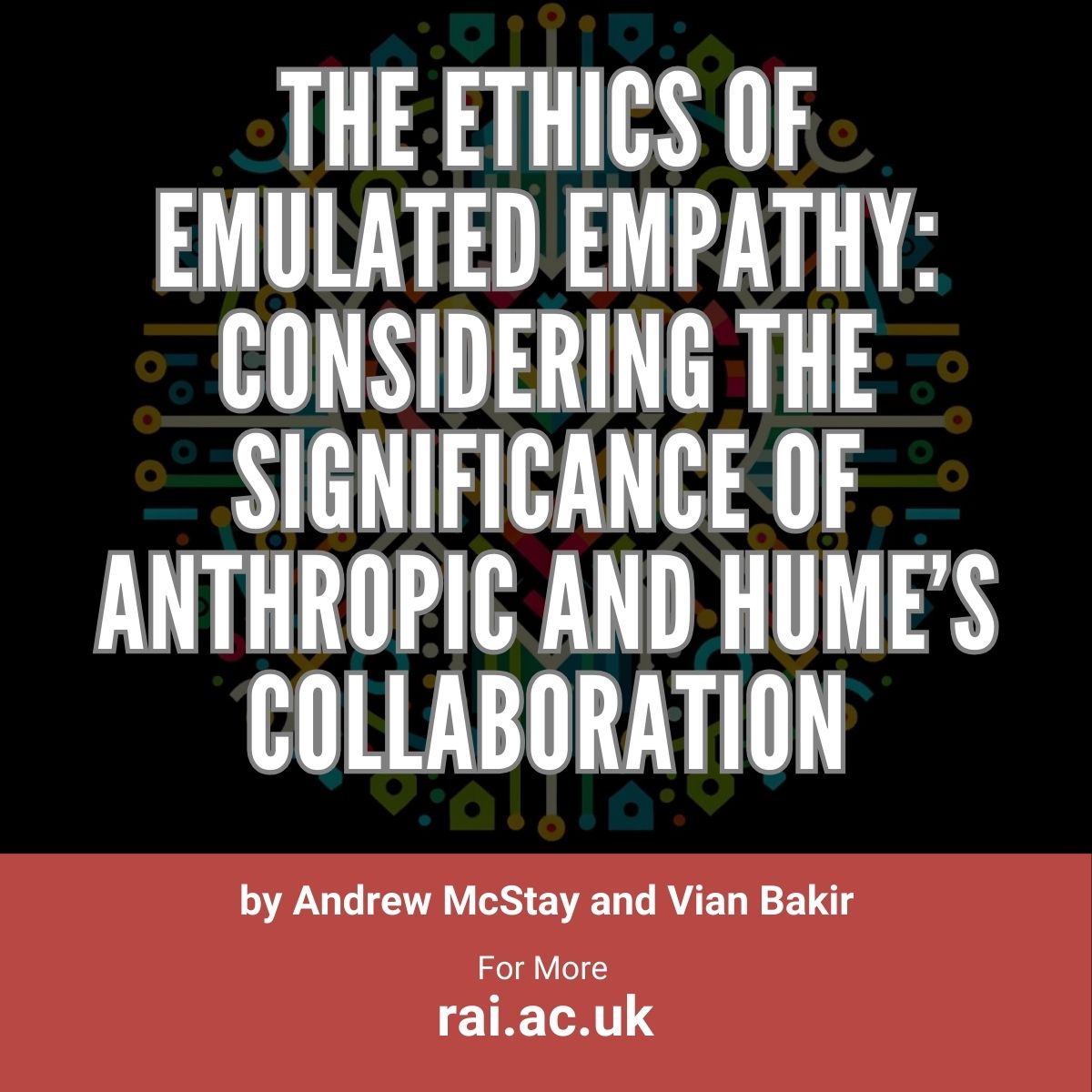
The Ethics of Emulated Empathy: Considering the Significance of Anthropic and Hume’s Collaboration! Dive into this interesting #blog by our AEGIS project! #AI. @digi_ad
📖https://t.co/X1ONuhJHQy
👉About the project- https://t.co/W0NIFkeNIn
A total pleasure to be a guest on the @BBCRadio4's 'Artificial Human', discussing whether AI can read emotions. The angle on the topic was excellent, as Chris, a listener, had called in asking whether AI can help him understand emotion expressions. https://t.co/49dQjcYFny
There's right and easy criticism/concern here (privacy, mining, security, etc.) but, IMV, we shouldn't miss neurophenomenology (overlap of biology/experience). See here: https://t.co/dp2o1kjwac
Update about the second Neuralink device in a human.
If all goes well, there will be hundreds of people with Neuralinks within a few years, maybe tens of thousands within 5 years, millions within 10 years, …
Ive been longing for someone to extend our work on ghostbots to synthetic avatars of the alive, like Abbatars, and here it is! Thanks @digi_ad ! https://t.co/g60tSJ3mJW
New paper :) Here I argue that presence is a crucial factor in human-synthetic interaction, esp. in relation to ghostbots. It explains 'presence' and shows why it matters, esp. for those in governance. It gets weird, but there are v.simple recommendations. https://t.co/hJQQmdd6H6
@SimonadeHeer@mario_gug@APonceETUI Hi, perhaps, but I see wiggle room for a defence here. If one separates detection of states from expression (e.g. telesales), as per recital 18, I think there's a big problem in AIA. Problem is reliance on Ekman/physiognomy critiques. (Nb. I'd like to be wrong.)
#AI_Act
to be noted:
"emotional AI for monitoring could arguably discipline an employee if the AI says they sound grumpy on calls, just so long as there’s no inference that they are, in fact, grumpy." @digi_ad@APonceETUI
*
https://t.co/OE8fn12dJ6
(2) Citizens (n=2000+) had mixed views, seeing scope for safety, but also risks of bias (40% for, 27% don't know, and 33% uncomfortable). Qualitative work also mixed. Our view distills to "Don't": even for laudable goals (safety), risks are too high and the technology too shonky.
At the EAI Lab we find little evidence for effectiveness of emotional AI tech in a policing or security context, risk of bio-deterministic framings of criminality, deep skepticism from law enforcement (interviews), and high risk in trying to gauge emotion and/or human intent (1).
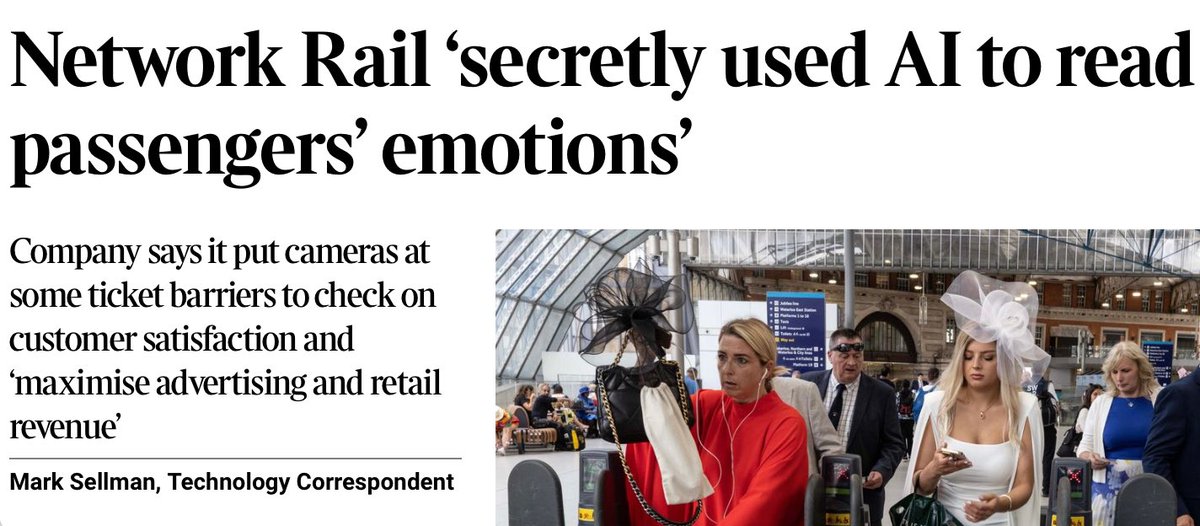
Grimace, you’re on TV https://t.co/UZEXWrcMyJ Network Rail uses AI to assess the happiness of passengers (or customers as it would call them) as they pass through ticket barriers
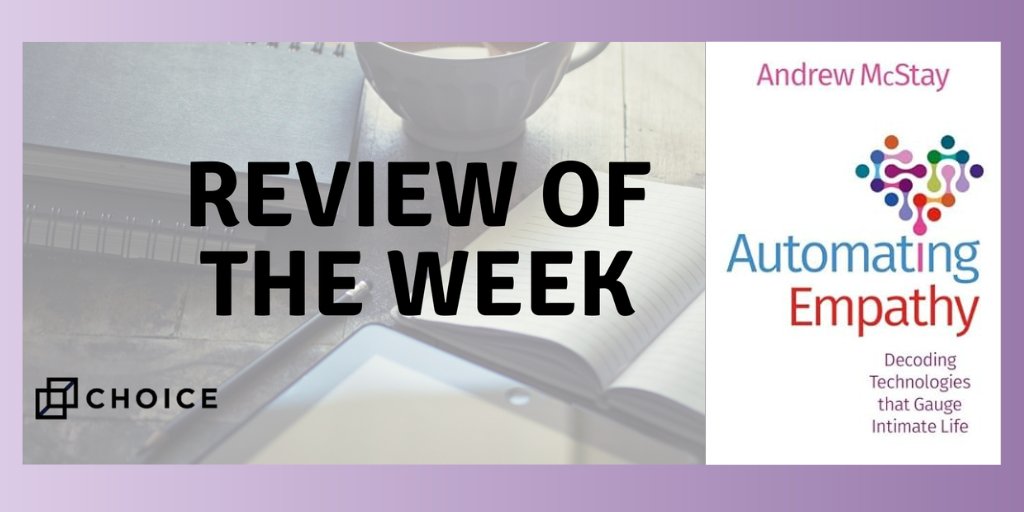
This #ReviewoftheWeek centers on emotional #AI, evaluating the ethics of “contemporary technologies designed to emulate, interpret, and express empathy" in @digi_ad's "Automating Empathy" from @OUPAcademic: https://t.co/RMgVlepxre #Empathy#AIEthics
UNESCO’s Ethics of AI team is recruiting! We're looking for 6 experts to contribute to cutting-edge projects on the ethical governance of AI across the following workstreams (please note the deadlines for applications are 16-17 April):
📢Exciting news! A new white paper titled “AI FRINGE PERSPECTIVES’ is now published, written by a consortium drawn from the attendees of @AISummitFringe with @responsibleaiuk ensuring a diversity of views garnered from the academic community.
Download now https://t.co/m6jGiMlMeY
As it stands, we are yet to see any emotion AI technology develop in a way that satisfies data protection requirements, and have more general questions about proportionality, fairness and transparency in this area. (October 2022) https://t.co/ZvXcD84JGD
Many problems, but detecting "aggressive" behaviour is v.notable. Esp' a problem for folk with dark skin (black people with neutral expressions more likely to be labeled angry). ICO got ahead of this issue (we inputted) so time to put that policy to work. https://t.co/oXKUrxFXB8