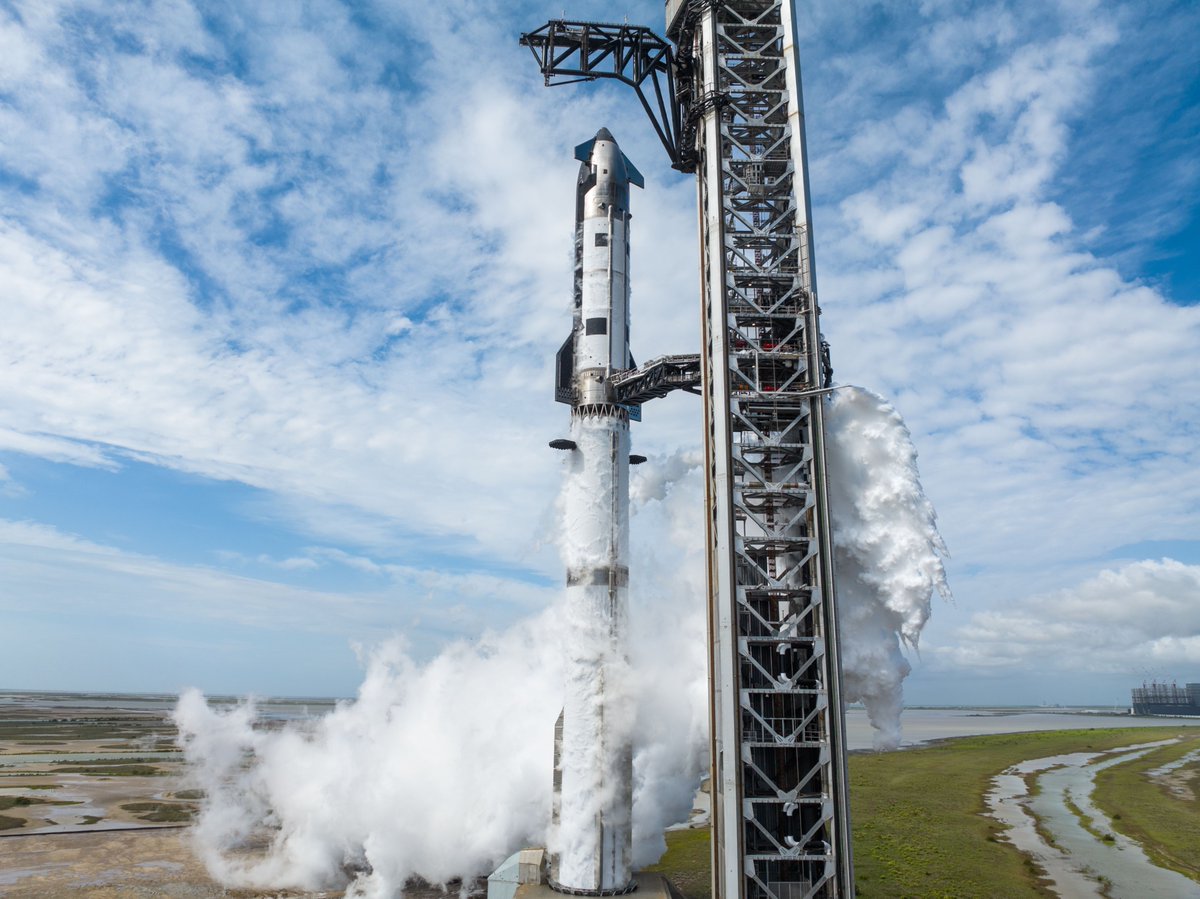
SpaceX has just released a massive new list of changes in Starship V3, which is now scheduled to launch on May 19th:
Super Heavy V3 Changes
Grid Fin Redesign:
• Reduced from 4 fins to 3
• Each fin is now: 50% larger, stronger, repositioned for better catching/lifting
• Lowered on booster to reduce heat exposure during hot staging
• Fin hardware moved inside fuel tank for protection
Integrated Hot Stage:
• Removes the old disposable interstage shield
• Booster dome now directly exposed to upper-stage engine ignition
• Tank pressure + steel shielding protect structure
• Interstage actuators retract after separation for protection
New Fuel Transfer System:
• Massive redesign of fuel transfer tube
• Roughly the size of a Falcon 9 first stage
• Allows: simultaneous startup of all 33 Raptors, faster and more reliable flip maneuvers
Engine Bay / Thermal Protection Changes:
• Engine shrouds removed entirely
• New shielding added between engines
• Propulsion + avionics more tightly integrated
• CO₂ fire suppression system removed
• Simpler and lighter aft section
Propellant Loading Improvements:
• Moved from 1 quick disconnect to 2 separate systems
• Adds redundancy
• Reduces complexity of pad interfaces
Starship V3 Changes
Completely Redesigned Propulsion System:
• Clean-sheet redesign
• Supports: new Raptor startup method, larger propellant volume and improved reaction control system
• Reduces trapped/leaked propellant risk
Aft Section Simplification:
• Fluid + electrical systems rerouted
• Engine shrouds deleted
• Large aft cavity removed
Flap Actuation Upgrade:
• Changed from: 2 actuators per flap to 1 actuator with 3 motors
• Improves:, redundancy, mass efficiency, cost
Faster Starlink Deployment:
• Upgraded PEZ dispenser
• Faster satellite deployment speeds
Long-Duration Spaceflight Capability:
• New systems added for: long orbital coasts, orbital refueling, cryogenic fluid management, vacuum, insulated header systems and high-voltage cryogenic recirculation
Ship-to-Ship Docking + Refueling:
• Added 4 docking drogues
• Added propellant transfer connections
• Directly supports in-space refueling architecture
Avionics Upgrades
Massive Electrical System Upgrade:
• ~60 custom avionics units
• Batteries/inverters/high-voltage systems integrated together
• ~9 MW peak power capability
Better Navigation + Redundancy:
• New multi-sensor navigation system
• Designed for precision autonomous flight
Propellant Monitoring in Space:
• New RF sensors measure propellant levels in microgravity
• Important for orbital refueling missions
Camera + Connectivity Upgrades:
• ~50 onboard camera views
• 480 Mbps Starlink connectivity onboard
• Low-latency redundant communications
Raptor 3 Engine Changes
Higher Thrust:
• Sea-level Raptors:
• Increased from:
230 tf → 250 tf
507k lbf → 551k lbf
Vacuum Raptors:
Increased from:
258 tf → 275 tf
568k lbf → 606k lbf
Lower Mass:
• Sea-level engine mass reduced: 1630 kg → 1525 kg
Simpler Design:
• Sensors/controllers integrated into engine body
• Removes need for engine shrouds
• New ignition system for all variants
• Huge Vehicle-Level Weight Savings
• ~1 ton saved per engine across vehicle systems
Launch Pad 2 Upgrades (Starbase)
Faster Propellant Loading:
• Larger propellant farm
• More pumps
• Faster fueling operations
Chopstick Improvements:
• Shorter arms for faster movement
• Switched from hydraulic → electromechanical actuators
• Better reliability + redundancy
Stronger Quick Disconnect Arm:
• Reinforced and redesigned
• Swings farther away during launch
Launch Mount Redesign:
• Better load handling
• Improved launch protection
• Improved throwback reliability
New Flame Diverter System:
• Bidirectional flame diverter
• Designed to eliminate ablation/refurbishment after launch
Hardened Propellant Systems:
• Methane and oxygen systems separated
• Valves/filters moved into protected bunker
• Improves safety and reliability
SpaceX: "Together, these new elements are designed to enable a step-change in Starship capabilities and aim to unlock the vehicle’s core functions, including full and rapid reuse, in-space propellant transfer, deployment of Starlink satellites and orbital data centers, and the ability to send people and cargo to the Moon and Mars."
This is going to be an epic flight! 🚀
Most CEOs are way too media trained
They end up sounding like corpo bots in interviews
It’s so much better to just talk how you talk. You’re allowed to have a personality
Everyone is scared to say something “wrong” but, generally, tedium and irrelevance are far greater risks
Ireland specifically requested that Israeli technology capable of seeing through fog be removed from its new government jet.
We respect Ireland’s sovereign right not to see where it’s going.
@bundeskanzler Hören Sie mit dem Blah-blah auf. Erzählen Sie stattdessen was Sie morgen tun werden, damit sich diese Tragödie nicht wiederholt. Bitte listen Sie Ihre Prioritäten auf, damit wir diese nachvollziehen und Sie verantwortlich halten.
@JM_Luczak Hören Sie mit dem Blah-blah auf. Erzählen Sie stattdessen was Sie morgen tun werden, damit sich diese Tragödie nicht wiederholt. Bitte listen Sie Ihre Prioritäten auf, damit wir diese nachvollziehen und Sie verantwortlich halten.
For my first post, I’m sharing a letter @NVIDIA signed on why open models matter.
AI will transform every industry, power every company, and be built by every country.
Open models strengthen safety and cybersecurity, accelerate innovation and diffusion, and enable sovereignty.
The world needs both frontier closed models and frontier open models.
https://t.co/AUKzoQ5Ikb
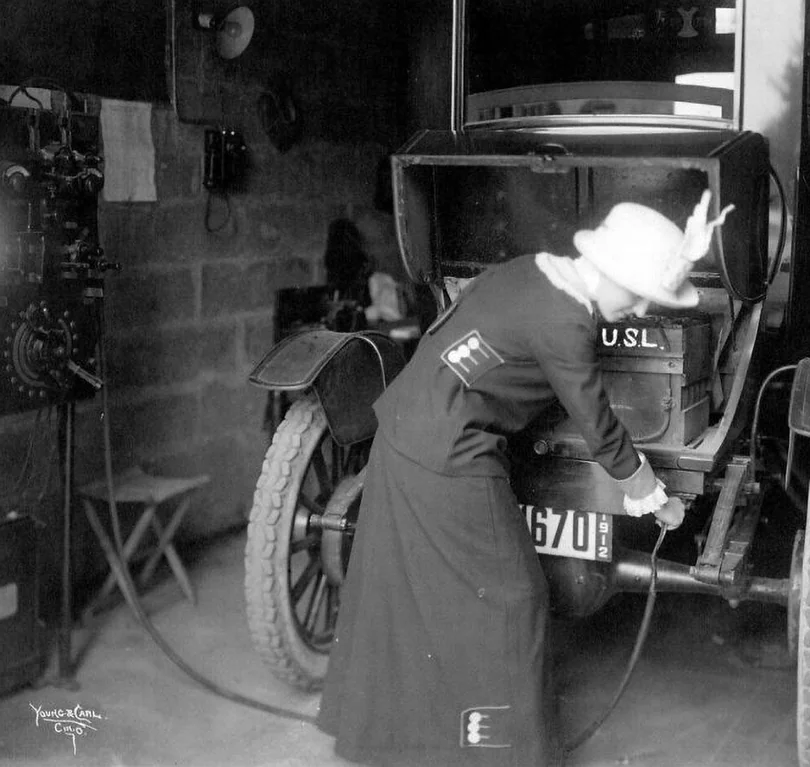
A 1912 shot of a woman plugging in her electric car.
During the early twentieth century, electric vehicles were highly popular in urban areas due to their quiet operation and clean emissions. These early cars were especially favored by women because they did not require the dangerous and physically demanding hand-cranking needed to start gasoline engines.
Screw it, we're giving a free blood test to every American.
Today we're launching Death Clock. No one lives forever. The only question is: when?
We trained an AI to predict your date, then move it. One app. Years added to your life.
Real needle, real lab, $0.
Today, @Ford announced we’re joining forces with our founding partners at @BlackRock, @Google, and @Carhartt to form a new organization, the Alliance for America’s Skilled Trades.
Skilled trades are at the heart of what we call the Essential Economy, the 95 million Americans who build, move, and fix the things our country depends on every day. These vital trades and industries are the backbone of the American economy, but millions of these jobs are expected to go unfilled in the years ahead.
At Ford, we recognize the skilled trades workforce shortage is a national crisis but also a generational opportunity. Why this alliance? Well, like any big, thorny problem, no one person or organization is going to solve the skilled trades shortage alone. And so when I started talking to Larry Fink, Bayo Ogunlesi, Ruth Porat, and Linda Hubbard about these issues, we knew that we could do more together.
We’ve got three main goals: build a jobs pipeline for skilled trades, highlight what's working across the country including the launch of a Skilled Trades Report, and grow this movement with more partners.
This is just the start. We look forward to welcoming others on board who are equally passionate about solving this for America.
Read our op-ed today in @FortuneMagazine to learn more about our collective work: https://t.co/wPZcl4jpQI
#EssentialEconomy #SkilledTrades
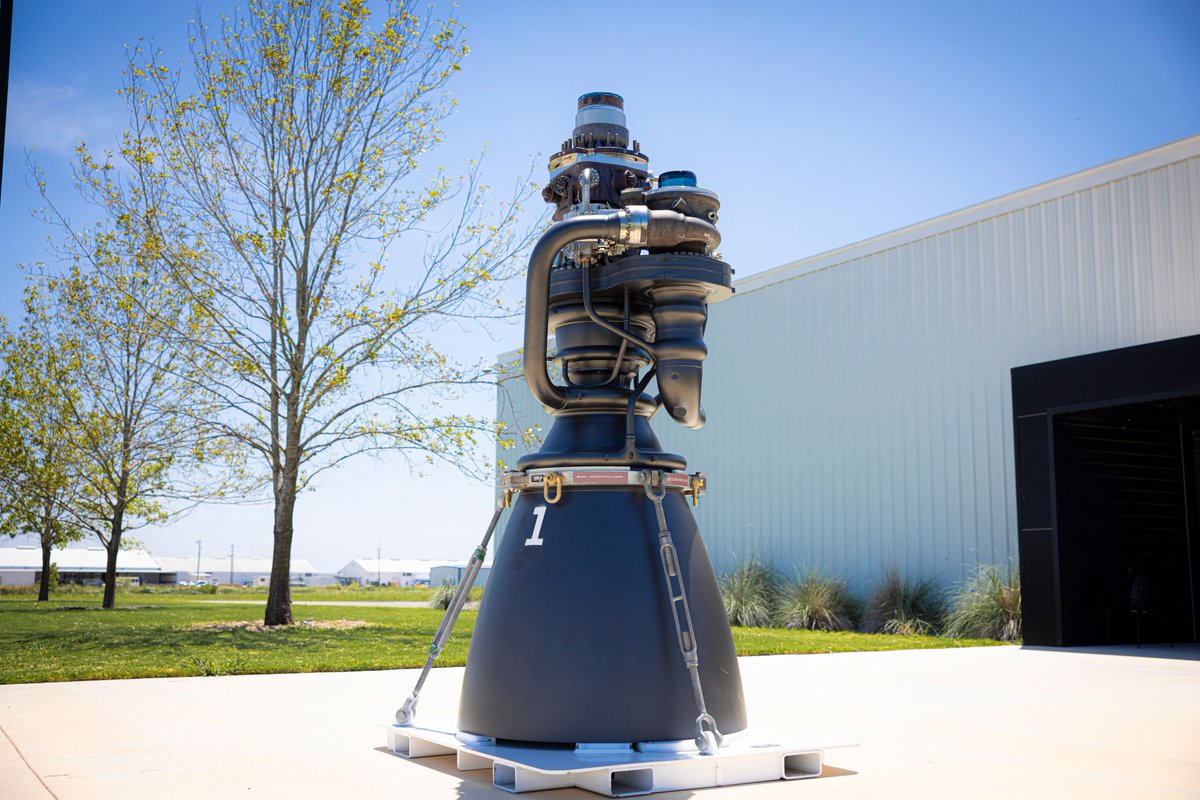
Rocket engine testing is where every mission begins. Before a rocket ever leaves the launch pad, engineers push its engines to their limits to make sure they can handle the extreme temperatures, pressure, and power needed for spaceflight. Every successful test brings the next launch one step closer.
A foundational principle for automating complex machines operating in unstructured environments is what I call Tele Op-to-Autonomy.
All this means is that you should start off with 100% remote control (tele operation) and progressively add automations until the human is eventually 100% removed.
Why this works so well:
1) It allows you to get a product into the field crazy fast, which means you can start learning where all of your wrong assumptions are much sooner. This is by far the fastest path to test out product market fit, test tech efficacy, etc.
2) There is significant overlap in the tech needed to teleop and automate so the amount of “wasted work” towards the ultimate goal of full automation is actually quite low. In both cases, you will require:
- A fully drive by wire system
- A sensing suite capable of giving full situational awareness
- A remote support function for when things inevitably go wrong.
3) Development/iteration speed skyrockets when devs don’t have to eat the entire elephant at once. Imagine being a developer asked to automate some function for machine that is mission critical for the customer and you have the following two options:
Scenario 1 - Focus on automation first:
The devs are well aware that if they don’t deliver a solution with 99.9…% (pick your number of 9s) the customer will be impacted, their work will have caused relationship damage, and they effectively will have failed. As a result, devs start to focus on solving for the long tail of exceptions which exponentially increases time to market.
Scenario 2 - Focus on awesome teleop first:
You built your remote support systems first and thoroughly enough that someone anywhere in the world can strap into an awesome UI, get full situational awareness through strategically located streaming camera and sensor feeds, and take control over every aspect of the operation.
If you did this right there is also a mechanism to alert someone that a machine or process is “stuck” so the person can just get an alert, switch the UI over to that machine and seamlessly take control. In this scenario, someone watching the machine wouldn’t even know that control was handed off to a remote operator as the system keeps operating without the need for any local interventions.
In scenario 2 the automation strategy can start to be viewed through the metric of “# of support personnel per machine”. On day one that ratio will likely be 1:1. As you incrementally add automations that ratio can go to 1:2, the. 1:5, then 1:20, etc. and it can happen fast because each step of the way the developers writing the automations know that there is a graceful fallback plan for any exceptions so they don’t need to solve the long tail of potential issues before releasing the new feature.
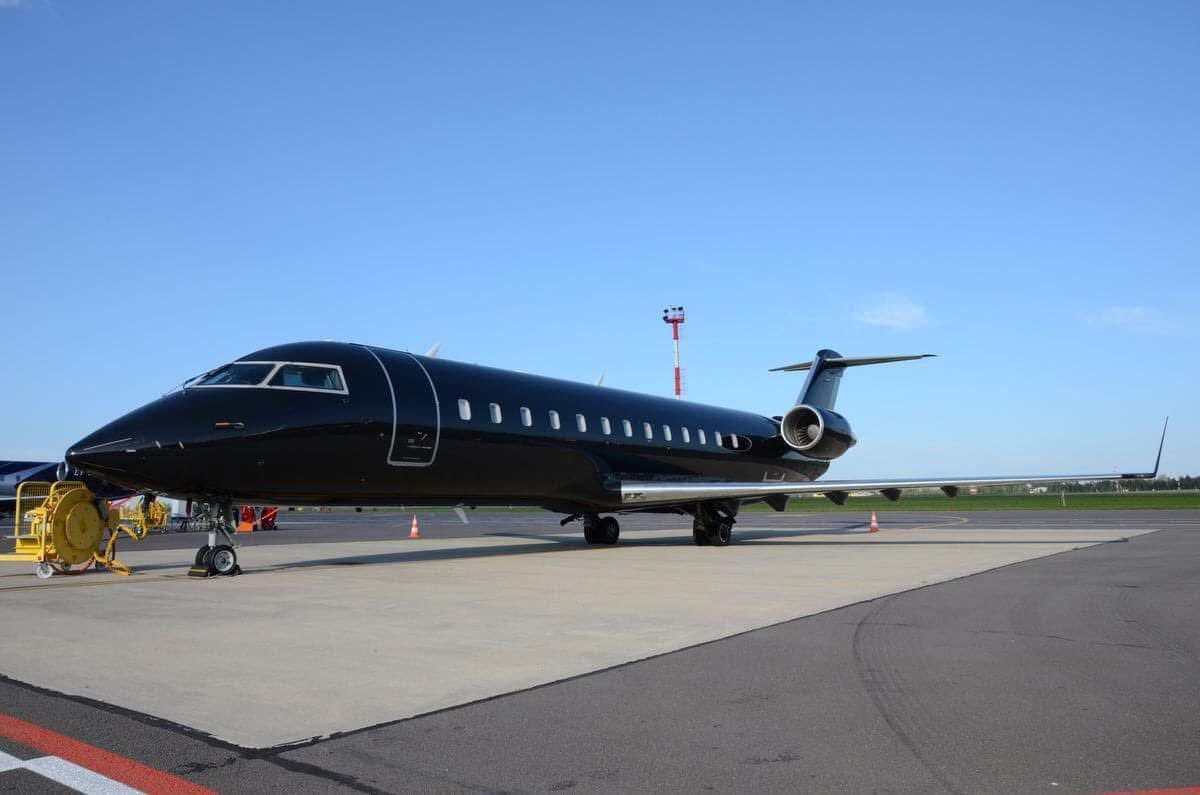
"A guy looked at my airplane the other day and said I wonder how many people I could have fed for the price of that airplane...
I replied I am not sure, it fed a lot of families at the Dassault factory where it was built. I’m sure it fed a bunch of families that rolled the aluminum at the Alcoa factory. It surely fed a lot of people at the Honeywell factory where the experts built the turbines. It fed a whole company for a few weeks when I had them build me a new interior. It feeds the families of the linemen that fuel it.
That’s the difference between capitalism and a welfare mentality. When you buy something, you put money in people's pockets, and give them dignity for their skills.
When you give someone something for nothing, you rob them of their dignity and self worth.
Capitalism is freely giving your money in exchange for something of value.
Socialism is taking your money against your will and shoving something down your throat that you never asked for."