A study on Google AI search shows how to get 70% of users to actually click to your site.
The methodology works for literally any real business.
It also aligns perfectly with what SEO Stuff has been doing all year.
https://t.co/eh1auroJF7
Let’s get into the details:
Two really interesting articles came out not long ago.
The first came from Sagapixel.
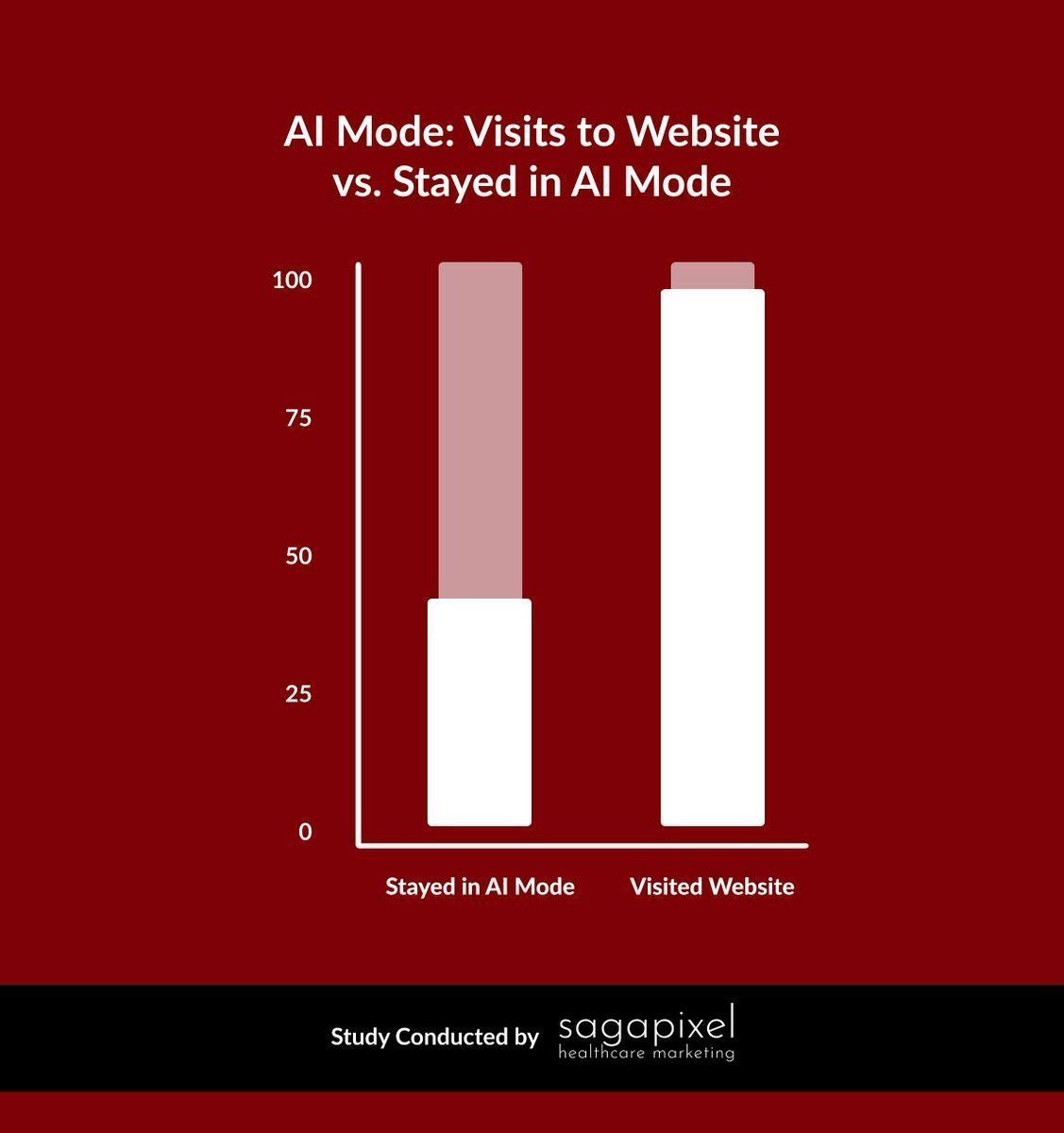
They wanted to test whether, if AI Mode becomes the default search experience, it would rob websites of all traffic.
They observed 52 participants across the U.S. and Canada, spending nearly 22 hours searching for high-involvement services like dentists, dermatologists, and botox providers.
Their findings were pretty fascinating.
[Want to know how your site ranks in Google, ChatGPT, Claude and broader AI search?
Check here (it's free):
https://t.co/Pn764BHwyL]
Nearly 70 percent of AI Mode users visited a website.
Only 27 percent felt ready to decide based on the AI summary alone.
Additionally, 89 percent of users clicked on more than one business, and the average user checked 3.7 options per session.
They basically treated AI Mode like a curated list.
What mattered to the searchers?
Not Google Business Profile photos.
Only 21 percent of users viewed photos.
Reviews mattered a lot, though.
Seventy-four percent of users read reviews before clicking.
All of this pairs interestingly with a piece from Rob Tindula on Search Engine Land.
He noted that AI platforms still drive only about 2 to 3 percent of the traffic that Google organic search delivers.
You wouldn’t expect that given how much attention AI search has been getting, but a lot of data shows similar numbers.
Meanwhile, quick SEO wins are still working shockingly well.
Title tags are a perfect example.
They are one of the simplest levers in SEO, and one of the most consistently mishandled.
In one recent case, Tindula described how a business added a simple “& [keyword]” to their homepage title tag without changing anything else, and rankings jumped.
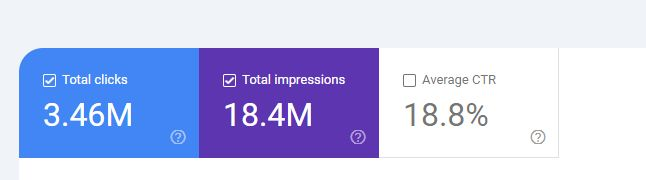
Clicks increased, and impressions followed not long after.
This was one edit on one page.
Stack that with on-page copy improvements, internal linking, and backlinks across multiple pages, and growth compounds fast.
None of this is cutting edge.
It’s old-school SEO, and it works.
Second, content freshness and authority still matter for competitive keywords.
There’s a belief right now that publishing on established topics is pointless because “everything is already covered.”
That’s not what the data shows.
When a site has:
Strong authority.
A clear right to win.
Fresh, materially better content.
The so-called skyscraper approach still works.
Tindula noted cases of new content jumping to page one and climbing into the top three almost immediately, even in crowded SERPs, simply because older results were stale.
Ignoring these opportunities because they feel unsexy leaves easy wins on the table.
Third, user experience is not optional just because AI exists.
There’s a growing assumption that AI assistants will eventually handle conversions, or that users won’t need websites anymore.
That future is not here yet.
And for most businesses, it may never fully arrive.
Regardless of how traffic comes in, organic, paid, AI referrals, or direct, the same rules apply.
Fast pages convert better.
Clear CTAs win more clicks.
Strong UX outperforms weak UX.
Simple CTR tests and layout improvements are still producing measurable gains.
Waiting for AI to replace your funnel is not a strategy.
At this point, the real risk doesn’t seem to be underestimating AI, but overcorrecting for it.
Traditional organic search still drives the majority of traffic for most sites.
SEO fundamentals still deliver when executed properly.
Quick wins are real.
High-quality content is still rewarded.
User experience still matters.
Most importantly, these fundamentals do not compete with AI visibility.
Strong SEO improves rankings, conversions, and trust signals, and increases your likelihood of being surfaced, cited, or included by AI systems.
This is exactly why SEO Stuff has never treated AI search as a separate product or gimmick.
And this is exactly how SEO Stuff (https://t.co/wKpf0EILTx) is built.
The done-for-you package:
https://t.co/yEFyM0Ze7W
High-intent, comparison-driven articles designed to land you inside the AI consideration set.
Question-based H2s with extractable answers.
TLDRs and clean structure.
Three DR50+ backlinks to reinforce trust.
The content package:
https://t.co/4CAnUt07PO
Deep, authoritative content that still wins traditional rankings.
Fresh updates that AI systems favor.
Semantic coverage that trains AI on who you are and when to include you.
Built to compound over time.
The authority package:
https://t.co/Z9m9D7TjES
Because authority is still the strongest signal across Google and AI systems.
This is all built around the boring things that keep working.
Correct targeting.
Fresh content.
Clear structure.
Authority.
Speed.
Trust.
Because those are the inputs both Google and AI systems rely on.
AI is reshaping search in some ways, sure, but what already works still matters.
Want to know how your site ranks in Google, ChatGPT, Claude and broader AI search?
Check here (it's free):
https://t.co/Pn764BHwyL
Microsoft dropped an official “Here Is How To Get Traffic From ChatGPT” guide.
It got surprisingly little attention.
Let’s go over it together.
Not long ago Microsoft released "A guide to AEO and GEO - Practical data strategies to empower retailers for AI search, AI assistants and AI browsers.”
Everything here is drawn directly from the document and its diagrams, with some of my personal takes layered on top for clarity and execution value.
I’ll also reference the pages in the PDF in case you want to go read it yourself.
That said, if you don't care and just want someone to get the ChatGPT traffic for you, let SEO Stuff do the heavy lifting:
https://t.co/eh1auroJF7
And if you want to know where your site stands right now across Google and AI search, check here (it's free):
https://t.co/Pn764BHwyL
Microsoft’s central message in the doc is that retail competition is shifting from “being found” to “being chosen.”
They argue that traditional SEO was optimized for:
Ranking
Clicks
Page visits
Whereas AI-driven shopping replaces that with:
Answers
Recommendations
Agent-led decisions
They’re arguing that visibility is now earned by how clearly AI systems understand your products, trust your brand and can act on your data.
This is where “AEO” and “GEO” come in.
(I hate both of these acronyms and prefer to just call it all AI search optimization, but this is their doc so I’ll go with their language.)
This is also why we’ve seen brands struggle even with strong traditional SEO, but immediately improve AI visibility once they pair technical SEO with structured, intent-driven content and authoritative signals like those included in SEO Stuff’s done-for-you package.
https://t.co/yEFyM0Ze7W
Microsoft also broke down the difference, to them, between AEO and GEO.
Microsoft makes it a very clean distinction:
Answer / Agentic Engine Optimization (AEO) in their estimation optimizes content and data so AI assistants and agents (Copilot, ChatGPT, Gemini) can:
Find it
Understand it
Summarize it
Recommend it
Act on it
This is about clarity and machine-readability.
Generative Engine Optimization (GEO) optimizes content so generative AI search systems trust it as:
Authoritative
Credible
Citable
This is about credibility, reputation, and justification.
Microsoft is explicit that SEO still matters, but it is now the foundation and not the endpoint.
In practice, this is why execution now requires both properly structured pages and volume at scale, something SEO Stuff intentionally designed the Premium Content Bundle to solve.
https://t.co/wA30K3XNYQ
Microsoft then delved into the AI shopping ecosystem and how discovery actually works now.
One of the most interesting sections is Microsoft’s breakdown of AI browsers, assistants, and agents (pages 5–7).
These are not separate systems and they overlap constantly.
AI BROWSERS
Edge, Chrome, or similar with embedded AI
They can “see” the live page you are on and interpret it in real time.
AI ASSISTANTS
Copilot, ChatGPT, Gemini
They answer questions, summarize options, and recommend products.
AI AGENTS
They:
Navigate websites
Add items to carts
Apply promo codes
Calculate shipping
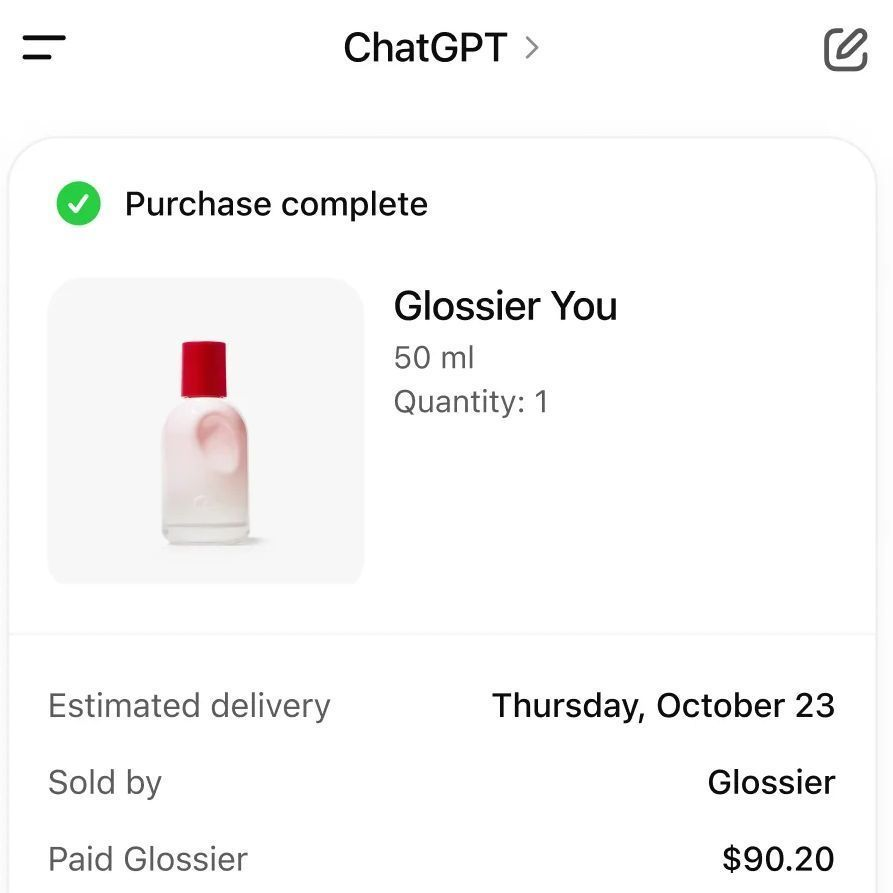
Complete purchases
The key insight:
The question is not “which AI surface am I optimizing for?”
The question is what data can AI access, trust, and use?
This is exactly where most sites break.
The data exists, but it isn’t structured, consistent, or surfaced in a way AI can reliably act on.
Microsoft then went into how AI actually decides what to recommend.
Microsoft outlines a multi-stage reasoning process used by Copilot and Bing AI (pages 7–8).
AI does not rely on one data source, but rather fuses:
CRAWLED WEB DATA
Brand reputation
Category authority
Expert mentions
Historical understanding
PRODUCT FEEDS AND APIS
Price
Availability
Variants
Inventory
Key specs
This is where competitive advantage often comes from, and where most brands are under-optimized.
LIVE WEBSITE DATA
Real-time pricing
Promotions
Reviews
Media
Checkout functionality
If your live site fails, the agent fails, even if feeds were perfect.
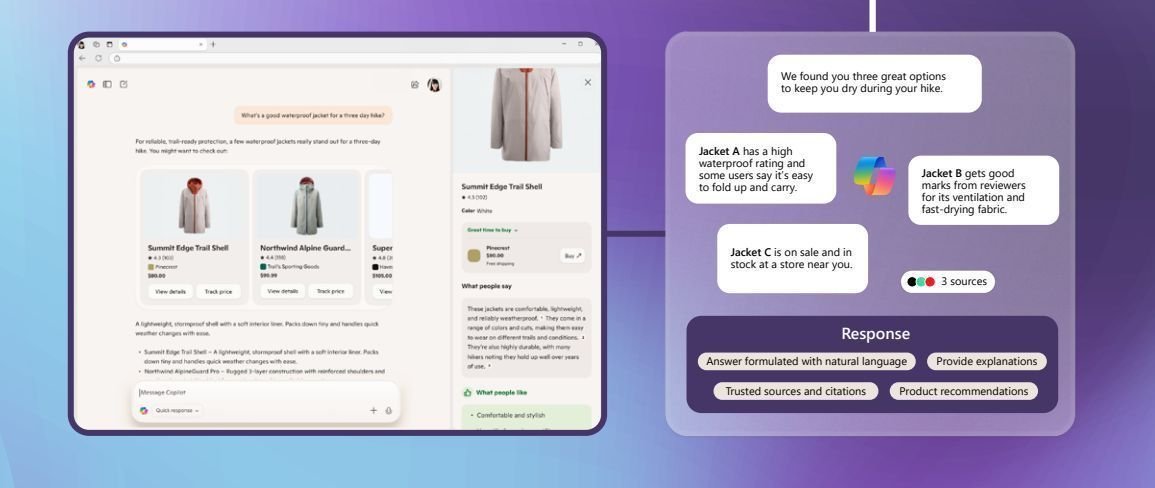
An example Microsoft gives is “rain jacket under $200.”
AI reasoning includes:
“Patagonia and North Face make quality jackets” (general knowledge)
“Hiking jackets need to be lightweight and waterproof” (category understanding)
“Brand X is known for hiking equipment” (brand positioning)
“Your model is $179 and in stock” (feeds)
“Competitor is $199 and backordered” (feeds)
Your product makes the top recommendations because feeds, availability, price, and context align.
This is why content that simply “ranks” but doesn’t explain, compare, or justify rarely shows up in AI answers without additional supporting assets.
Microsoft then really breaks down the journey from SEO to AEO to GEO.
They summarize the transition pretty clearly (page 6):
SEO = matching keywords
“Waterproof rain jacket”
AEO = descriptive clarity
“Lightweight, packable waterproof rain jacket with ventilation and reflective piping”
GEO = justification and trust
“Best-rated by Outdoor Magazine, 4.8 stars, 180-day returns, 3-year warranty”
So basically, AEO drives understanding and GEO drives confidence, and you need both to be recommended.
This is why brands pairing long-form, intent-driven content with authoritative backlinks and mentions often outperform those relying on SEO alone.
Then Microsoft talks about three data layers you must control.
They stress that retailers must show up in three distinct data planes (page 10):
CRAWLED DATA
What AI learned during training
What it finds via real-time web search
This shapes baseline brand perception.
SEO still matters here.
PRODUCT FEEDS AND APIS
Structured data you actively provide
This is where precision and control live.
Feeds drive:
Comparisons
Rankings
Recommendations
This is where many retailers under-invest.
LIVE WEBSITE DATA
What AI agents see when they actually visit
Includes:
Reviews
Media
Dynamic pricing
Checkout capability
If agents cannot transact, influence stops at recommendation.
Here are the three action pillars Microsoft prescribes.
This is the most legit part of the document (pages 11–14).
Pillar 1: Technical foundations and structured data
AI requires structure and consistency, not creativity.
Microsoft explicitly calls for:
MACHINE-READABLE CATALOGS
DYNAMIC FIELDS:
Price
Availability
Size
Color
SKU
GTIN
dateModified
ITEMLIST MARKUP FOR CATEGORIES
LOCALIZED PRICING AND LANGUAGE VIA:
inLanguage
priceCurrency
REQUIRED SCHEMA TYPES:
Product
Offer
AggregateRating
Review
Brand
ItemList
FAQ
They also highlight this:
“Never serve different HTML to bots than to users.”
Pillar 2: Intent-driven content enrichment
AI interprets intent over keywords.
MICROSOFT RECOMMENDS:
Front-loading descriptions with:
Who it is for
What problem it solves
Why it is better
Use-case framing:
“Best for day hikes above 40 degrees”
Headings that mirror real questions
Modular, citable content blocks
THEY EXPLICITLY ENCOURAGE:
Q&A sections
Comparison content
Feature lists
“Goes well with” product relationships
Video transcripts
Detailed image alt text with ImageObject schema
This is content designed for extraction as opposed to reading.
This is also why scale matters.
One or two pages won’t move the needle.
Systems that produce dozens of structured, intent-mapped articles tend to win, which is exactly what the Premium Content Bundle is built around.
https://t.co/wA30K3XNYQ
Pillar 3: Trust and credibility signals (GEO)
AI systems prioritize verifiable truth.
Microsoft highlights:
VERIFIED SOCIAL PROOF
Verified reviews
Review volume
Sentiment extraction (“highly rated for comfort and fit”)
Review and AggregateRating schema
AUTHORITATIVE BRAND IDENTITY
Expert reviews
Press mentions
Certifications
Sustainability badges
Official brand links
CONTENT INTEGRITY
Avoid exaggerated claims
Maintain consistent brand voice
Provide structured FAQs and help content
This also stood out:
“AI penalizes low-trust language.”
Interesting, but obviously open to interpretation.
Microsoft then closed with a fairly straightforward message.
Retailers already have most of the signals AI uses to rank and recommend.
The winners in AI commerce will be the brands that:
Treat data as a product
Treat feeds as strategic assets
Treat content as machine-readable infrastructure
Treat trust as a measurable ranking factor
This is what Microsoft calls “AI ranking readiness.”
If I had to reduce this entire PDF to one core idea:
AI needs to understand your products in order to justify recommending them. It needs to literally be able to act on your data in real time if you want to be a legit presence in AI-driven commerce.
Luckily, SEO Stuff (https://t.co/wKpf0EILTx) solves for all of this.
And if you want to know where your site stands right now across Google and AI search, check here (it's free):
https://t.co/Pn764BHwyL
🔥 After 820% Gains: Are Privacy Coins Becoming the New Payment Rails?
$ZEC up 820%. $XMR up 130% in 2025.
Privacy tokens are moving beyond speculation and evolving into full infrastructure stacks.
From payments to messaging, browsing, and decentralized identity, ecosystems like @BeldexCoin are building a complete privacy layer for Web3.
Institutional attention is growing, with research recognition adding further credibility.
All Paid Courses — 100% FREE (Part 3)
I'm giving you access to 81+ free courses. 👌👇
1. Social Media Marketing
2. Android App Development
3. Facebook Ads
4. SEO
5. Google Ads
6. Content Writing
7. Graphic Designing
8. Video Editing
9. Web Development
10. Hacking and more with 73+ courses.
To get, just:
- Comment "SEND"
- Like & Retweet
- Follow me (so that I can DM)
ChatGPT + laptop + internet connection + 60 minutes per day = $9500 every month.
I normally sell this guide for $81, but for the next 48 hours, it’s yours 100% FREE.
To get: -
1. Follow me (So I can DM you )
2. Retweet
3. Reply " Ai "
Must follow me to get DM. Free for 48 hours