Have you ever noted that the first person to disappear when protests turn violent is often the one who called you there? Sijai ona hashtag free Sifuna, ama Free Kalonzo, ama Free Eugene Wamalwa. Sijawahi. Only the ones to free the #CommercialActivists.
Nowadays, when the smoke clears, it is ordinary young people who carry the consequences through arrests, injuries, court cases and lost opportunities. Real leadership Nikama ya Baba, may his soul continue resting peacefully. Baba used to stand with the people he mobilized and always accepted responsibility for the outcomes.
Rest in power Agwambo.🕊️
A modern economy depends on a modern police service. Our country’s Police Reform Agenda will be delivering exactly that through comprehensive reforms will strengthen leadership, officer welfare, operational autonomy, accountability and community policing.
With 55% of the reform program already implemented, the proposed legislative framework is aimed at creating a National Police Service that is better equipped, better led and better supported to protect lives, property and constitutional rights. Professional policing strengthens public confidence, secures communities and creates the stability required for investment, enterprise and national development.
Crime investigations are entering a new era of precision. The proposed National Forensic Science framework is strengthening the use of DNA analysis, cyber forensics, ballistics and toxicology to support faster, more accurate and evidence based criminal investigations.
Combined with body worn cameras, integrated CCTV systems and modern digital policing technologies, these reforms will improve transparency, strengthen accountability and protect both innocent citizens and police officers. A stronger justice system begins with stronger evidence.
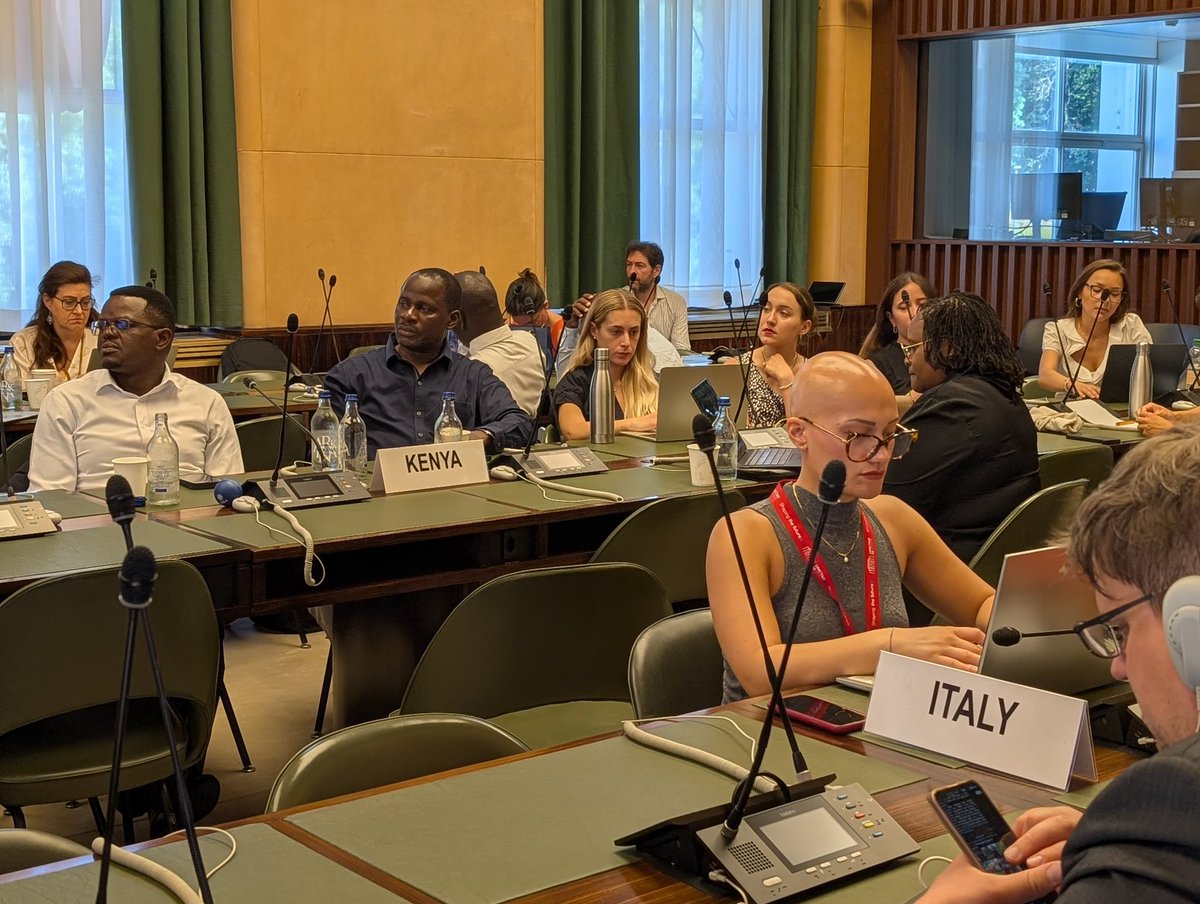
On the sidelines of the UNECE Conference, I had the pleasure of accompanying PS, @SDPI_AM Mr. Cyrell Odede, in paying a courtesy call on Kenya’s Mission, where we held insightful discussions on the continued application of the Public Private Partnership framework in delivering Kenya’s diplomatic infrastructure portfolio.
The successful delivery of the Geneva Chancery through a Public Private Partnership demonstrated the versatility of the PPP framework in financing and delivering specialised public infrastructure beyond our borders, providing a structured investment model that integrates project preparation, private capital mobilisation, infrastructure delivery and long term asset stewardship within a single contractual framework.
The PPP Directorate is currently advancing the preparation of additional Chanceries and Mission Offices across multiple jurisdictions for delivery through Public Private Partnerships similar to the Geneva model, reflecting Government’s commitment to sustainable infrastructure financing, efficient public asset delivery and the continued strengthening of Kenya’s diplomatic presence through well structured investment partnerships.
SC/Classmate @ckanjama , the statutory disclosure published pursuant to Sections 59 and 69 of the Public Private Partnerships Act should be read together with the executed Project Agreement, since each instrument fulfils a distinct statutory function within the PPP framework. The statutory notice communicates the execution of the transaction and its material commercial terms, whereas the Project Agreement, together with its Output Specifications and technical schedules, prescribes the legally enforceable obligations governing the concession, including the engineering scope, corridor capacity, operational performance, service levels, lifecycle maintenance obligations and asset handback requirements that define the investment throughout the concession period.
The road corridor was split into two sections and will developed/maintained by two separate entities i.e: CRBC-NSSF consortium on the first section (Rironi - Gilgil) and SHADONG HI-SPEED on the second section (Gilgil - Mau Summit).
The executed Project Agreement contractually obligates the CRBC–NSSF Consortium to develop, finance, operate and maintain approximately 139 kilometres of strategic road infrastructure comprising 81 kilometres of the A8 Road and 58 kilometres of the A8 South Road. Those contractual obligations encompass the expansion of the Rironi–Naivasha Road into a continuous four lane dual carriageway, the expansion of the Naivasha–Gilgil Road into a continuous six lane dual carriageway, together with the expansion of the Rironi–Maai Mahiu Road into a continuous four lane dual carriageway incorporating dedicated climbing lanes between Km 8+800 and Km 18+800, each forming an integral component of the Project Agreement and collectively delivering the approved corridor capacity prescribed under the concession. The above scope is far better than what was in the previous contract that was terminated.
The reference to Gilgil in the executed Project Agreement reflects the approved scope of the present PPP transaction for the first section, which constitutes one transaction within the wider corridor investment. The structuring of strategic infrastructure into discrete PPP transactions aligns project readiness, investment viability, procurement sequencing, prudent fiscal management, optimal risk allocation and private capital mobilization within the statutory framework established under the Public Private Partnerships Act, enabling each transaction to progress upon completion of the prescribed project development requirements and statutory approvals, preserving the continuity of the overall corridor investment and securing the orderly delivery of nationally significant transport infrastructure.
The National Cybersecurity Agency is set to strengthen the protection of government digital platforms that process millions of citizen interactions every year. From registrations and permits to certificates and essential public services, these systems form a critical part of daily governance and public administration.
The Agency will play a central role in enhancing security, improving system resilience and ensuring that citizen data is protected from cyber threats, unauthorized access and digital fraud.
The anarchists and commercial activists are frustrated! Our country is peaceful, business as usual countrywide. They thought they would wreck havoc, hakuna Mtu ako ready to risk their lives or livelihoods for the few bloodthirsty politicians and anarchists to cash out! Kazi safi by the @InteriorKE 👏🏽
The global infrastructure financing agenda is evolving rapidly as governments strengthen Public-Private Partnerships to mobilize private capital, enhance fiscal sustainability and deliver resilient infrastructure that supports long-term economic transformation. The 19th Session of the UNECE Committee on Innovation, Competitiveness and Public-Private Partnerships in Geneva provides an important platform to shape international policy, strengthen institutional frameworks and advance practical solutions that improve the planning, financing and delivery of strategic infrastructure.
Kenya has built one of Africa’s most robust Public-Private Partnership pipelines through sustained institutional reforms, stronger project preparation, enhanced transaction structuring and a transparent investment framework that continues to attract global private capital into strategic sectors. Landmark projects across transport, energy, water, affordable housing, health, education and digital infrastructure reflect our country’s commitment to expanding investment opportunities, accelerating infrastructure delivery and creating lasting socio-economic value through well-structured PPP transactions.
The Committee’s agenda closely aligns with Kenya’s infrastructure financing priorities through its focus on resilient infrastructure, innovation-enhancing procurement, fiscal sustainability, tariff affordability, stakeholder engagement, climate resilience, digital transformation and the application of artificial intelligence across the PPP project lifecycle. The development of international standards and practical guidance on climate-resilient infrastructure, stakeholder engagement, small-scale PPPs, fiscal sustainability and AI-enhanced PPPs presents valuable opportunities to strengthen project preparation, investment readiness and infrastructure governance.
The Committee’s work is already delivering measurable global impact through the PPP and Infrastructure Evaluation and Rating System (PIERS), which has assessed more than 350 infrastructure projects across 68 countries and 24 sectors, representing over USD 139 billion in capital expenditure while strengthening project sustainability and investment readiness. These global benchmarks provide valuable insights that support Kenya’s efforts to expand its pipeline of bankable PPP transactions, deepen investor confidence and reinforce the country’s position as a leading destination for sustainable infrastructure investment in Africa.
In The Finance Act, 2026, KES 112.4 Billion has been Committed to Water, Sanitation and Environmental Protection.
This investment will support clean water access, environmental conservation and improved public health outcomes.
Ni Bottom Up! ✌️
Juicy News!
Safari ya kuelekea Singapore of Africa needs properly educated citizens, no IFs, no BUTs! Having that in mind, the overworking KK administration has delivered a resounding vote of confidence in the potential of Kenyan youth through a KES 784 billion allocation to education, training, student financing and skills development.
This shows that our beloved President @WilliamsRuto recognizes talent as a national asset and views knowledge, skills and innovation as the engines that will drive Kenya’s transformation into a more productive, prosperous and opportunity-rich economy.
As Kenya positions itself as a premier destination for continental and global conferences, exhibitions and high-level diplomatic engagements, the ongoing transformation of Bomas of Kenya into the Bomas International Convention Complex (BICC) marks a bold step towards creating a world-class meetings and events destination while preserving one of the country's most iconic cultural and historical landmarks.
With roofing and finishing works currently underway, the project is set to redefine Nairobi's conference infrastructure and establish the region's largest hub for Meetings, Incentives, Conferences and Exhibitions (MICE).
The redevelopment will deliver a modern convention complex supported by an 11,000-seat auditorium, multiple breakout meeting facilities, a high-security presidential pavilion capable of hosting numerous heads of state and integrated hospitality, retail and recreational amenities.
During its implementation phase, the project is already creating employment opportunities for hundreds of workers and stimulating economic activity across the construction, hospitality and service sectors.
The State Department for Internal Security and National Administration continues to support the successful implementation of the project through inter-agency coordination, strategic stakeholder engagement and the development of security and protocol frameworks required for a facility envisioned to host some of the world's most significant gatherings. MORE PICS - https://t.co/PVPuN5PCoz
JUICY NEWS!!
After years of waiting, compensation has finally begun for victims of human rights violations linked to demonstrations and public protests since 2013! In the first phase alone, 348 verified victims are set to receive KES 448.7 million as the country takes a decisive step toward justice, accountability, and national healing.
Under Ruto, every life matters!
Education is both a powerful equalizer and a gateway to opportunity. Recognizing its transformative role in driving social mobility and national development, the Government continues to prioritize investments in the sector.
This commitment is demonstrated in the Bottom-Up Economic Transformation Agenda (BETA), which views education as a key pathway for empowering individuals, expanding opportunities and enabling citizens to improve their livelihoods and contribute meaningfully to the country's growth.
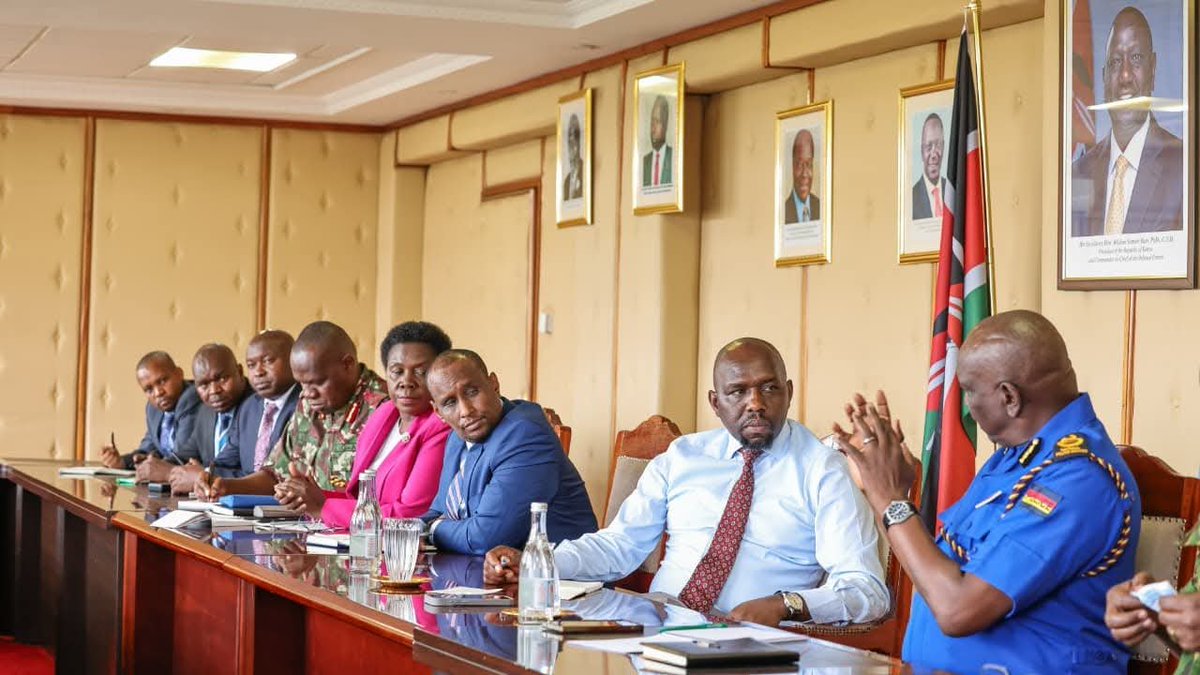
Joined CS Hon. @kipmurkomen in a meeting with the Nairobi Metropolitan Police Unit technical team on the operationalisation of the Unit, which will enhance public order, safeguard businesses and critical installations, and improve traffic flow across Nairobi and its environs.
The team is finalising operational frameworks informed by best practices from the US, UK, Italy and Japan, with a strong emphasis on public participation and technology in crime prevention and response.
This follows a recent benchmarking exercise in Italy, which I attended, aimed at strengthening modern and intelligence-led policing models.
Present were colleague PS Ahmed Abdisalan Ibrahim (National Government Coordination), Inspector General of Police Douglas Kanja, DCI Director Amin Mohamed, DIGs Eliud Lagat (KPS), Gilbert Masengeli (APS), Principal Administrative Secretary Beverly Opwora and Nairobi City County Head of Law Enforcement and Inspectorate Services Eva Wangechi among other stakeholders.