How Russia builds “Telegram agent” networks across Europe:
20 MILLION “job ads” on Discord:
“Most of these ads were posted through disposable accounts registered using phone numbers from India, Iran and several Middle Eastern countries.’’
https://t.co/TWwnSvZesx
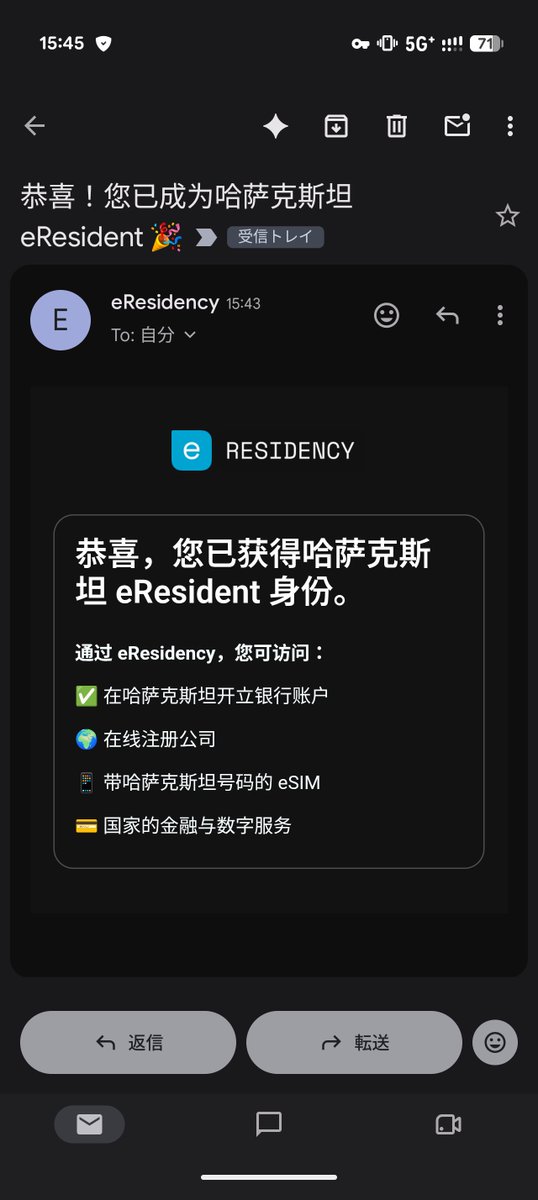
Interessant: voor 49 dollar kan je een digitale burger worden in Kazachstan. Je krijgt een e-ID en een eSIM.
En die eSIM is handig, voor OSINT bv
Er zijn heel weinig landen die zoeits aanbieden.,
« Nous avons secoué la France ! » : Derrière Enrique Arias Gil, l’Espagnol lié à NoName057(16) qui recrute des informateurs pour la Russie depuis Moscou, Golden Owl a identifié R-Techno, la société de renseignement privée de l’ancien officier du FSB Roman Romachev. Ce dernier forme des opérateurs russes, transforme les promotions de stagiaires en « réseaux de renseignement » et se vante de ses actions en France. Un thread 🧵 1/11
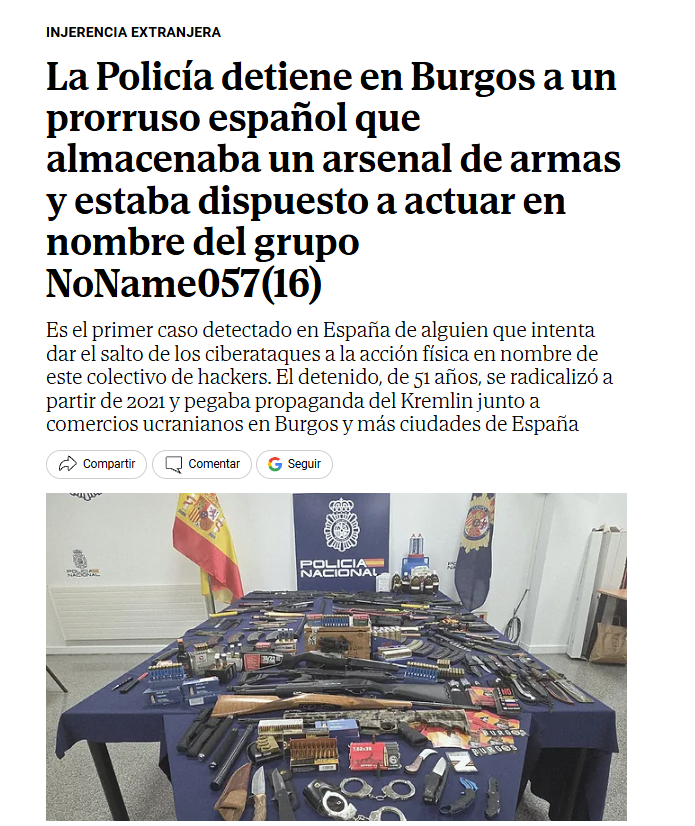
Police in Burgos just arrested a Spaniard stockpiling weapons and ready to act for NoName057(16).
On Nov 6 we published The Invisible Arsenal and warned about exactly this.
Enrique Arias Gil, a Spanish political scientist under a Spanish arrest warrant for helping NoName057(16), runs a Telegram channel from Moscow that recruits his own countrymen for Russia.
In two weeks of the campaign it offered Spaniards crypto rewards to join NoName's DDoSia attacks, money for confidential data on Spanish officials, and $25,000 bonuses to fight in the Russian Army.
Update: X has suspended the accounts we exposed as part of the Iranian regime's network in France. They're no longer active.
This is what's known as FIMI, foreign information manipulation and interference: a foreign state running fake accounts that pretend to be ordinary people, here French citizens, to push its own political line inside another country.
Suspensions don't end an operation like this. The same networks come back with new names, new faces and new accounts. That's why they have to be watched constantly and caught early.
We'll keep doing exactly that.
This is how the Iranian regime's accounts work their way into a French audience.
Each account begins with a French face: a French name, a French city and a short life story. One is a journalist from Marseille, another a doctoral student in Lyon, another a mother. Several borrow the names of French celebrities.
The account then collects followers. It follows thousands of French users in communities where following back is a courtesy, and they follow it in return. That is how an account that X locates in Iran comes to have more than 4,000 followers, most of them French.
It grows through emotion. Images of suffering in Gaza are the largest part of what these accounts publish and bring their largest audiences. The followers and the credibility gained there are then spent on French politics.
To reach people who do not follow them, the accounts place replies under the posts of news media, elected politicians and the President, where hundreds of thousands of French readers will see them. Half of everything they publish is a reply of this kind.
At every French crisis since 2023 they have carried one message: the President is a dictator, the police are the enemy, and the answer is the street.
When X began showing where accounts are based, in November 2025, most of them fell silent within days. The ones that returned this autumn connect through an app build that shows a region and not a country. The loudest voice now belongs to the accounts of an outlet that French authorities attribute to the Iranian regime's interference, and those accounts display France as their location.
One month ago we documented the same method ahead of Israel's election.
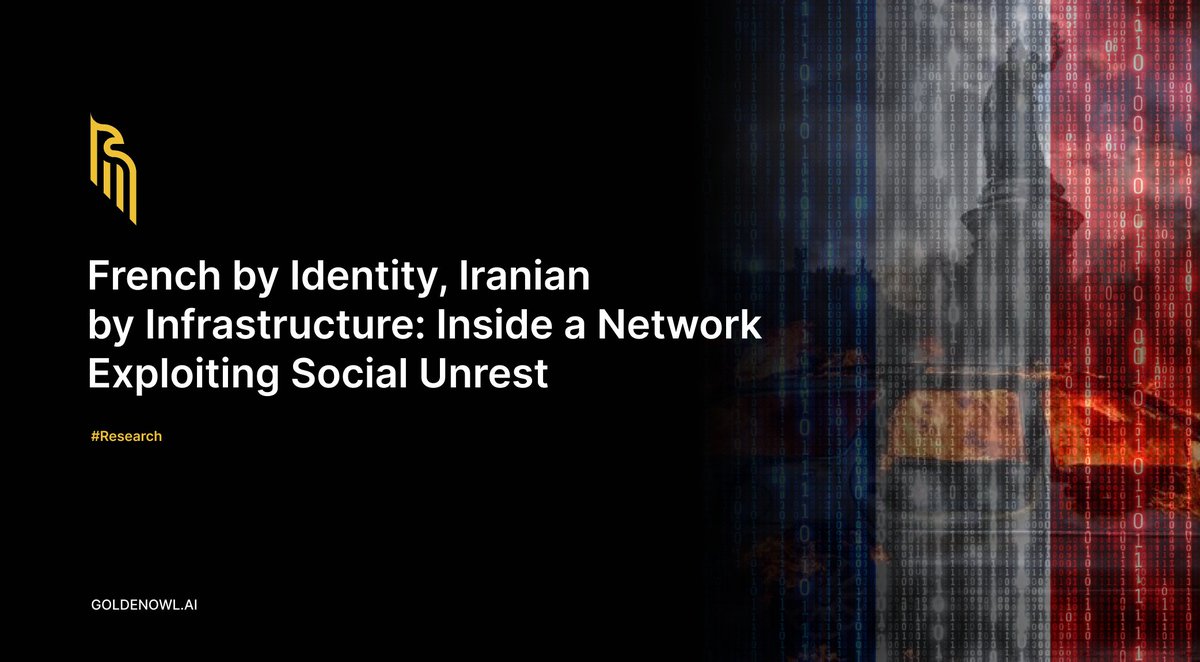
In France, Golden Owl® uncovered 164 accounts operating behind French identities, generating 46 million views, with evidence of Iranian-linked influence activity exploiting social unrest.
Our earlier investigation in Israel revealed strikingly similar methods.
For the EU, the implications extend beyond individual disinformation campaigns: a persistent, adaptable influence infrastructure capable of crossing borders, adopting local identities and exploiting each society’s vulnerabilities.
The identities are local. The infrastructure is not.
Full investigation: https://t.co/nABvUo3dLN
Again a company that delivers much needed materials to Ukraine is targetted by far-left extremists.
This time, they couldn’t blame it on “zionism”, so the excuse is that it produces non-lethal equipment that is used by european police.
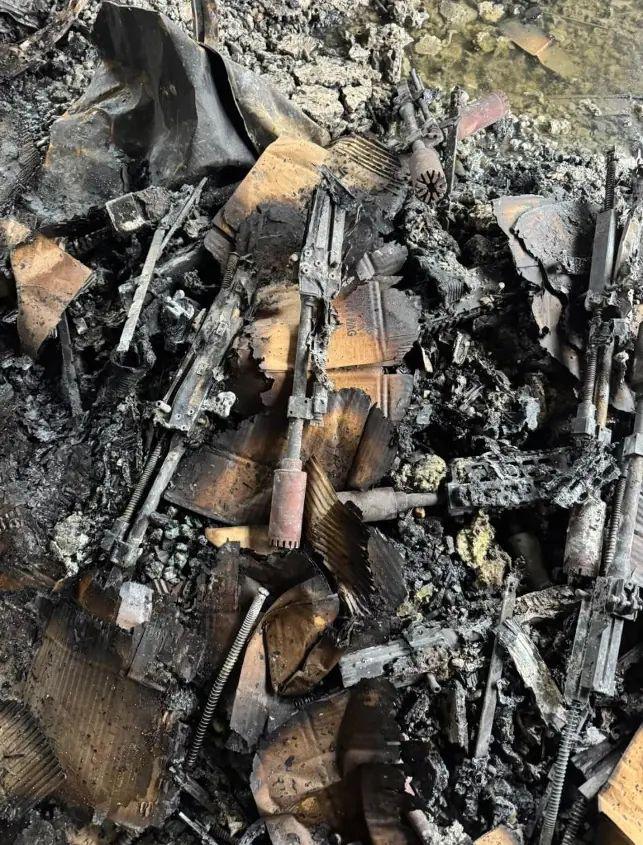
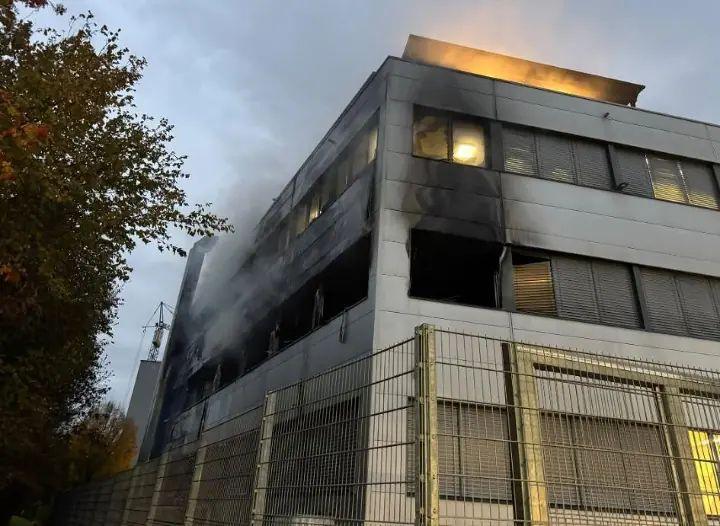
🇨🇭 An arson attack by far-left extremists heavily damaged the headquarters of a Swiss firearms manufacturer
A catastrophic fire severely damaged the headquarters and facility of B&T AG in Thun, Switzerland, in the early hours of Thursday, October 29, 2026. No injuries were reported, as the facility was closed at the time.
Authorities have launched a full investigation, with arson the primary focus. Leftist extremist groups have allegedly claimed responsibility.
Online manifestos and political chatter indicate the facility was targeted due to unrest in France and B&T’s production of the GL06 / LBD 40 less-lethal launchers, widely used by European police for riot control.
The company’s exports of weapon systems to Ukraine, along with its less-lethal riot-control launchers, are cited by investigators as the primary motives.
Initial estimates put the structural damage at 12 to 20 million Swiss francs ($15 to $24 million USD).
The story keeps getting crazier. To recap everything that has been reported so far:
- The US intelligence community discovered that Jensen Huang, the CEO of the largest company in the world, was sleeping with Alice Huang, a Chinese spy and an executive at Megaspeed. (FT)
- Multiple independent investigations have concluded that Megaspeed is likely a Chinese cutout, which helps Chinese companies access AI chips or circumvent export controls. (NYT and Bloomberg)
- The US intelligence community also concluded that Alice Huang’s goal was to convince Jensen to lobby the U.S. government to loosen export controls on advanced AI chips. (NYT)
- The intelligence community relayed this information to “a small group of top US government officials” earlier this year. (FT)
- Over the last year, Jensen Huang has repeatedly lobbied the U.S. government to loosen export controls on advanced chips. @BISgov has done so, not only by permitting the export of H200 chips to China, but also not enforcing export controls that would have required a license for exports of the most advanced Blackwell chips to Megaspeed and Southeast Asia.
- Although @CommerceGov leadership was presumably briefed on this information by the U.S. intelligence community, @BISgov has taken no actions to tighten controls on Megaspeed or Southeast Asia.
- Megaspeed remains a preferred cloud partner of Nvidia, and continues to receive Nvidia Blackwell chips despite employing a Chinese spy who reportedly is romantically engaged with the CEO of Nvidia.
- Tens of billions of dollars worth of AI chips have been exported to Southeast Asia this year alone, and Malaysia and Singapore are now two of the four largest importers of AI chips in the world.
What is going on here??? We need answers. The question of who gets the most advanced AI chips in the world is literally the defining strategic question of our time. And not only does it seem like the MSS may be directly influencing the debate on export controls in the United States, but also @CommerceGov is refusing to listen to the warnings of the IC on this issue. What is a POSSIBLE good explanation for why Megaspeed is still receiving chips? Why is there not a license requirement for AI chip shipments to all of Southeast Asia? This is beyond strange at this point.
The fallout from this story will be massive. Obviously, the motivations underpinning Nvidia’s policy views opposing export controls must now all be questioned. But also, how did @BISgov sit on this information and has still taken no actions? We need answers.
Wymyślona "katownia AZOWA" pod Kijowem czyli 1:0 dla rosyjskiej propagandy.
TL:DR - żadnej katowni nie było. Nie było tortur, połamanych kręgosłupów itp. Byli za to żołnierze GN którzy po dezercji zostali wyłapani ale zgodzili się wrócić na front żeby uniknąć więzienia. Zanim wyśle się ich do jednostek są oni w przejściowych kwaterach. Czemu w domu pośrodku niczego? A bo koszary lubią odwiedzać Iskandery i Ch-101. Stąd rozproszenie bazy kwaterunkowej SZU.
Najpierw kto nakręcił całą inbę - Валентина Молода czyli Walentyna Mołoda - właścicielka gabinetu medycyny estetycznej i prorosyjska aktywistka nawołująca za "pokojem" i przeciw "podżeganiu do wojny" - wypisz wymaluj ten sam spin co u naszych krajowych onuc. Pani Walentyna przebrała się w strój ratownika ZRMu (nigdy takowym nie będąc) i skombinowała sprzedaną lata temu karetkę na fałszywych blachach która to kiedyś należała do firmy „Med-Prestiż” która to zbankrutowała w 2023 roku.
Kolejną osobą dramatu jest nastolatek który rzucał kamieniami i butelkami po czym spadł z płotu ogradzającego posesję (na który się wdrapał) i złamał kończynę. To właśnie tego nastolatka pod kocem z miną pt "ała boli" pokazywać zaczęły liczne konta na socjalach jako "torturowanego 14 latka". To musiały być bardzo szybkie tortury skoro od wdrapania się na płot i upadku do nagrania jak jest zabierany prze karetkę minęło zaledwie kilka minut. Było też parę innych osób w tym były żołnierz GN i kilku mediaworkerów.
Generalnie zaplanowana akcja która się prawie udała. Prawie ponieważ w zasadzie od razu wpuszczono część dziennikarzy do "spalonego" (w sensie ukrycia) mini-koszarowca. A w środku normalne warunki, sal tortur brak. Natomiast przy okazji całej awantury czterech żołnierzy GN którzy byli w ośrodku stwierdziło że"źle się czują" i chcą być zabrani karetką na badania. Z filmów nie wynika aby wyglądali źle lub mieli ślady pobić itp. Raczej wykorzystali okazję żeby później trafić na front. Nie potępiam - ludzkie zachowanie. Natomiast bus próbujący ich wywieźć (mimo oznaczeń GW) został zdemolowany przez zgromadzonych kilkudziesięciu ludzi jako bus "СЗЧ" od "busikizacji".
Na koniec dowódca właściwej jednostki GN oraz Budanow uspokoili sytuację.
To że całe zajście miało miejsce dosłownie pól dnia po tym jak Rosjanie zrzucili kilka szybujących półtonówek lotniczych na punkt pomocy cywilom na Zaprożu w wyniku czego zabito ponad 20 cywili zapewne nie ma nic do rzeczy. Ale jakoś tak wyszło że zamiast mówić o tym że ruscy znów mordują cywili pół internetu podnieca się prorosyjskim "glonojadem" udającym sanitariusza i nastolatkiem który spadł z płotu.
6/6 This said, it is peculiar how PA methodically hits companies or systems that have little to no remote impact on Israel, but certainly have one on NATO and its effort to improve readiness and resilience against Russia.
How strange that only refrigeration systems in EU countries have been hacked.
South Africa has more Danfoss systems than most countries, but not one system has been hacked..
Gee, I wonder why?
UPDATE: Yes, I had to make another update. Upon further research, the total is now 12 countries affected by the European refrigeration cyberattack.
🇸🇪 Sweden
🇧🇪 Belgium
🇱🇺 Luxembourg
🇪🇪 Estonia
🇮🇪 Ireland
🇳🇱 Netherlands
🇫🇮 Finland
🇩🇰 Denmark
🇮🇹 Italy
🇷🇴 Romania
🇩🇪 Germany
🇵🇹 Portugal
🇫🇷 France has likely been affected as well, but this remains unconfirmed.
BREAKING: 🇸🇪 Swedish grocery giant ICA, one of Sweden's largest supermarket chains, says several of its stores have been hit by a cyberattack overnight, causing refrigerators and freezers to be remotely set to 50°C.
The incident has likely resulted in large quantities of food spoiling. Multiple stores, including ICA Kvantum in Sjöbo and Tomelilla, have reported being affected.
ICA says stores will remain closed during the morning and are expected to reopen at 9:00 a.m. Swedish time.
The company has apologized to customers and says it is working to restore normal operations.
The incident comes amid a wave of cyberattacks targeting businesses recent weeks, following similar incidents reported in France and the United States.
Lithuanian police say arson attacks targeting Starlink equipment in Lithuania, Poland, and Bulgaria are linked.
Two suspects have been identified in the attempted arson at a Vilnius site on the night of October 18. One holds Turkish and German citizenship, the other Serbian and German.
The two men are also suspected of involvement in the attacks in Bulgaria. Different individuals were involved in Poland, but they are linked to the same group.
"We see direct links between these individuals and the incidents. They are all connected to one another," said Saulius Briginas, deputy head of the Lithuanian Criminal Police Bureau.
The suspects are under investigation for terrorism-related offenses, including involvement in an organized terrorist group. Possible links to Russia are also being investigated.
📹: Lietuvos policija
Starlink, Starshield, GPS, and the Claims About “Hacking”: A Technical Explanation
A post accusing Ukraine of “hacking” #Starlink is spreading rapidly on this platform.
The technical claims in that post are incorrect. They seem based on a collection of rumors circulating on Telegram, including information from Russian channels.
Unfortunately, this post and others like it are receiving an enormous number of likes and reposts.
That's why I believe it's important to address these claims with clear technical explanations rather than allow misleading information to spread unchecked.
This is a fairly detailed post, but I think the distinction matters.
Some of the technical information below comes from my own research and detailed analysis of Starlink terminal firmware, particularly its GPS, PNT, and velocity-processing systems.
#⃣ 1. What are Starlink and Starshield?
People still frequently confuse the two.
Starlink is SpaceX's commercial satellite internet service, designed for consumers, businesses, and other commercial users.
Starlink supports operation in motion, but the permitted speed depends on the service plan, equipment, and geographic region.
Under commonly available commercial plans, the maximum authorized operating speed is 160 km/h (100 mph).
In Ukraine, Starlink terminals are subject to a specific speed restriction: they cannot operate at speeds above approximately 75–80 km/h.
This Ukraine-specific restriction was introduced less than a year ago, in coordination with Ukrainian authorities, to prevent Starlink terminals from being used on drones.
Starshield is SpaceX's government-focused product and service family, based on Starlink technology and developed for national security applications.
It includes secure communications, Earth observation, and hosted payload capabilities.
Some Starshield systems involve dedicated government spacecraft and infrastructure. However, Starshield communications services can also use the underlying Starlink satellite network.
This distinction is important: Starshield does not necessarily mean a completely separate physical satellite constellation or entirely different user terminal hardware.
SpaceX develops and operates the underlying Starlink infrastructure. The U.S. government procures Starshield capabilities through contracts, with ownership and operational control depending on the particular system and arrangement.
The division of authority between SpaceX and the U.S. government has become especially relevant following the October 2026 incident.
Unlike ordinary commercial Starlink service, Starshield configurations used for military operations in Ukraine have supported substantially higher operating speeds.
#⃣ 2. Is Starshield available in Ukraine?
Yes. Starshield is operational in Ukraine and is extensively used by the Ukrainian military.
Starshield service has been used in Ukraine since approximately mid-2023. Subsequent U.S. government contracts and public reporting also confirm its availability.
The United States has procured Starshield services specifically to support Ukrainian military operations.
An October 2026 U.S. Senate letter explicitly confirms that Ukraine receives Starshield services procured by the U.S. government.
Therefore, the idea that Ukraine is somehow obtaining Starshield capabilities by secretly modifying commercial terminals fundamentally misunderstands how these services are provided.
How does the Ukrainian military use these services?
The Ukrainian military uses both commercial Starlink and Starshield.
Commercial Starlink is widely used because of its availability, relatively low cost, and excellent performance. For stationary installations and many other applications, commercial service is entirely sufficient.
Starshield is used for specialized military applications, including drones and other platforms requiring reliable connectivity at higher operating speeds.
These are capabilities provided through the Starshield service itself, not necessarily through unauthorized modifications to commercial Starlink hardware.
Using Starshield for its intended and authorized military applications is not inherently a violation of its service terms.
#⃣ 3. Regarding the October 2026 incident
Beginning on October 13–14, Ukrainian military units encountered unexpected speed restrictions affecting Starshield connectivity.
Terminals that had previously operated at substantially higher speeds began losing connectivity at approximately 160 km/h, with some reports describing interruptions at even lower speeds.
These restrictions disrupted military operations, particularly those involving high-speed unmanned systems.
The consequences were serious. Ukrainian officials reported that the restrictions interfered with drone operations, including efforts to intercept russian attack drones.
The decision-making process remains disputed. Neither SpaceX nor the U.S. government initially accepted responsibility for imposing the restrictions. Subsequent reporting and statements from U.S. lawmakers raised questions about who authorized the changes and which organization had the ability to implement them.
As of October 24, Ukraine's Ministry of Defense has officially reported that Starlink/Starshield connectivity is once again stable at speeds exceeding 400 km/h.
#⃣ 4. Does Starshield require separate hardware?
Not necessarily.
This is one of the most important points in the entire discussion.
Starshield is a government-focused service and technology family. In the case of satellite communications provided to Ukraine, existing Starlink terminal hardware can be provisioned to use Starshield service.
In December 2024, Bloomberg reported that a Pentagon contract would provide Starshield access to an additional 2,500 Starlink terminals already deployed in Ukraine, on top of 500 terminals previously covered.
The contracts therefore provided service for a total of 3,000 terminals.
In practice, compatible commercial Starlink hardware can be reassigned to Starshield service through the appropriate authorization and provisioning process.
This requires approval. It is not something that a customer can simply enable through the ordinary Starlink application.
Are there specialized Starshield terminals?
Yes.
For example, there is a specialized variant of the Starlink Mini known internally as `mini1_rugged`.
Based on my hardware research, this model uses an improved GNSS receiver, the Teseo V, instead of the receiver found in the regular Mini.
However, despite having repaired and examined numerous terminals and maintaining contact with people working with this equipment, I have not encountered evidence of this specific variant being supplied to Ukraine.
The Starshield terminals I have encountered or received information about in Ukraine are based on regular Starlink hardware.
Some terminals arrive already configured for Starshield service. Others can be provisioned for it through the appropriate channels.
The key point is simple:
A regular Starlink terminal operating under an authorized Starshield service configuration is still a Starshield terminal from the service perspective. It does not need to be physically modified or “hacked” to obtain that service.
#⃣ 5. Why does a Starlink/Starshield terminal require GPS?
Three years ago, I published an article explaining why GPS is important for Starlink terminals and how to improve GPS reception on the hardware available at that time: https://t.co/Ucng1IRu79
Some of the technical details in that article are now outdated, but the fundamental principles remain relevant.
A Starlink terminal requires sufficiently accurate position and timing information for network synchronization, beamforming, and other aspects of normal operation.
Location information can also be used for geographic service authorization.
Invalid or spoofed GPS data may interfere with these processes. Depending on the magnitude of the error and the firmware's ability to detect it, the terminal may lose connectivity or become unable to operate normally.
Modern firmware also includes mechanisms to detect suspicious or inconsistent GPS information.
When GPS data is considered unreliable, the terminal may attempt to use an alternative source of positioning, navigation, and timing (PNT) information derived from Starlink's own satellite constellation.
However, this fallback mechanism is not guaranteed to work reliably under every operating condition.
This distinction helps explain why some hardware modifications focus on improving GPS reception or supplying more reliable positioning data, rather than bypassing Starlink's network authorization mechanisms.
#⃣ 6. What is Starlink PNT?
Starlink PNT is a positioning, navigation, and timing capability that derives information from signals transmitted by Starlink satellites.
By combining satellite measurements with known orbital information, a terminal can estimate its position and movement independently of a conventional GPS receiver.
Starlink firmware contains the necessary functionality to process these measurements and use them as an alternative positioning source.
Initially, this functionality was more of an experimental feature. It was interesting from an engineering perspective, but its accuracy and reliability were limited.
Over time, it has improved significantly.
Modern implementations can provide useful positioning information, including when a terminal is moving.
There are still measurement errors, uncertainties, and limitations, but Starlink-derived PNT can serve as an alternative when GPS is unavailable or unreliable.
Nevertheless, conventional GNSS remains an important and generally preferred source of positioning and timing information in current terminal designs. For now.
Can the terminal operate without GPS?
Under certain conditions, yes.
Starlink firmware provides a gRPC request called `dish_inhibit_gps`, which controls whether GPS is used as a position source.
When GPS use is inhibited, the firmware can attempt to rely on alternative positioning information.
A similar situation occurs when GPS data becomes unavailable because of hardware or communication problems.
However, disabling GPS does not guarantee that the alternative positioning solution will be sufficiently accurate or available.
It also does not automatically change the terminal's service permissions.
#⃣ 7. How does a Starlink terminal determine its moving speed?
The GPS receiver is a primary source of position and velocity information.
Proprietary NMEA messages, including `TMPV`, carry information the terminal's motion-processing logic uses.
The firmware does not necessarily trust these measurements without additional validation.
The firmware can filter GPS-derived velocity and compare it with information from other available sources, including Starlink-derived positioning.
The terminal also contains an inertial measurement unit (IMU), whose acceleration measurements can help evaluate movement and detect inconsistencies.
The firmware applies thresholds and consistency checks to these measurements.
These mechanisms run internally and aren't exposed as user-configurable settings.
If GPS measurements differ significantly from the expected values or fail validation, the firmware can reject them.
However, GPS validation and service-speed enforcement are two different things.
Rejecting GPS data does not automatically mean that the terminal has exceeded the permitted operating speed.
The terminal's service configuration determines whether operation at a particular speed is authorized.
When the relevant speed policy is violated, the terminal may report a condition such as: `MOVING_TOO_FAST_FOR_POLICY`
This distinction is essential when evaluating claims about GPS modification.
Simply changing GPS-reported velocity does not automatically change the terminal's authorized operating speed or eliminate the firmware's internal validation mechanisms.
As explained earlier, appropriately provisioned Starshield service supports high-speed operation without the same restrictions imposed on ordinary commercial configurations.
Therefore, no additional “hacking” is required to obtain high-speed capability when that capability is already authorized as part of the service.
Reliable GNSS reception remains desirable, however.
This is one reason specialized terminal designs may incorporate improved receivers, such as the Teseo V used in the `mini1_rugged` variant.
It also explains the existence of solutions intended to improve GPS reception or provide a more reliable PNT input.
**Improving positioning reliability is not the same thing as bypassing service authorization.**
#⃣ 8. How does Starlink geofencing work?
There are two important factors: geographic service authorization and physical RF coverage.
Understanding the difference is essential.
Geographic service authorization
Starlink uses geographic information to determine where service is available and whether a particular terminal is authorized to operate.
The system uses logical geographic regions rather than relying exclusively on the physical boundaries of satellite beams.
H3 is one geographic indexing system relevant to this discussion. It divides the Earth's surface into hierarchical hexagonal cells that represent geographic locations and regions.
Geographic indexing provides a convenient way to manage coverage and service policies, but an H3 cell should not be confused with a physical satellite beam.
Network authorization can depend on several factors, including geographic location, service configuration, terminal identity, and applicable restrictions.
A terminal may be physically capable of receiving a satellite signal while still being denied access to the service.
This is an important distinction when discussing restricted territories, including russia.
Receiving a Starlink signal does not necessarily mean the terminal is authorized to connect to the network.
Physical RF coverage
Satellite beams cannot perfectly follow national borders or the boundaries of geographic indexing cells.
An RF beam has a physical footprint determined by the satellite antenna, beam steering, operating conditions, and geometry.
Its boundaries are not perfectly sharp.
Consequently, a beam may illuminate areas on both sides of a national border even though the service is authorized on only one side.
This is a normal characteristic of satellite communications, not evidence that geographic service restrictions have been disabled.
The role of GPS in geofencing
The terminal's reported location provides another source of information for determining whether it is operating in an authorized region.
The network can use terminal positioning information, together with its own authorization rules, to determine whether service should be permitted.
When operation is prohibited, the terminal may receive an appropriate disablement code from the network.
These mechanisms should be understood as parts of a broader service authorization system, rather than as a single GPS check controlling everything.
Can geofencing be bypassed by supplying modified GPS coordinates?
This question requires some nuance.
Changing the location reported by a GPS receiver may influence positioning-dependent decisions, but it does not automatically override network authorization.
Starlink also has other information available to evaluate terminal operation, and its firmware includes mechanisms for detecting inconsistent positioning data.
Large discrepancies can disrupt normal positioning and beamforming calculations, trigger validation failures, or cause the terminal to lose connectivity.
Most importantly, changing GPS coordinates does not by itself grant a terminal permission to use a service or geographic region for which it is not authorized.
#⃣ 9. So what exactly is being called a “Starlink hack”?
This is where much of the confusion comes from.
The modifications being discussed online are primarily related to improving GPS reception or providing the terminal with reliable positioning and timing information.
These are technical solutions intended to improve connectivity and stability, particularly when the terminal is moving or operating in an environment with GPS interference.
They do not automatically bypass Starlink's speed restrictions, geographic limitations, or network authorization mechanisms.
As explained earlier, regular Starlink hardware can also operate under an officially authorized Starshield service configuration, which supports high-speed military applications.
Neither improving GPS reliability nor using an authorized Starshield service constitutes hacking Starlink.
It's important to understand these differences before making accusations based on photographs, rumors, or incomplete technical information.
#⃣ Conclusion
Starlink and Starshield use closely related technologies, but they are different services with different capabilities and restrictions.
Regular Starlink hardware can operate under an officially authorized Starshield service configuration. No special hardware modifications are required.
Improving GPS reception or providing reliable positioning data does not mean bypassing Starlink's network restrictions.
Using Starshield for authorized military operations is not hacking. Neither is improving a terminal's GPS reliability.
My goal is simply to explain how these systems work and clear up the confusion surrounding them.
Technical accusations should be based on evidence, not rumors.
#starlink #starshield #gps
Russian Kosmos 2612 and ICEYE-X36 (providing Ukraine military support) are now in perfect sync with each other. The Russian military satellite is intentionally stalking and tracking the Western radar satellite. Keeping a satellite "bumper-to-bumper" in this manner allows Russia to intercept or jam data transmissions, physically inspect Western technology, or quickly pivot to execute a kinetic or non-kinetic anti-satellite (ASAT) attack with very little warning or fuel expenditure.
Kosmos 2612 executed a series of highly precise, fuel-heavy maneuvers to force itself into a "coplanar" orbit—matching ICEYE-X36's exact altitude (~555 km), speed, and inclination (~97.8°). The ICEYE-X36 satellite is giving the Ukraine military support.