How can modeling and simulation help surgeons answer "what-if" questions about pre-surgical knee injuries and refine clinical practices? What are the methods for building subject-specific finite element knee models in a semi-automated way?
How can we validate these models to ensure accurate predictions? If these questions intrigue you, explore the work of Konstantinos Risvas, who investigates the combined effect of Lateral Extra-Articular Tenodesis and Anterior Cruciate Ligament reconstruction.
Back then it was tough to find available FE models, modeling methodologies, open-source tools, and data on knee modeling. The only exception was the OpenKnee project. Hopefully, our line of work will bring more tools to the community. Well done Kostas! https://t.co/jbtxxtNRqr
Predictive simulation is challenging even for well-constrained models and healthy gait. What about pathological gaits which are doomed to fall by definition? Congrats to Alice! https://t.co/oGwKc0gASW
We have a postdoc position available in musculoskeletal modeling, aging, muscle fatigue, gait changes, and met cost of walking. In collaboration with @UMass_MOBL
https://t.co/MBHAhByvlx
@AmSocBiomech@ISBiomechanics@BlackBiomechs@LatinxBiomech
@IntWomxnBiomech
@ASBPostdocs
Our recent work about real-time musculoskeletal kinematic and dynamic analysis using marker- and IMU-based solutions. The source code will be released in a couple of days.
https://t.co/b3HWGUPEH4
I am very proud of this collaborative paper between @Harvard and @Griffith_Uni describing how multidisciplinary approaches to spinal cord injury rehabilitation are breaking ground. https://t.co/MjpoEiqQoK
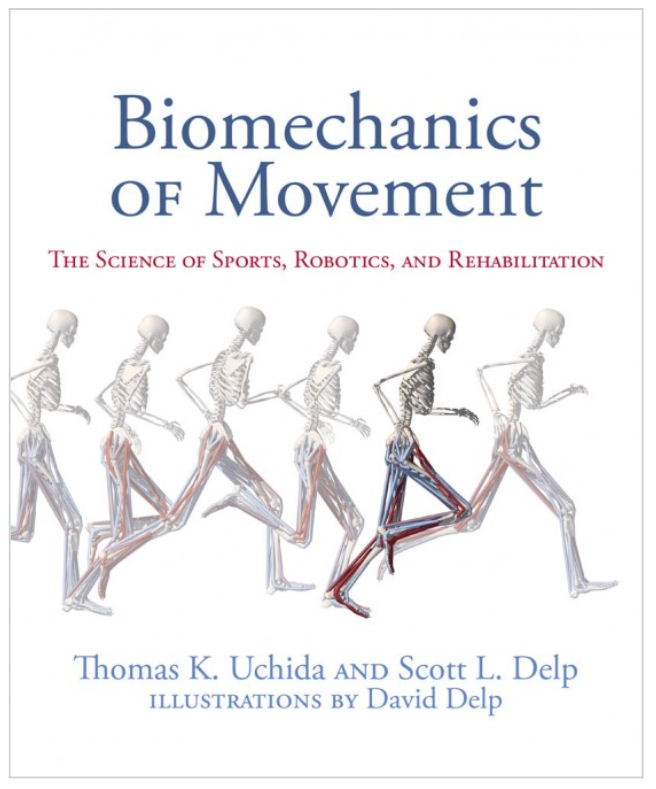
A fantastic new book "Biomechanics of Movement
The Science of Sports, Robotics, and Rehabilitation" by Tom Uchida & Scott Delp is out now! I encourage every Biomechanist to pickup a copy https://t.co/hgTvfFKZM2