great season. great first two series. third one not so much. Still the future is bright still a couple of pieces. The #habs will be back in the playoffs next year. Haters going to hate especially when their teams died early #gohabsgo
This was three days ago. It’s proof you never know what’s going on in a person’s mind or heart. Please know that even if you feel it, you’re never alone and there’s always a way out of the darkness. The suicide and crisis lifeline is 988. 💔😞
I'm an unapologetic Montreal Canadiens fan, but I will not soon forget the classy Buffalo fans for completing the Canadian national anthem when the singer's mic conked out. Respect.
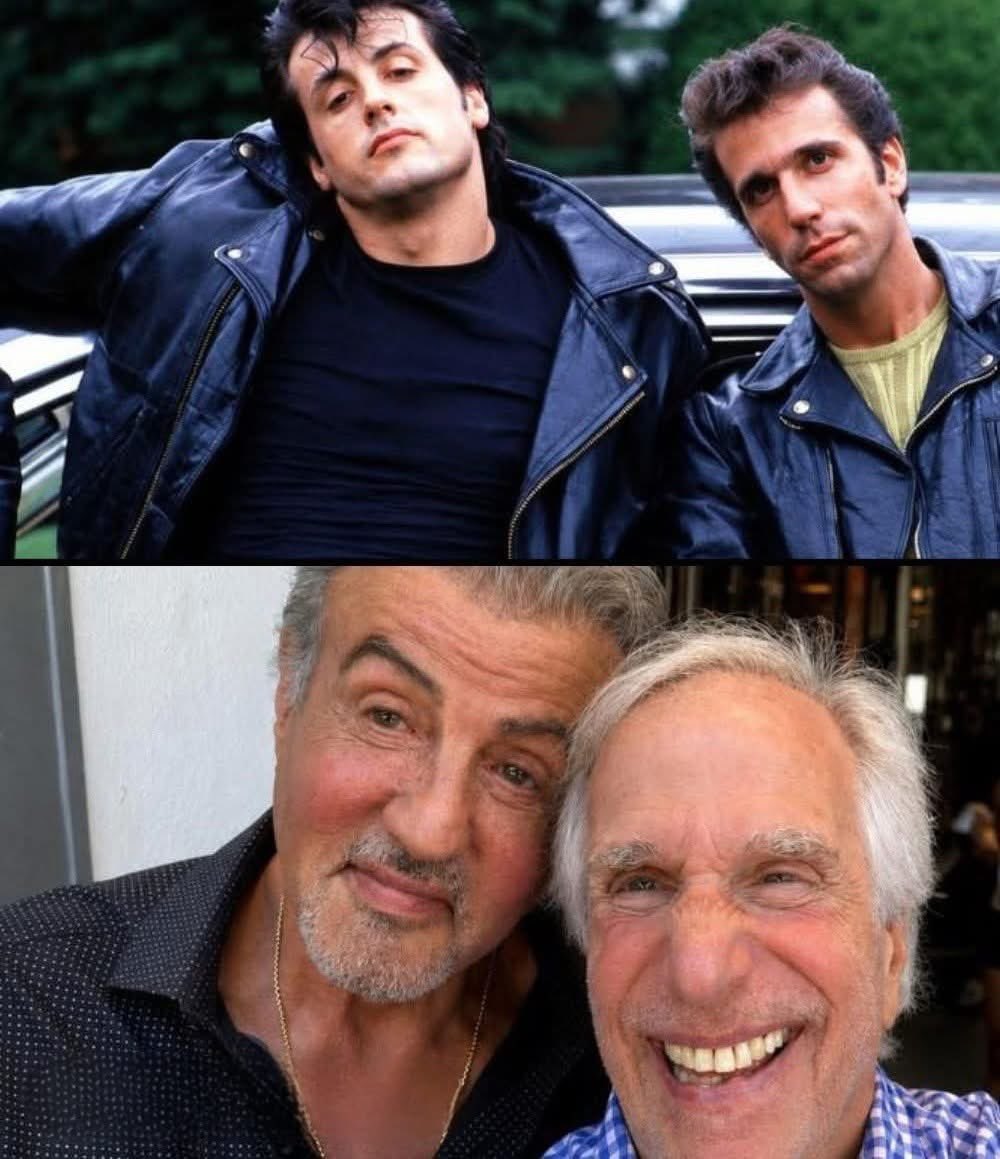
In 1974, Sylvester Stallone was walking around Hollywood with a worn script under his arm and almost no one willing to listen. It was Henry Winkler, then a rising star from Happy Days, who stopped and believed in him when everyone else had already dismissed him.
At the time, Stallone was in a difficult situation. He was going from audition to audition without success, had very little money, and was desperately trying to sell a handwritten screenplay he considered his only real chance.
That script was called Rocky.
He had written it in just a few days after watching the fight between Muhammad Ali and Chuck Wepner. Inside that story was much of his own life: struggle, rejection, and the feeling of constantly being underestimated.
Film studios read the script and recognized its power, but they all had one condition: the lead role had to go to an established actor.
Stallone refused every time.
He would rather stay broke than see another actor play Rocky Balboa.
One day, after yet another failed audition, he found himself in a casting office with the tired expression of someone who had been fighting too long without success. Henry Winkler noticed him almost by chance.
At the time, Winkler was becoming famous for his role as Fonzie in Happy Days. He could have ignored Stallone like so many others did.
Instead, he stopped to talk to him.
Years later, Winkler said Stallone looked like one of those actors Hollywood had already decided to discard. But when Stallone began talking about the plot of Rocky, something completely changed. He spoke with a conviction that felt impossible to fake.
Winkler asked to read the script.
He took it home and finished it overnight.
The next day, he called his agent, Jackie Lewis, telling her that this young man had something authentic and that she absolutely needed to meet him.
It was a decisive phone call.
Jackie Lewis agreed to represent him, and the script finally began circulating among influential people in the industry. It eventually reached producers Irwin Winkler and Robert Chartoff, who immediately understood the story’s potential.
Even then, however, studios wanted a big star in the lead role. Major names such as Ryan O’Neal and James Caan were considered.
But Stallone kept saying no.
He would only sell the film if he could play Rocky himself.
In the end, the producers convinced United Artists to take the risk. They reduced the budget and agreed to give the lead role to an almost unknown actor.
The rest is cinema history.
Rocky won three Academy Awards and turned Stallone into a global star.
In later years, Stallone often recalled how important Henry Winkler’s support had been at that moment in his life. He said that that trust came precisely when he was beginning to lose hope.
And Winkler never publicly took credit for it.
He simply saw something in a man that everyone else had stopped seeing.
When Coca-Cola suddenly closed a plant in Newfoundland in January 1992, the province's residents started a boycott.
That boycott continues to this day, as people choose to support the local and family-owned Pepsi bottling plant.
*should have said Rum and Pepsi*