Corruption in high places - this is a true story
The amount of cow 💩💩💩💩💩💩still resting at the bottom of this could go on forever.
But I will tell my tale about the bankruptcy of MF Global at which I had a futures account at the time
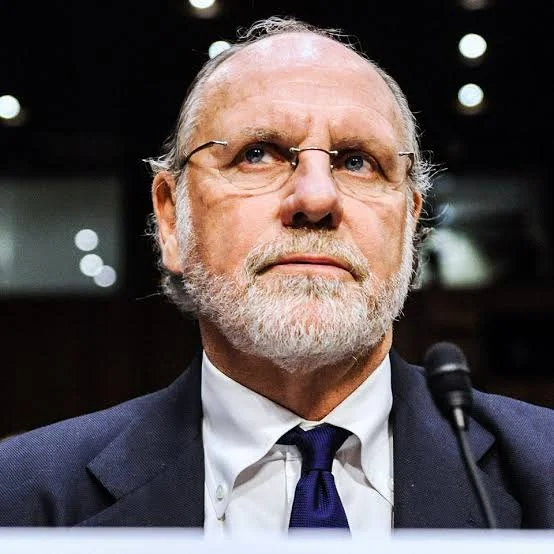
....and Little Jonny Corzine should be in jail today with keys at the bottom of the Hudson
Jon Corzine's scheme cost me money personally. I had money with the squirmy rat
MF Global had long roots in the futures business. It was born out of company called EDF Man (I think I have the first three letters right), a big player in commodities for years.
Jonny, the little rat, was the CEO of MF Global -- he was largely the reason MF Global went into bankruptcy holding my money.
Note: I have somehow found the magic way to be a victim of every futures commission merchant (FCM) that has gone broke. I got tales on all of them.
Little Jonny was the magic man in finance. He had been the CEO of Goldman, the U.S. Senator from Jersey and was hotsy totsy with all the right people.
MF Global was a big FCM. It mattered to the industry.
Like many professional commodity traders I typically have money with two or three FCMs at a time. My main FCMs right now are ADM and IBKR.
The Rat and the Rascals (his execs) took out huge bets in European debt instruments, primarily from the countries that were in the worst fiscal shape. You see, rats like to eat garbage.
In fact, it was a highly leveraged $6 billion bet.
The problem was that MF Global was on wrong side of the trade -- and the rats on the other side of the trade knew it.
While futures brokers are allowed to take risk for their own positions, what happened to this one was hallmark history. This is one might be one of my last memories when my memories are all gone. That is why I am on personal campaign to write them down for anyone in future that might give a hoot.
It is never good to be the big long on a leveraged bond trade when the bonds start becoming down graded. The smart money began to sense, then know, that Corzine could be squeezed. And he was.
The worst is yet to come -- and with it I will have a lesson for all commodity traders.
Margin call after margin call MF Global was bleeding. Yet, Corzine still believed in the trade (wait to learn what happened to the trade later on). And, in fact, the trade actually was not the issue if the Rat had not pushed all the cheese into the betting ring.
With all trades, the three HUGE variables are direction, timing and size. Get any one of these wrong with big money on the line, and your done.
Corzine got the eventual direction right, but his timing and sizing stunk -- like the London sewers.
AND THIS IS WHERE CORZINE WENT FROM WRONG ON A TRADE.
AND WHERE CORZINE, THE CFTC AND THE FUTURES INDUSTRY WENT WRONG ON ETHICS - VERY VERY WRONG
The industry I came into had long held the the concept of segregated accounts as more than sacred.
The industry dictum was that customer money was to be protected against bankruptcy by being held in segregated bank accounts (at least one for each customer) rather than being commingled with the firm's funds.
The only exception was when a trader client of an FCM takes a trade home at the end of the day's session. Then the Independent Clearing Corp (or House) of the exchange demands initial margin to be moved that day from the money sitting with the FCM over to the Clearing House as a good faith deposit.
If a position goes against a stubborn trader more and more of his money is moved over to the Clearing House -- this is called a margin call. Back in my early days I had to make margin calls on many commercial customers' trades. They had three days to get the money to us.
One of my biggest stories to come will the story of a huge client that went bankrupt and what this personally cost me.
So, back to Corzine. MF Global was meeting many margin calls on its bad bet on European debt (rhymed by accident, sorry).
This is where the entire story really gets interesting. Excuse the long background.
Remember the bit earlier about segregated accounts, a bedrock of the futures industry.
Well, dynamite was placed into the bedrock. Corzine appealed to the CFTC to SECRETLY allow it to "rob" customer segregated money in the U.S. and transfer it to London to meet margin calls it could not make on its own.
Credible sources strongly suggest that other leading FCMs at the time thumbed-up the deal.
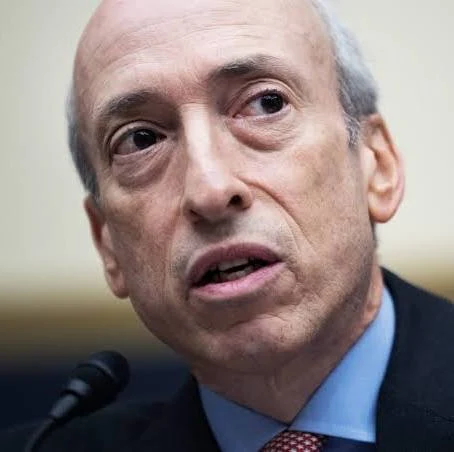
The CFTC was rotten then and it is rotten today. The head of the CFTC at the time was another rat -- one that actually really looks like one. Gary Genzler. Look at his picture -- you'll see what I mean -- this is no joke.
So, bottom line and then the wrap up.
MF Global lost almost 200 million dollars.
Gary Genzler moved to a different rat hole as head of the Securities and Exchange Commission. That's how government works. Screw up one job on the way to a promotion.
MF Global went bankrupt.
Jon Corzine got a slap on the wrist and is doing the "philanthropic" gig.
At the outset, approximately $1.2 billion in customer funds appeared to be missing or improperly used.
At the end -- we are talking years here -- my and the money of every customer was recovered. This amounted to $6.7 billion and more than 25,000 customers.
Two lessons.
First, the federal regulatory agencies overseeing market speculation just absolutely stink of rot. Really nothing any of us are likely to do about this, so we need to just live with it I suppose.
Second, know your broker. Brokers go out of business all the time. Remember Refco. Remember Lehman. Remember Peregrine Financial. I actually lost money -- a sizeable chunk -- in the bankruptcies of Refco and Peregrine.
Those of you trading futures markets. Beware of the discounters. I choose ADM precisely because it has HUGE money behind it from the mother ship.
OK, with all good stories there is a kicker. In this one there is a real gem.
Corzine's trade. At huge discounts, the trade was bought by George Soros. I am telling you the truth.
I acknowledge that it was unkind of me to use rodent language herein if you found it offensive. Please know that I think it was suitable.
https://t.co/MABe6Zmrkv
Most novices think that profitability comes from finding winners - lots of luck with this one
Long-term profitability has much more to do with cutting losses quickly
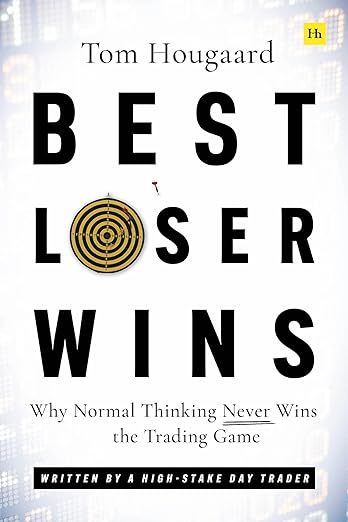
Being a big winner is a matter of being an excellent loser
According to Edwards & Magee's philosophy, a pattern can still be considered successful even if the price falls just short of its measured objective.
Their reasoning is based on two key ideas:
1)Price objectives are approximations, not exact forecasts.
2)They repeatedly stress that measured objectives are estimates of the minimum probable move, not precise price levels. Markets rarely stop exactly at a projected objective.
3)The primary test of a pattern is whether it correctly anticipated the direction of the move.
If a confirmed pattern breaks out and produces a substantial move in the expected direction, the pattern has largely done its job—even if it reverses a few percent before reaching the calculated objective.
I've made my living as a futures trader for five decades basically studying price and price alone -- no fundamentals, no macros, no indicators, no CNBC, no Bloomberg
Charts -- just price charts
So, you might be shocked when I tell you that charts do NOT predict prices. End of story.
So don't let some slime ball with a You Tube channel and 85% win rate sell you a load of what comes from the south end of cattle
Chart simply tell us where price has come from and where it is now
The only real value of price charts for Factor LLC, my trading company (our money, NO OPM) is sometimes helping to define a very asymmetric reward-to-risk possibility
I use the word "Possibility" for all trades
There is not such a mathematically valid concept as assigning probability to a single event. I believe in only the law of a large data pool
And I certainly do not believe in certainties
We do share our thinking with a private X community and every once in a while we through some chart we are looking at on public X -- sometimes with outrageous statements (true and sometimes false) just to see what sentiment is as represented by replies -- we will take anything we can get to add to the slim edge possible for speculators
World class long-term track records such as those of Stan Druckenmiller are built one trade at a time
Big piles are often stacked from individual trades that were not anything special
Trading is a marathon, not a sprint
Largest inflation decline in over six years. Core inflation comes in at 2.6%. Four years ago with Biden inflation was at 9.1%.
Watch the consensus crowd on Wall St execute a familiar pivot. Only weeks ago, the dominant narrative pointed to imminent rate hikes, driven by the so-called “Iran shock” and reinforced by the ECB’s tightening. The argument was framed in terms of central bank credibility: if the ECB hikes, the Federal Reserve, under Chairman Warsh, must follow.
That logic is flawed.
It rests on a narrow, demand-centric view of inflation that has long dominated Wall Street thinking, the growth is bad. The Keynesian reflex is to treat inflation as a function of excess demand, with higher rates serving as the primary corrective tool. Yet this framework struggles when inflation is rooted in supply constraints rather than overheating demand.
The second- and third-order effects so often invoked, wage spirals, tariffs , embedded expectations, are not immutable laws. They are contingent outcomes. But when supply is impaired, tighter monetary policy can exacerbate the problem rather than solve it. Basic supply side theory.
Housing offers a clear example. Elevated rates have constrained new construction, tightened inventory, and reinforced price pressures in shelter, a major component of inflation indices. In such cases, policy is not restraining inflation; it is helping to sustain it. CPI ex shelter was -0.7% MoM.
This raises an uncomfortable possibility for policymakers. If inflation is being driven, even partially, by supply-side bottlenecks, then rate cuts, not hikes, may be the more effective tool. Lower financing costs can stimulate construction, unlock capacity, and expand supply, easing price pressures over time.
That perspective has been largely absent from the policy debate for decades. But as the limits of demand management become clearer, it may be due for reconsideration.
For Chairman Warsh, the implication is straightforward but politically fraught: credibility is not established by reflexively tightening in the face of inflation. It is established by correctly diagnosing its cause. If the source lies on the supply side, particularly in interest-sensitive sectors such as real estate, then easing policy, yes Rate Cuts, may be the more credible response.
Warsh today clarified that he thinks none of the existing, published measures of inflation that remove price outliers, such as the Dallas Fed trimmed mean, reliably capture underlying price pressures:
"None of those are very good measures of underlying inflation.... My view is that we need new measures to understand the underlying changes in inflation. Am I interested in what's the mean or median price of a good and a big box retailer? You bet I am. And none of these measures capture that. I am super interested in finding new measures to do a better job to help us inform our decisions so that the inflation of the last five years don't continue."
At his confirmation hearing, he had referred to "trimmed averages" and "median type measures" as possibly more useful gauges of underlying inflation. This led to greater focus on median or trimmed mean gauges from Wall Street analysts who closely monitor inflation and map price data into their analysis of the Fed's reaction function.
(In a WSJ story in May that was referenced at the hearing today, I wrote, "Warsh didn’t specify which trimmed mean he had in mind. The most widely cited is the Dallas Fed’s version...")
https://t.co/wqV5dzT3St
@MarioOttai549 I have written a whole section for CFA candidates, Technical Analysis for Portfolio Managers. It should help in balancing the effect of rational expectations and efficient market hypothesis.
https://t.co/w3M5qCF3Gv
After studying almost all technical analysis concepts and drawing many diagonal lines and coding so many indicators,
I went back to horizontal setups, no volume, no indicator. Only price action, old school classical chart pattern breakouts.
I would say the starting point...
@PeterLBrandt Thank you, Mr. Peter!
I have significantly improved my trading psychology, especially in holding positions without being shaken by the market’s sudden sharp reversals or “brakes.” And many other things as well.
Best regards!!
This post comments is also a great source for behavioral studies in speculative markets. So many confident comments out there that $MSTR will never need to sell.
Trade identification (set ups) are waaaaaay over emphasized and contribute little to a trader's edge. How a trade is sized and exited and the management of emotions and process are far more important aspects of trading. The vast overwhelming obsession over set ups is misplaced
The first book is engaging, easy to read, and gives you an overview.
The second book is a comprehensive, psychologist-authored deep dive (into the "belief engine" in the brain. It explores perception, memory, emotion, social influences, and why beliefs override evidence. Strong on practical implications for everyday convictions. It is a big 600-page book.
The third one is a more recent, readable academic survey of cutting-edge research. It covers how beliefs form/evaluate in areas like politics, health, and extremism, with cross-cultural examples. Great for a structured, modern overview if you want something concise yet thorough.
None of these is aimed at the general layman. These are more for those in the field.
Markets are clinging to a Federal Reserve that no longer exists.
Chair Kevin Warsh’s latest remarks have been parsed with the familiar Powell-era toolkit, every phrase treated as a breadcrumb toward the next rate decision. It is a reflex honed over a decade of hyper communicative central banking. It is also increasingly unfit for purpose.
Warsh is not offering incremental guidance within an inherited framework. He is challenging the framework itself.
The distinction is being missed. Investors appear eager to translate his comments into conventional signals on policy timing and terminal rates. In doing so, they risk overlooking what is more consequential: a chair who is signalling that the Fed’s operating model, its communication strategy, its institutional posture, perhaps even its implicit policy hierarchy, is up for revision.
Under Powell, forward guidance was elevated into a primary policy instrument. Markets learned to trade the Fed’s language as much as its actions. Don’t look at the data objectively just respond to the Fed we were told.
But that equilibrium depended on a central bank committed to transparency as a stabilising tool. A reform-minded Fed, by contrast, will place less weight on short-term signalling and more on reclaiming flexibility, discretion, and institutional credibility.
That shift does not lend itself to clean decoding. Indeed, it actively resists it. A generation of Wall St researchers need to go back to school.
The result is a growing mismatch between what markets think they are hearing and what is actually being said. Remarks that are being mined for near-term policy clues may instead be early markers of a broader institutional reset. The more investors force these signals into the old template, the greater the risk of mispricing the path ahead.
This will not be resolved in a single meeting. It may take several FOMC cycles, and likely a few policy surprises, before the market fully internalises that the reaction function itself is in flux.
Until then, the danger is clear: Wall Street is still trading Powell’s Fed, anchoring off of dot plots, while Warsh is busy building a different one.
Several components of my approach
1. Max initial risk per trade = 7/10th of 1% of capital
2. Move stops to BE within a week or two
3. Liquidate all trades that are losers on Fridays
4. Advance stop on one-half of each trade
5. Take profits at measured targets
6. Maximum composite initial risk on highly correlated trades <2% of total nominal capital